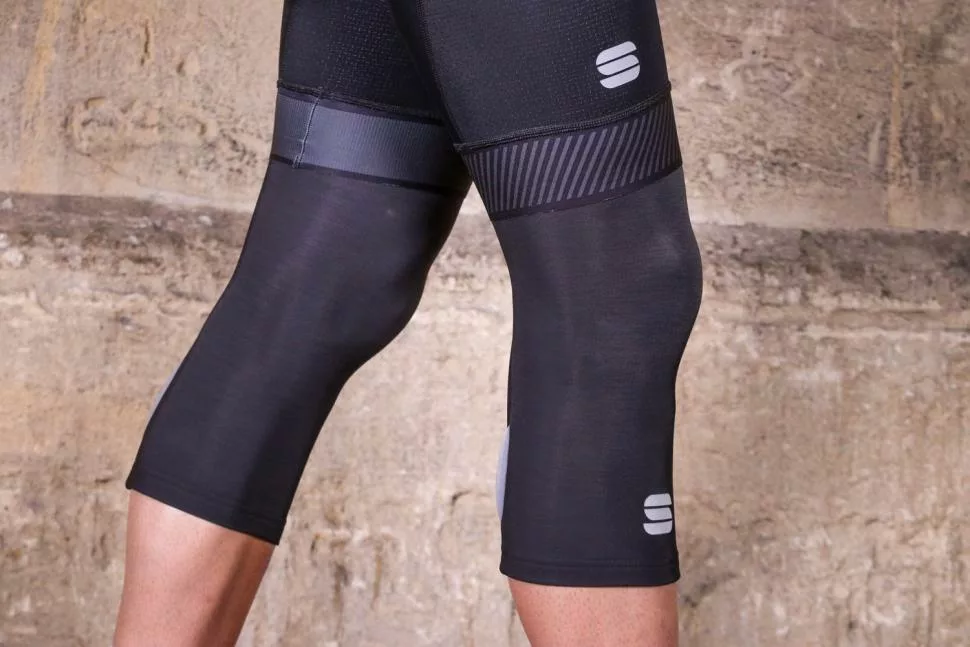
Cycling knee warmers sit in the gap between summer bib shorts and full tights. They cover the knee and part of the thigh and calf, adding targeted warmth without the bulk of a complete leg warmer.
They are most useful in spring and autumn, or on cool starts when you expect to remove a layer later. For riders who dislike full leg warmers bunching around the ankles, knee warmers are often the simpler option.
What are cycling knee warmers for?
The aim is to keep the knee joint and surrounding muscles out of direct cold airflow while leaving the lower leg uncovered. They work especially well with thermal or standard bib shorts when the weather is too cool for bare knees but too mild for full tights.

How should knee warmers fit?
The upper edge should sit well underneath the bib-short leg so there is no exposed strip of skin. The lower edge normally finishes high on the calf. Both ends need enough grip to stay in place without cutting into the leg.
If they slide down while riding, they are either too loose, poorly shaped for your leg or not overlapped far enough under the bib shorts.
Current option: Le Col Knee Warmers
Le Col’s current Knee Warmers use Italian Roubaix fabric, silicone grippers and reflective tabs. The brand rates them for roughly 5–15°C, which is exactly the transitional-weather range where knee warmers make the most sense.
Check the current Le Col Knee Warmers.
Knee warmers vs leg warmers
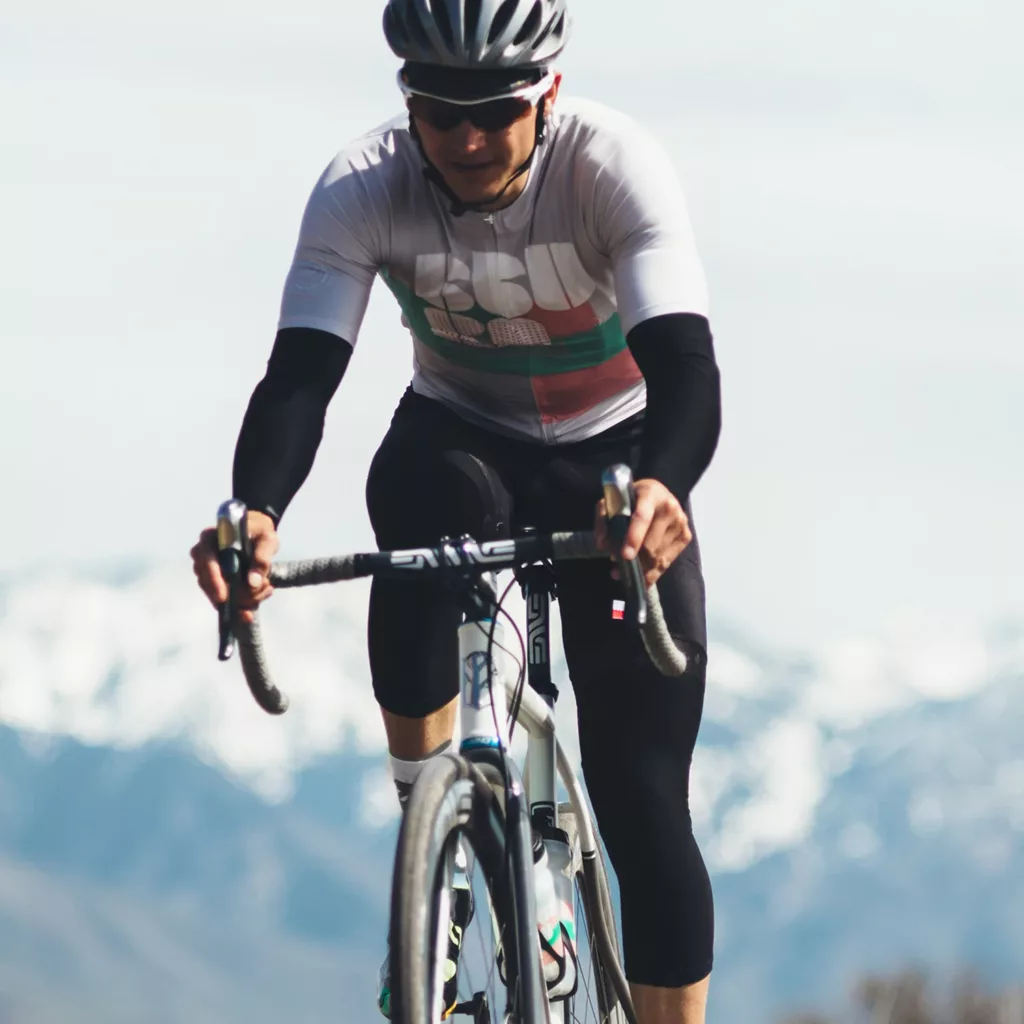
Knee warmers are easier to remove and pack, and they are cooler once the temperature begins to rise. Leg warmers offer substantially more protection in cold wind, rain and winter conditions.
If the forecast stays below about 8°C for the whole ride, full leg warmers or bib tights usually make more sense. If the morning starts at 8°C and finishes at 15°C, knee warmers are much easier to manage.
Do knee warmers improve performance?
They are clothing, not a performance device. Their benefit is comfort and temperature management. Staying comfortable can make it easier to ride well, but there is no need to turn the decision into a marginal-gains argument.
Can you wear them in rain?
Standard Roubaix warmers cope with light spray but are not waterproof. Water-resistant versions are useful for damp roads, while sustained rain calls for more complete weather protection.
Are knee warmers worth it?
For riders who already own good bib shorts, yes. They extend the useful temperature range of summer kit and take up very little space when removed.
They are most valuable for variable weather rather than deep winter. If you regularly leave home in single-digit temperatures and stay there, a good pair of bib tights is simpler.
-
 Photo Credit: Luc Claessen/ISPA
 -
 Photo Credit: Unsplash / Chris Linnett