
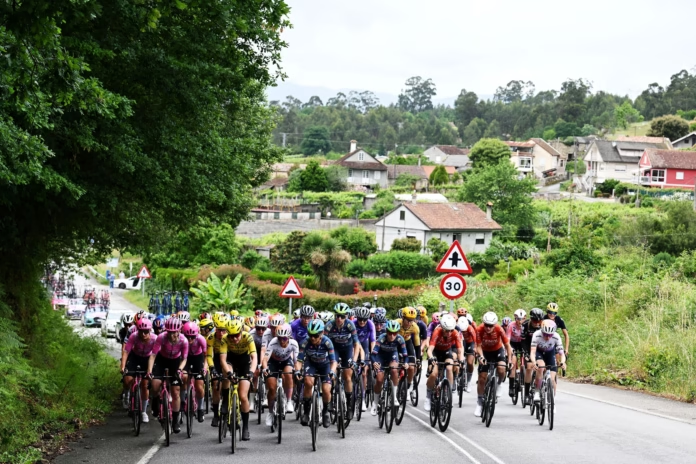
La Vuelta Femenina 2026 reaches its third day on Tuesday, 5th May with a stage from Padrón to A Coruña that is officially labelled flat, but should be treated with more caution than that word suggests. The route covers 121.2km and finishes beside the Riazor Stadium, giving the race a coastal finale that could suit a reduced sprint, a late attack or a messy bunch finish if the peloton struggles to stay organised.
The race also arrives at Stage 3 after a chaotic opening two days. Noemi Rüegg won Stage 1 and took the first red jersey, but crashed out on Stage 2. Marianne Vos had already left the race with a broken collarbone after her Stage 1 crash. Shari Bossuyt then won the Stage 2 sprint, while Franziska Koch moved into the overall lead after another strong ride from FDJ-Suez. Lotte Kopecky was again in the thick of the finale, but her sprint went wrong and she was relegated.
That gives Stage 3 a sharper edge. On paper, this is one of the better chances for the faster riders before the race becomes more demanding again. In reality, the lumpy Galician terrain, the coastal approach and the crash-heavy tone of the opening stages mean this could become another nervous day.
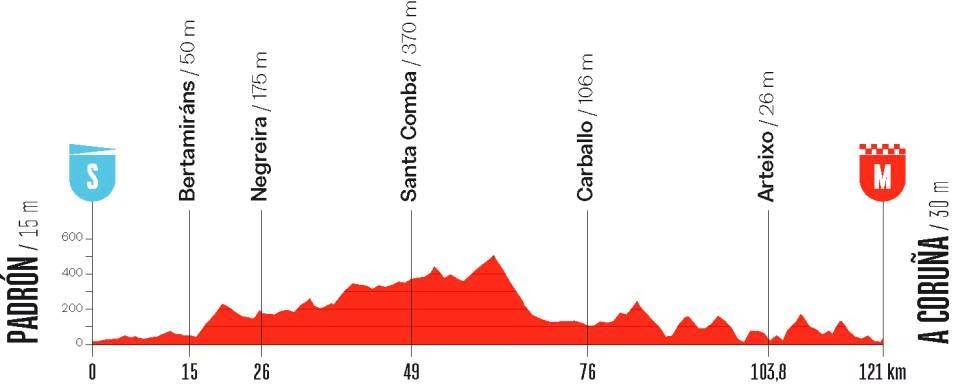
La Vuelta Femenina 2026 Stage 3 route
Stage 3 runs from Padrón to A Coruña over 121.2km. The official route classification is flat, but the profile is far from featureless. There are no categorised climbs and no mountains points available, yet the riders still face repeated uncategorised rises across the day.
That makes this a stage where fatigue can build quietly. The early part of the route moves north from Padrón, with the road rising and falling through the first half of the stage rather than offering a long spell of easy control. The middle section should give the peloton time to manage the breakaway, but the final third is more complicated.
The intermediate sprint comes with 16.7km remaining, which places it close enough to the finish to influence both the points battle and the stage tactics. From there, the route moves towards the coastline and into A Coruña, with the final kilometres demanding good positioning before the finish on Avenida da Habana near the Riazor Stadium.
For the broader picture of how this stage fits into the week, our La Vuelta Femenina 2026 full route guide breaks down all seven stages, including the decisive mountain finishes still to come.
What time does stage 3 start?
Stage 3 starts at 14:04 local time in Spain, which is 13:04 in the UK. The finish is expected between 17:05 and 17:26 local time, depending on the speed of the race. For UK viewers, that means an expected finish window between 16:05 and 16:26.
Key stage details:
- Date: Tuesday, 5th May
- Route: Padrón to A Coruña
- Distance: 121.2km
- Stage type: Flat
- Categorised climbs: None
- Stage start: 13:04 UK time
- Expected finish: between 16:05 and 16:26 UK time
- Finish location: Avenida da Habana, A Coruña
- Race leader: Franziska Koch
UK viewers can follow the race through TNT Sports and HBO Max, with the wider broadcast picture covered in our guide to watching La Vuelta Femenina 2026 in the UK.
Why stage 3 is not a simple sprint day
Stage 3 is officially flat, but the route has enough texture to make the finish less predictable. The road includes more than 2,000 metres of elevation gain, and the final third includes a series of uncategorised rises before the descent towards A Coruña.
That should matter tactically. Teams with fast finishers will want to control the race, especially after two days in which the early leaders and expected contenders have already been disrupted. But control has not looked easy so far. Wet roads, technical finales and nervous positioning have already shaped the race, and the run towards A Coruña could produce similar pressure.
The final approach also gives attackers a narrow window. There is a rise inside the last 10km before the descent and flat finish, meaning a strong rider could try to go clear before the sprint trains fully settle. The most likely outcome is still a reduced sprint, but it may not be a neat one.
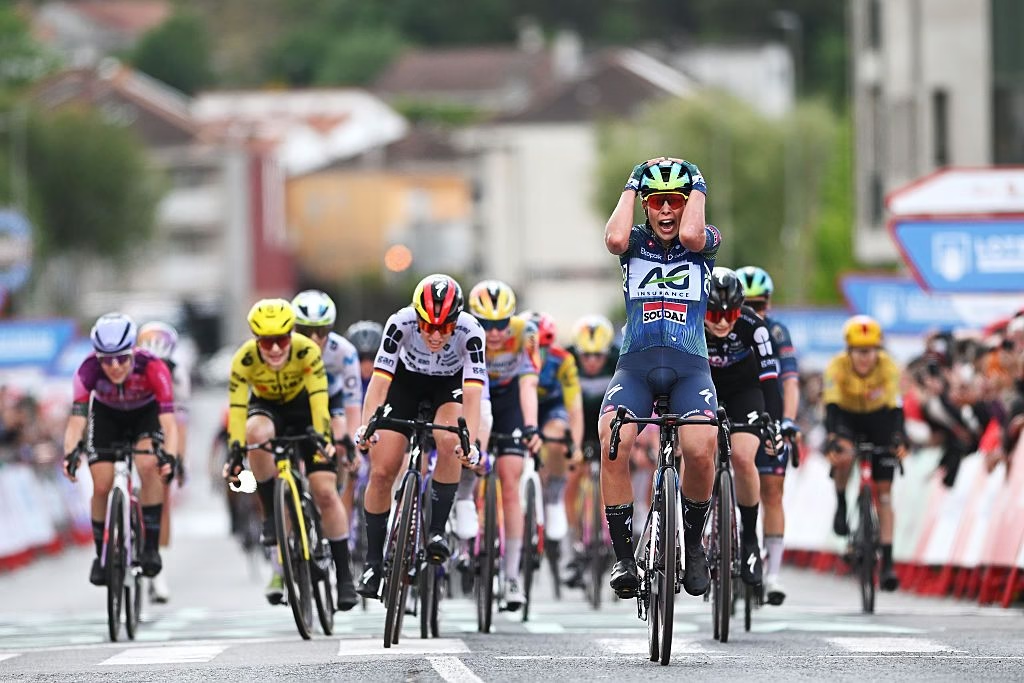 Photo Credit: Getty
How stage 2 changed the race
The biggest storyline before Stage 3 is the race’s sudden reshaping. Rüegg’s abandon removes the Stage 1 winner and first leader from the race, while Vos’ withdrawal has already taken away one of the riders most suited to these rolling, tactical finishes.
Koch now wears red, and FDJ-Suez have earned that position through consistency rather than one isolated move. Koch was already 3rd on Stage 1, then stayed prominent on Stage 2 as the race became more chaotic around her. That makes FDJ-Suez one of the central teams for Stage 3, because they have a leader to protect and a rider capable of contesting another reduced finish.
Kopecky remains the obvious unfinished story. She was close on Stage 1, then looked positioned for another major result on Stage 2 before her sprint unravelled, and she was relegated. On a stage with an easier finish on paper but enough late terrain to remove some pure sprinters, she should again be one of the most watched riders in the race.
Contenders to watch on stage 3
Shari Bossuyt has earned immediate attention after winning Stage 2. The finish in A Coruña may be quicker than the previous day, but she has already shown that she can handle the stress of this race and finish the job when the sprint becomes complicated. AG Insurance-Soudal now have a stage win, and that should give them more freedom.
Franziska Koch enters Stage 3 in red and should not be viewed only as a defensive leader. Her opening two days have shown that she has the form and positioning to stay involved in these finishes. FDJ-Suez may prefer a controlled day, but if Koch reaches the final kilometres in the front group, another high placing is realistic.
Lotte Kopecky may be the strongest favourite if the finish is selective enough to remove some of the faster but less robust riders. The stage is not mountainous, but the repeated rises and coastal finale should suit her strength. After two frustrating finishes, Stage 3 gives her another chance to convert good positioning into a clean result.
Letizia Paternoster remains a logical contender for this kind of stage. She has enough speed for a sprint and enough resilience for a day that is not properly flat. The closer the finish comes to a reduced bunch rather than a full peloton, the more her chances improve.
Arlenis Sierra is another rider who fits the profile. Movistar do not need to carry the race all day, but Sierra has the durability and finishing speed for a stage where the final kilometres are more about positioning and strength than a pure lead-out.
Megan Jastrab could also be relevant if UAE Team ADQ keep her sheltered deep into the finale. With Maëva Squiban already active in the mountains classification battle and the team holding wider options, Jastrab gives them a fast-finishing card if the bunch sprint is still large enough.
-
 Photo Credit: quentinphotographiebe
 -
 Photo Credit: Getty

Tactical outlook
Stage 3 should bring a familiar tension between sprint control and opportunism. The breakaway will probably be allowed to form, but the flatter label and the lack of categorised climbs should encourage more teams to chase than on the previous two days.
The difficulty is that the final 20km is not simple. The intermediate sprint comes with 16.7km remaining, then the road continues towards A Coruña with enough turns, rises and coastal exposure to keep the bunch stretched. Teams that wait too long to organise could find themselves out of position before the final descent and flat run-in.
For the GC contenders, this is another day to stay close to the front without taking unnecessary risks. The decisive stages are still ahead, particularly the summit finishes later in the week, but the race has already shown how quickly a rider’s ambitions can be damaged by crashes or poor positioning.
Prediction
Stage 3 should come down to a sprint, but probably not the cleanest one of the race. The route is officially flat, yet the day includes enough rolling terrain and late positioning pressure to make a reduced group or stretched bunch more likely than a full peloton arriving neatly together.
Kopecky is the pick. She has been close twice already, the route suits her strength, and the finish in A Coruña gives her another chance to use a hard day rather than a pure drag-strip sprint. Koch, Bossuyt, Paternoster and Sierra all make sense as podium contenders, while a late attack could still succeed if the sprint teams hesitate after the final rise.
The most likely outcome is a tense, reduced sprint beside the Riazor Stadium, with Kopecky finally getting the finish she has been chasing since the race began.

