
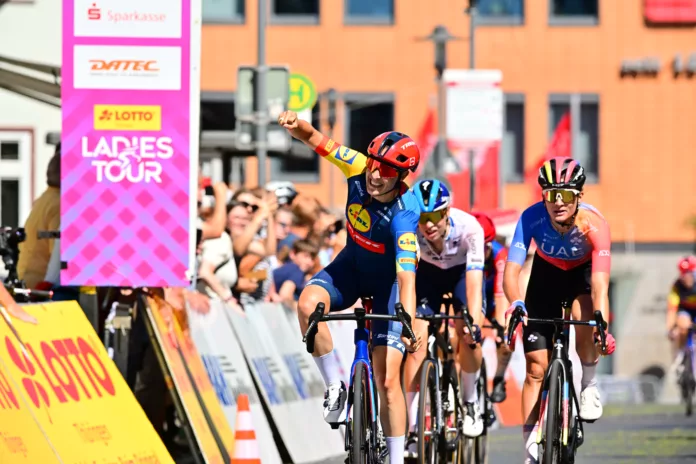
The LOTTO Thüringen Women Cycling Challenge brings international women’s racing back to Thüringen on Sunday, 21st June, but in a very different format from the stage race that gave the region such a long place in the sport’s history. Instead of the multi-day LOTTO Thüringen Ladies Tour, the 2026 edition is a one-day UCI 1.Pro race based in Gera, with a 123.8km route that should reward riders who can sprint after a hard, hilly race.
That makes it a difficult race to categorise. The finish profile is not a mountain finish, but the route is far from flat. The organisers list four categorised climbs, with the Ferberturm in Gera expected to be central to the final phase of the race. That should make it selective enough to remove some pure sprinters, while still leaving enough fast riders in contention if their teams can control the repeated climbs.
It is also a race with emotional weight. The old LOTTO Thüringen Ladies Tour was one of the longest-running and most recognisable women’s stage races in Europe, with a roll of honour that included Lucinda Brand, Lotte Kopecky, Ruth Edwards, Lisa Brennauer, Emma Johansson and Evelyn Stevens. The new Women Cycling Challenge is not trying to pretend that nothing has changed. It is a restart, but one that keeps Thüringen connected to elite women’s cycling.
For more background on how the new event came together after the loss of the former stage race, see ProCyclingUK’s report on the Thüringen organisers’ plans for a new women’s international race in 2026 and the earlier piece on the Lotto Thüringen Ladies Tour 2025 cancellation. For wider race context, see our Women’s Cycling Race Hub and Women’s Cycling Route Guide Hub.

What kind of race is the LOTTO Thüringen Women Cycling Challenge?
The 2026 LOTTO Thüringen Women Cycling Challenge starts and finishes in Gera, with the route heading through Gera, the Vogtland and eastern Thüringen before returning to the city. The official route information lists 123.8km of race distance, four categorised climbs and a finish in the centre of Gera.
The key feature is not one long climb, but the accumulation of short, repeated efforts. Dörtendorf and the Ferberturm should shape the race, especially once the peloton returns to Gera and the final circuits begin. A 1.7km climb at around 6 per cent is not enough to make this a pure climbers’ race, but repeated late ascents can change the character completely.
That points towards a reduced sprint, a late attack from a strong puncheur, or a small group forming over the final climbs. The fastest rider on the start list is not automatically the favourite. The winner will need to survive the climbing, stay close through the decisive laps and still have enough left for the finish.
The race should suit riders who can handle repeated changes of pace. Strong sprinters with climbing resistance, punchy all-rounders and aggressive attackers all have a path to victory. It is much less obvious for riders who need a completely flat lead-out, and it may also be too fast and tactical for pure climbers who lack a finish.
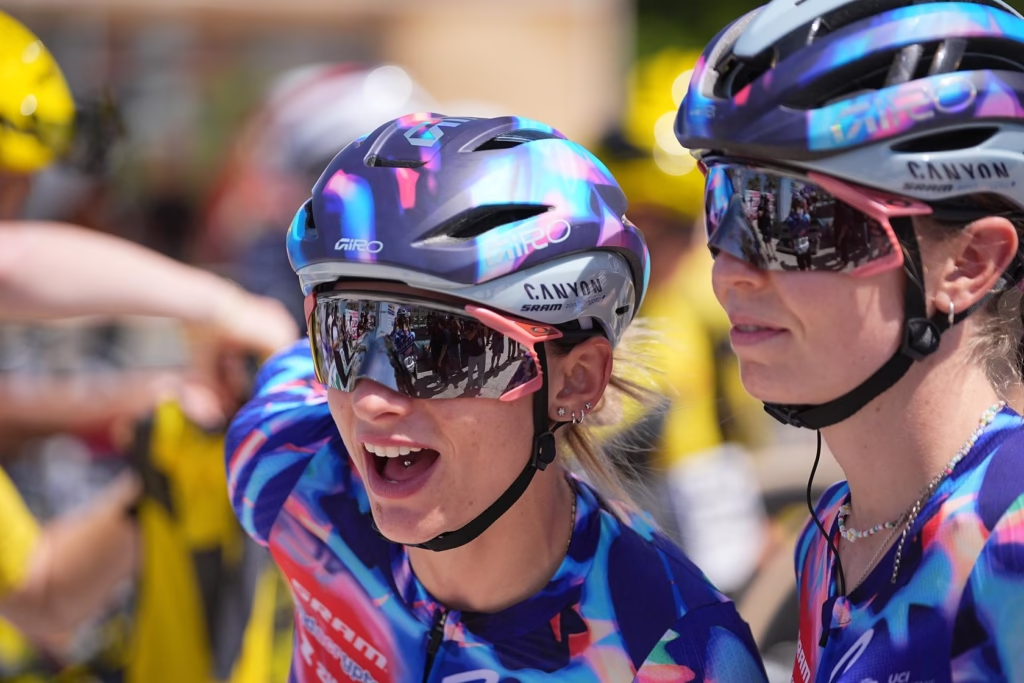 Photo Credit: RCS
Chiara Consonni
Chiara Consonni is the clear headline name on the start list and the rider most likely to be marked by the rest of the field. Canyon SRAM bring the fastest finisher in the race, and if the final group is still reasonably large in Gera, Consonni will be the rider many teams fear most.
Her advantage is obvious. She has the sprint speed to win against almost anyone here, and she has enough experience in harder one-day races to survive more than just a flat run-in. The question is whether the repeated climbs around Gera make the race too selective or too chaotic for Canyon SRAM to keep everything under control.
The Ferberturm laps are crucial for her. If she can get over them with teammates still around her, Canyon SRAM have the strongest finishing card. If she is isolated or forced to chase repeated attacks, the race becomes much more complicated.
Consonni’s best scenario is a controlled race where Canyon SRAM allow a manageable breakaway, keep the strongest attackers within reach, then bring a reduced group to the finish. In that situation, she is the favourite. The more the race becomes stop-start, aggressive and fractured, the more vulnerable she becomes.
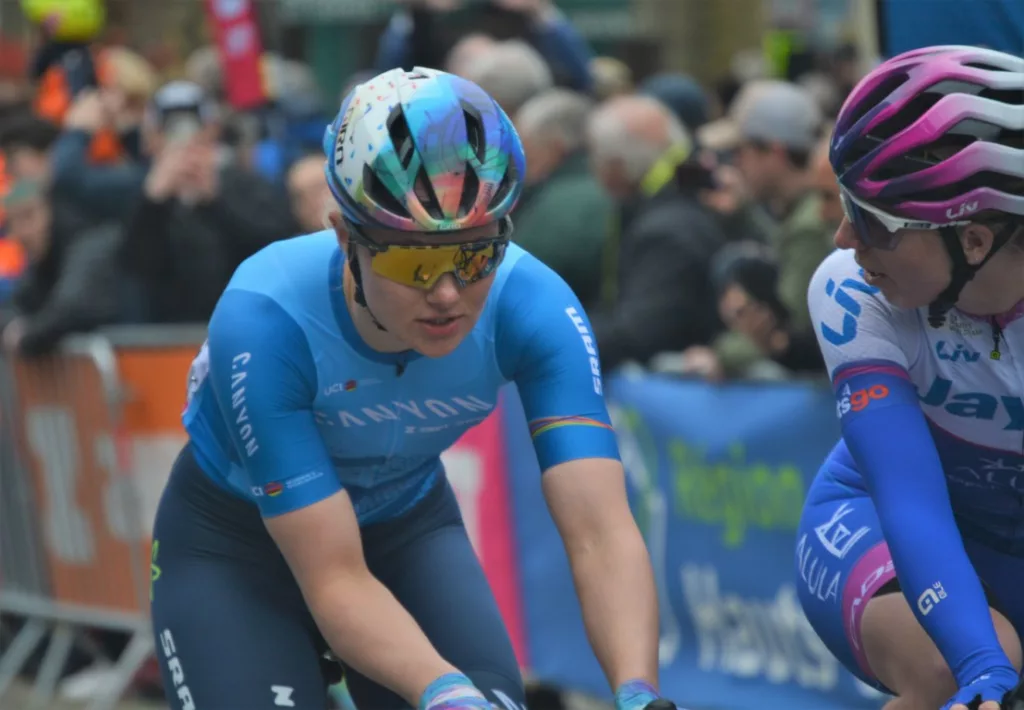
Maike van der Duin
Maike van der Duin gives Canyon SRAM a second route into the race, and that could matter if the final circuits become too hard for a straightforward sprint plan. She has the speed to be dangerous from a reduced group, but she also gives the team tactical flexibility.
That is important because Consonni will be closely watched. If Canyon SRAM simply ride for one outcome, they may invite attacks on the climbs. Van der Duin gives them another option. She can follow moves, force other teams to chase, or become the sprint card if the race breaks differently from expected.
Her track background and ability to handle fast, tactical racing should suit a course where positioning and repeated accelerations matter. This is not a race where the strongest rider on paper can simply wait until the final 200 metres. If the front group is constantly reshaped on the Ferberturm, a rider with Van der Duin’s sharpness becomes valuable.
Canyon SRAM have the best one-two punch in the race. Consonni is the obvious finisher, but Van der Duin may be the rider who makes that plan harder to disrupt.

Eline Jansen
Eline Jansen is one of the most interesting contenders because her 2026 form has already shown exactly the qualities needed for a race like this. She won Grand Prix du Morbihan with a late attack and then followed it with a stage victory at the Tour Féminin International des Pyrénées. That combination of punch, timing and finishing strength makes her a very serious threat in Gera.
VolkerWessels do not need to dominate the race. They need to make it awkward. Jansen is at her best when the race becomes selective enough to remove the pure sprinters but not so hard that it turns into a climbers-only contest. The Ferberturm laps could fit that perfectly.
She is not likely to want a full bunch sprint against Consonni. Her best chance is a smaller group, preferably one created by late pressure on the climbs. If she can get into a move with riders who hesitate or start looking at Canyon SRAM, she has the kick to finish it.
Jansen’s recent results also mean she will not be underestimated. That is the main complication. She has moved from outsider to marked rider, and VolkerWessels will need to use their team smartly to keep her from being isolated too early.
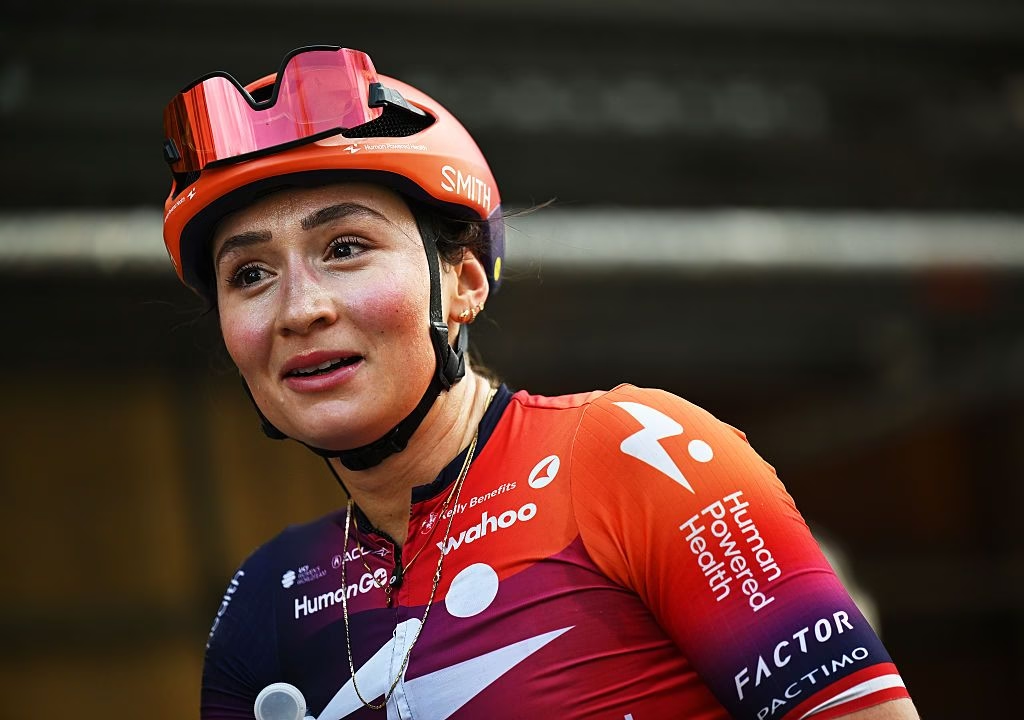
Kathrin Schweinberger
Kathrin Schweinberger has the profile of a rider who can make the race difficult before still being competitive at the finish. Human Powered Health bring several options, but Schweinberger is the one who stands out for a hard, hilly one-day race that may come down to a reduced sprint.
She has been consistent across spring races in 2026 and is well suited to a course where repeated short climbs gradually wear down the peloton. She is not simply a pure sprinter, and that matters in Gera. The final will likely reward riders who can fight for position on the climbs, handle a hard race and still produce a finishing effort.
The challenge for Schweinberger is the same one faced by every fast rider here: Consonni’s top speed. If the race comes back together too cleanly, Canyon SRAM hold the strongest card. Schweinberger needs the race to be selective enough to reduce the lead-out trains and blunt the pure sprint advantage.
Human Powered Health can help that happen. With Silvia Zanardi and Yurani Blanco Calbet also in the team, they have the numbers to race actively rather than wait.

Silvia Zanardi
Silvia Zanardi gives Human Powered Health another strong route into the race. She is fast enough to matter in a reduced sprint and experienced enough to handle a messy final. That makes her a valuable second card alongside Schweinberger.
Zanardi’s best chance is a selective finish where the front group is not too large. She may not want to line up in a straightforward sprint against Consonni, but she can be dangerous if the final climbs have stripped away lead-outs and left a smaller group of tired riders.
That kind of race would suit Human Powered Health well. Schweinberger can cover one scenario, Zanardi another. If the team race aggressively through the final circuits, they can force Canyon SRAM and VolkerWessels to make decisions.
Zanardi should not be treated as just a backup option. In a race with short climbs, a flat finish and reduced-group possibilities, she has a realistic path to a podium.

Yurani Blanco Calbet
Yurani Blanco Calbet is the rider who gives Human Powered Health a more aggressive option if the race breaks up before the finish. She is less likely to win a pure sprint against the fastest finishers, but she can make the final harder and force other teams to respond.
That role could be vital. If Human Powered Health wait for a sprint, they are riding into Canyon SRAM’s strongest scenario. If Blanco Calbet attacks or follows moves on the final circuits, the team can make the race less predictable and create space for Schweinberger or Zanardi.
Her strength is in forcing pressure rather than waiting for a perfectly controlled finish. On a route with repeated categorised climbs, that matters. The Ferberturm should give attacking riders several chances to test the group, and Blanco Calbet is exactly the kind of rider who can make a move dangerous if the favourites start watching each other.
She may be more likely to shape the result than win it outright, but that still makes her one of the key riders in the race.
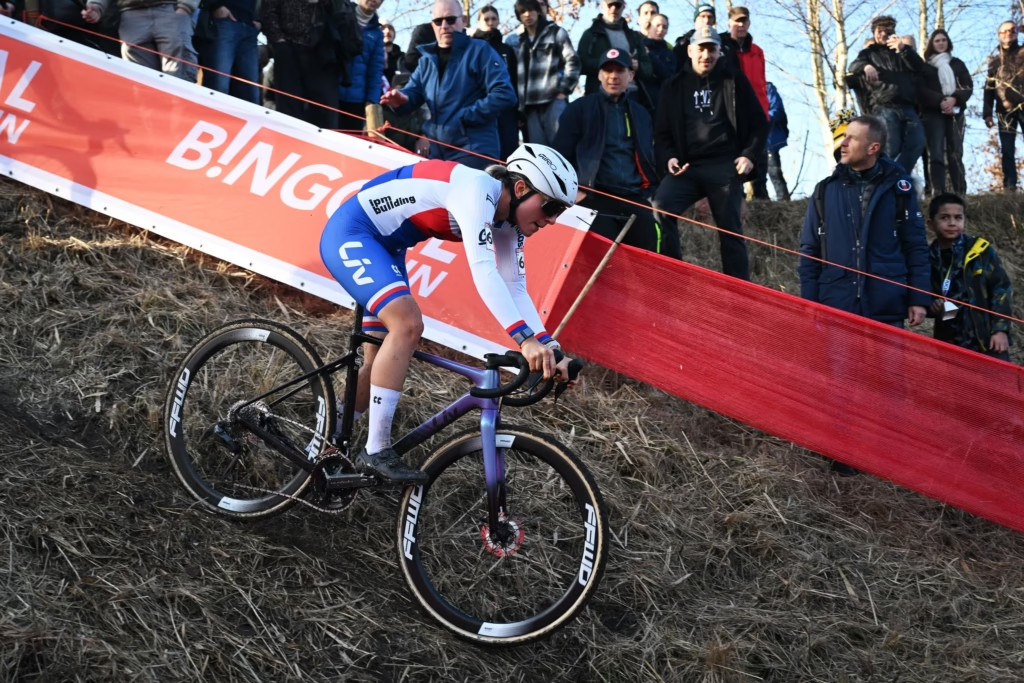
Kristýna Zemanová
Kristýna Zemanová brings a different kind of threat. She has the explosiveness and climbing ability to make the repeated climbs count, especially if the race becomes aggressive on the final circuits.
For VIF Cycling Team, Zemanová is the obvious rider to place into the hardest moments of the race. She is unlikely to want a big sprint against Consonni or Schweinberger. Her route is through selection: make the climbs matter, force a smaller front group, and try to carry enough speed into the finish.
The challenge is whether the climbs are hard enough. A 1.7km effort at around 6 per cent can create damage, but only if the racing is committed. If the strongest teams control the pace, the race may still come back together. Zemanová needs repeated attacks, not just a steady tempo.
If the final hour becomes open, she is one of the riders most capable of changing the race.
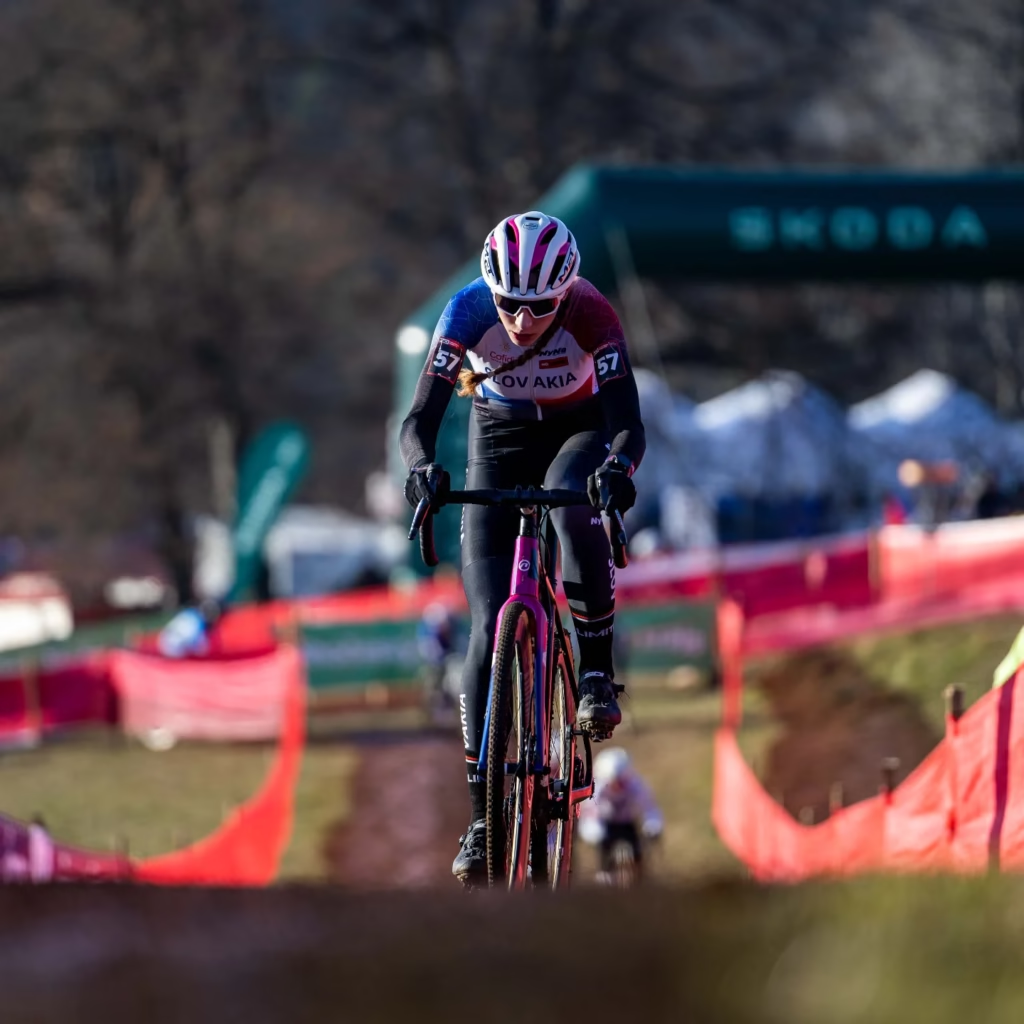
Sofia Ungerová
Sofia Ungerová is another rider who should be taken seriously if the race becomes selective rather than controlled. MAT Atom Deweloper Wrocław have a useful leader for this kind of hilly one-day event, and Ungerová’s strengths fit the likely rhythm of the race.
She is not the fastest finisher on the start list, so her best chance comes through aggression and attrition. The repeated climbs give her places to attack, follow moves or force the bigger teams to use riders earlier than they want.
Her team may not have the same depth as Canyon SRAM or Human Powered Health, but that can sometimes simplify the tactical approach. Ungerová does not need to defend multiple cards. She needs to be present when the race becomes selective and willing to commit before the sprint teams regain control.
If the final laps are raced hard, she is a genuine outsider for the podium.
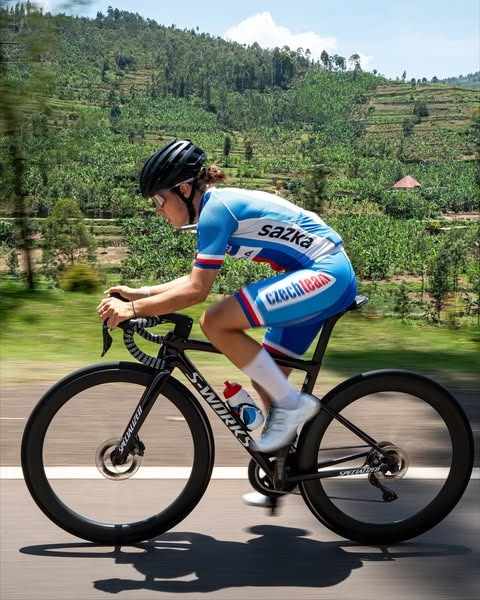
Barbora Němcová and Petra Ševčíková
Dukla Women Cycling arrive with two riders who can make the race interesting if the climbing becomes more important than the sprint. Barbora Němcová and Petra Ševčíková both give the team options for a selective race, especially if the final circuits become aggressive.
Němcová has shown enough ability in hard racing to be treated as more than an outsider, while Ševčíková adds another rider who can follow moves and help Dukla avoid being tied to one scenario. In a race where the bigger teams may focus on controlling Consonni or Jansen, that kind of freedom can be useful.
Their best route is a front group forming over the Ferberturm where the main sprint teams are forced to chase from behind. If Dukla can place one rider into that move and keep another protected, they can punch above their weight.
A full bunch sprint is unlikely to be their ideal outcome. A fragmented race would suit them far more.

Sabrina Stultiens and Laura Molenaar
VolkerWessels have more than one way to back up Jansen. Sabrina Stultiens and Laura Molenaar both give the team useful depth on a route where climbing resistance and positioning will matter.
Stultiens brings experience and the ability to read a race. That could be important in a final where repeated climbs, small groups and tactical hesitation decide the outcome. She may not be the fastest finisher, but she can help shape the race in Jansen’s favour or move into a dangerous attack herself.
Molenaar adds another useful option on terrain that is not flat enough for a pure sprint procession. If VolkerWessels use their numbers well, they can avoid simply waiting for Jansen to answer everything.
The team’s best scenario is an aggressive final hour. If the race is hard but not totally broken, Jansen becomes a major threat. If it is completely open, Stultiens and Molenaar give VolkerWessels ways to stay involved.
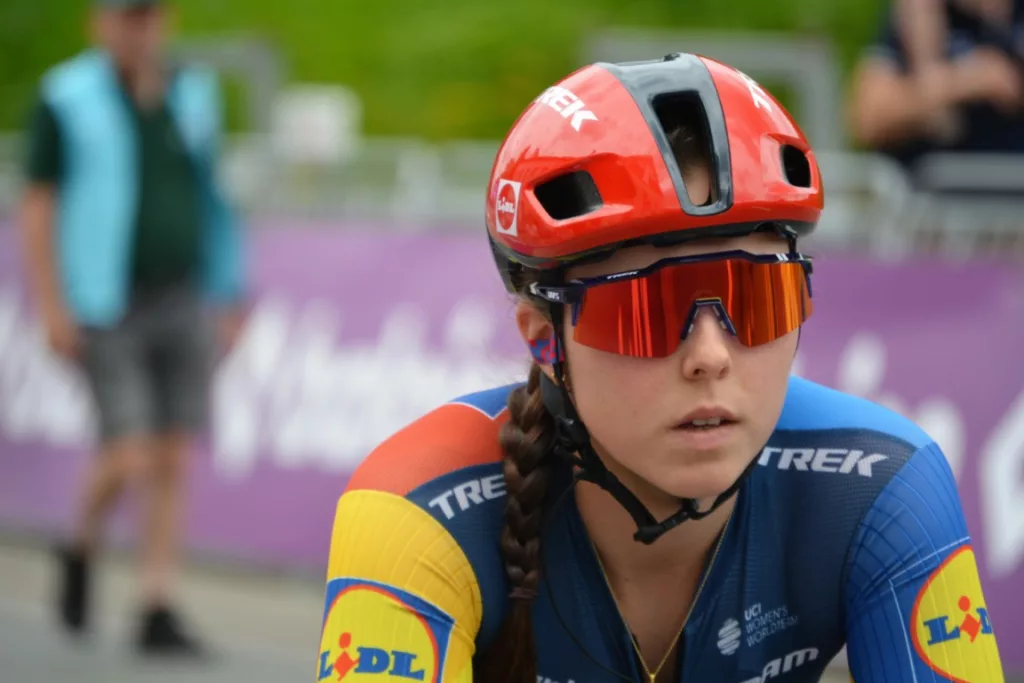
Lisa Klein and Laura Süßemilch
Rembe | Rad-Net Women bring German interest and two riders who should understand the importance of positioning in a race like this. Lisa Klein and Laura Süßemilch both have qualities that could make them relevant, even if they are not obvious outright favourites against the fastest finishers.
Klein’s experience and power make her an important name on home roads. A controlled, fast race with a reduced group could suit her better than a very steep, explosive selection. She is also the kind of rider who can use strength and positioning to stay in contention when others drift backwards.
Süßemilch gives the team another powerful option and could be useful if the race becomes more tactical. Rembe | Rad-Net Women are unlikely to have the burden of control, which may help. They can race opportunistically and look for the moment when the bigger teams begin marking each other.
A home result would be significant, and both riders are capable of placing well if they survive the Ferberturm circuits near the front.
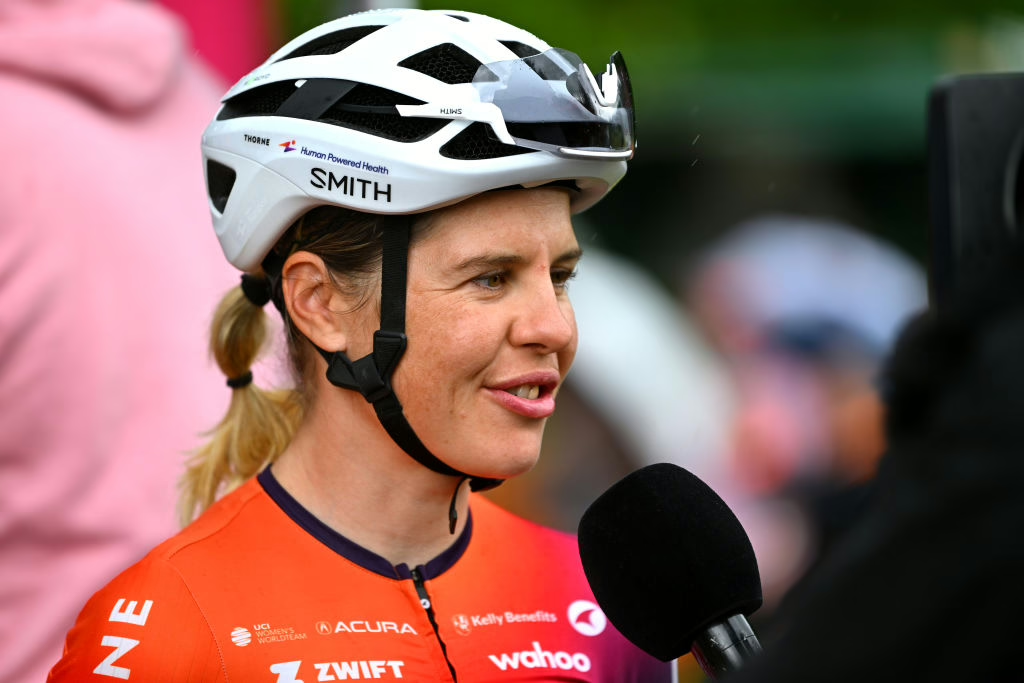
Corinna Lechner and Romy Kasper
Wheel Divas Cycling Team bring two experienced German riders who could thrive if the race becomes less predictable. Corinna Lechner and Romy Kasper may not have the same sprint ceiling as Consonni, but they have the kind of race sense that can matter on a hilly, technical one-day route.
Kasper’s experience is especially valuable. She knows how to survive hard races, position herself and judge when a move is worth following. That can be crucial in a race where the repeated climbs may create small splits rather than one obvious selection.
Lechner gives the team another rider capable of staying close through the harder parts of the route. If the race is too controlled, a win may be difficult. If it becomes attack-heavy, both riders can become more dangerous.
They are outsider contenders, but not riders the bigger teams can ignore completely.

Manon de Boer and Britt Knaven
Citymesh-Customm Pro Cycling Team have a useful combination in Manon de Boer and Britt Knaven. Both can be relevant in a race where the final climbs may not fully break the field but should make the finish harder than a normal sprint.
De Boer is the more experienced name and gives the team a rider who can handle a selective race. Knaven is still developing but has the kind of profile that can be useful in a hilly one-day event if she is well placed before the final circuits.
Their best chance is to race proactively. Waiting for a full sprint is unlikely to be the best approach against Canyon SRAM and Human Powered Health. Getting into the right move, especially once the race returns to Gera, offers a better route to a standout result.
Citymesh-Customm do not need to control the race. They need to make sure they are represented when the stronger teams start marking each other.
The race within the race
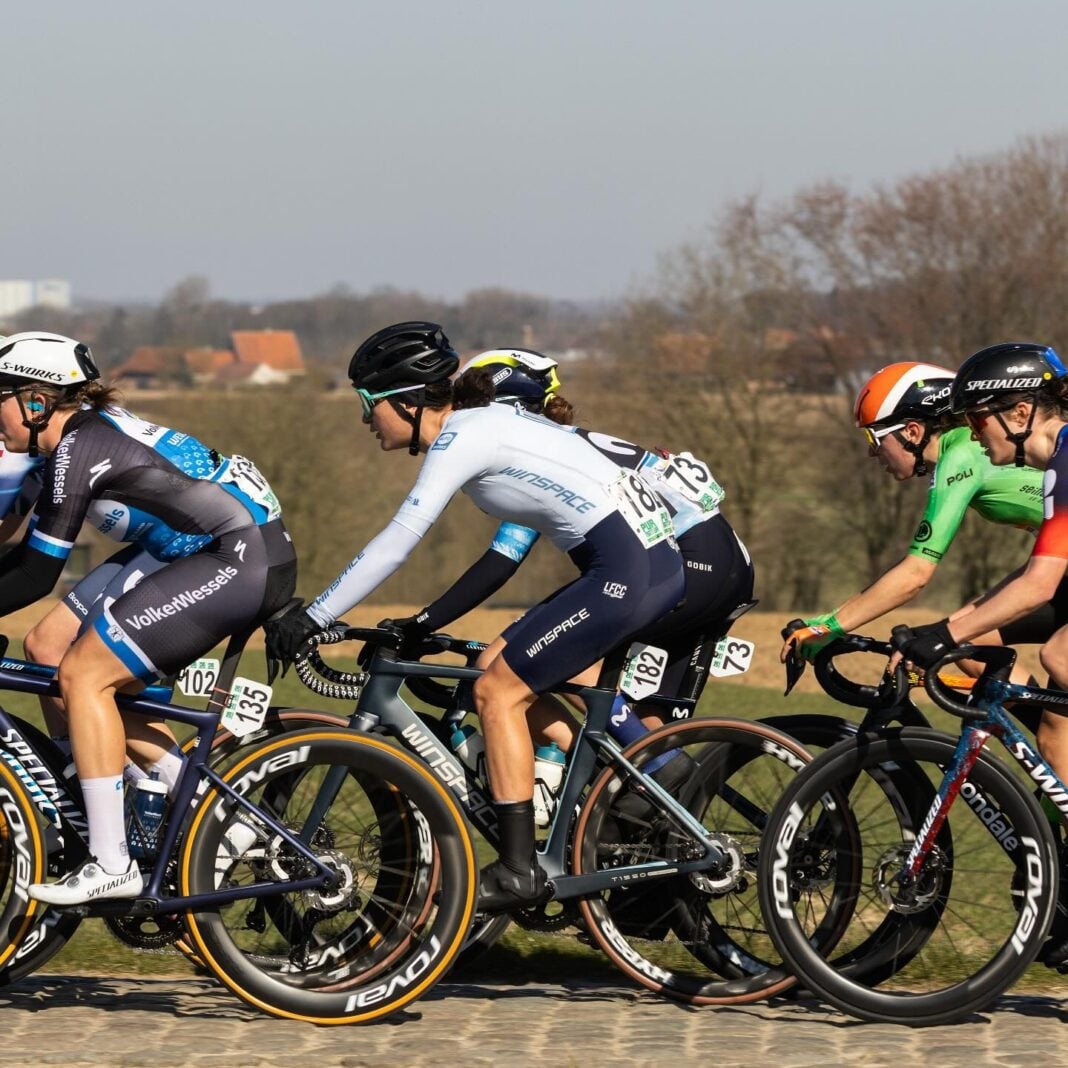
The LOTTO Thüringen Women Cycling Challenge is not only about the biggest names. The start list includes several German club and development teams, which gives the race another layer.
For riders from LKT-Team, Team Plasmatreat, BRV Berlin Cycling Team and PZ Giessen Racing Team, this is a rare chance to line up against WorldTeam and ProTeam riders in a UCI 1.Pro race on German roads. That can change how the early race is ridden. Breakaways may be especially attractive for smaller teams because visibility matters.
The stronger squads will have to manage that. If a move goes early with motivated riders and the peloton hesitates, the race can become harder than expected long before the Ferberturm. If the bigger teams keep everything under control, the final circuits should decide it.
That tension between control and opportunity is one of the reasons the race should be more interesting than a simple sprint preview.
-
 Photo Credit: quentinphotographiebe
 -
 Photo Credit: Getty
How the race could be won
There are three obvious winning scenarios.
The first is a reduced sprint. This is probably the strongest scenario for Consonni, Schweinberger, Zanardi, Jansen and Van der Duin. The climbs remove some riders, the peloton shrinks, but the strongest fast finishers survive and fight for the win in Gera.
The second is a late attack on the Ferberturm. This suits riders like Jansen, Zemanová, Ungerová, Blanco Calbet, Němcová or Stultiens. If one or two strong riders get clear while the sprint teams hesitate, the race could be decided before the final straight.
The third is a small group formed by repeated pressure. This may be the most likely if the final circuits are raced aggressively. In that scenario, the winner needs climbing resistance and sprint speed, not just one or the other.
The flat finish profile means the final sprint still matters, but the road before it should decide who is actually there.
Prediction
Consonni is the most obvious favourite because she is the fastest finisher in the race and has a strong Canyon SRAM team around her. If the final group is still large enough for a sprint, she will be hard to beat.
Jansen is the most compelling alternative. Her 2026 form has shown that she can win from late moves and finish off selective races, which makes her well suited to the Ferberturm circuits. She may not want a pure sprint against Consonni, but she does not need that kind of race to win.
Schweinberger is another strong podium pick. She has the combination of toughness and finishing speed needed for this route, and Human Powered Health have enough depth to race aggressively through Zanardi and Blanco Calbet as well.
The final depends on how hard the climbs are raced. If Canyon SRAM keep it under control, Consonni should win. If VolkerWessels or Human Powered Health can make the last hour messy, Jansen and Schweinberger become much more dangerous.

