
I have heard the line often enough over the years. A women’s race has a messy finale, a crash splits the bunch, or a rider goes down in a nervous section, and out comes the familiar verdict: women’s cycling is dangerous, the bunch lacks skill, the fields are too mixed, the racing is too chaotic.
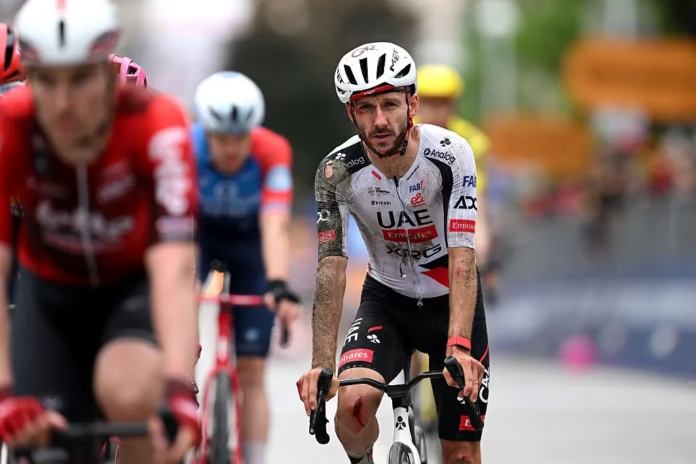
Then you watch the opening stages of the Giro d’Italia 2026, see the men’s peloton hit by crashes, wet roads, nervous positioning and a race-altering incident that sends Adam Yates, Marc Soler and Jay Vine out of the race, and suddenly the language changes.
Now it is not a referendum on men’s cycling. It is bad weather. It is slippery roads. It is the stress of a Grand Tour opening. It is teams fighting for position. It is the speed of the race. It is an unfortunate part of cycling.
All of those explanations may be true. The problem is that they are also true when women crash.

The double standard is not subtle
This is not about pretending the women’s peloton never makes mistakes. It does. So does the men’s peloton. Every peloton does. Cycling is a sport of risk, fatigue, pressure, speed, poor surfaces, nervous finales and riders trying to occupy the same limited space at the same time.
What stands out is not that crashes happen. It is how quickly some people reach for gendered explanations when they happen in women’s races.
A crash in a men’s race is usually treated as a product of circumstance. A crash in a women’s race too often becomes a statement about the standard of the sport. That is the part that has never sat right with me.
If the men crash on wet roads, the road was dangerous. If the women crash on wet roads, the bunch supposedly lacks bike-handling. If the men crash in a sprint, the finale was nervous. If the women crash in a sprint, the peloton is apparently not ready for that level of racing. If the men lose riders in a chaotic opening week, it is a brutal reminder of the dangers of Grand Tours. If the women have a crash-heavy day, the old stereotypes get dusted off again.
That is not analysis. It is habit.
The Giro has shown what cycling always shows
The Giro d’Italia has not suddenly become an unsafe race because the men have crashed in the opening stages. It has shown what road cycling often shows: when you put a full peloton onto wet roads at high speed, with GC teams, sprint teams and opportunists all fighting for control, risk increases quickly.
The stage 2 crash that took Adam Yates out of the race changed the GC picture before the Giro had properly reached its Italian roads. That is not a small detail. UAE Team Emirates-XRG lost its leader and key support riders in one early blow, and the entire complexion of their race changed.
Yet nobody serious would watch that and conclude that men’s cycling is inherently underdeveloped, unskilled or unfit for the spotlight. Nor should they. The correct questions are about conditions, route design, timing, race pressure, safety protocols, positioning, decision-making and bad luck.
Those are also the correct questions when the women’s peloton crashes.
Women’s cycling is judged with less room for error
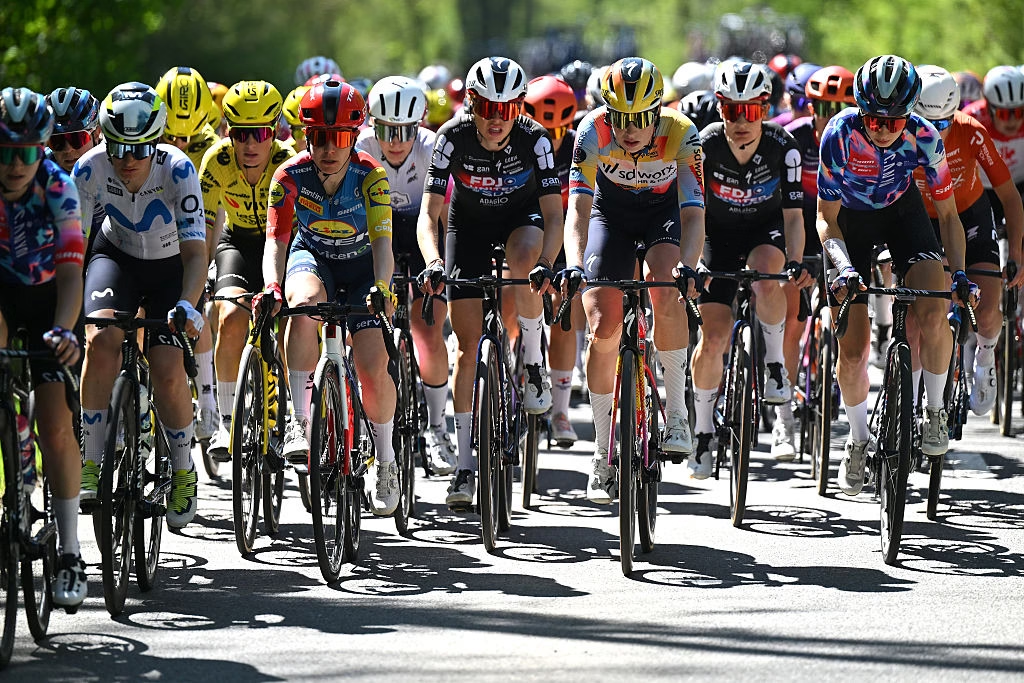
Women’s cycling has spent years being asked to justify things the men’s sport is allowed to take for granted. Longer races? Prove it. Live coverage? Prove it. WorldTour status? Prove it. Bigger fields? Prove it. More investment? Prove it.
That burden also appears in crash discourse. A men’s race can be chaotic without the entire men’s peloton being put on trial. A women’s race can rarely make the same mistake without someone using it as evidence for a wider claim they probably already believed.
That is what frustrates me. Not criticism itself. Criticism is necessary. If a final kilometre is badly designed, call it out. If barriers are poor, call it out. If road furniture is left exposed, call it out. If a team gets its positioning wrong, say so. If a rider makes a mistake, analyse it fairly.
But do that consistently.
Do not turn crashes in women’s races into proof of a problem with women’s cycling, then turn crashes in men’s races into proof that cycling is simply a dangerous sport. The sport deserves better than that, and so do the riders.
The clearest recent example was the crash on the Cipressa descent at Milan-San Remo Donne, where Debora Silvestri was launched over the roadside barrier after several riders had already gone down ahead of her. It was a frightening incident, and the speed with which the clip spread beyond cycling circles made the reaction even more revealing. The crash went viral because it was visually shocking, but also because it became an easy hook for familiar comments about women’s bike-handling, danger and whether the race belonged on that terrain.
When the men crash on the Cipressa or the Poggio, the conversation usually turns to speed, risk, road design and the tiny margin between control and disaster. When the women crashed, too much of the reaction moved straight to a wider judgement on the women’s peloton itself. The incident deserved concern for the riders, scrutiny of the descent and a serious safety discussion. It did not deserve to be turned into another lazy referendum on whether women can race bikes.
The pace and depth argument is often misused
One of the common arguments thrown at women’s racing is that the peloton has a bigger spread in ability. There can be some truth in that depending on the race, the level, the field and the stage of development of the calendar. Women’s cycling has grown quickly, and its professional structure has not always been allowed to mature at the same rate as its talent.
But that explanation is too often used lazily. It becomes a catch-all answer for every incident, even when the crash is caused by the same factors that affect men’s races: weather, narrowing roads, road furniture, high-speed positioning, fatigue, bad luck or a technical finale.
The men’s Giro shows why that matters. This is not a small, under-resourced field with inexperienced riders. It is a Grand Tour peloton full of elite professionals, experienced teams, major budgets and deep race infrastructure. It can still crash repeatedly. It can still look nervous. It can still produce chaos before the race has even reached its main battleground.
So perhaps the issue is not that women crash because they are women. Perhaps the issue is that cycling is dangerous when raced at speed in difficult conditions.
That should not be a radical point.
Visibility changes perception
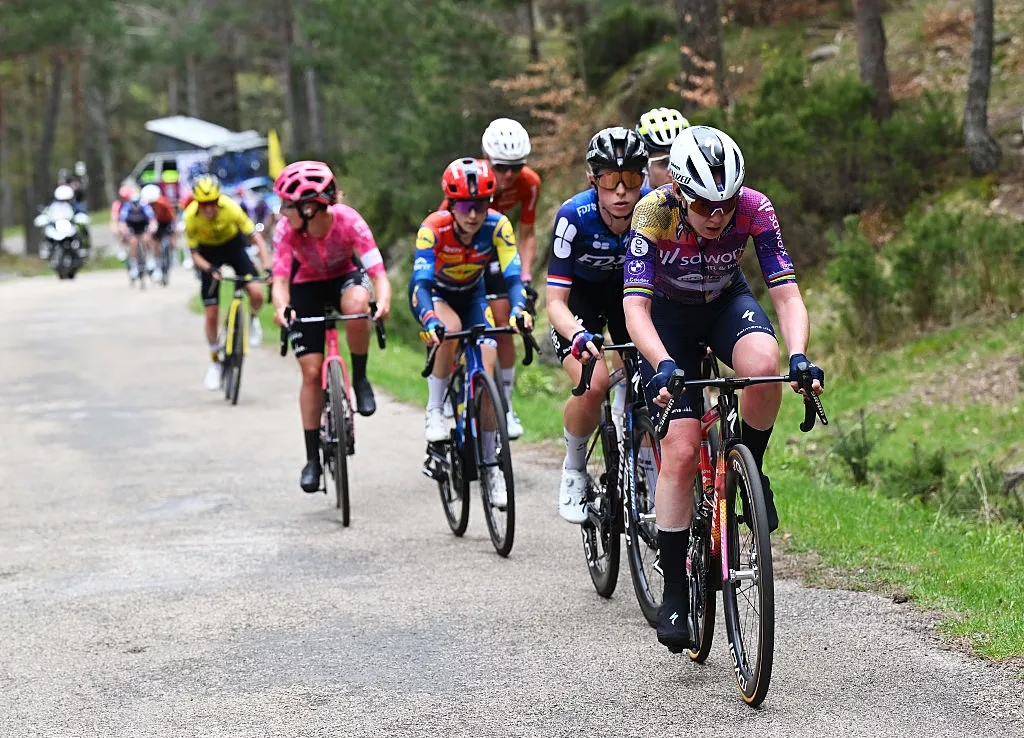
There is another factor here: coverage. Women’s cycling now has more live television, more clips, more social media attention and more people watching entire finales rather than reading a short result afterwards. That is good. It is one of the most important changes in the sport.
But visibility also means more scrutiny. Incidents that once would have gone largely unseen are now replayed, clipped, slowed down and discussed. The same happened in men’s racing years ago. More cameras did not create more danger, but they made the danger harder to ignore.
Women’s racing is going through that shift while still carrying old prejudices. That combination can distort the conversation. More people see the crashes, but not everyone brings enough context to understand them properly.
The answer is not to stop showing the races. The answer is to improve the quality of the analysis around them.
The safer racing debate should be shared across the sport
If the Giro’s opening stages lead to anything useful, it should be a broader conversation about rider safety, not a selective one.
The sport needs better route scrutiny. It needs safer finales. It needs proper management of road furniture. It needs organisers to think harder about wet descents, exposed corners, barrier placement, sprint approaches and the pressure created by putting GC teams and sprint teams into the same narrow roads at the same time.
That applies to men’s races. It applies to women’s races. It applies to WorldTour events, ProSeries races and smaller events trying to grow with limited resources.
The best safety arguments are not gendered. They are practical. Where did the crash happen? Why did it happen? Could the route have been designed better? Were the warnings good enough? Was the finale appropriate? Did the weather change the risk level? Were teams forced into a predictable fight for position?
Those questions move the sport forward. Stereotypes do not.
Women riders deserve the same analytical generosity
One of the things I have always wanted in women’s cycling coverage is not special treatment. It is equal seriousness.
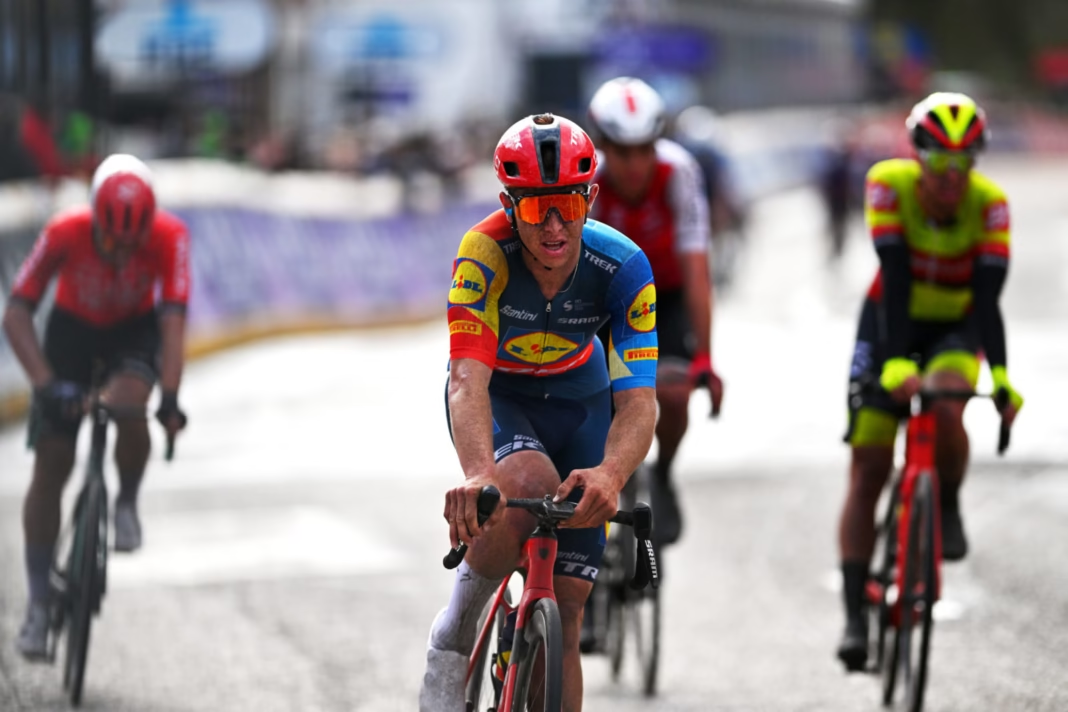
That means giving women riders the same tactical respect, the same benefit of proper context, and the same analytical generosity that men’s racing receives almost automatically. It means recognising bravery without being patronising. It means discussing mistakes without turning them into gendered verdicts. It means taking the racing seriously enough to analyse it on its own terms.
When the men crash, we look at the conditions. When the women crash, we should do the same.
When the men are nervous in the opening week of a Grand Tour, we understand the pressure. When the women are nervous in a major stage race or one-day Classic, we should understand that too.
When the men’s peloton is torn apart by bad weather, crashes and road conditions, we do not ask whether men’s cycling deserves its place. We ask what happened. Women’s cycling deserves that same baseline of respect.
The Giro should make the old line harder to say
The opening stages of the Giro d’Italia 2026 should make the lazy crash narrative harder to repeat. Not because men crashing somehow excuses every incident in women’s racing, but because it strips away the pretence that crashes reveal something uniquely flawed about the women’s peloton.
They do not.
Crashes reveal the danger of cycling. They reveal the cost of speed, pressure, weather, route design and positioning. Sometimes they reveal mistakes. Sometimes they reveal bad organisation. Sometimes they reveal nothing more profound than the fact that 180 riders cannot all be at the front on wet roads.
Women’s cycling does not need to be protected from criticism. It needs to be protected from lazy criticism. There is a difference.
The Giro has reminded us that even the best men’s peloton in the world can look chaotic when the conditions and stakes align badly. The next time a women’s race has a crash-heavy day, the analysis should start from the same place it does for the men: what actually happened, what could have been safer, and what the race context tells us.
Not with the tired assumption that women crash because they are women.

