The men’s Flèche Wallonne 2026 arrives with a very different feel to some recent editions. With Tadej Pogačar not expected to start, the Mur de Huy is less of a coronation climb and more of a tactical examination. That does not make the race weaker. If anything, it makes it more intriguing.
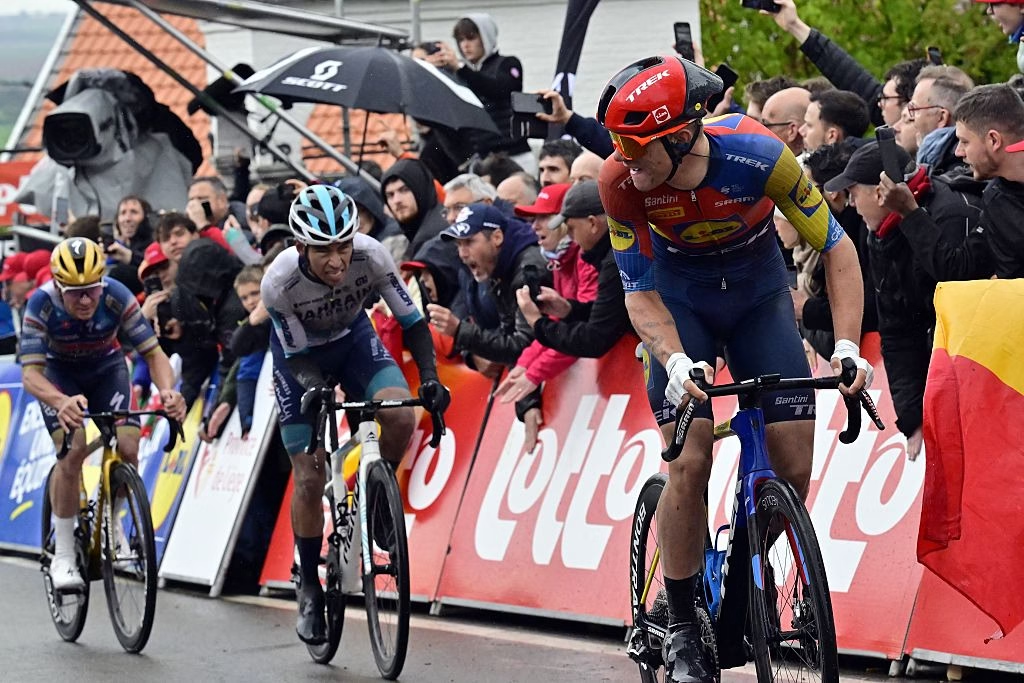
Flèche Wallonne is often described too simply as a waiting game before the final 1.3km. That is understandable, because the Mur de Huy has a way of swallowing every previous theory and reducing the race to legs, timing and nerve. Yet the modern version is not just about one final burst. The repeated climbs in the closing circuit soften the field, expose teams without depth, and force riders to decide whether they are genuine win candidates or merely hoping to survive long enough to be visible on the last ramp.
The 2026 edition has one obvious storyline: the rise of Paul Seixas. The teenager has moved from prospect to immediate threat in astonishing fashion, and his Itzulia Basque Country performance means he can no longer be treated as a rider learning at the edge of the race. He is now one of the riders shaping it. But La Flèche Wallonne is not a normal climbing test. It rewards explosive control as much as pure climbing strength, and the Mur punishes anyone who spends too much energy too soon.
That is where the race becomes fascinating. Seixas may be the most talked-about rider, but he is far from the only winner in the field.
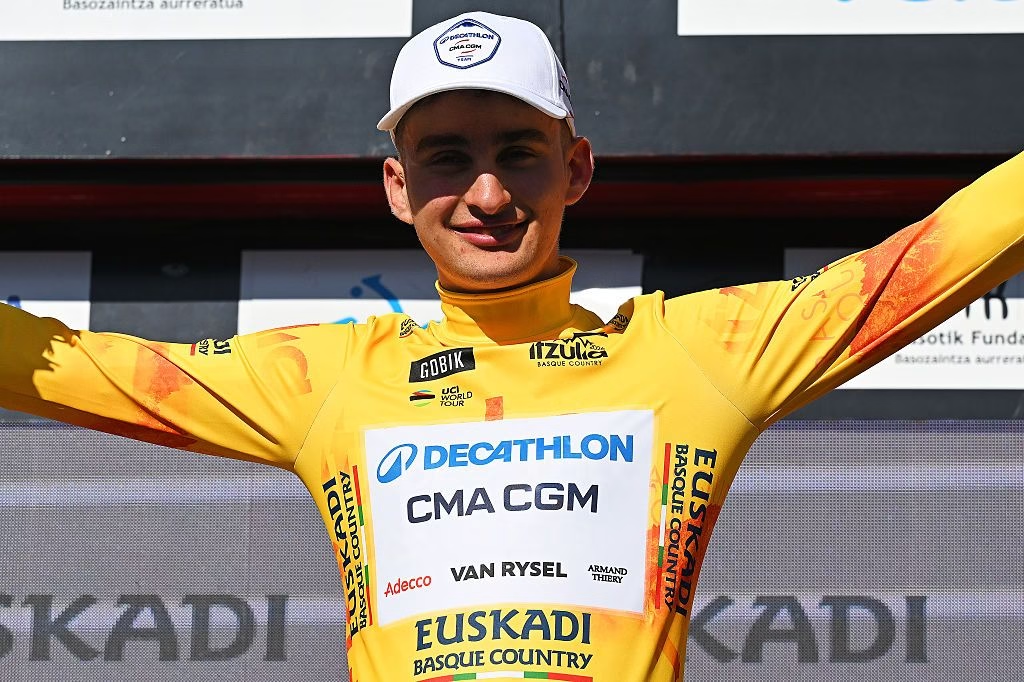 Photo Credit: Getty
Paul Seixas brings momentum, but the Mur de Huy asks a different question
Paul Seixas starts as the headline contender for Decathlon CMA CGM Team because his recent form demands that status. Winning Itzulia Basque Country at 19 years old was not just a promising result. It was a statement of climbing authority, recovery, repeatability and racing maturity. Across a hard week, he showed the capacity to win stages, defend a lead, and cope with pressure when the race turned against him.
That is hugely relevant to La Flèche Wallonne, because the final hour is rarely clean. The Mur de Huy is the finishing climb, but the kilometres before it are where composure is tested. The Côte d’Ereffe and Côte de Cherave narrow the field, while positioning into Huy can be as important as raw climbing strength. A rider can have the best legs in the race and still lose if he hits the steepest section too far back.
Seixas has the acceleration and climbing strength to win here. The more interesting question is whether he can judge the last 400 metres. The Mur de Huy tempts young riders into going early, especially if they feel stronger than everyone around them. If Seixas waits, measures the gradient, and launches in the upper part of the climb, he can win. If he reacts to every move, the race may come to him too late.
Kévin Vauquelin has the most convincing Flèche Wallonne record
Kévin Vauquelin may be the most logical pick if the race is judged by course suitability rather than hype. He has finished 2nd at La Flèche Wallonne in both 2024 and 2025, which tells us something very specific. He does not merely climb well. He understands this finish, handles the rhythm of the race, and has already proven he can be in the right position when the road kicks brutally upwards.
That history matters. The Mur de Huy is not a climb that rewards vague confidence. Riders need to know how long the effort really feels, where the steepest ramps bite, and how quickly a winning move can become a collapse. Vauquelin has twice been close enough to see what victory requires. That makes him dangerous in a year when the usual dominant names are absent.
The possible concern is freshness. He crashed at Amstel Gold Race, and any lingering effect would be exposed on the final climb. But if he has recovered properly, he looks like one of the safest podium candidates in the field. More than that, he has the kind of repeated near-miss record that often precedes a breakthrough.
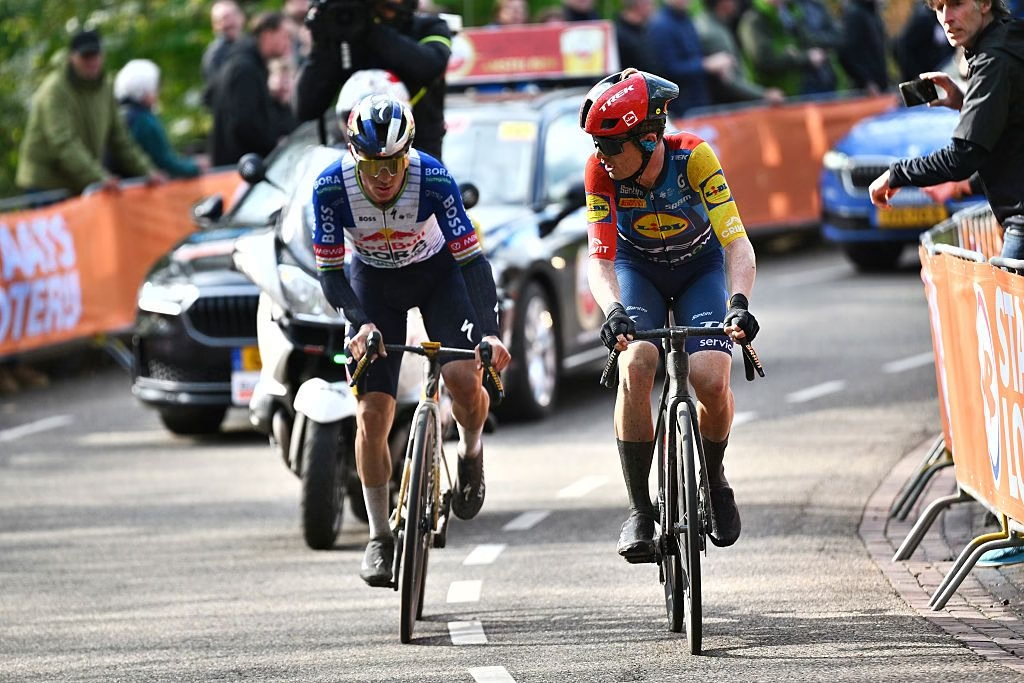
Mattias Skjelmose gives Lidl-Trek a proven Ardennes option
Mattias Skjelmose does not need a strange race to be relevant. He has already shown across multiple Ardennes campaigns that he can handle punchy, selective finales, and his 2nd place at La Flèche Wallonne in 2023 remains one of the clearest pieces of evidence that this climb suits him. He was also 2nd at Amstel Gold Race this year behind Remco Evenepoel, which places him firmly among the strongest riders of the week.
Skjelmose’s challenge is slightly different to Seixas or Vauquelin. He is not always the sharpest pure finisher on the steepest gradients, but he is tactically resilient and difficult to shake once the race becomes selective. If the pace is hard on the final circuit, that works for him. If Lidl-Trek can keep him sheltered and avoid forcing him into long defensive efforts, he has a clear route to victory.
Juan Ayuso’s absence changes Lidl-Trek’s balance, but it may also simplify their race. Skjelmose is the obvious leader. On a finish as specific as the Mur de Huy, that clarity can be useful. There is no need to improvise if he is delivered into the final kilometre in the first 15 wheels.
Romain Grégoire has the punch to make the finale awkward
Romain Grégoire is one of the more interesting contenders because he does not need to wait for the final 200 metres to influence the outcome. He has the punch, aggression and race instinct to make the final circuit harder before the Mur de Huy, particularly if the favourites’ teams hesitate. That does not mean he should attack from too far out, but he is not a passive rider, and that matters in a race where everyone knows the obvious script.
His ride at Amstel Gold Race, where he was part of the decisive selection before being distanced late, also suggests good condition. Flèche Wallonne is shorter in its decisive action but more violent in the final effort. If Grégoire can arrive fresher than he did at Amstel, he has the profile to trouble the more established names.
The question is whether the Mur is quite steep and sustained enough for his best finish. He may prefer a slightly faster, more rolling finale, but that does not rule him out. If the front group is reduced and no one wants to take responsibility before the final climb, Grégoire is exactly the kind of rider who can benefit from uncertainty.
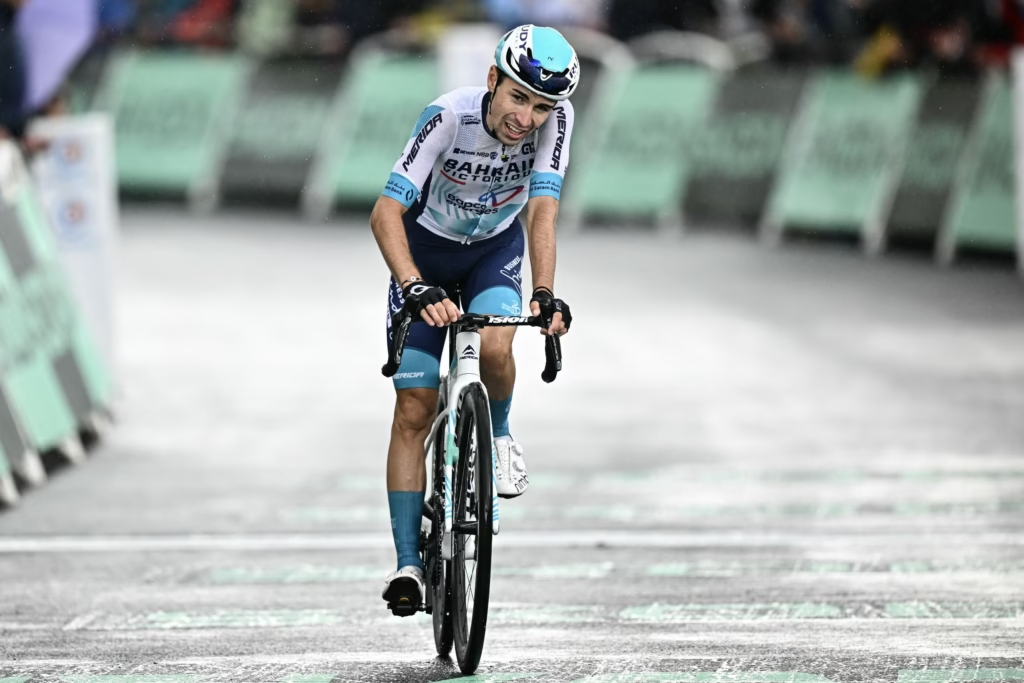
Lenny Martinez is dangerous if the race becomes a climber’s test
Lenny Martinez brings a slightly different threat. He is more of a pure climber than several of the punchier favourites, and that makes him particularly interesting if the final circuit is raced hard enough to remove the more explosive but less durable contenders. Bahrain Victorious do not need to overcomplicate the race. They need it difficult, attritional and honest.
The Mur de Huy can favour Martinez if the climb is raced from the bottom rather than turned into a short sprint. A stop-start approach may not be ideal for him, but a hard tempo through the lower slopes followed by a gradual thinning of the group would bring him closer to the winning equation. He is unlikely to be the rider most teams fear in a flat-out 150-metre kick, but he can win if others misjudge the effort.
For Martinez, positioning is crucial. He cannot afford to start the Mur trapped behind riders who are already cracking. If he hits the climb near the front and the race becomes a slow-motion grind, he is one of the few who can keep applying pressure while others fade.
Julian Alaphilippe and Marc Hirschi give Tudor experience and instinct
Tudor Pro Cycling Team arrive with two riders who understand the value of timing in this race. Julian Alaphilippe has won La Flèche Wallonne three times, and although he is no longer the same automatic favourite he once was on the Mur de Huy, his record still gives him relevance. Very few riders know this finish better. Even if he is not the strongest, he may still be one of the smartest.
Marc Hirschi offers a more current winning threat. His best performances often come when the final is selective but not completely controlled, and he has the punch to punish hesitation. The challenge for Tudor is deciding how much they lean on experience and how much they race forward with Hirschi as the sharper card. If both are still present entering Huy, they have tactical options.
Alaphilippe probably needs a more chaotic race than the clean sprint-to-the-Mur scenario. Hirschi may be better suited to a small-group finale where riders are already under pressure before the climb begins. Together, they make Tudor one of the more tactically interesting teams in the race.
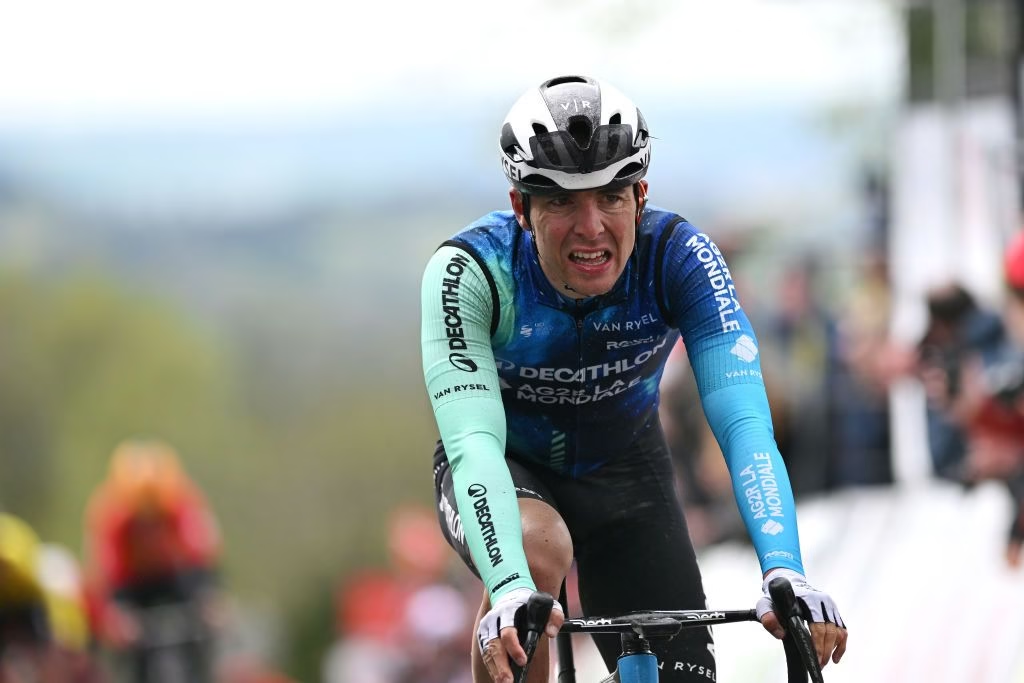
Benoît Cosnefroy and Tim Wellens give UAE Team Emirates-XRG options without Pogačar
Without Pogačar, UAE Team Emirates-XRG lose the single strongest reference point in the race, but they do not arrive empty-handed. Benoît Cosnefroy is an obvious contender for a punchy Ardennes finish, particularly after showing well at Amstel Gold Race. His best chance comes if the race is reduced but not completely dominated by the pure climbers. He needs the final climb to be explosive rather than grinding.
Tim Wellens gives UAE another way to shape the race. He is unlikely to be the fastest rider on the last ramp if a large group arrives together, but he can make the approach more uncomfortable. That matters because a harder final circuit would help Cosnefroy by removing some of the riders who can outkick him from a steadier race.
Cosnefroy has often been at his best when races become nervous and tactical. Flèche Wallonne is more predictable than Amstel in its finish, but the absence of one overwhelming favourite gives him a better chance of turning that uncertainty into a podium challenge.
Oscar Onley, Lennert Van Eetvelt and the next wave of outsiders
Oscar Onley is an interesting outsider for Team Picnic PostNL because his climbing style should translate well to the Mur de Huy. He is not yet as proven in this exact finish as Vauquelin or Skjelmose, but the basic ingredients are there: sharp climbing, good resilience and the ability to handle steep gradients. His ceiling is high if the race becomes more selective than expected before Huy.
Lennert Van Eetvelt is another rider who has the right blend of climbing and punch. For Lotto Intermarché, he represents the kind of contender who can slip slightly under the radar while the French favourites and bigger-name Ardennes riders absorb attention. If he arrives in the final group with energy left, he is more than capable of a high finish.
Christian Scaroni is also worth watching because of his consistency in hard one-day races. He may not have the same headline profile as Seixas or Skjelmose, but these are the races where timing, confidence and a clean final kilometre can close the gap between favourite and outsider. A podium would not be a shock if the race opens earlier than expected.
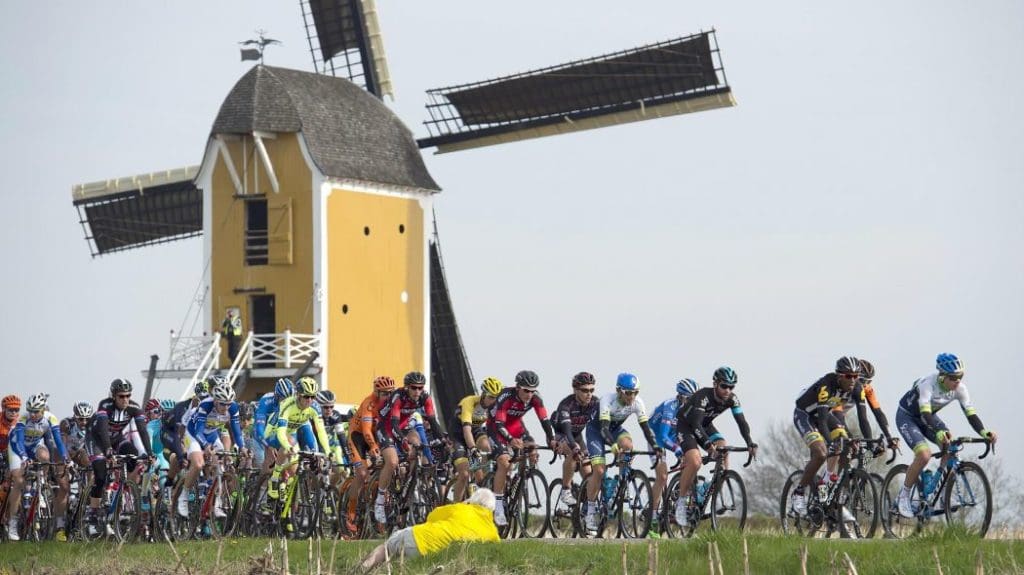
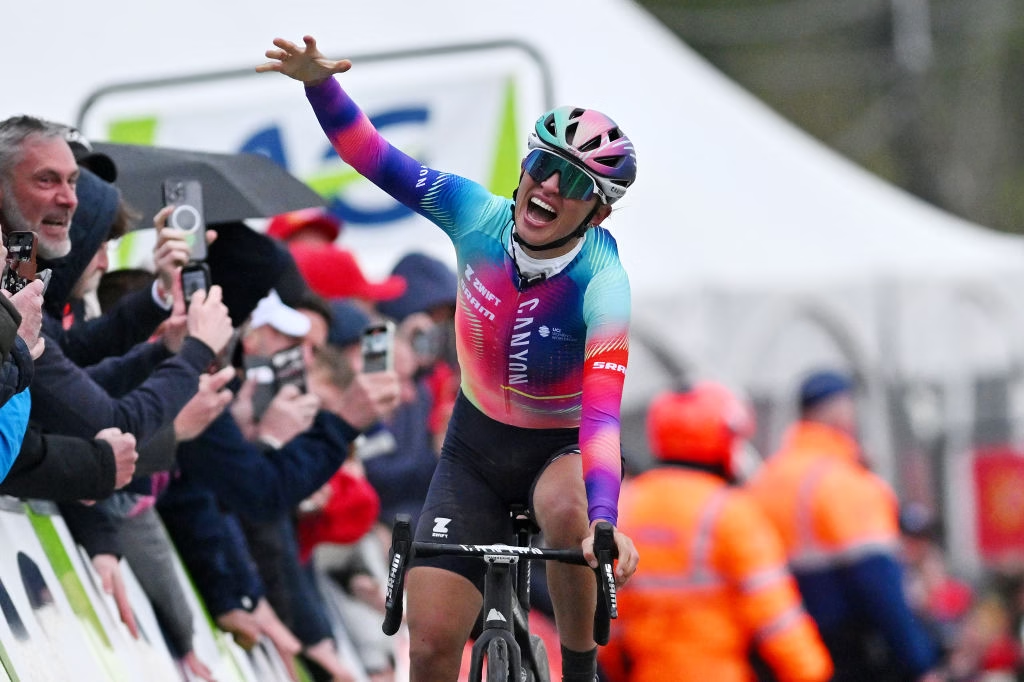
How the race could be won
The simplest version of Flèche Wallonne 2026 is a controlled final circuit, a reduced group into Huy, and a final selection on the steepest ramps. In that scenario, Seixas, Vauquelin and Skjelmose look like the clearest winners. Seixas has the form, Vauquelin has the race-specific record, and Skjelmose has the Ardennes reliability.
A harder version of the race brings Martinez, Onley and Van Eetvelt closer into the picture. If the repeated climbs are raced aggressively and the front group is already small before the final ascent, the finish becomes less about one explosive kick and more about who can still produce power after repeated damage.
The more tactical version gives riders like Grégoire, Hirschi, Cosnefroy and Alaphilippe a route into the race. If teams hesitate, if the favourite group marks Seixas too heavily, or if no single squad has enough control, the race can become more open before Huy. That is where an instinctive Ardennes rider can change the shape of the finale.
Prediction
Kévin Vauquelin looks the strongest pick for the men’s Flèche Wallonne 2026. Paul Seixas has the most exciting form line and may well be the most powerful rider in the field, but the Mur de Huy is a climb where experience counts for a great deal. Vauquelin has twice finished 2nd here, knows the rhythm of the final kilometre, and arrives in a year when the absence of Pogačar removes the rider who made the 2025 edition almost unwinnable for everyone else.
Seixas is the obvious threat, especially if he times the final acceleration correctly. Skjelmose is the safest podium candidate if the race follows a familiar pattern. But Vauquelin feels like the rider with the clearest combination of course knowledge, climbing punch and unfinished business.