
Men’s Liège-Bastogne-Liège 2026 takes place on Sunday 26th April and closes the spring Classics season with the oldest Monument in cycling. It is the race where depth matters almost as much as leadership, because the Ardennes do not simply expose the strongest rider. They also expose which teams can still place support around their leader when the race starts to split for good.
The 2026 edition arrives with the strongest possible shape at the top. Tadej Pogačar, Remco Evenepoel and Paul Seixas are the obvious headline names, but the supporting cast matters too. Mattias Skjelmose, Kevin Vauquelin, Tom Pidcock, Ben Tulett, Mauro Schmid and others give the race enough secondary pressure that no team can rely on one simple script.
That is what makes Liège-Bastogne-Liège different from a more controlled one-day race. It is long enough to reward patience, hard enough to punish weak support, and selective enough that several teams can still believe they have a route to victory before the final climbs. The line-ups below show how each team may try to shape that story, building on the picture already outlined in the full start list for Men’s Liège-Bastogne-Liège 2026.
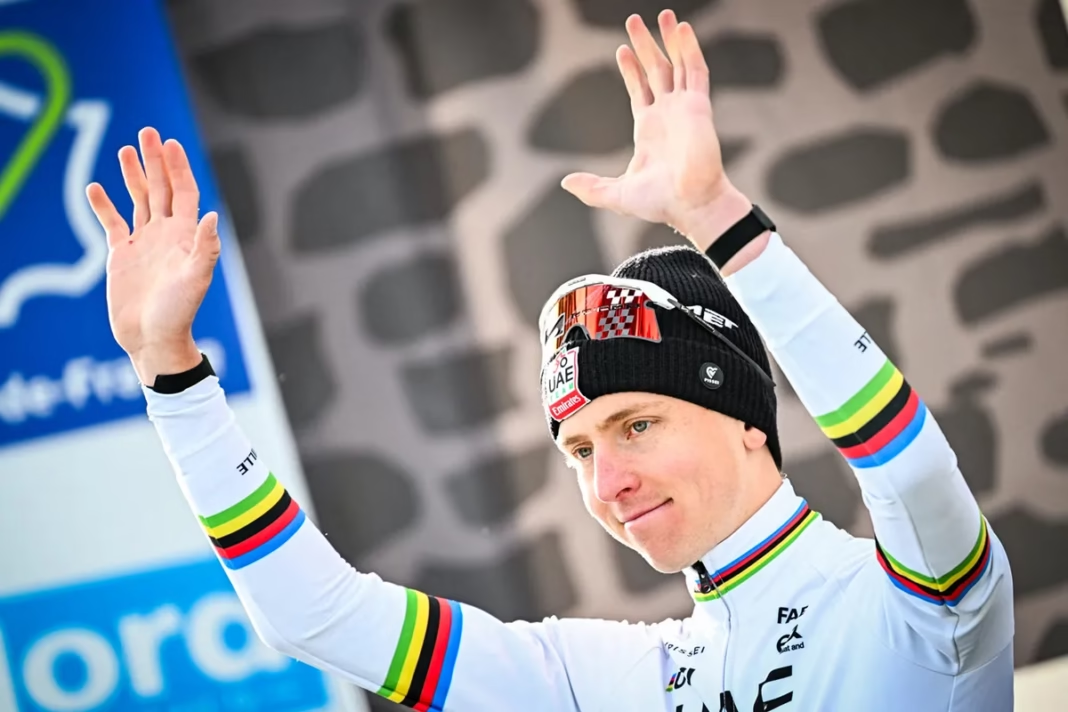
UAE Team Emirates-XRG
UAE Team Emirates-XRG arrive with the clearest favourite in the race. Pogačar is still the defining reference for this kind of Monument terrain, and his presence alone changes the responsibilities of every other team. Around him, Domen Novak, Pavel Sivakov, Tim Wellens and Vegard Stake Laengen give UAE proven support, while Rune Herregodts adds another strong engine for the middle phase of the race.
The key strength here is that UAE are not simply arriving with the best rider. They are arriving with the best rider and the sort of support that can make rivals use up their own helpers too early. Wellens is particularly important because he can shape difficult phases before the pure climbing section begins, while Sivakov gives them a rider who can still be present once the race becomes more selective.
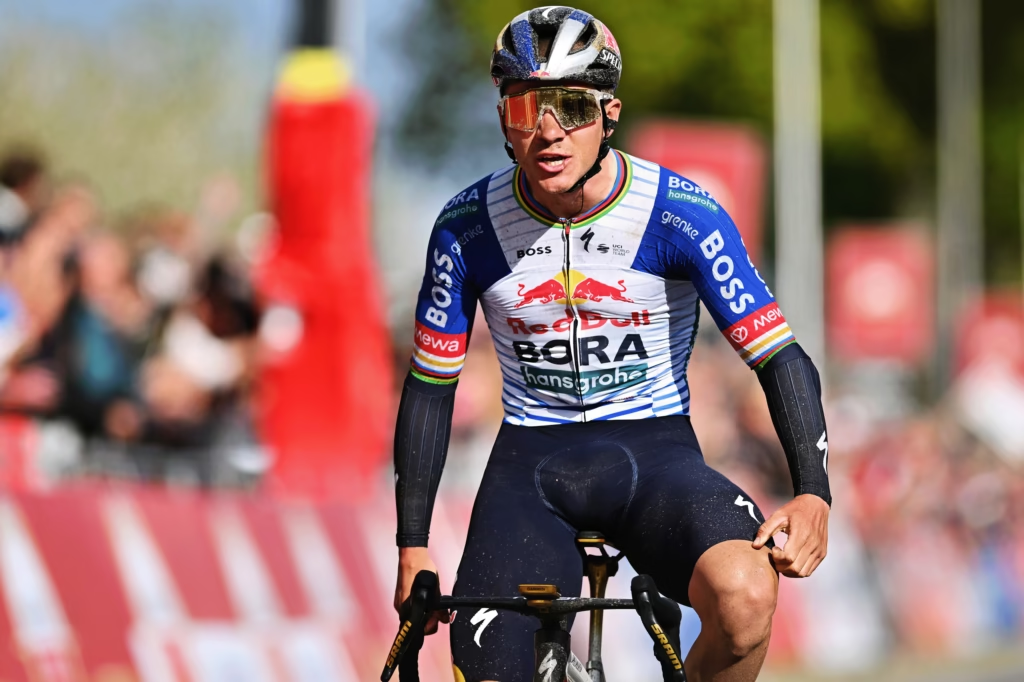 Photo Credit: Getty
Red Bull – Bora – Hansgrohe
Remco Evenepoel gives Red Bull – Bora – Hansgrohe one of the two or three clearest winning cards in the race. Around him are Nico Denz, Haimar Etxeberria, Finn Fisher-Black, Jai Hindley, Daniel Felipe Martínez and Jan Tratnik, which makes this one of the strongest support structures in the race.
This is a serious Liège line-up. Hindley and Martínez give the team real climbing depth, Tratnik is useful well before the final climbs, and Fisher-Black offers another rider capable of surviving a hard race deep into the finale. Red Bull – Bora – Hansgrohe do not just have a one-card plan here. They have the sort of support that gives Evenepoel a chance to race aggressively rather than defensively.
Decathlon CMA CGM Team
Decathlon CMA CGM Team arrive with the rider everyone is suddenly talking about. Paul Seixas’s win at La Flèche Wallonne changed the tone completely, and now Liège becomes the next test of how far this breakthrough really goes. The team backs him with Léo Bisiaux, Stan Dewulf, Antoine L’Hote, Jordan Labrosse, Paul Lapeira and Nicolas Prodhomme.
The key here is that the team no longer arrives merely hoping Seixas can follow the favourites. He now has to be treated as one of the riders who can win. Prodhomme gives them another rider who can still be useful on harder terrain, while Lapeira and Labrosse make the team less one-dimensional than it might first appear.
His place in the bigger spring story was sharpened further in What Men’s Flèche Wallonne 2026 means for the season, and Liège now becomes the next step in that rise.
Lidl-Trek
Lidl-Trek bring one of the most interesting two-rider structures in the race through Mattias Skjelmose and Giulio Ciccone. They are joined by Julien Bernard, Patrick Konrad, Jacopo Mosca, Matteo Sobrero and Carlos Verona, which gives the team strong support across several phases of the race.
Skjelmose is the most obvious winning card after his strong Ardennes week, but Ciccone makes the team more dangerous because he offers a different type of climbing and attacking profile. Sobrero and Verona matter because Liège is rarely just about the final climb. Teams need riders who can still function earlier in the decisive sequence, not only a leader waiting for the last move.
 Photo Credit: Getty
Team Visma | Lease a Bike
Team Visma | Lease a Bike line up with Ben Tulett, Owain Doull, Filippo Fiorelli, Menno Huising, Steven Kruijswijk, Pietro Mattio and Tim Rex. This is a deeper and more interesting team than it might look at first glance, even if it does not contain one of the two obvious race favourites.
Tulett has already shown in the Ardennes that he belongs in this level of one-day finish, while Kruijswijk gives the team climbing experience and Doull offers support for the long approach to the decisive phase. Visma may not control the race, but they do have enough quality to keep multiple riders relevant into the harder final section.
Team Jayco AlUla
Team Jayco AlUla bring Mauro Schmid, Alessandro Covi, Anders Foldager, Alan Hatherly, Asbjørn Hellemose, Ben O’Connor and Andrea Vendrame. That gives them one of the more varied line-ups in the race.
Schmid is the obvious recent form rider after his Ardennes performances, but O’Connor gives them another rider who can survive a hard race and Hellemose adds a second climbing option. Jayco do not have the most obvious single favourite, but they do have several riders who can still matter if the race opens from slightly further out than expected.
Pinarello-Q36.5 Pro Cycling Team
Tom Pidcock gives Pinarello-Q36.5 Pro Cycling Team immediate relevance. He is joined by Xabier Azparren, Sjoerd Bax, Marcel Camprubí, Christopher Harper, Quinten Hermans and Xandro Meurisse.
Pidcock’s strength is versatility. He can follow on climbs, attack at awkward moments and finish sharply enough from smaller groups. Harper is important because he gives the team another genuine climbing presence, while Hermans and Bax offer support before the race narrows fully. The issue is whether Pidcock reaches the decisive point with enough riders still around him to give him options rather than just survival.
EF Education-EasyPost
EF Education-EasyPost bring Alex Baudin, Samuele Battistella, Markel Beloki, Mikkel Frølich Honoré, Michael Leonard, Lukas Nerurkar and James Shaw. This becomes a more opportunistic team rather than one likely to shape the main race narrative directly.
Shaw is the clearest climbing option, while Baudin and Nerurkar may need to look for opportunities through timing rather than outright control. EF still have enough quality to be active, but this line-up feels more suited to anticipation than to matching the very biggest teams rider for rider in the final sequence.
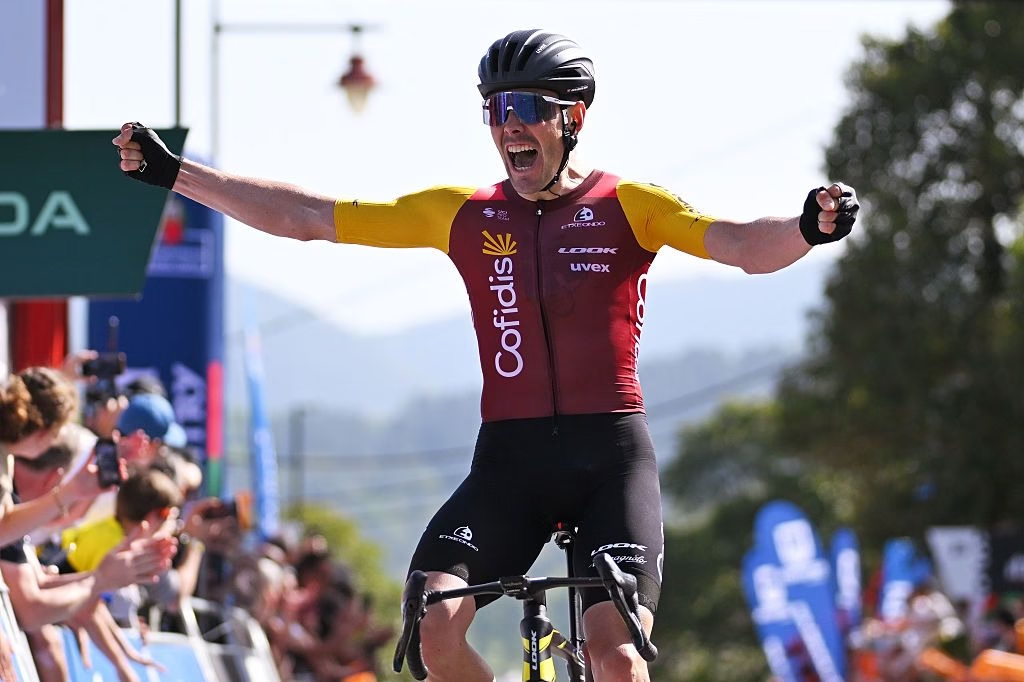 Photo Credit: Getty
Cofidis
Cofidis line up with Ion Izagirre, Alex Aranburu, Yaël Joalland, Jan Maas, Sam Maisonobe, Paul Ourselin and Dylan Teuns. This is a team that does not have the headline power of the biggest squads, but it does have several riders who understand hard one-day racing.
Teuns is the most obvious Liège-style card because he can survive difficult terrain and still produce a sharp finish if the race shape suits him. Izagirre and Aranburu add experience and tactical calm. Cofidis are unlikely to dictate the race, but they can still be relevant if the Monument becomes more tactical than explosive.
Bahrain Victorious
Bahrain Victorious bring one of the most interesting climbing groups in the race through Lenny Martinez, Pello Bilbao, Santiago Buitrago, Afonso Eulálio, Fran Miholjević, Pau Miquel and Antonio Tiberi.
Martinez brings the most obvious freshness, while Buitrago and Tiberi give Bahrain two more riders who can be relevant if the race turns into a deeper endurance test. Bilbao’s experience matters too, especially in a Monument where calm decision-making is often as important as raw numbers. Bahrain may not have the simplest hierarchy, but that can be useful if several of their riders are still present late on.
Groupama-FDJ United
Groupama-FDJ United line up with Romain Grégoire, Ewen Costiou, Kévin Geniets, Guillaume Martin-Guyonnet, Rudy Molard, Quentin Pacher and Enzo Paleni.
Grégoire gives them their most obvious current Ardennes option, while Martin-Guyonnet adds climbing resilience and Molard brings experience. The interesting thing about this line-up is that it does not need the race to follow one script. Groupama-FDJ United can race more aggressively if they want, or they can stay on the right side of the major favourites and wait for the race to open around them.
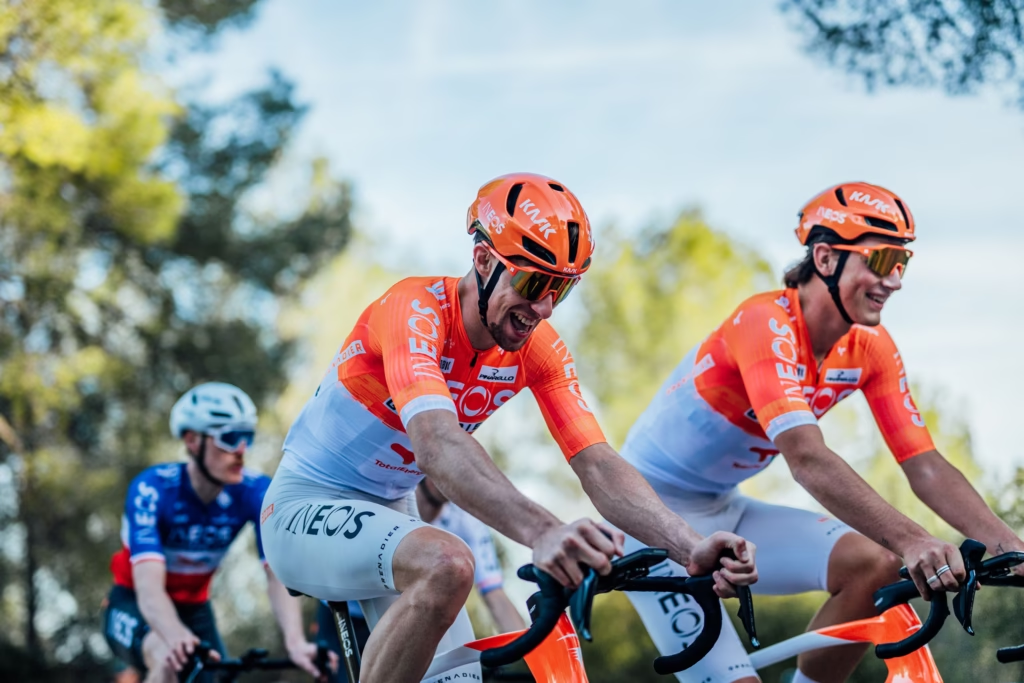 Photo Credit: Getty
INEOS Grenadiers
INEOS Grenadiers arrive with Kévin Vauquelin as their most interesting card, backed by Egan Bernal, Laurens De Plus, Jack Haig, Bob Jungels, Axel Laurance and Brandon Rivera.
Vauquelin has shown enough in the Ardennes to be taken seriously, while Bernal, De Plus and Haig give INEOS several riders who understand long, attritional climbing races. Jungels adds Monument experience and Laurance gives the team one more option if a reduced group forms differently than expected. INEOS are unlikely to dictate Liège from the front, but they are well built to profit from a race that opens unpredictably.
XDS Astana Team
XDS Astana Team bring Clément Champoussin, Nicola Conci, Anton Kuzmin, Christian Scaroni, Davide Toneatti, Diego Ulissi and Simone Velasco.
This line-up leans on Scaroni, Ulissi and Velasco, which gives Astana a more opportunistic one-day feel rather than a pure climbing shape. If they matter, it is likely to be through anticipation rather than simply following the biggest names to the final climb.
Uno-X Mobility
Uno-X Mobility bring Tobias Johannessen, Anthon Charmig, Magnus Cort, Anders Johannessen, Alexander Kamp, Andreas Kron and Andreas Leknessund.
This is a very useful Liège team. Tobias Johannessen is the clearest climbing card, Leknessund offers another rider capable of surviving a hard race, and Kron plus Cort give the team options if the race turns slightly less predictable than expected. Uno-X do not arrive with the biggest favourite, but they do bring one of the more balanced support structures outside the very top teams.
Movistar Team
Movistar Team line up with Cian Uijtdebroeks, Roger Adrià, Davide Formolo, Raúl García Pierna, Pavel Novák, Iván Romeo and Natnael Tesfazion.
Uijtdebroeks is the obvious name here because Liège gives him a route into a hard one-day race without forcing him into a sprint-type finale. Formolo adds serious experience, while Adrià and Romeo give the team a little more flexibility than a simple climbing squad. Movistar may not be expected to shape the race at the very front, but they do have enough quality to be visible if the race opens earlier than expected.
 Photo Credit: Getty
Tudor Pro Cycling Team
Tudor Pro Cycling Team bring Julian Alaphilippe, Robin Donzé, Joel Suter, Roland Thalmann, Larry Warbasse, Fabian Weiss and Hannes Wilksch.
Alaphilippe is the obvious centre of attention because even if Liège is no longer his most natural target, his ability to animate a race like this still cannot be ignored. Tudor do not have the collective firepower of the top WorldTour squads, but they do have the sort of leader who can change a race by making it less predictable. If Alaphilippe has the freedom to move before the final decisive sequence, Tudor’s value may come through disruption rather than control.
Soudal Quick-Step
Soudal Quick-Step line up with Maximilian Schachmann, Steff Cras, Pascal Eenkhoorn, Dylan van Baarle, Mauri Vansevenant, Louis Vervaeke and Filippo Zana.
This is still a solid Monument team, but it is no longer one built around the clearest winning card. Schachmann, Cras and Vansevenant all give them ways to stay relevant, while Van Baarle and Vervaeke bring support and experience. Their role now looks more like one of tactical presence than outright leadership.
NSN Cycling Team
NSN Cycling Team line up with George Bennett, Marco Frigo, Brady Gilmore, Pau Martí, Krists Neilands and supporting riders around a squad that looks built more for opportunity than control. It is not the team with the deepest Liège credentials, but it does have riders who understand hard one-day racing and who may still find value in an early or middle-race move.
For teams in this position, the goal is usually not to wait for the obvious finale. It is to find a way into the race before the biggest teams fully take over. That will likely be NSN’s best route as well.
-
 Photo Credit: A.S.O./Billy Ceusters
Which teams look strongest?
UAE Team Emirates-XRG are still the strongest team on paper because they have the clearest favourite and enough support to make his job easier. Red Bull – Bora – Hansgrohe are the next obvious team because Evenepoel gives them one of the very few riders who can beat Pogačar by force rather than by race circumstance, and the support around him is strong enough to back that up.
Lidl-Trek, Bahrain Victorious, Team Visma | Lease a Bike and INEOS Grenadiers look like the next group, each in slightly different ways. Lidl-Trek have two strong cards. Bahrain have several climbing options. Visma have depth even without the clearest single favourite. INEOS have enough strong riders to profit if the race opens in a less predictable way.
Decathlon CMA CGM remain the most interesting alternative storyline because Seixas has changed from prospect to genuine contender in the space of a week. He is why this Monument feels less settled than it might have done otherwise.
Men’s Liège-Bastogne-Liège 2026 team-by-team verdict
Men’s Liège-Bastogne-Liège 2026 has the kind of team picture a Monument should have. The obvious favourites are there, but so are enough deeper line-ups to stop the race from becoming too neat. UAE Team Emirates-XRG and Red Bull – Bora – Hansgrohe carry the biggest expectations. Lidl-Trek, Bahrain Victorious, Team Visma | Lease a Bike and INEOS Grenadiers carry the most convincing secondary pressure, while Decathlon CMA CGM bring the sport’s most exciting new problem in Seixas.
That is why Liège should still feel open even with Pogačar and Evenepoel on the start line. The teams behind them are good enough to make the race harder than a simple two-rider forecast suggests. For the wider build-up, the full start list, the UK viewing guide and the main race hub frame the rest of the picture around what should be a properly loaded final Monument of the spring.

