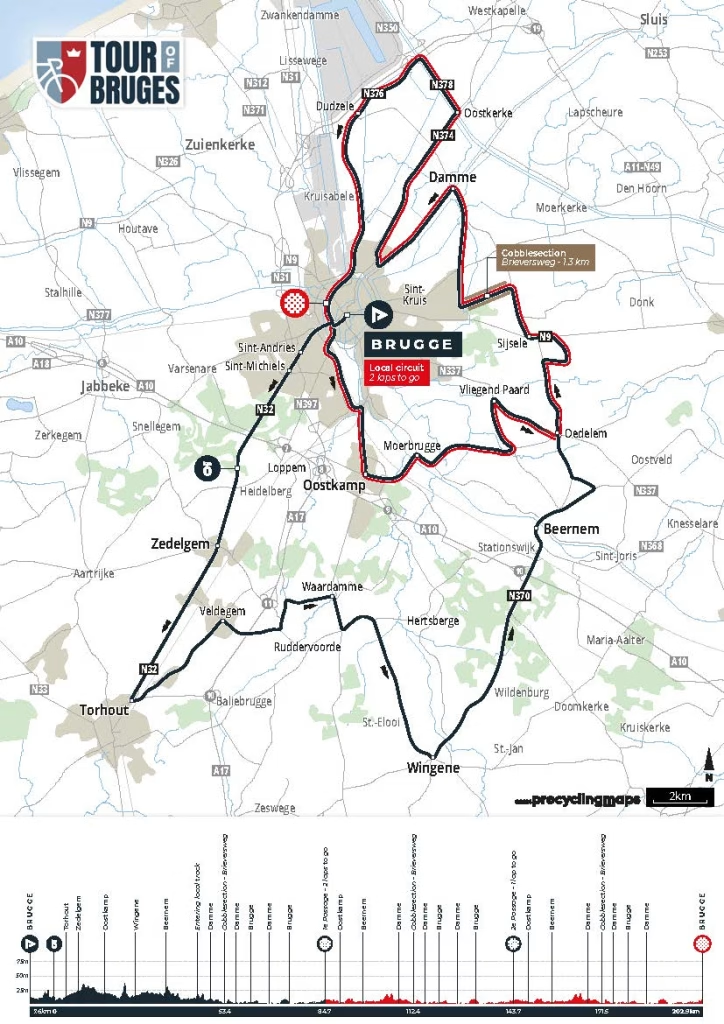
Ronde Van Brugge – Tour of Bruges 2026 is not just a renamed Classic Brugge-De Panne. The route makes that clear straight away. The men’s race on Wednesday 25 March covers 202.9km, starts in Bruges and finishes in Bruges, with the old pull towards De Panne and De Moeren gone completely. Instead, the organisers have built a flat, Brugge-centred race around two main loops and a finish on the wide Gulden-Vlieslaan.
That changes the whole feel of the event. For years, the old race was defined by the coast, by exposure, and by the long psychological drag towards De Panne where crosswinds could turn the day into a split-ridden survival test. This new route is still flat and still built for fast men, but it asks a different tactical question. It is less about one iconic danger zone and more about repeated positioning, local knowledge and whether a sprint team can stay organised on a race that now loops back on itself. ProCyclingUK’s A brief history of Men’s Ronde Van Brugge – Tour of Bruges is the best companion piece if you want the broader identity shift behind the route.
Start and finish in Bruges
The race begins on Bruges’ Market Square at 12:45pm local time and ends back in Bruges later in the afternoon. That alone tells you how different this event now is. Bruges is no longer just the ceremonial start before the race heads away towards the coast. It is the organising centre of the whole day.
From a viewing point of view, that should make the race easier to read. The route is more self-contained, the finish area matters more in the story of the day, and the event has a stronger sense of place around Bruges itself. From a racing point of view, though, it means teams have to adjust. The old instincts built around De Panne and De Moeren do not map neatly onto this new version.
A southern loop first
The first major section of the 2026 route is a southern loop through places such as Torhout, Wingene and Beernem. This is the part of the race that gives the route some breadth before it tightens back towards the Bruges area.
What matters here is not climbing difficulty, because the route is deliberately flat, but early control. Teams with sprint ambitions will want the break established, the race settled and the first half of the day kept reasonably predictable. That is easier said than done in Belgian one-day racing, even on a flat course. Narrow roads, exposed stretches and constant movement around smaller towns can still make the peloton nervous.

The link through Oostkamp
After the southern loop, the race reconnects towards the Bruges region via Oostkamp. This is the hinge between the broader opening section and the more repetitive local structure that defines the second half of the day.
That transition matters tactically because it is where the race begins to feel less like a long point-to-point classic and more like a looped circuit race with rising tension. Once the peloton gets back into the orbit of Bruges, the pressure changes. Positioning becomes more about timing the next technical section or key road rather than simply surviving a long march towards the sea.
The northern loop and repeated pressure
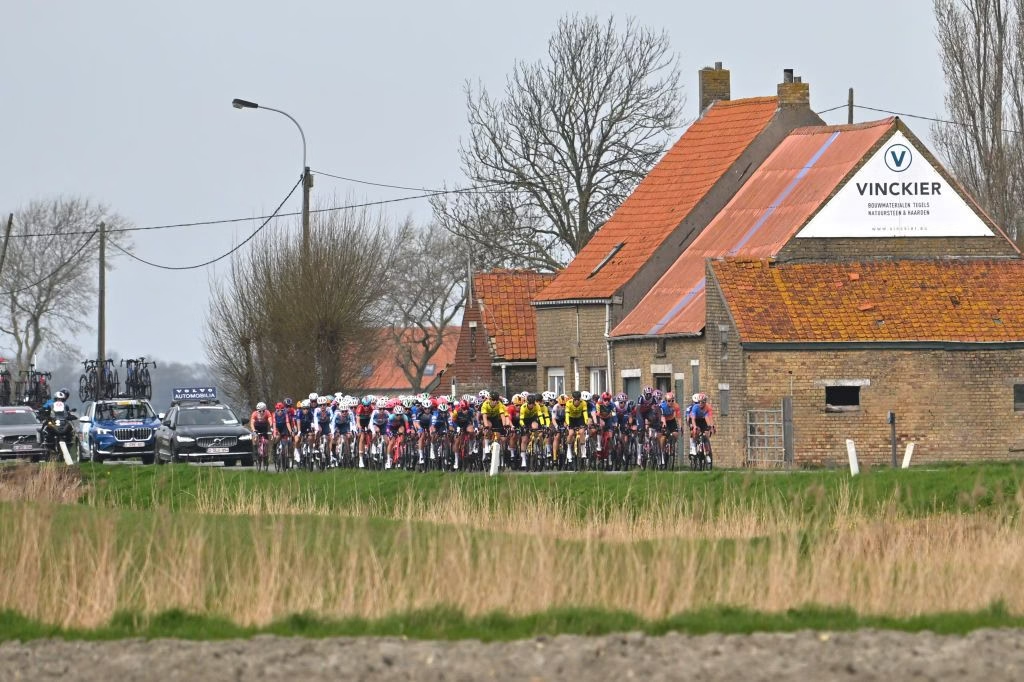
The northern loop is the real heart of the new route. Riders head through places like Damme, Koolkerke and Dudzele, and they complete that northern section three times.
That repeated structure is one of the most important features of the 2026 race. It means familiarity starts to matter during the race itself. Riders and teams see the same roads again, which can help with positioning but can also intensify the stress because everyone knows where the important moments are coming. Repetition in Belgian racing rarely makes things easier. It usually makes the peloton sharper, tighter and more aggressive.
Brieversweg and the World Championships nod
One of the standout details in the new route is the inclusion of Brieversweg, a cobbled sector that formed part of the 2021 Road World Championships time trial course in Bruges.
This is not enough to turn the race into a cobbled Classic in the usual Flemish sense, but it does stop the course from becoming a pure drag-strip for sprinters. Small features like this matter in flat races because they interrupt rhythm and force teams to keep their lead riders protected. In a route without major climbs, every awkward section carries more weight.
Why this should still end in a sprint
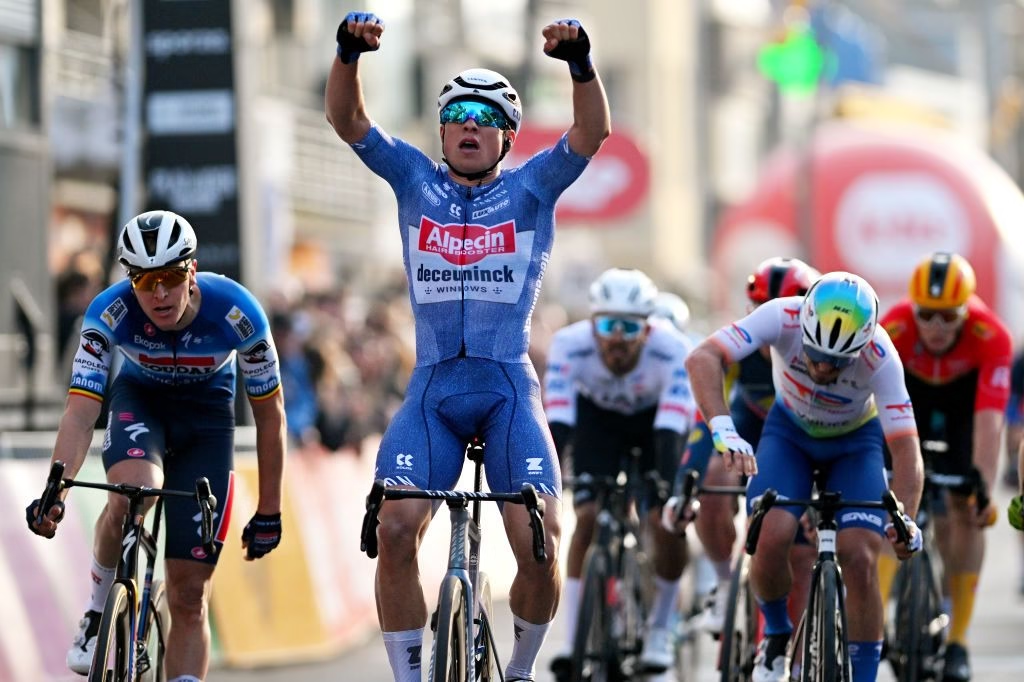
The organisers have been quite clear about the route’s identity. This is a race built as a sprinter’s dream, with a deliberately flat parcours and a wide finish on Gulden-Vlieslaan.
That does not mean a sprint is guaranteed, because no Belgian one-day race is ever quite that simple. But the route strongly encourages that outcome. There is no De Moeren-style hinge where the whole race naturally wants to split. There is no meaningful climbing block to remove the fastest finishers. The course is designed to keep the strongest sprinters in play, provided their teams can keep control.
This is the key difference from the old race. Classic Brugge-De Panne often looked like a sprint race on paper but carried a deeper threat of wind-driven chaos. Ronde Van Brugge – Tour of Bruges 2026 still has stress, but it feels more like sprint stress than survival stress.
What the route means for the race
The 2026 route makes the event easier to define and harder to compare. It is no longer best understood through the old coastal identity. It is now a flat Brugge-based WorldTour one-day race built around loops, local roads and a likely fast finish.
That means the race’s tactical reset is real. Sprint teams should like it. Riders who thrive on repeated positioning battles should like it too. But the old specialists in coastal crosswind warfare lose the most obvious section of road where they once knew the race could be broken open.
For readers trying to place it in the wider week, ProCyclingUK’s Beginner’s guide to Men’s Ronde Van Brugge – Tour of Bruges 2026 and A brief history of Men’s Ronde Van Brugge – Tour of Bruges are the best next reads.