

Men’s Tour de Romandie 2026 has exactly the kind of line-up that can make a one-week stage race feel far more important than a simple tune-up event. Primož Roglič returns to a race that suits him naturally, while Tadej Pogačar gives the field its biggest star power and Antonio Tiberi adds a serious second line of GC quality. Behind them, the wider start list has enough depth to make the overall battle feel genuine rather than ceremonial.
That matters because Romandie rarely rewards only one type of rider. The route asks for enough climbing to expose weak legs, enough technical race management to punish poor positioning, and enough consistency to make one bad day costly. In other words, it is the sort of race that suits complete general classification riders rather than specialists surviving from stage to stage.
It also sits in a useful part of the calendar. Romandie is not just a race riders pass through on the way to something else. It has enough status and enough route difficulty to stand on its own, which is why the team-by-team guide and the full start list already point towards a much deeper race than a standard late-spring WorldTour week.
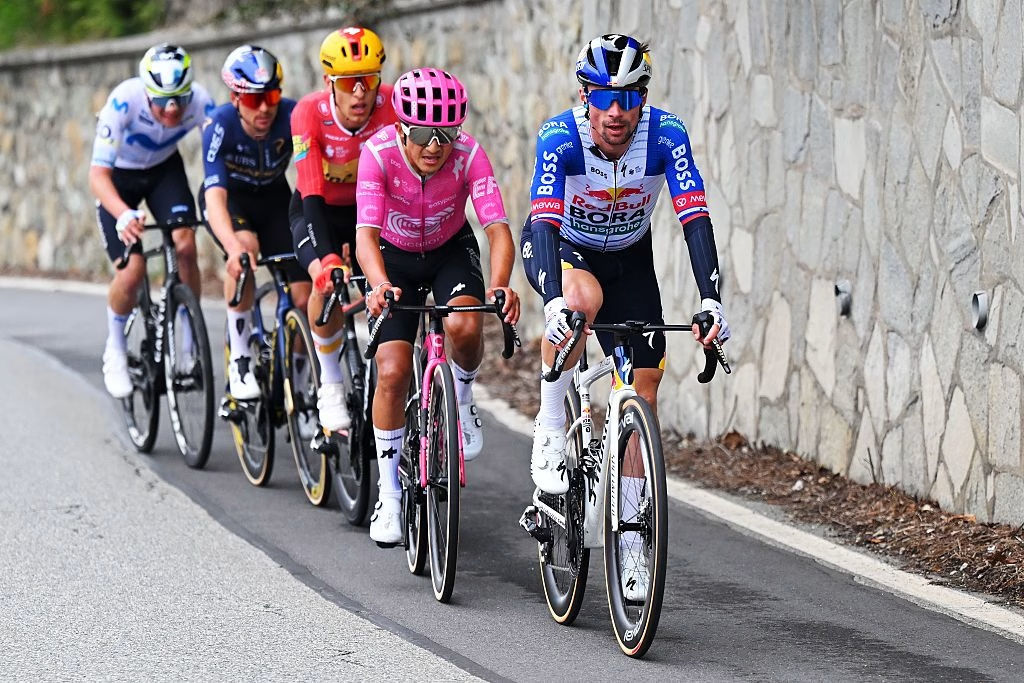 Photo Credit: Getty
Primož Roglič is the clearest reference point
Roglič starts as the most natural favourite, not only because of his broader stage-race status, but because Romandie is exactly the kind of race that fits him. It rewards control, repeated climbing strength and the ability to manage a week without wasting energy. Those are all familiar Roglič qualities.
What makes him so dangerous here is that he does not need the race to tilt fully in one direction. If Romandie becomes a controlled GC contest, he has the patience and experience to manage it. If it becomes more open and attritional, he still has the climbing and tactical sense to stay in control. That versatility is usually the mark of the strongest one-week stage-race riders, and it is why he feels like the most dependable pick in the field.
He also has the kind of presence that settles a race around him. Rivals know they cannot give him cheap time, but they also know that forcing the race too early can play into his hands if he is already comfortable and well protected. That balance is part of why he remains the clearest reference point in this field.
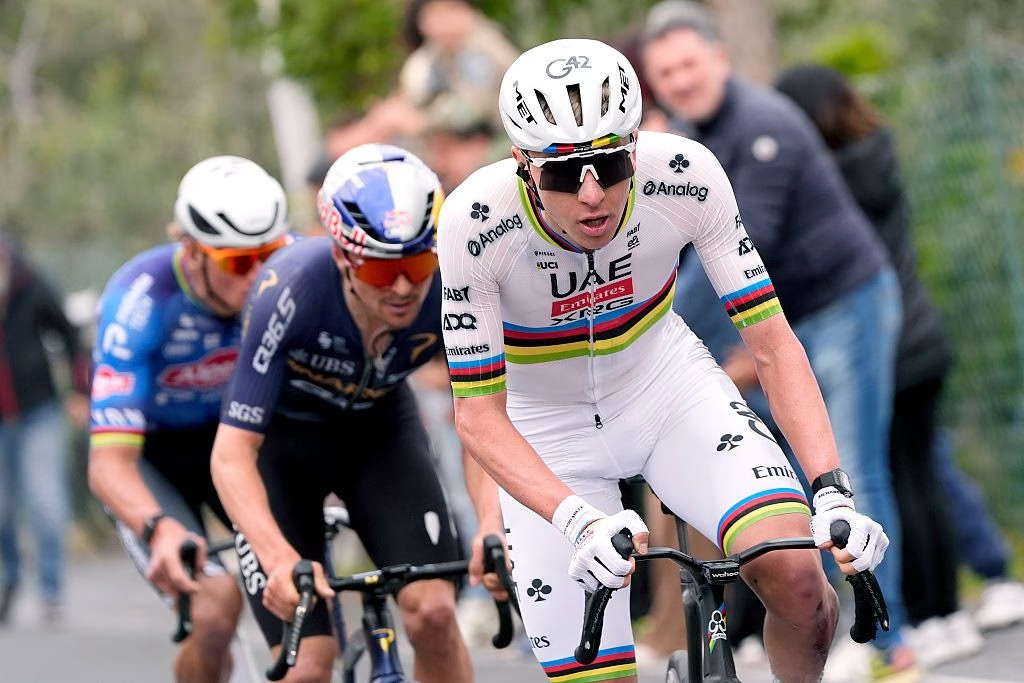
Tadej Pogačar gives the race its biggest star weight
Pogačar’s presence changes the entire feel of the race. Even in a strong WorldTour field, he is the sort of rider who immediately shifts the tone from serious to heavyweight. If he is close to his best, he does not simply contend in a race like Romandie. He threatens to dominate it.
In a race like this, that matters as much psychologically as tactically. Rivals know that if they wait too passively, Pogačar can simply take control through one decisive acceleration. But if they overreact too early, they risk spending energy chasing the one rider best equipped to profit from that kind of chaos. That tension makes him more than a favourite. It makes him the rider who bends the race around his presence.
The larger question is not whether he can win. It is what kind of race he wants to create. If he decides to make Romandie hard early, few riders in the field are likely to benefit from that. If he chooses to wait, then the rest of the contenders at least have a better chance of keeping the race layered deeper into the week.
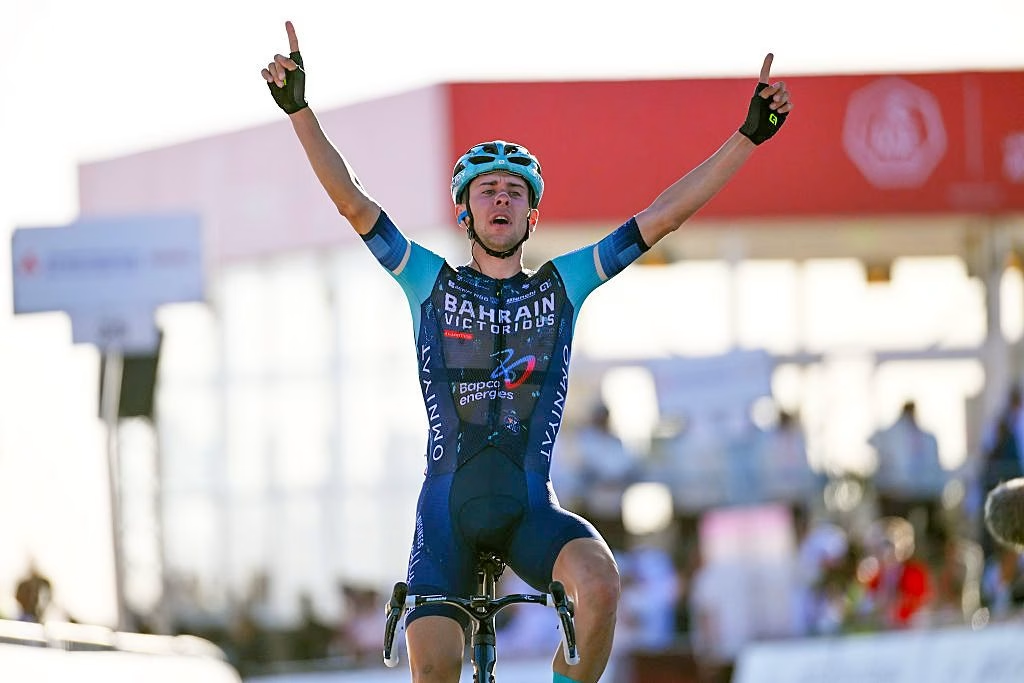
Antonio Tiberi should be taken seriously
Tiberi looks like one of the most convincing second-line overall contenders. He may not start with the same weight of expectation as Roglič or Pogačar, but he is exactly the kind of rider who can profit if the race becomes more measured and cumulative.
That is often how Romandie works for riders like him. The race does not always require a single spectacular act of dominance. It often rewards riders who stay close, manage the harder stages well and arrive in the final phase without having wasted too much energy. Tiberi’s profile fits that kind of race extremely well.
He is also the sort of rider who becomes more dangerous the longer a race stays controlled. If the biggest names mark each other heavily and no one forces a decisive split too early, Tiberi’s steadiness starts to matter more and more. In a one-week race, that is a very useful quality.
The wider GC picture should still matter
Even with Roglič and Pogačar at the top of the conversation, Romandie should not collapse into a two-rider preview. The field has enough depth behind them to keep the race tactically interesting, especially if one or both big favourites are not fully in command from the opening stage.
That is one reason this race remains useful every season. Romandie usually sits in that valuable space where the very biggest names can still win, but where a slightly lower-ranked GC rider can also force his way into the picture. For viewers, that is often the best kind of stage race. The hierarchy is visible, but not fully closed.
That wider pressure is also what keeps teams honest. The biggest squads may have the most obvious leaders, but they cannot simply assume the rest of the field will fall into line behind them. A week like this usually punishes that kind of complacency.
How the race may be won
The cleanest scenario is that Roglič or Pogačar asserts control on the decisive climbing day and then manages the race through experience and team strength. But Romandie can also work in a more layered way. A rider such as Tiberi does not need to dominate the race from the start to contend. He only needs to remain close enough for the final mountain stages or harder transitional days to create an opening.
That is what makes the contenders picture interesting. The biggest names are obvious, but the route is not always kind to riders who assume their status will decide things by itself. A one-week race rewards consistency and timing, and Romandie has a long habit of making those qualities visible.
The route itself helps create that uncertainty. It is hard enough to shape the GC properly, but not so brutally specific that only one rider type can win. That means climbers, strong all-rounders and tactically sharp GC riders can all look at the race and see a path.
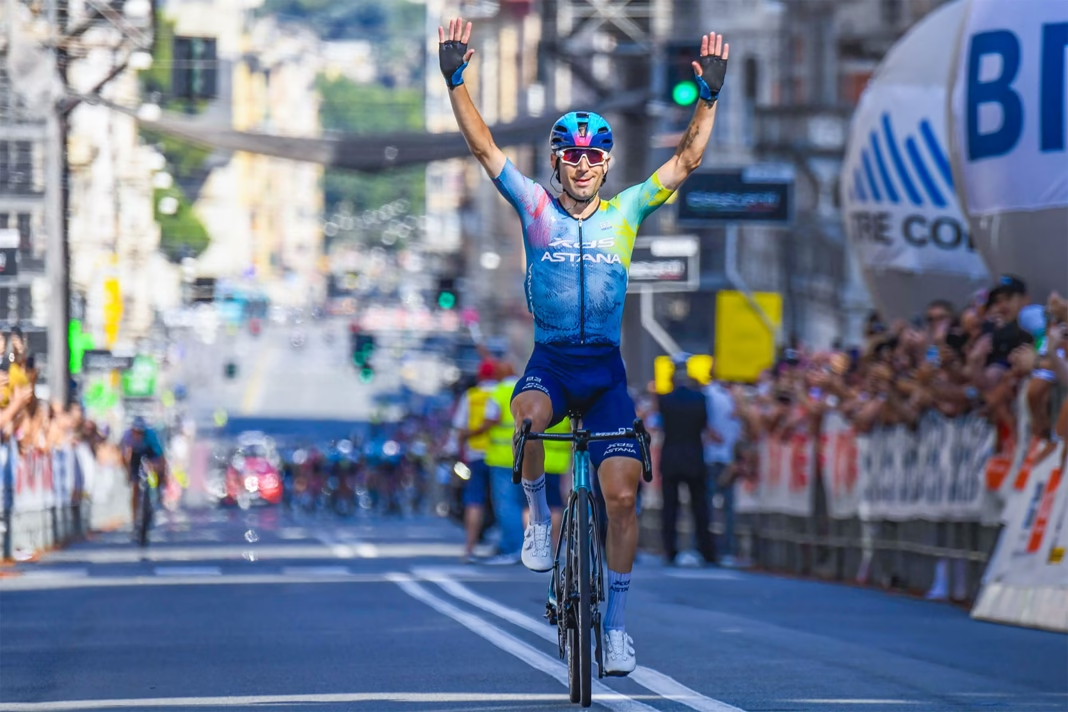
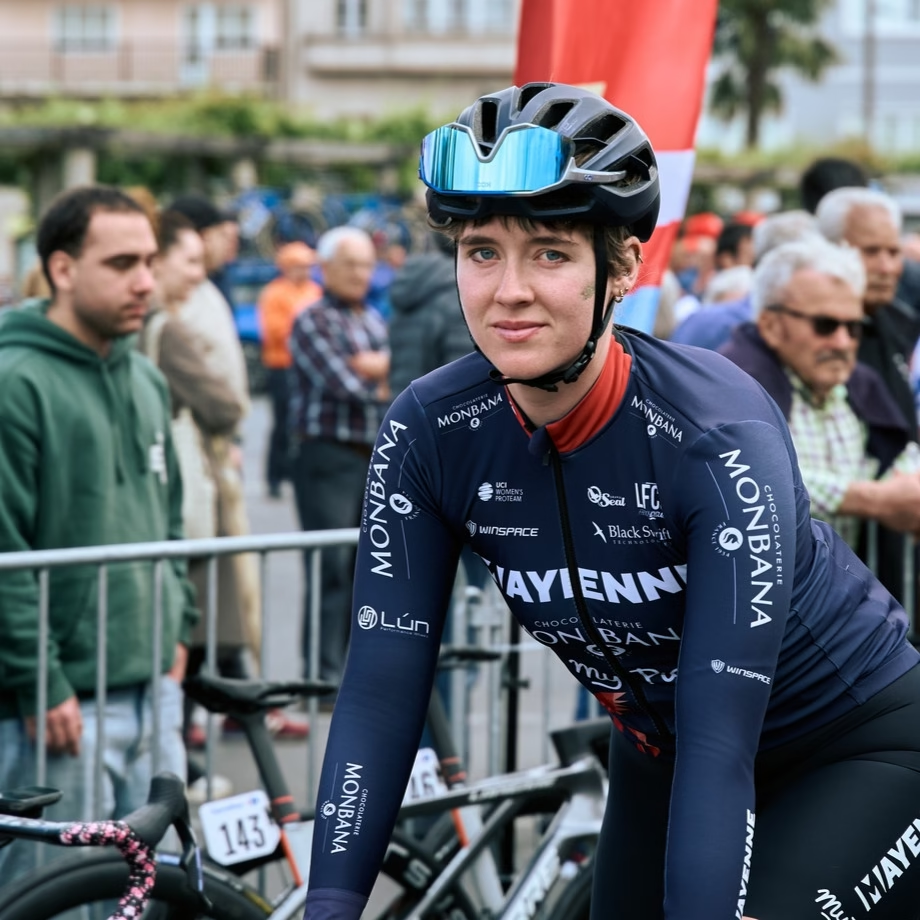
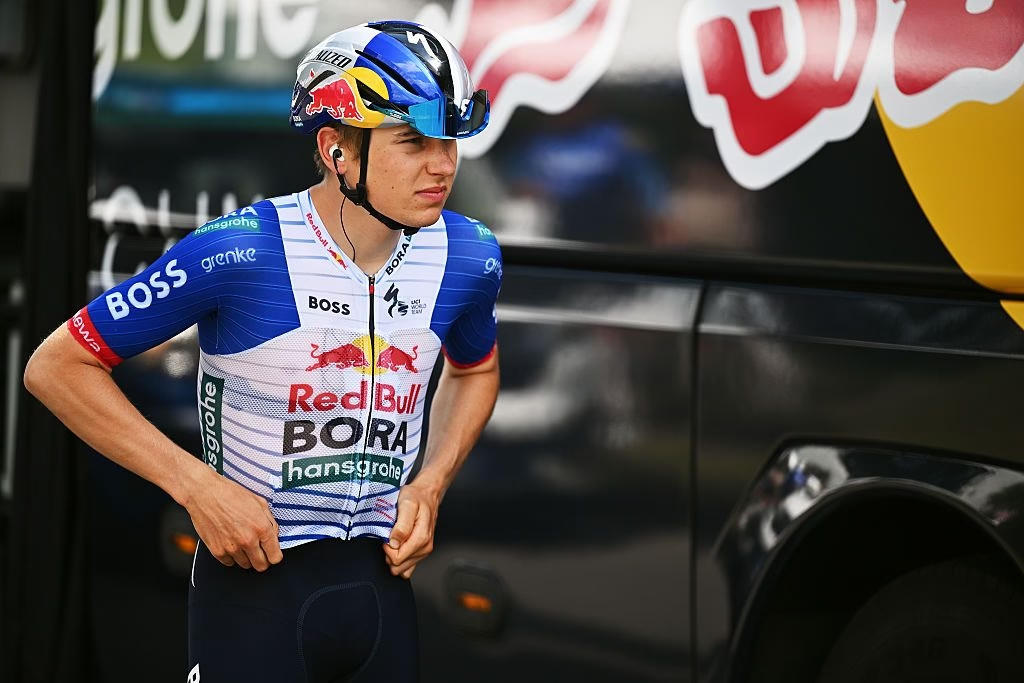
Top contenders for Men’s Tour de Romandie 2026
Primož Roglič starts as the most natural favourite because Romandie suits his one-week stage-race strengths almost perfectly. Tadej Pogačar gives the race its biggest headline presence and the rider most capable of overwhelming the field if he finds the right stage. Antonio Tiberi looks like the strongest alternative if the race becomes more measured and cumulative rather than explosive from the start.
Behind them, the race should still leave room for a second line of GC riders to shape the week. That is usually where Romandie becomes most interesting. It may begin with obvious names, but it rarely ends with only the obvious story.
Contenders verdict
Men’s Tour de Romandie 2026 has the right kind of contenders picture for a strong WorldTour stage race. Roglič gives it proven stage-race authority. Pogačar gives it star weight and the possibility of domination. Tiberi gives it a serious alternative line if the biggest names do not fully lock the race down. That is enough to make Romandie feel like much more than a calendar bridge between bigger targets.
If the race follows the cleanest script, it should run through Roglič and Pogačar. But a field like this is strong enough to resist easy summaries, which is exactly why Romandie tends to reward proper attention every year. For the wider race context, the main men’s cycling hub, the full start list and the team-by-team guide frame the rest of the week around what should be a properly serious GC contest.
Top 3 Prediction
⦿ Tadej Pogačar
⦿ Primož Roglič
⦿ Antonio Tiberi

