
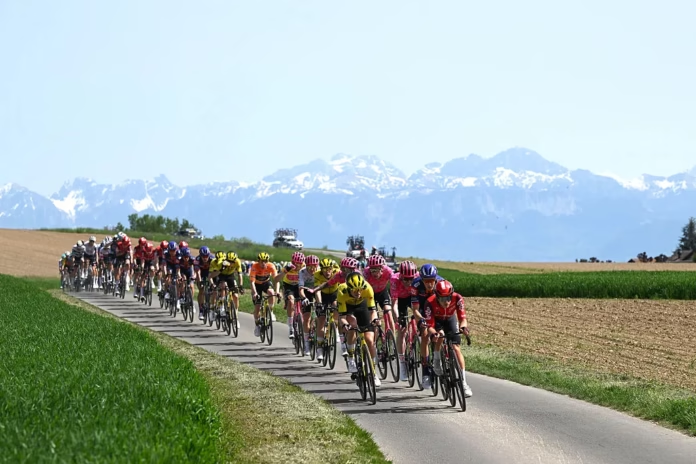
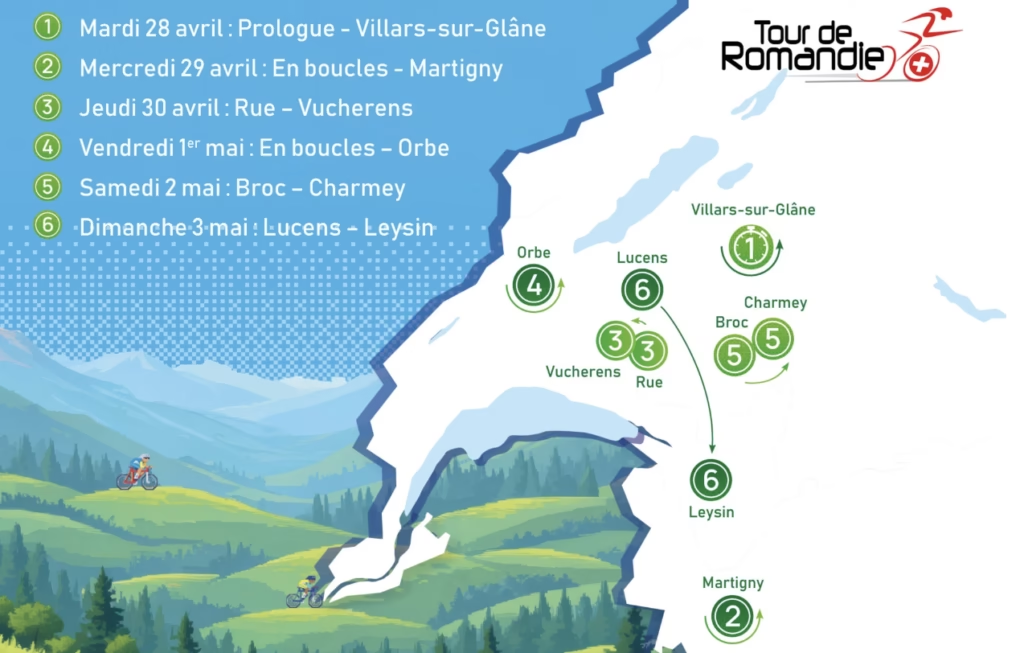
The Men’s Tour de Romandie 2026 looks like a climber-friendly edition built less around time trial control and more around sustained pressure across the road stages. The race runs from Tuesday 28th April to Sunday 3rd May, starts with a short prologue in Villars-sur-Glâne, then moves through five road stages based around Martigny, Rue-Vucherens, Orbe, Broc-Charmey and Lucens-Leysin. Across the week, the route adds up to 851.9km with 14,183 metres of elevation gain and 17 classified climbs.
That overall shape matters because it marks a clear shift in emphasis. With only one short individual time trial at the start, the road stages carry more weight, and the pure climbers have more room to shape the general classification. The final summit finish at Leysin is the obvious headline point, but there are several earlier chances to put pressure on rivals too.
For wider stage-race context, this fits naturally alongside ProCyclingUK’s Men’s cycling history, races, riders and teams hub and the broader Men’s cycling route guide hub.
What sort of Men’s Tour de Romandie route is it in 2026?
This is a route that keeps asking riders to climb, but not always in the same way. The opening road stage brings a major ascent at Ovronnaz, stage 2 is a punchier and more repetitive day, stage 3 includes the long Col du Mollendruz, stage 4 stacks up multiple serious climbs including both sides of Jaunpass, and stage 5 ends with the decisive haul to Leysin. That makes the Men’s Tour de Romandie 2026 a week for riders who can recover well, climb repeatedly and stay alert on stages that do not always look decisive until quite late.
It also looks like a race where there is less room for a specialist time triallist to defend a lead once the mountains begin. The prologue is short enough to create early gaps, but not enough on its own to decide the week. After that, the route tilts firmly towards the climbers and strong GC all-rounders.
Prologue – Villars-sur-Glâne
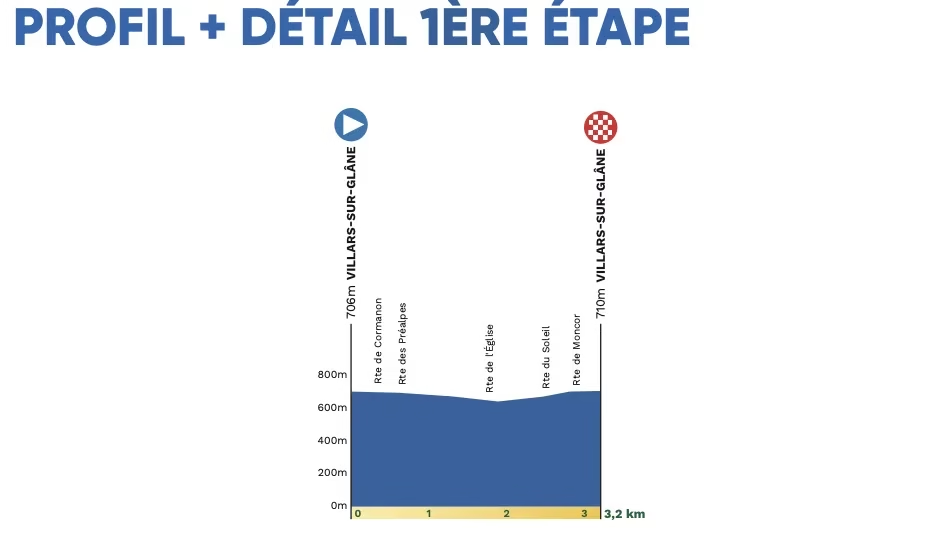
The Men’s Tour de Romandie opens on Tuesday 28th April with a short individual time trial in Villars-sur-Glâne. As the race’s only time trial in 2026, it matters without becoming dominant.
Riders who are sharp against the clock can take the first leader’s jersey and put a few seconds into their rivals, but nobody is going to win the Men’s Tour de Romandie here. Instead, it should act as the opening sort rather than the decisive examination.
Stage 1 – Martigny to Martigny, 171.2km
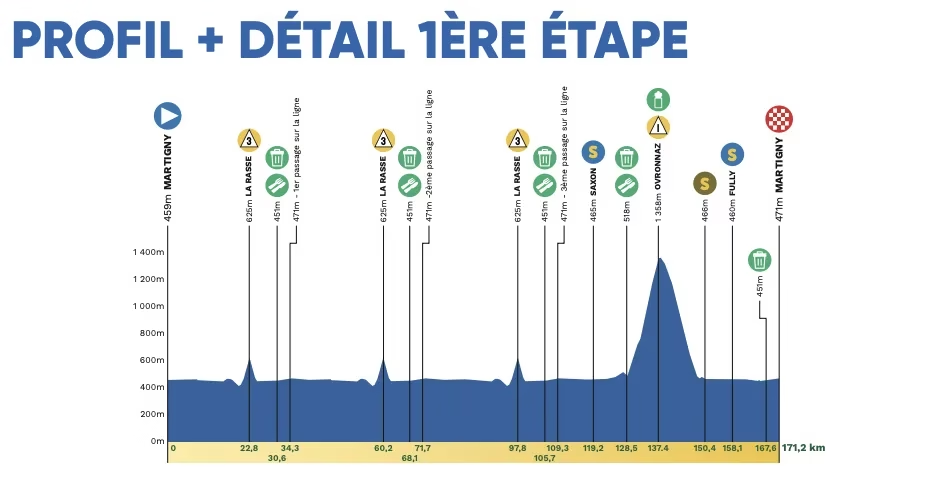
The first road stage on Wednesday 29th April is a looping day around Martigny. The route uses mainly valley roads early on, with three circuits to the north-west featuring La Passe, then heads along the Rhône before the race reaches its first genuinely serious climb at Ovronnaz. That ascent is 12km long at an average of 9.1 per cent, and the stage finishes only 33km after the summit.
That combination makes stage 1 more selective than a standard opening road day. The climb is hard enough to expose riders who came in undercooked, but the descent and run-in leave open the possibility of a reduced bunch finish rather than a huge GC split. It feels like the sort of stage where strong climbers can test the field without necessarily blowing the race apart.
Stage 2 – Rue to Vucherens, 173.1km
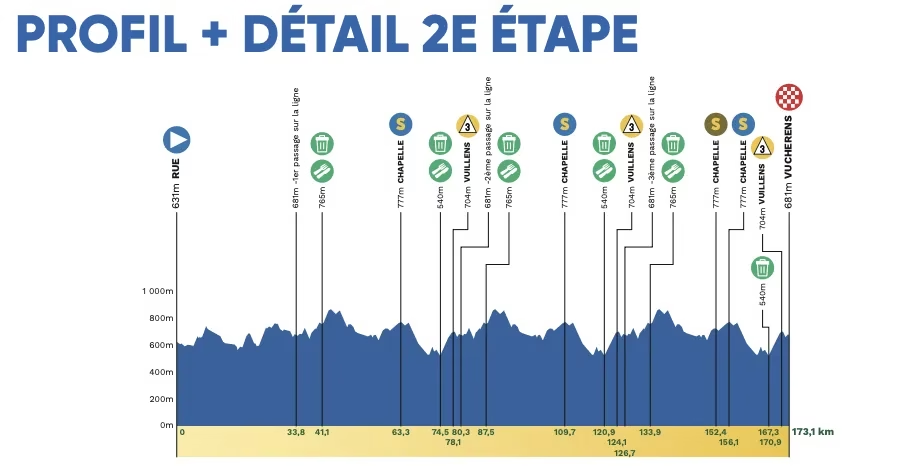
Stage 2 on Thursday 30th April runs from Rue to Vucherens. In reality, it is a 173.1km twisting stage built around repeated circuits and punchy climbing. The key repeated obstacle is the category 3 climb of Vuillens, which comes after an intermediate sprint in Chapelle on each circuit, with only 3.8km from the top of the final passage to the finish.
This looks like one of the more awkward stages to control. It is not a summit day, but it is relentless enough to invite aggression. Puncheurs, stage hunters and GC riders with sharp legs should all see opportunity here. The short run from the final climb to the line could also make positioning more important than outright climbing strength.
Stage 3 – Orbe to Orbe, 176.6km
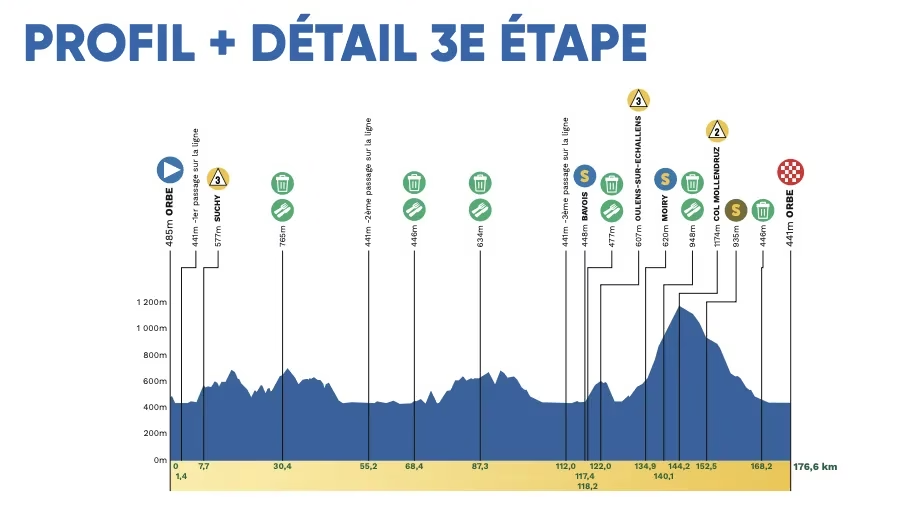
Friday 1st May brings another looping stage, this time around Orbe. The day is 176.6km long and starts with the category 3 climb of Suchy inside the opening 7.7km. The route then builds gradually before the main obstacle arrives late. After Oulens-sur-Echallens, the peloton tackles the Col du Mollendruz, a 21.8km ascent in the Jura, before a long descent back to the finish.
That makes stage 3 tactically interesting. Mollendruz is the kind of climb that can do real damage if a team wants to force the race, but with 32km from the top back to Orbe, the stage does not absolutely guarantee GC separation on the line. It should still be one of the key sorting stages of the week, especially for riders who are less comfortable descending or less secure on longer climbs.
Stage 4 – Broc to Charmey, 149.6km
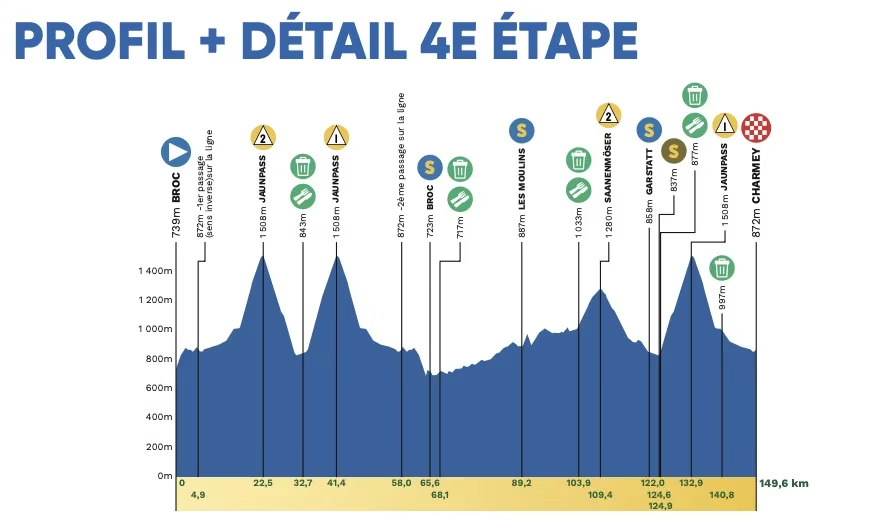
Stage 4 on Saturday 2nd May is shorter at 149.6km, but it may be the most deceptively hard day of the race. The route goes from Broc to Charmey and includes four classified climbs, two category 2 ascents and two category 1 climbs. The biggest theme is repetition, especially around Jaunpass, which is climbed from both sides early in the stage. The shorter side is 5.6km at 8.3 per cent, while the longer side is 8km at 7.8 per cent. Later on, the stage also includes the category 2 climb of Saanenmöser before returning to Jaunpass for the final 17km run to the finish.
This is the sort of Men’s Tour de Romandie stage that can become more important than the profile first suggests. It is not the queen stage in reputation, but the repeated climbing and late uphill finish into Charmey make it a serious GC day. Riders already under pressure by this point may find there is nowhere to hide.
Stage 5 – Lucens to Leysin, 178.2km
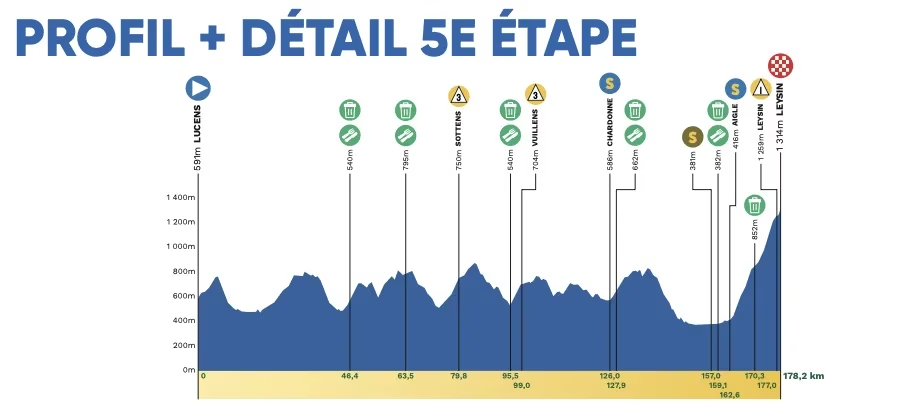
The final stage on Sunday 3rd May runs 178.2km from Lucens to Leysin and ends with the only summit finish of the week. The opening half is more rolling than brutal, with several uncategorised climbs and a pair of category 3 ascents at Sottens and Vuillens, but everything is really pointing towards the final climb. After the race passes Lake Geneva and reaches Roche, there are only 15.6km left before the climb to Leysin begins to decide the overall classification. The main body of that ascent is 10.9km at an average of 6.7 per cent.
This is clearly the race’s biggest GC stage. Unlike some Romandie editions where time trials or late descents leave room for ambiguity, Leysin should provide a direct final answer. If the gaps are still tight after Charmey, this is where the Men’s Tour de Romandie is most likely to be won outright.
Which stages matter most for the overall?
The three biggest GC days look like stage 3 to Orbe, stage 4 into Charmey and especially stage 5 to Leysin. Stage 1 should create the first real climbing test, but stages 3 to 5 are where the race is most likely to shift decisively. Mollendruz on stage 3 can weaken riders before the weekend, Charmey can stretch the field through repeated climbing, and Leysin gives the organisers the cleanest final mountain showdown of the week.
That means the Men’s Tour de Romandie 2026 looks well-designed from a narrative point of view, too. The race should build properly. It opens with a small time trial, moves into a selective first road stage, then gets progressively harder before the summit finish decides the title on the final afternoon.
-
 Photo Credit: Billy Ceusters / Getty Images

What kind of rider does the 2026 route suit?
This Men’s Tour de Romandie edition should suit an all-round climber who can handle repeated elevation rather than just one explosive summit finish. The prologue prevents pure climbers from ignoring the clock altogether, but the route overall gives much more weight to climbing resilience, recovery and consistency across a full week of varied terrain.
It should also reward riders who are willing to race before the final day. Because there is only one time trial and several mountain or semi-mountain opportunities, the strongest teams have more than enough terrain to animate the race rather than wait for Leysin.
Verdict on the Men’s Tour de Romandie 2026 route
The Men’s Tour de Romandie 2026 route looks like a strong, coherent week of racing. It has enough time trialling to open the race cleanly, enough climbing to keep the GC battle alive every day, and a final summit finish that should give the event a clear conclusion. Across 851.9km and 14,183 metres of elevation gain, this is not a soft transitional stage race. It is a proper climbing-focused WorldTour test.
In practical terms, that should make it one of the more revealing stage races of the spring. Riders who come out of the Men’s Tour de Romandie with the overall win, or even with strong climbing performances across the week, will have done so on a route that asks real questions almost every day.
For readers building out the full race package, this also pairs well with ProCyclingUK’s Men’s Paris-Roubaix 2026 contenders preview, What Men’s Ronde van Vlaanderen 2026 means for the season and the wider Men’s cycling history, races, riders and teams hub.

