Nicole Cooke’s story does not fit neatly into the version of British cycling that later became easiest to package and celebrate. She was too early for that, too independent for it, and too willing to say out loud what others preferred to leave buried. Yet that is exactly why she remains one of the most important riders British cycling has produced. She was not only a brilliant winner. She was also a disruptive force in the best and most uncomfortable sense, a rider whose career exposed structural problems in the sport long before many governing bodies were ready to admit they existed.
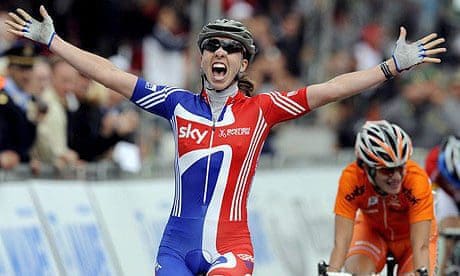
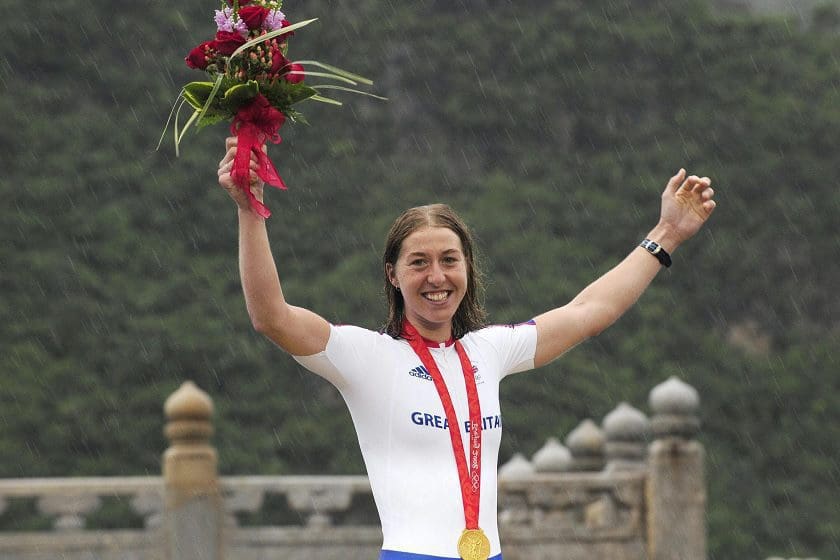
At her peak, Cooke was one of the defining road riders of her era. She won the UCI Women’s Road World Cup overall in 2003 and 2006, claimed major one-day races including La Flèche Wallonne Féminine, Amstel Gold Race and the Tour of Flanders for Women, and in 2004 became the youngest winner of the Giro d’Italia Femminile, as well as the first British rider to win that race. In 2008, she reached the summit of the sport by winning Olympic road race gold in Beijing and the road world title in Varese, becoming the first rider, male or female, to win those two titles in the same year.
For readers moving through the wider story of women’s cycling, this piece sits naturally alongside ProCyclingUK’s Women’s cycling history, races, riders and teams hub, A brief history of the Tour de France Femmes, and A brief history of Liège-Bastogne-Liège Femmes.
A champion before the system knew what to do with her
Cooke’s rise was startlingly early. She won the British national road race title in 1999 at the age of 16, and later Team GB retrospectives made clear just how unusual her development was. Before most riders have even settled into senior racing, she had already established herself as a national champion and one of the most talented young riders in the world.
That early brilliance matters because it helps explain the tension that would follow her throughout her career. Cooke was not a rider shaped by a mature, generous, well-funded women’s system. She was often ahead of the support around her. In later reflections, she repeatedly pointed to a sport where female riders were expected to accept less, ask for less and be grateful for whatever they were given. Her criticism did not come from the outside. It came from someone who had already done the winning and knew exactly what the sport looked like from the inside.
The palmarès was far deeper than one golden season
It is tempting to reduce Cooke to Beijing and the rainbow jersey because those two images are so powerful. But her career was far broader than a single magnificent year. She won major Classics, stage races and national titles across a long span, including La Flèche Wallonne Féminine three times, the Women’s Road World Cup twice, the Grande Boucle Féminine Internationale twice, and British road race titles year after year. British Cycling’s Hall of Fame summary describes her as one of the organisation’s most decorated athletes, while Team GB’s retrospective on Beijing places her Giro win and World Cup dominance properly within the story.
That depth matters because it changes how she should be remembered. Cooke was not a rider who caught one perfect wave. She was a genuine all-round force, able to win on hilly terrain, in major one-day races and over stage-race formats. She was also racing in an era when the women’s calendar was thinner, teams were more fragile, and many of the gains later generations would enjoy had not yet arrived. Her achievements were elite even before you apply that context. Once you do, they look even stronger.

2008 made her immortal
Even so, 2008 is the year that fixed her in British sporting history. In Beijing, Cooke won Team GB’s first gold medal of the Games in the women’s road race. Team GB’s athlete profile and retrospective both note the scale of that result, while British Cycling later highlighted that she became the first Briton to win Olympic and world road race titles in the same year. That double remains the defining line on her record.
There is also a more specific British significance to that Olympic victory. Team GB’s account notes that Cooke’s 2004 Giro win had already made her Britain’s first Grand Tour winner on the road, male or female, and her Beijing victory then gave Britain its first gold medal in an Olympic road race discipline. In simple terms, she was not just adding another medal. She was setting historical firsts.
That should have made her one of the central figures in the story British cycling told about itself. In some ways, it did. But never quite fully, and never comfortably. Cooke was too candid, too sceptical and too unwilling to play along with the convenient myths that institutions often prefer around champions. That is part of what makes her such a compelling figure now.
She refused the easy version of the sport
Cooke’s retirement in January 2013 remains one of the most striking exits in modern cycling. Rather than offering the usual thanks, nostalgia and a soft fade into legend, she used her retirement statement to attack doping, corruption and inequality in the sport. In the full text published by The Guardian, she spoke with unusual directness about the abuse of drugs in cycling and about one overlooked but vital issue, gender inequality. The statement landed because it came from an Olympic and world champion who had earned the right to be heard, and because she chose not to protect the sport’s image at the expense of the truth as she saw it.
That speech has lasted because it was not merely emotional. It was precise. Cooke linked the glamour and success sold around elite cycling with the much harsher reality many women faced, especially financially and professionally. She argued that women’s cycling had long been treated as secondary, and that this was not accidental but structural. Years later, that argument would sound far less radical than it did at the time, largely because the sport gradually moved in the direction she had already been demanding.
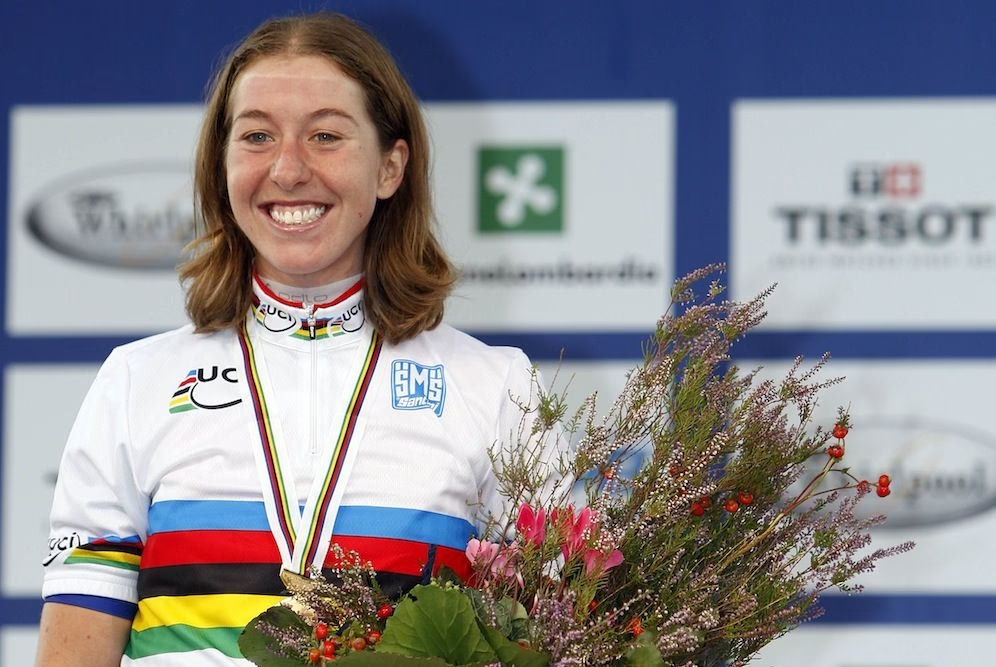 Photo Credit: Yuzuru Sunada
The conflict with British cycling was about more than personality
It would be too simple to describe Cooke as merely difficult or outspoken. The conflict she embodied was larger than personality. In her later public comments, including a 2016 Guardian piece written during the Jess Varnish and Shane Sutton controversy, Cooke argued that sexism in elite cycling was by design, not a one-off failure or a few bad remarks. She linked her own experiences to a deeper culture in which male racing received the money, the coverage and the authority, while women were expected to fit around it.
That argument carried extra weight because it was consistent with what she had been saying for years. This was not opportunism. It was a long-running critique from someone who knew exactly how British and international cycling worked. Her later evidence to Parliament in 2017 pushed this even further. Reporting around that hearing shows Cooke attacking both the sport’s anti-doping failures and its sexism, describing a culture in which accountability was too weak and inconvenient voices were too easily dismissed.
This is where Cooke’s historical importance grows beyond race results. She was one of the British riders who forced bigger questions. Not simply whether a woman could win at the top level, she had already answered that, but whether the system around elite cycling was actually fit for women at all.
For connected reading on that broader women’s racing backdrop, this also pairs well with A brief history of Paris-Roubaix Femmes and A brief history of La Flèche Wallonne Féminine.
Why she matters even more now
Cooke’s career looks different when viewed from the present. Many of the things she criticised, weak structures, unequal visibility, underfunded women’s teams, and a tolerance for sexism dressed up as tradition, are now much more openly discussed. Women’s cycling has improved significantly in the years since her retirement, with a stronger calendar, more broadcast presence and more serious team investment. But one reason those conversations became unavoidable is that riders like Cooke refused to leave them unsaid.
There is also something important in the fact that she was often awkward for the sport to celebrate. Institutions usually prefer champions who can be placed neatly on a poster. Cooke was too sharp-edged for that. She won, but she also remembered. She did not separate her palmarès from the conditions in which it was built. That refusal is part of her legacy.
Brilliance first, but not brilliance alone
The risk with Cooke is that the conflict can overshadow the racing, or that the racing can be used to soften the conflict. Both would miss the point. Her greatness lies in the combination. She was brilliant enough to make history on the road, and clear-sighted enough to understand what the sport was refusing to confront. The best way to remember her is not as a champion who happened to speak out, nor as a critic who happened to win. It is as both at once.
That is why Nicole Cooke still matters so much in British cycling history. She was a world-class rider, the first Briton to complete the Olympic and world road-race double in the same year, and one of the most decorated road racers Britain has produced. She was also a figure who forced the sport to face questions it would rather have postponed, about money, power, sexism and honesty. In the end, that combination may be what makes her legacy stronger, not messier.
Nicole Cooke palmarès
- Olympic Games road race, 2008
- UCI Road World Championships road race, 2008
- UCI Women’s Road World Cup overall, 2003, 2006
- Giro d’Italia Femminile overall, 2004
- Grande Boucle Féminine Internationale overall, 2006, 2007
- La Flèche Wallonne Féminine, 2003, 2005, 2006
- Tour of Flanders for Women, 2007
- Amstel Gold Race, 2006
- Trofeo Alfredo Binda, 2007
- British national road race championships, 1999, 2000, 2001, 2002, 2003, 2004, 2006, 2007, 2008
- British national time trial championships, 2006, 2007, 2009
- Commonwealth Games road race silver medal, 2002