Omloop het Nieuwsblad returns on 28th February 2026 as the first major appointment of the European season and, for many teams, the first real moment of truth after winter training and early-stage racing elsewhere. Ghent remains the anchor point, with the start once again tied to ’t Kuipke for the next six years, before both races thread south into the Flemish Ardennes and finish in Ninove on Elisabethlaan. The shape of the day is familiar, but it rarely feels routine: early-season condition, nerves, and the first proper collisions between rival teams tend to produce a race that is more about decision-making under pressure than pure form alone.
The organisers are leaning into the storylines that give the Omloop its identity. The message is clear: the opening classic is not simply a warm-up for what follows, it is its own fight for status, and it often exposes who has arrived ready to race hard, and who still needs weeks to sharpen up.
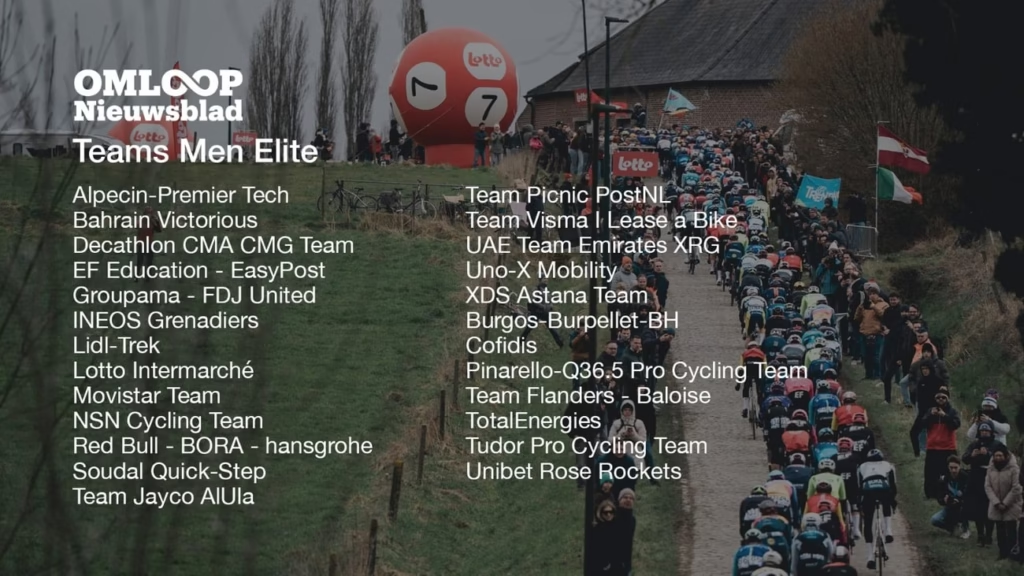
Men’s race: a long opening classic with a finale built for selection and tactics
The men face around 207 kilometres, starting after the traditional team presentation in Ghent and rolling quickly into a day where positioning counts almost from the gun. In recent editions, that has been the defining feature: it is not uncommon for the peloton to ride with the urgency of a late-race finale far earlier than most viewers expect, because everyone knows the decisive terrain is narrow, technical, and unforgiving.
The course design encourages that tension. The early and mid-race workload is substantial, with repeated visits to the Leberg and Eikenberg shaping fatigue and forcing teams to reveal their intentions. By the time the race hits Wolvenberg and Molenberg, riders are already riding on the edge, and the strongest teams are usually using that phase to isolate rivals rather than to win the race outright.
From there, the route settles into the sequence that defines the Omloop’s closing act. After the cobbles of Kerkgate and Jagerij, roughly 45 kilometres from the finish, the pattern becomes relentless: Leberg again, then Berendries, then the pair that increasingly matters for how the final hour is raced. Tenbosse and Parikeberg are not the most famous names on the course, but they are placed like a lever. Hit hard, they can split the race into fragments before the Muur-Kapelmuur even arrives, and that changes everything. A strong group cresting Parikeberg with momentum can force teams behind into damaging chases, while those in front can start to play with the numbers.
The finale then runs through the Muur-Kapelmuur and Bosberg, a pairing that carries the race’s mythology and still offers a clear tactical choice. Go early on the Muur, and you risk dragging the wrong companions into the move. Wait and you risk being boxed in or losing contact at the worst moment. The Bosberg, by contrast, tends to settle things in a more brutal way: if you have spent too much to stay in position on the Muur, you pay on the drag that follows.
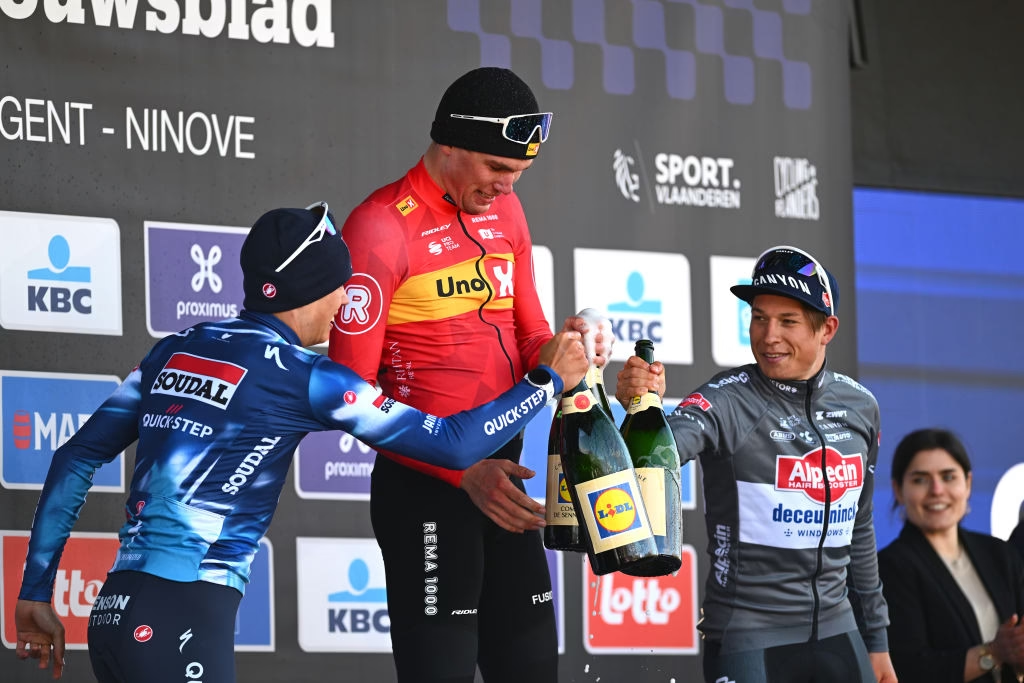
This year’s narrative arrives with a champion already attached to the race. Søren Wærenskjold returns as the defending winner, and that matters because the Omloop is often won by riders who can handle both the chaos and the final sprint scenario if the strongest group comes back together. That balance, resilience and speed is why this race has become a proving ground for riders who can thrive across the full spring, not just one type of finale.
In terms of the startlist, the men’s race brings the full WorldTour contingent, plus seven ProTeams. Cofidis, Pinarello-Q36.5 Pro Cycling Team, and Tudor Pro Cycling Team were automatically guaranteed invitations based on their 2025 performances, which reflects how the organisers want the strongest second-tier teams present rather than simply filling places. They are joined by Burgos-Burpellet-BH, Team Flanders-Baloise, TotalEnergies, and Unibet Rose Rockets, a mix that adds both local interest and aggressive racing potential, particularly in the early break dynamics that can influence how much control the big teams have later.
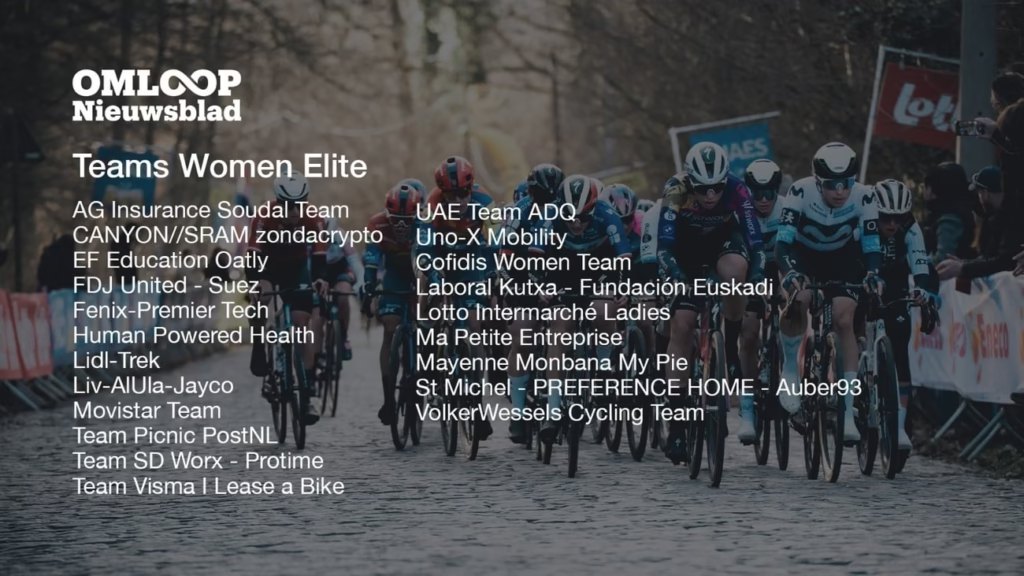
Women’s race: 137 kilometres, a sharper climb sequence, and the same decisive run to Ninove
The women cover 137 kilometres, and while the distance is shorter, the race rarely feels any calmer. If anything, the women’s Omloop has increasingly been defined by how quickly it escalates once the climbing sequence begins. The profile is designed as a tightening noose: Edelareberg and Wolvenberg begin the selection process, Molenberg and Leberg raise the intensity, and then the final run of climbs becomes a test of who still has both legs and clarity.
The women’s climbs come in a clean, escalating order: Edelareberg, Wolvenberg, Molenberg, Leberg, Berendries, Tenbosse, Parikeberg, Muur-Kapelmuur, and Bosberg. That structure matters because it creates repeated points where teams must decide whether to ride defensively or whether to turn the race into a numbers game. Tenbosse and Parikeberg sit in the sweet spot where the best attackers can force separation without committing to an all-or-nothing effort, and it is often on these ramps where riders sense hesitation and exploit it.
From there, the shared finale takes over, and it tends to deliver two common scenarios. Either a small, high-quality group arrives at the Muur with enough cohesion to keep a gap over the chase, or the race fractures into a series of accelerations where riders are forced to ride on instinct rather than plan. The Bosberg then becomes the filter, and once the front is reduced to riders who can both climb and sprint, the run-in to Elisabethlaan can become surprisingly tactical for an opening classic.
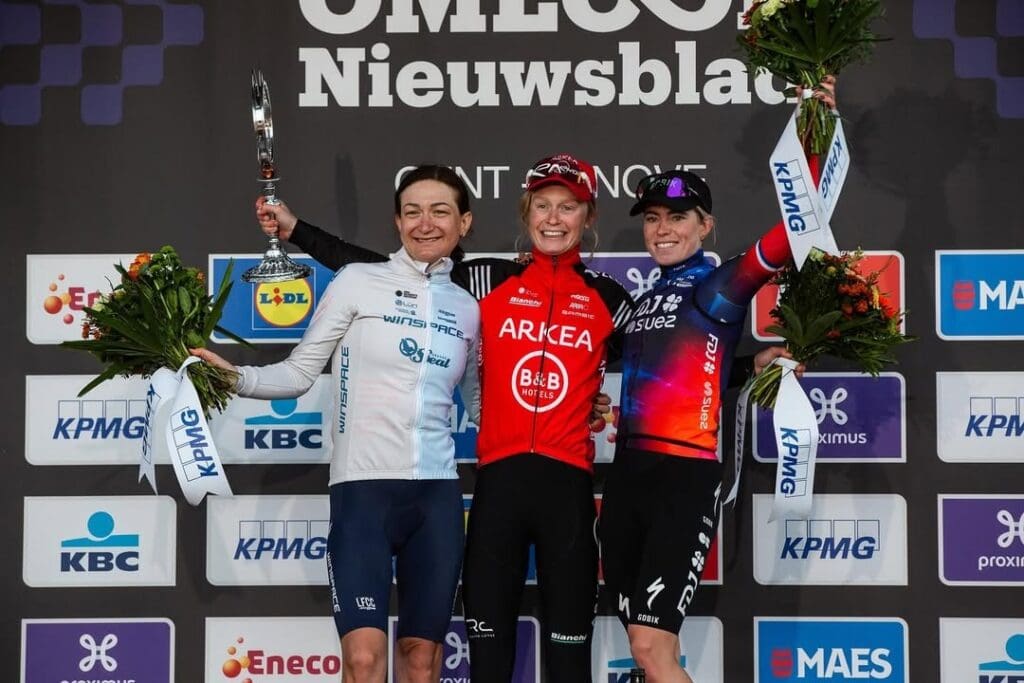 Photo Credit: Flanders Classics
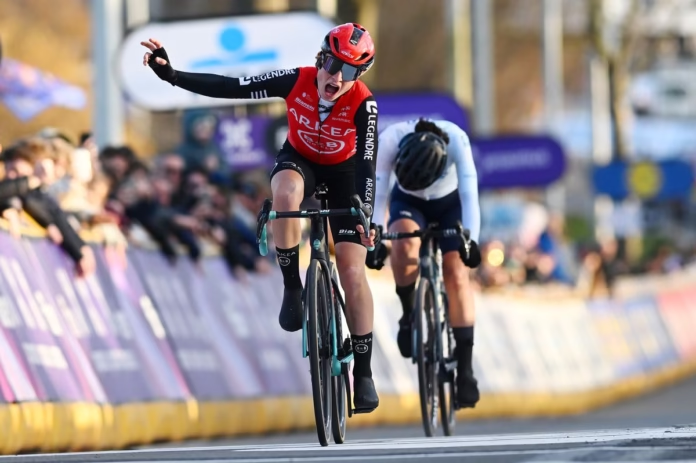
The defending women’s champion is Lotte Claes, and her return adds a useful layer to the story of the race. The Omloop often rewards riders who can read the moment rather than simply overwhelm the course, because February legs can be unpredictable and team hierarchies are not always settled yet. That is why the women’s edition has become such a compelling start to the season: it is one of the few days where opportunists can genuinely outplay deeper squads if they catch the right opening.
As with the men, the women’s race includes all Women’s WorldTeams, alongside seven Women’s ProTeams: Cofidis Women Team, Laboral Kutxa – Fundación Euskadi, Lotto Intermarché Ladies, Ma Petite Entreprise, Mayenne Monbana My Pie, St Michel-Preference Home-Auber93, and VolkerWessels Cycling Team. In practical terms, that list matters because it keeps the race open. The invited ProTeams often race with nothing to lose, which can force WorldTour teams to spend energy earlier than they would prefer, especially if the breakaway composition becomes uncomfortable.
Why Tenbosse and Parikeberg matter more than they look on paper
The headline climbs will always be the Muur-Kapelmuur and Bosberg, because they are iconic and they arrive late enough to feel decisive. But Tenbosse and Parikeberg increasingly shape what the finale becomes. They appear after the race has already been softened by Berendries, and they arrive before riders have mentally committed to the “Muur moment”. That timing allows aggressive riders to force selections while others are still trying to manage the race rather than win it. In modern editions, where teams are deeper and racing is more controlled, those transitional climbs often become the only places where the front can be split without an immediate organised chase.
That is why the Omloop remains such a useful bellwether for the spring. It does not just show who is strong. It shows who is ready to make decisions at speed, and who can handle the unique pressure of Flemish racing when the roads are narrow, the legs are uncertain, and the season is suddenly real again.