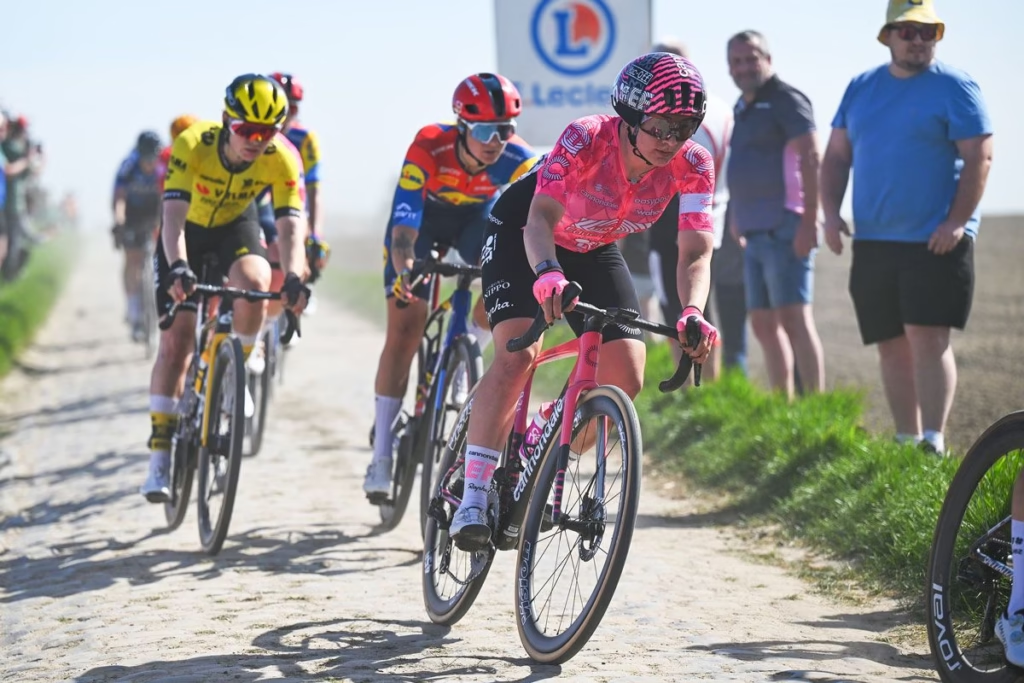
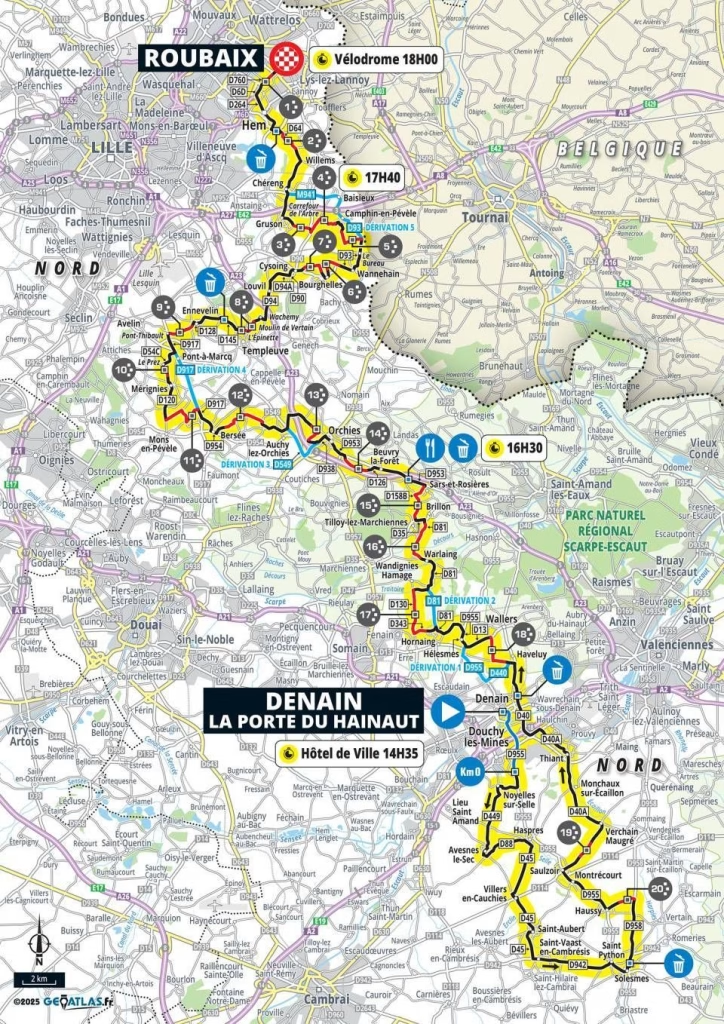
Paris-Roubaix Femmes 2026 looks like the hardest edition of the race so far. The identity of the event has not changed, it still starts in Denain and finishes in the Roubaix velodrome, but the route has been made more demanding by removing the early loops around Denain and replacing them with a more direct run into the cobbles. The result is a 148.5km race with 33.7km of pavé across 20 sectors, up from 29.2km last year. Three new sectors, Haussy, Saulzoir and Haveluy à Wallers, have been added to the women’s route.
That matters because Paris-Roubaix Femmes has always been a race where difficulty is shaped less by total distance than by how quickly and how cleanly the cobbled sectors arrive. In 2026, the opening phase should be more direct and more selective. There is less softening-up terrain before the fight for position really begins, and that means the race may feel sharper earlier than in previous editions. For broader background, this guide works naturally alongside ProCyclingUK’s beginner’s guide to Paris-Roubaix Femmes 2026, the Paris-Roubaix Femmes history, and the travel-focused best places to watch Paris-Roubaix Femmes in person.
What is new about the route in 2026?
The key change is simple. The race heads north from Denain without the old opening loops and reaches the cobbles sooner through three additional sectors: Haussy, Saulzoir and Haveluy à Wallers. Haveluy in particular has been highlighted as a meaningful addition because it is a four-star sector with a sharp turn into it, which should increase the pressure before the better-known later stretches of the race.
That does not turn the women’s race into a carbon copy of the men’s event, but it does push it closer to the same philosophy. The 2026 route looks less interested in allowing a calm first half and more interested in making riders work for every position much earlier. That is one of the reasons the race should be harder to control for the bigger teams.
How many cobbled sectors are there?
There are 20 cobbled sectors in the 2026 women’s race, covering 33.7km in total. That is the largest total cobbled distance the race has had so far.
For newer fans, that number matters because Paris-Roubaix Femmes is not just difficult because of one or two iconic sectors. It is difficult because the race keeps asking the same question over and over again. Can riders hold position, keep their bikes moving cleanly, avoid punctures and crashes, and still have enough left once the decisive sectors arrive? More cobbles does not just mean more spectacle. It means more opportunities for the race to split before the final hour.
Which cobbled sectors matter most?
The late-race hierarchy remains familiar even with the extra opening sectors. Mons-en-Pévèle and Carrefour de l’Arbre are still the two five-star sectors on the women’s route, and they remain the places most likely to decide the race. Camphin-en-Pévèle is still one of the major late launchpads too, even if it technically sits below them in difficulty rating. Hornaing à Wandignies also remains one of the most important four-star sectors earlier in the race.
This is the essential reading of the route. The new sectors make the race harder overall, but the final outcome is still most likely to be shaped by the same brutal sequence that has defined recent editions. If a rider is going to win Paris-Roubaix Femmes 2026 with a decisive move, the most likely places remain Mons-en-Pévèle, Camphin-en-Pévèle or Carrefour de l’Arbre.
Why Haveluy matters more than just being new
Haveluy à Wallers is the new sector likely to attract the most attention. It is not just a fresh line on the map. It is a four-star addition with a technical approach, and that should matter because Paris-Roubaix sectors are often as much about entry speed and positioning as they are about the stones themselves.
That is what makes Haveluy potentially important in tactical terms. It arrives well before the race’s ultimate deciding phase, but it could still force early stress into the bunch and make it harder for teams to hold a calm structure. The strongest squads will not want to lose riders there, yet they may have to spend energy earlier than planned to avoid exactly that. This is an inference from the sector’s rating and described approach.
The decisive late sequence
The broad story of Paris-Roubaix Femmes still lives in its final sequence of sectors. Once the race reaches Mons-en-Pévèle, the event usually moves from nervous possibility into genuine elimination. Riders who are still well placed there are no longer simply surviving. They are in contention. From there, Camphin-en-Pévèle and then Carrefour de l’Arbre tighten the race further before the run towards Roubaix.
This is why Paris-Roubaix Femmes often feels more concentrated than some other one-day races. There may be 20 cobbled sectors in total, but the race tends to build towards a recognisable final hour where every mistake is amplified. A small gap at the wrong moment can become decisive very quickly once the strongest riders are isolated. That is also why the race is so compelling in person, as covered in ProCyclingUK’s best places to watch Paris-Roubaix Femmes in person.
What kind of race should this create?
The organisers have clearly leaned into a tougher, more selective version of the women’s event. More cobbles and a more direct approach into them should increase fatigue and reduce the chance of a large group surviving comfortably into the final sectors.
That does not automatically mean the strongest rider simply rides away earlier. Paris-Roubaix never works as neatly as that. But the route does suggest a race where teams will have fewer domestiques left deep into the finale and where positioning errors may be punished sooner. In practical terms, that should favour riders who are not just powerful on the cobbles, but calm under repeated stress. This is an inference from the route change and cobbled increase.
Why the velodrome still matters
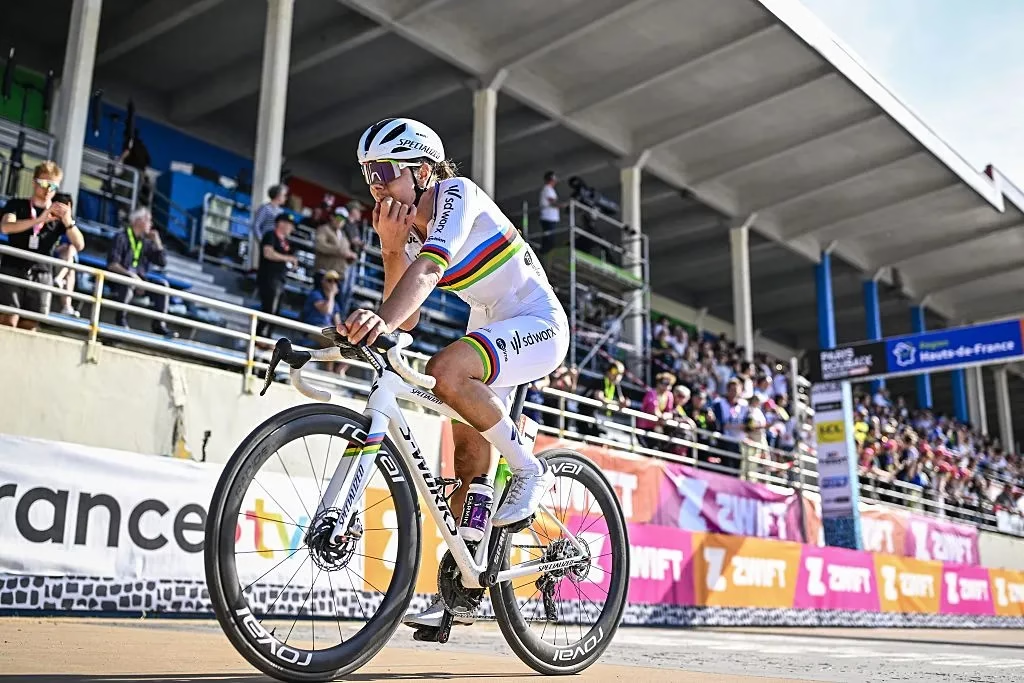
Even with the added cobbles, the race still ends in the Roubaix velodrome, and that finish remains central to how Paris-Roubaix Femmes is understood. The velodrome is not just a visual symbol. It changes the way riders and teams think about the final kilometres. A lone rider wants enough of a gap to stay clear before the track. A small group knows that if they arrive together, the race becomes a different sort of contest.
That balance is one of the race’s great strengths. The route can be brutal enough to reward an attacker, but the velodrome still leaves open the possibility that the winner is decided only at the very end. The harder 2026 route should increase the chances of a reduced front group rather than a larger chase making it back together, but the finish still gives the race tactical ambiguity right to the line. This is an inference based on the route structure and finish.
The simplest way to read the 2026 route
If you want the clearest summary, it is this:
- the race is tougher than before
- the new sectors make the first cobbled phase more serious
- the late sequence still revolves around Mons-en-Pévèle, Camphin-en-Pévèle and Carrefour de l’Arbre
- the velodrome finish keeps the outcome open even after the final pavé sectors
That is why Paris-Roubaix Femmes 2026 looks so interesting already. The race has not abandoned the structure that made the previous editions compelling. It has simply made the whole thing a little harsher, a little more selective and a little less forgiving. For a race whose entire identity is built on attrition, that is a meaningful shift.