
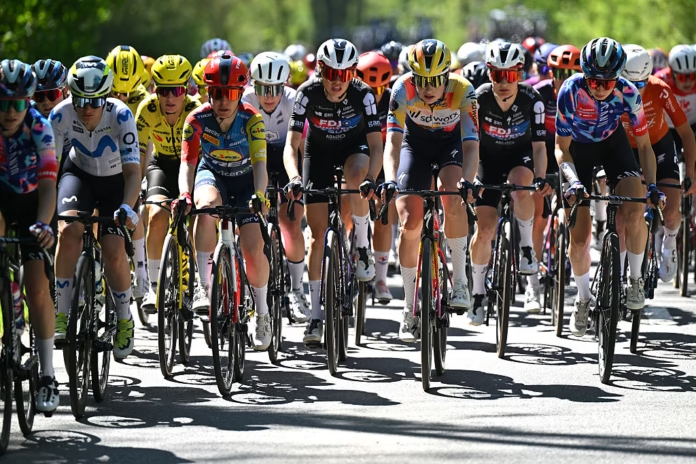
If you are new to women’s cycling, the hardest part is not always understanding who is winning. It is understanding what everyone is talking about while the race is happening. Commentary moves quickly, team tactics can change in seconds, and terms that feel obvious to regular viewers can sound oddly technical if you are still learning the sport.
That is why a race-day glossary helps. Women’s cycling is often easy to enjoy visually. The roads are clear, the attacks are obvious, and the tension of the finale usually comes across whether you know every detail or not. But once you understand the language around the race, everything becomes sharper. You start to see why a move matters, why one rider is working while another is sitting on, and why a bunch sprint on one day can look completely different from a reduced sprint on another.
This guide explains the key terms you are most likely to hear during a women’s road race. It is not a full technical dictionary of cycling. It is a practical glossary for race day, designed to make live viewing easier and more enjoyable.
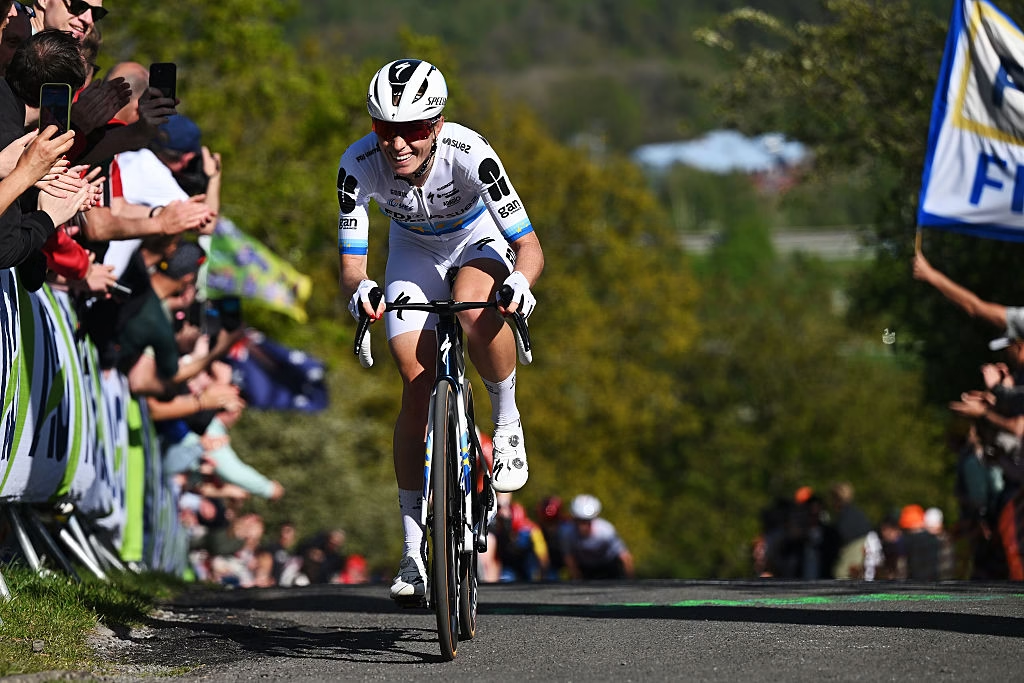 Photo Credit: Getty
Breakaway
A breakaway is a rider or small group of riders who have gone clear of the peloton. They are ahead of the main bunch and trying to build or hold a gap.
This is one of the most basic and most important ideas in cycling. A breakaway can form early and stay away for much of the day, or it can happen late as part of a decisive attack. Not every breakaway is trying to win. Sometimes it is about TV exposure, mountains points or forcing other teams to chase. Sometimes it is the winning move.
In women’s cycling, breakaways can be especially important because team depth is often thinner than in men’s racing, which can make the chase less predictable and give attackers a better chance.
Peloton
The peloton is the main bunch of riders in the race. If commentators say a rider has been caught by the peloton, it means the main group has brought her back.
You can think of the peloton as the race’s centre of gravity. Most teams place their leaders there until the race becomes selective enough to split apart. The peloton is not static, though. Its shape changes constantly depending on wind, road width, pace and tactics.
Bunch sprint
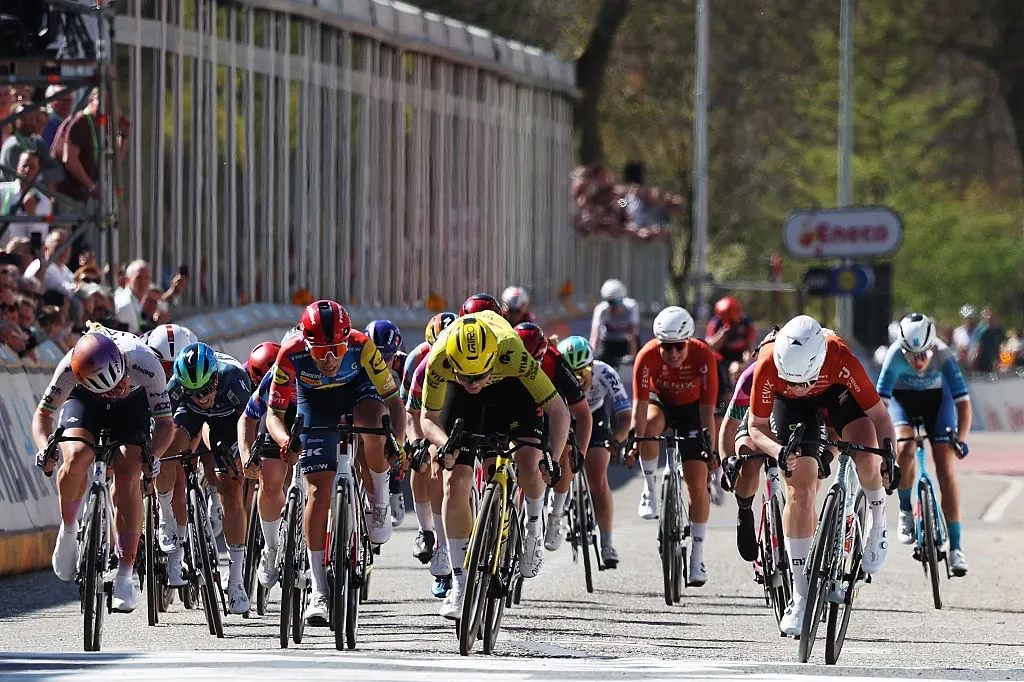
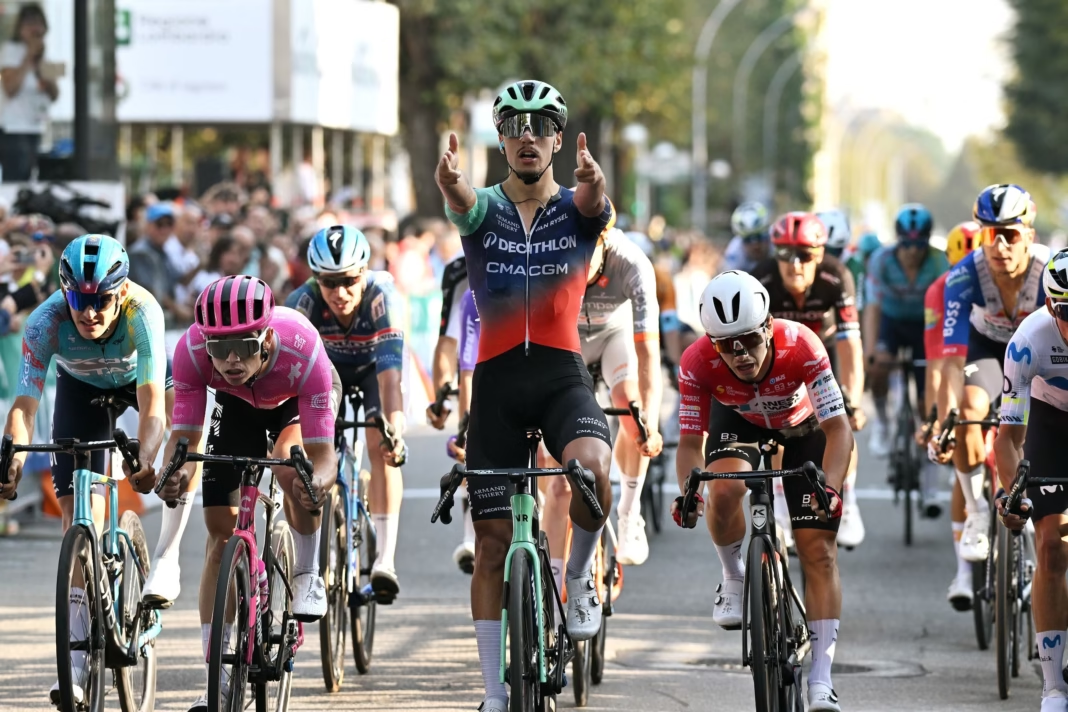
A bunch sprint is a sprint finish involving a large group of riders, usually the peloton or what is left of it after a flatter stage or one-day race.
This is where the fastest pure sprinters usually matter most. Their teams try to keep the race together, control breakaways and deliver them to the finish in the best possible position.
In women’s racing, bunch sprints can still happen after surprisingly hard days if the climbs are not selective enough to drop the fastest finishers.
Reduced sprint
A reduced sprint is a sprint finish from a smaller group rather than a full peloton.
This usually happens after a hilly race, crosswinds, gravel sectors or repeated attacks have thinned the field. Reduced sprints are often tactically different from full bunch sprints because the riders involved may be punchier, more tired or less supported by teammates.
A rider who is not fast enough to win a pure bunch sprint may still win a reduced one.
Lead-out
A lead-out is when one or more teammates ride hard in front of their sprinter to deliver her into the final metres in the best possible position.
The goal is not just speed. It is timing and placement. A good lead-out keeps the sprinter sheltered, moves her through the bunch without wasting energy, and releases her late enough that she can open her sprint without fading before the line.
Lead-outs in women’s cycling can vary hugely in size and quality. Some teams have full sprint trains. Others may only have one final rider doing the job.
Sprint train
A sprint train is a line of teammates leading out a sprinter in the closing kilometres of a race.
Each rider does a turn at high speed, then pulls off once her effort is done, ideally leaving the final lead-out rider and then the sprinter in perfect position. When it works, it looks smooth and controlled. When it goes wrong, the team can lose its sprinter before the sprint has even started.
GC
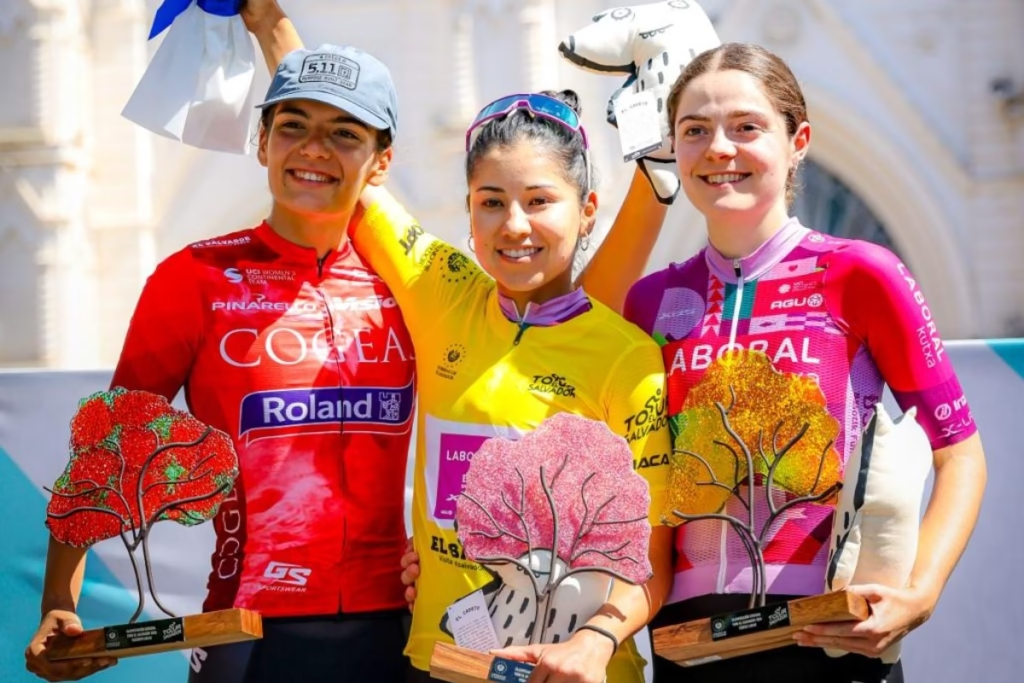
GC stands for general classification. This is the overall standings in a stage race, based on cumulative time.
The rider with the lowest total time leads the GC and usually wears the leader’s jersey, depending on the race. In Giro d’Italia Women, for example, that is the maglia rosa.
GC is what matters most in a stage race if you are talking about the overall winner rather than individual stage results.
Domestique
A domestique is a rider whose main job is to support a teammate rather than ride for her own result.
That support can mean chasing breakaways, carrying bottles, protecting a leader from wind, pacing on climbs or helping with positioning before key parts of the race. Domestiques are essential to cycling, even if they do not always appear in the result sheet.
The best domestiques can completely shape a race without ever looking like they are trying to win it.
Road captain
A road captain is an experienced rider within the team who helps make tactical decisions during the race.
The sports director gives instructions from the team car, but cycling happens too fast for every decision to come from behind. A road captain helps organise the team in real time, decides who should chase, when riders should move up, or how to respond to attacks.
Attack
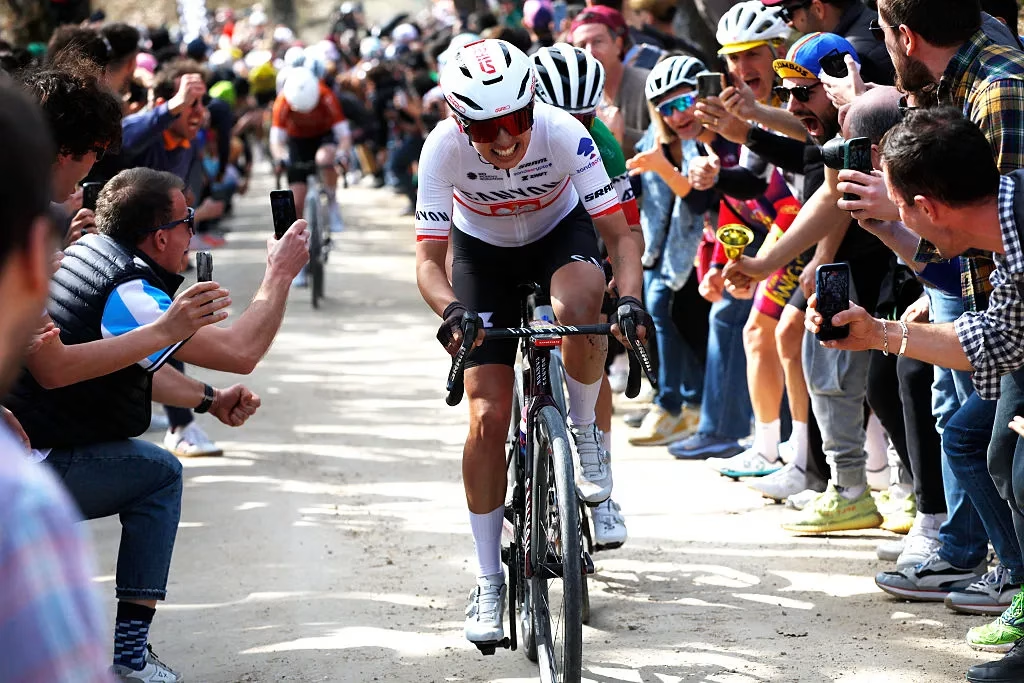
An attack is when a rider accelerates sharply in an attempt to go clear of the group.
Attacks can come at any time, but they matter most on climbs, in technical sections, in crosswinds or near the finish. Some attacks are testing moves. Others are race-winning efforts.
A key part of watching cycling is learning which attacks are dangerous and which are unlikely to last.
Counter-attack
A counter-attack comes just after another move has been brought back or begins to stall.
It is effective because the riders who just chased the first move are often tired or disorganised. Counter-attacks are one of the most common ways strong riders escape late in races.
Bridging across
If a rider is “bridging across”, she is trying to cross the gap from one group to another, usually from the peloton to the breakaway or from a chase group to the leaders.
This takes judgement as well as strength. Go too hard and you arrive exhausted. Go too slowly and the move disappears up the road.
Sitting on
If a rider is “sitting on”, she is following wheels in a group but not taking turns at the front.
This is usually tactical. If she has a teammate ahead, or if she believes she is the fastest rider in the group, she may refuse to contribute to the pace. That can frustrate the others, but it is often smart racing.

Pulling through
Pulling through means taking your turn at the front of a small group to help keep the pace high.
In a breakaway or chase group, riders often rotate smoothly, each doing a short effort before moving aside. If someone stops pulling through, the group’s cohesion can start to break down.
Chase
The chase is the effort behind the leaders to bring them back.
That could be done by one rider, a team, a small group or the peloton. Commentary often focuses on “who is chasing” because that reveals which teams believe the move ahead is dangerous.
Gap
The gap is the time difference between one rider or group and another.
If the breakaway has 30 seconds, that means they are 30 seconds ahead of the peloton. Gaps matter because they tell you whether a move is growing, stabilising or collapsing.
Selection
A selection happens when the race becomes hard enough that weaker riders are dropped and only the strongest remain.
This can happen on a climb, in wind, on cobbles, on gravel or simply through repeated pressure. A race that has “made the selection” has usually reached its decisive phase.
Dropped
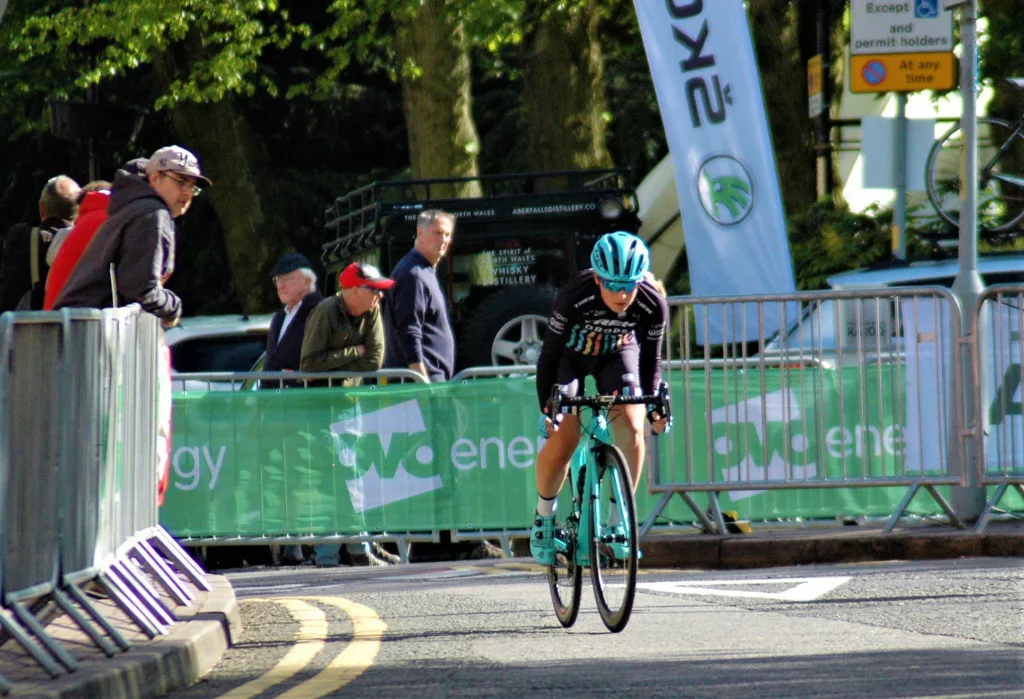
If a rider is dropped, she can no longer stay with the group she was in and falls behind.
Being dropped on a climb is common, but riders can also be dropped because of positioning, crashes, crosswinds or technical sections.
Split
A split is when a group breaks apart, either because of pace, terrain, wind or positioning.
Splits are not always caused by attacks. Sometimes they happen because the race stretches into a line and riders at the back simply cannot hold the wheel in front.
Crosswinds
Crosswinds happen when wind hits the riders from the side rather than directly ahead or behind.
They matter because riders can no longer shelter neatly in a straight line behind each other. This can stretch the bunch and create splits.
Crosswinds are one of the most important tactical elements in flat racing, and they can turn a quiet stage into chaos very quickly.
Echelons
Echelons are the angled lines riders form across the road in crosswinds to get shelter.
Because the road is only so wide, not every rider can fit into the protected line. Those left exposed can be dropped, and the bunch can split into several groups. If commentators mention echelons, the race is usually becoming dangerous very quickly.
Mechanical
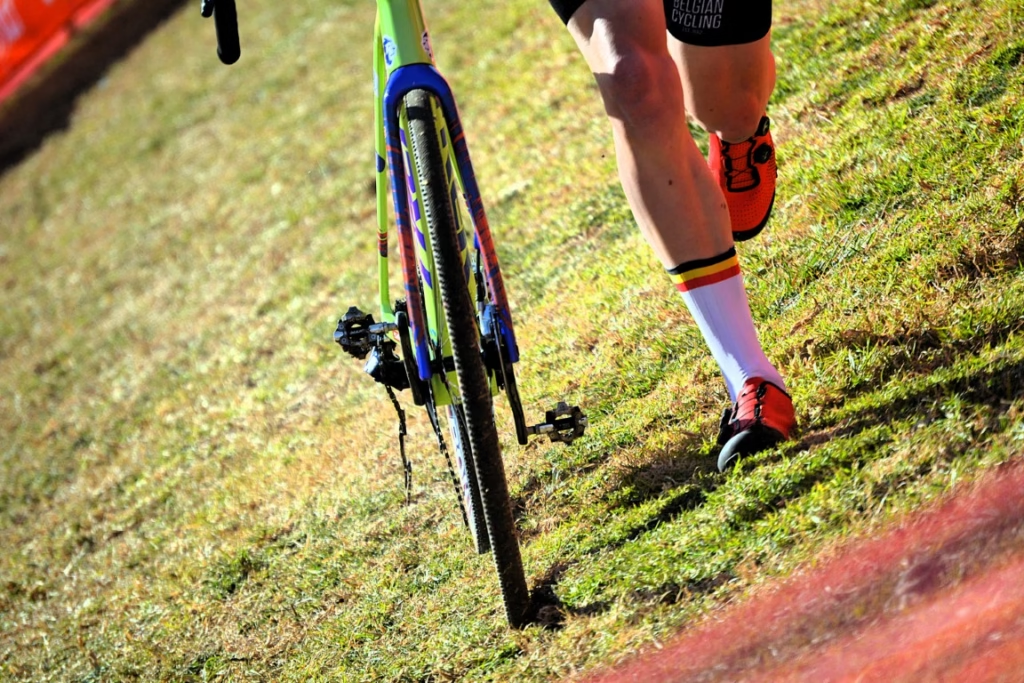
A mechanical is a bike problem such as a puncture, dropped chain or equipment failure.
Mechanicals matter because they can happen at the worst possible time. A rider may lose contact with the peloton or miss a decisive move simply because of bad luck or poor timing.
Feed zone
The feed zone is the designated area where riders can collect food and drink from team staff during a race.
Nutrition matters enormously, especially in longer races and stage races. A badly timed missed bottle or poor fuelling decision can shape the final result more than many viewers realise.
Bonk
To bonk is to run out of energy badly, usually because of poor fuelling.
A rider who bonks may suddenly lose power, struggle to respond and fade dramatically. The term is informal, but it is widely understood in cycling.
Climber
A climber is a rider who excels on steep or sustained ascents.
Climbers are usually lighter and best suited to mountain stages, hilly one-day races or summit finishes. Not all climbers are the same, though. Some prefer long steady climbs, others short sharp ramps.

Puncher or puncheur
A puncher is a rider who excels on short, steep climbs and explosive uphill efforts.
This rider type is especially important in races such as La Flèche Wallonne Femmes, Amstel Gold Race Women or hilly Classics where the decisive move comes on a sharp climb rather than a long mountain ascent.
All-rounder
An all-rounder is a rider who can handle different kinds of terrain and race situations well.
She may not be the best pure sprinter or the best pure climber, but she is strong across enough areas to be dangerous in many races. All-rounders often do especially well in one-week stage races and hilly one-day races.
Time trial
A time trial is a race against the clock where riders start individually and ride alone rather than as part of the bunch.
In a stage race, time trials can create important gaps in the GC. They favour riders who can produce sustained power and pace themselves precisely.
Time trial mode
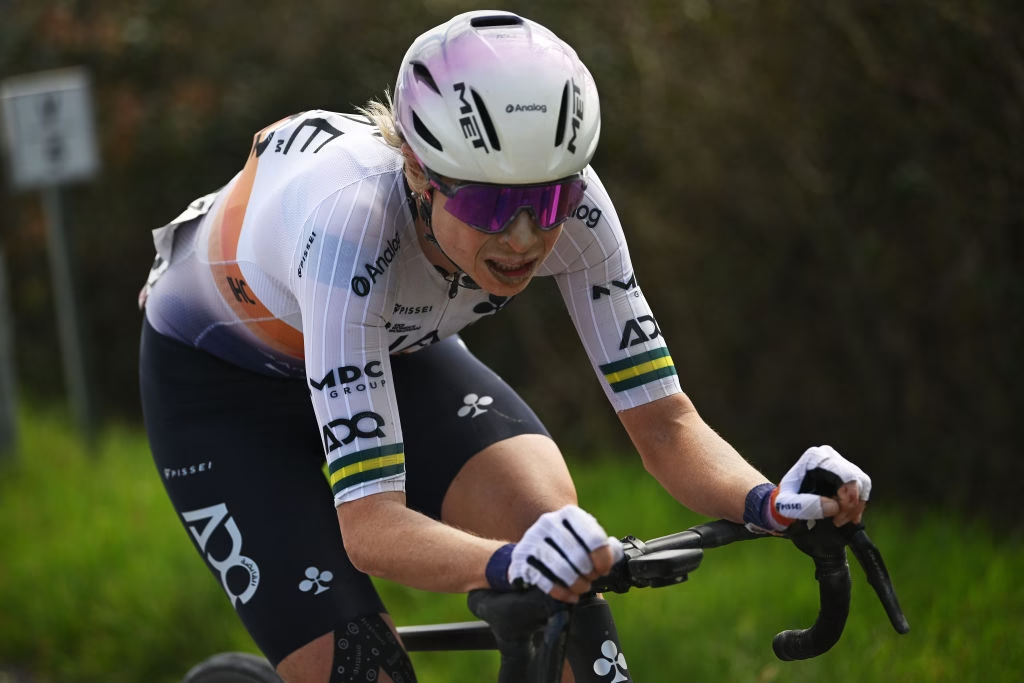
“Time trial mode” is a phrase commentators often use when a rider, duo or small group settles into a very hard, sustained effort that looks like an individual time trial even though it is happening inside a road race.
It usually means the rider is fully committed, head down, riding at a steady high pace and trying to turn the race into a pure power effort rather than something tactical. You often hear it when a strong rider attacks solo and begins to extend a gap, or when a pair of leaders start working smoothly together after going clear.
It is not an official racing category, just commentary shorthand. But it is useful because it instantly tells you what the race now looks like: less hesitation, less gamesmanship, more raw pacing and damage control behind.
Breakaway specialist
A breakaway specialist is a rider known for getting into aggressive moves and surviving out front.
These riders are often strong, tactically clever and good at judging effort. They may not win huge numbers of races, but they influence them constantly.
Satellite rider
A satellite rider is a teammate sent up the road earlier in the race to be available later if the leader attacks across to her.
This is a more advanced tactical term, but it is very useful in stage racing and harder one-day races. A leader can bridge across to her teammate later, then use that rider’s support farther up the road.
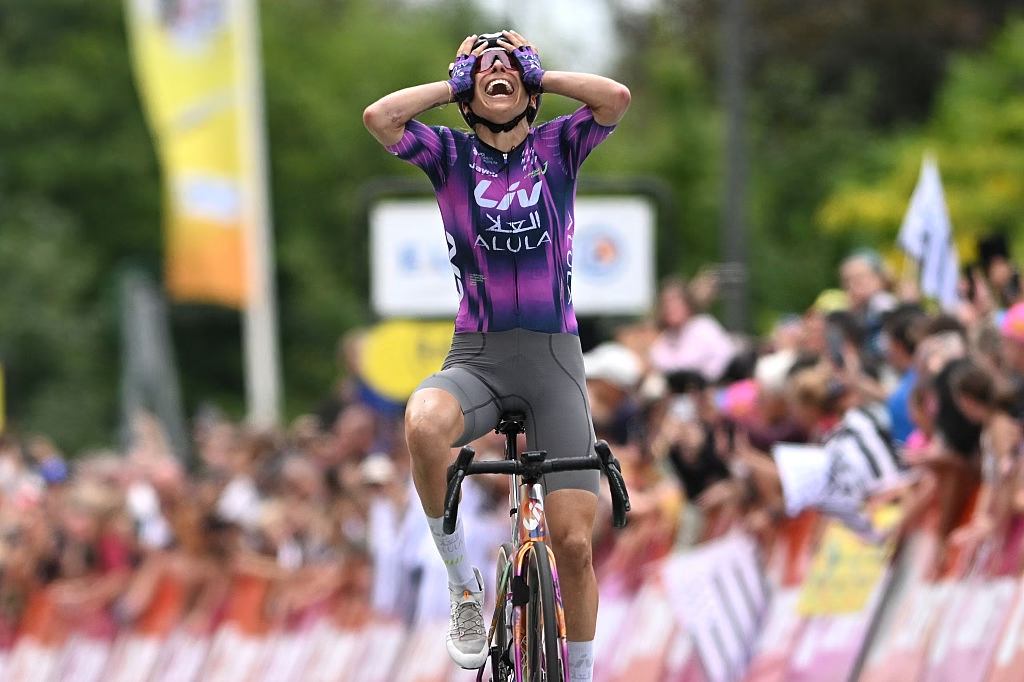 Photo Credit: Getty
Taking a flyer
Taking a flyer means launching a late attack, often in the final kilometres, in the hope of staying away before a sprint.
This usually happens when a rider knows she will not win a straight sprint and wants to force a different finish.
On the rivet
If a rider is “on the rivet”, she is at her absolute limit.
You often hear this on climbs or in very hard finales. It suggests a rider is only just holding on and may crack if the pace rises again.
Cracking
Cracking means a rider has suddenly lost the ability to hold the pace after riding near her limit.
This often happens on climbs, where a rider can look fine one moment and then lose contact very quickly. In stage racing, a crack can define the whole GC.
Race radio
Race radio is the communication system between the sports director in the team car and the riders.
Not every decision comes through race radio, but it is a major part of modern racing. It helps teams communicate about gaps, crashes, tactics and feeding.
Neutral service
Neutral service is independent mechanical support provided during the race.
If a rider has a puncture or mechanical and her team car is not immediately behind, neutral service can provide a bike or wheel. It is not always perfect, but it can save a race from ending instantly.
-
 Photo Credit: Getty
Why learning the terms matters
You do not need to know every cycling term to enjoy a race. Women’s cycling is often compelling long before you fully understand the tactics. But once you know what a breakaway, lead-out, echelon, reduced sprint or time trial mode really means, the race becomes easier to read and much more rewarding to follow.
That is especially true on race day, when commentary moves fast, and the logic of the race can shift in seconds. Understanding the language helps you spot the real story earlier. You start noticing when a team is chasing because it has to, when a rider is sitting on because it is smart, and when a race is beginning to split before the time gaps fully open.
Cycling becomes much easier once the words stop feeling technical and start feeling practical. That is when you stop merely watching the race and start reading it.

