I arrived in Corvara in that quiet window of autumn when the Dolomites seem to exhale. The summer crowds have thinned, the chairlifts creak to a stop, and the air carries a clarity that sharpens everything it touches. The light feels cleaner here in October, less insistent than summer, more deliberate. Blue sky without bravado. Cool mornings that demand arm warmers and reward you for bringing them.
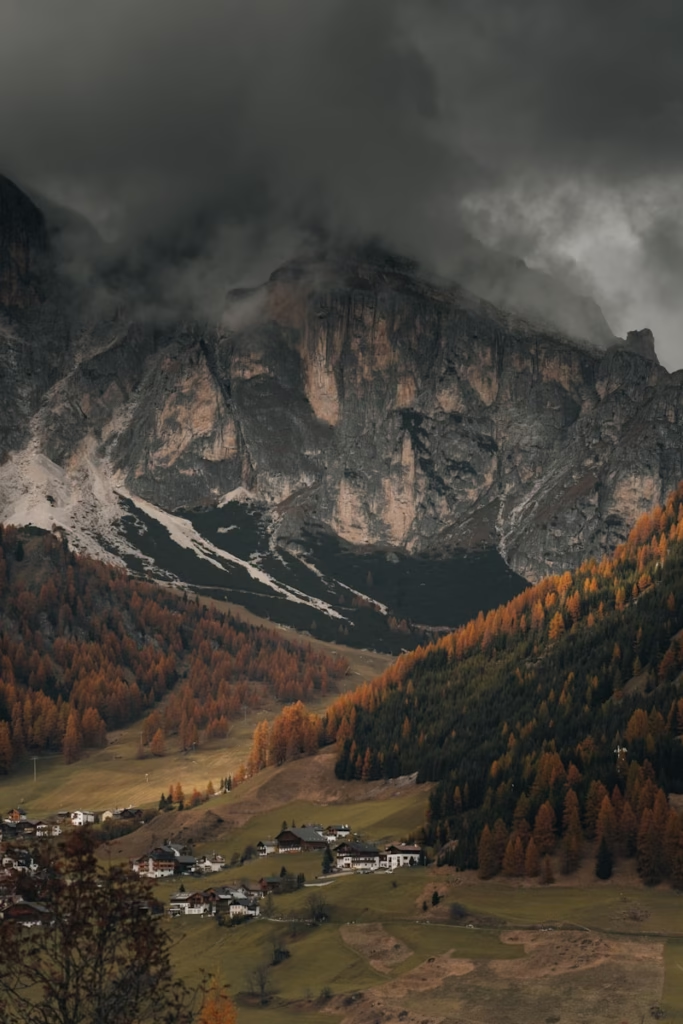
From my balcony at the Posta Zirm Hotel, the mountains stood close enough to feel like company. Not a backdrop, not scenery, but presences. Grey limestone faces catching the early sun, dark bands of pine climbing their lower slopes, a faint smell of damp leaves and woodsmoke drifting up from the valley. It felt like a place that expected effort from you, but promised something in return.
Rolling out from Corvara
I rolled out alone, wheels whispering over immaculate tarmac, the village still half-asleep. Corvara has a gentleness to it early in the day. A few shutters lifting, a bakery door opening somewhere nearby, the soft clink of cups inside cafés preparing for walkers rather than cyclists. The bike felt light beneath me, partly because of the cool air, partly because this was why I was here.
The road towards the Passo Gardena does not rush you. It eases you into the work, a polite incline through woodland that smells of moss and wet bark, the gradient just enough to warm your legs without demanding commitment. The soundscape is minimal. No traffic noise, just the faint hiss of tyres, the tick of the freehub when you stop pedalling to adjust a layer, your own breathing finding its rhythm.
 Photo Credit: Wolfgang Moroder
The slow build of the Passo Gardena
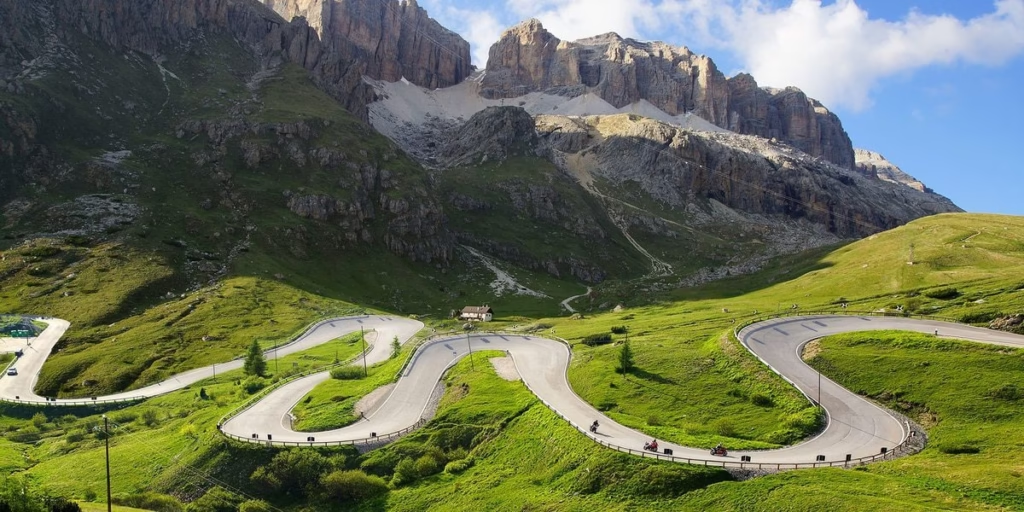
As the climb develops, politeness fades. The trees thin, the road straightens, and the mountain begins to speak more plainly. The gradient tightens its grip. Each corner reveals another stretch of road climbing steadily into space, the valley falling away behind you. Autumn has a way of amplifying these moments. The colours are richer, the contrasts sharper. Golden larch needles underfoot, dark shadows pooled beneath rock faces, the sky an uninterrupted blue that makes the effort feel almost theatrical.
Riding solo sharpens your awareness of discomfort. There is no conversation to dilute the work, no wheel to follow when the legs begin to complain. The Passo Gardena from Corvara is not savage, but it is honest. It asks for patience. My cadence slowed as the climb dragged on, the sensation in my legs shifting from warmth to something deeper, more insistent. That familiar internal negotiation began. You start counting bends. You start promising yourself things. Coffee. Rest. The descent.
Reaching the top of the pass
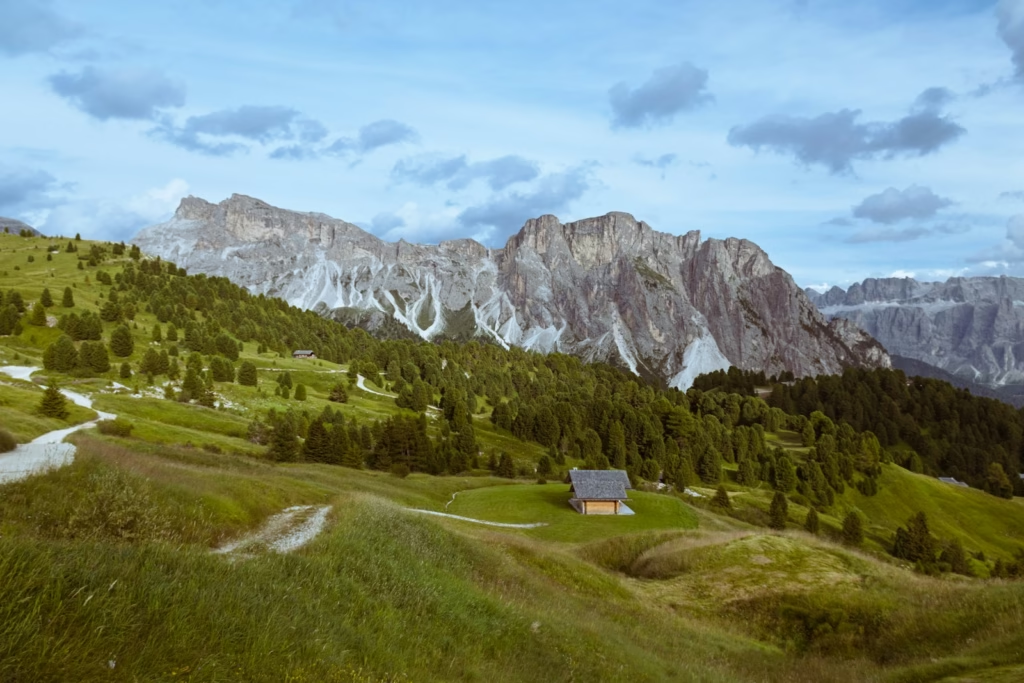
Higher up, the trees give way almost completely. The Dolomites reveal themselves properly here, their jagged profiles cutting into the sky with a confidence that borders on arrogance. The air thins, cool against the sweat on your arms, and every breath feels cleaner for it. The road surface remains flawless, a ribbon of grey curling its way through a landscape that feels older than the act of cycling itself.
The final kilometres are the hardest. Not because the gradient suddenly ramps, but because the climb has worn you down incrementally. Each pedal stroke carries weight now. My shoulders tensed without me noticing, hands fixed on the tops, gaze locked on the next bend. And then, almost abruptly, the effort releases its hold.
The summit arrives without fanfare. No dramatic reveal, no finish line theatrics. Just a sign, a widening of the road, a sense of space returning to your body. I stopped, unclipped, and stood still for a moment longer than necessary. The feeling at the top was extraordinary. Not triumph exactly, but relief edged with gratitude. For the legs that carried me there. For the silence. For the view opening out in every direction, peaks stacked upon peaks, pale and immovable.
Descending into flow
The descent from the Passo Gardena is the kind that makes you recalibrate what good road feels like. Long, flowing corners that encourage trust, visibility that invites speed, surfaces that hum rather than chatter. The air grew warmer with every metre lost, the smell of pine returning, the sound of water somewhere below growing louder as I dropped back towards the valley floor. This is where the effort repays itself, not with adrenaline, but with flow.
Linking roads across Alta Badia, the ride settled into a rhythm. Short rises, fast drops, villages that appeared and disappeared in the time it takes to drain a bottle. Stone farmhouses tucked into hillsides, church spires marking centres of gravity in the landscape. Even solo, there was a sense of being accompanied by history here. These roads have carried generations of riders, from local farmers to Giro d’Italia contenders, all measured against the same gradients, the same unyielding mountains.
Why the Dolomites stay with you
The Sella massif loomed throughout the day, sometimes distant, sometimes close enough to feel oppressive. Its scale is difficult to explain. It does not dominate through height alone, but through presence. Riding around it feels less like ticking off a route and more like orbiting something significant.
By the time I rolled back into Corvara, the sun had softened. The shadows lengthened across the road, and the temperature dipped just enough to remind me it was autumn. My legs carried that pleasant heaviness that comes from work well done. The village felt busier now, hikers returning, café terraces filling, the low murmur of conversation spilling into the street.
Back at the Posta Zirm Hotel, the transition from ride to rest was seamless. The building understands cyclists. There is no sense of being an inconvenience, no raised eyebrows at cleats on stone floors or salt-streaked jerseys. The bike was cleaned and stored with care. I showered, the heat loosening muscles that had tightened without complaint all day, and later sat down to food that felt earned rather than indulgent.
Local ingredients, simple preparation, flavours that cut through fatigue. Bread still warm, pasta that tasted of more than comfort. I ate slowly, watching the light fade from the mountains through the windows, replaying the climb in my head, the quiet at the top, the way the road had unspooled beneath me on the descent.
There are rides that impress you, and rides that stay with you. Not because they are the hardest, but because they feel complete. Landscape, effort, solitude, reward. The Dolomites have a way of stripping things back to essentials, and the Passo Gardena from Corvara does exactly that.
Practical information
Location
Corvara sits in Alta Badia, at the heart of the Dolomites in northern Italy. The region is a UNESCO World Heritage site and one of the most revered destinations for road cycling in Europe, with classic climbs radiating in every direction.
Riding
From Corvara, riders have immediate access to the Sellaronda loop, Passo Gardena, Passo Campolongo, Passo Pordoi and longer extensions towards Fedaia. Roads are exceptionally well maintained, gradients are sustained rather than erratic, and traffic drops significantly outside peak summer months.
When to go
Autumn offers mild temperatures, clear skies and quieter roads. Mornings can be cool, particularly at altitude, and layers are essential, especially for long descents.
Accommodation
The Posta Zirm Hotel in Corvara is a dedicated bike hotel well suited to road cyclists. It offers secure bike storage, workshop facilities and bike hire on site. Its central location places several major climbs directly on the doorstep, while post-ride recovery is enhanced by excellent local food and a relaxed, cyclist-friendly atmosphere.

Want more Italian ride ideas like this? Head to our Cycling in Italy hub for the best bases, iconic passes, and practical trip planning tips across the Dolomites, Tuscany, the lakes, and beyond.