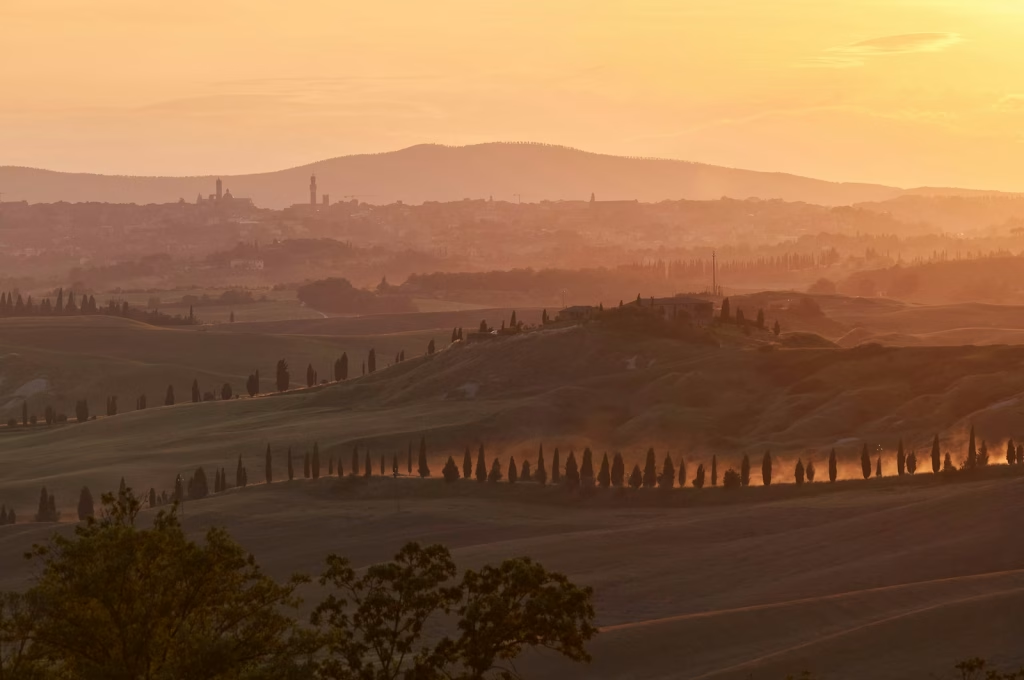
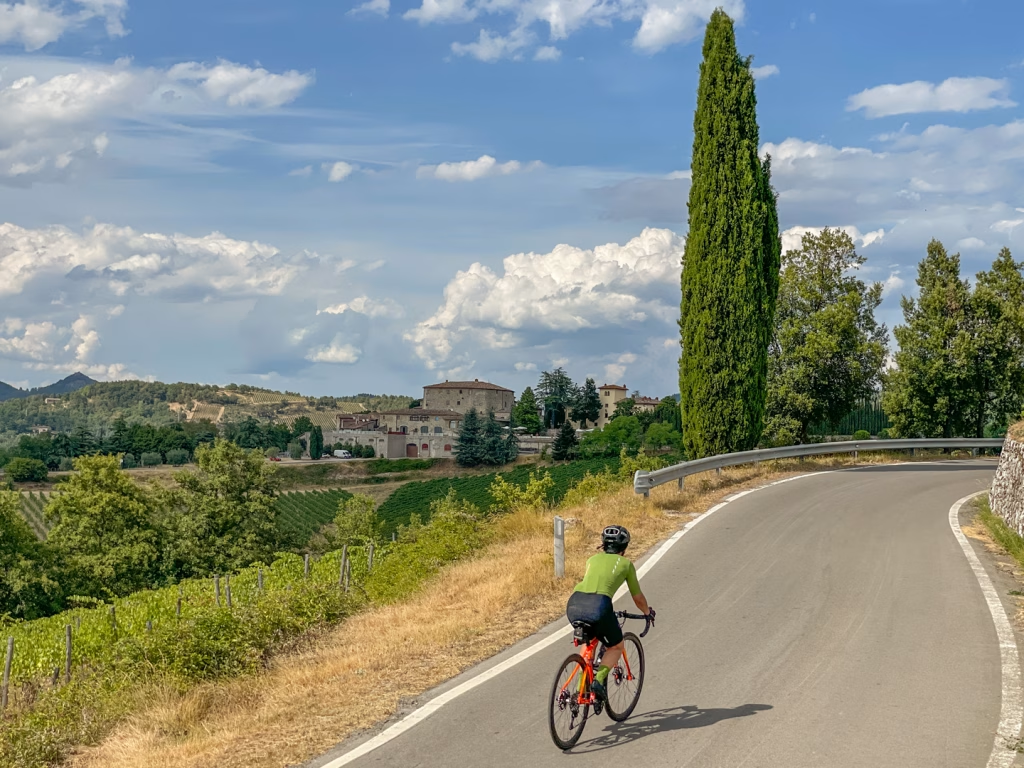
Tuscany, with the Chianti wine region at its heart, represents cycling’s most romantic landscape. Here, where cypress-lined roads wind through vineyard-covered hills beneath medieval hill towns, lies terrain that has seduced cyclists for generations with its promise of beauty over brutality, culture over conquest. Within a 30-kilometre radius of towns like Siena, Gaiole in Chianti, and Radda in Chianti, you can explore the legendary strade bianche (white gravel roads), tackle the rolling hills that define Tuscan cycling, and pedal through landscapes that appear unchanged since Renaissance painters first captured them on canvas. For those who view cycling not merely as a physical challenge but as a journey through history and culture, Tuscany offers an unparalleled experience where every bend reveals another postcard vista, where every hilltop village invites exploration, and where the rhythm of riding matches perfectly the unhurried pace of Italian countryside life.
Much like exploring iconic cycling destinations across continents, Tuscany rewards those who embrace a different kind of riding, one where the destination matters less than the journey, where stopping for an espresso or glass of Chianti becomes not an indulgence but an essential part of the experience.
Tuscany and Chianti: Geography and Character
Tuscany spreads across central Italy between the Apennine Mountains and the Tyrrhenian Sea, a region of approximately 23,000 square kilometres comprising Florence, Siena, Pisa, Lucca, and countless smaller towns and villages. The Chianti region, technically defined as the area between Florence and Siena where Chianti Classico wine can be produced, forms the heart of Tuscan cycling, though the region’s appeal extends well beyond these boundaries to include Val d’Orcia, the Crete Senesi, and the hills around Montalcino and Montepulciano.
The landscape character differs dramatically from Alpine or Pyrenean cycling. The hills rarely exceed 700 metres in elevation (Siena sits at 322 metres, Radda in Chianti at 530 metres), with the highest point in Chianti, Monte San Michele, reaching just 893 metres. This creates a rolling rather than mountainous terrain, where elevation gains accumulate through constant undulation rather than single sustained climbs. A typical Chianti ride might include 1,200-1,800 metres of climbing over 80-100 kilometres, but delivered through dozens of short ascents and descents rather than several major passes.
The geology underlying this landscape consists primarily of sandstone, clay, and limestone laid down when this region lay beneath ancient seas. This composition creates the distinctive light-coloured soil visible on the strade bianche, those unpaved roads that give the professional one-day race Strade Bianche its name and character. The same geology enables the vi
neyard cultivation that has defined this region for millennia. The vines, predominantly Sangiovese for Chianti production, create the visual texture that makes Tuscan landscapes so recognisable, rows of green (or autumn gold) following the hillside contours in patterns that speak to centuries of agricultural tradition.
Siena and Gaiole: Twin Cycling Capitals
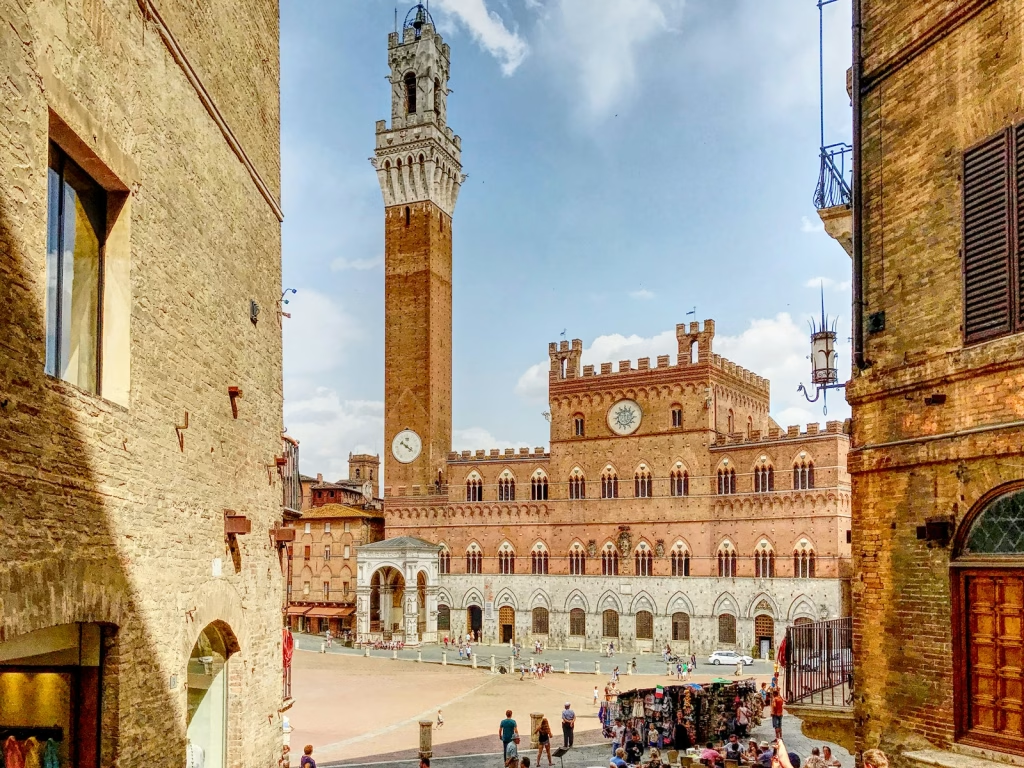
Siena (population 54,000) and the smaller Gaiole in Chianti (population 2,800) function as complementary bases for exploring the region, each offering distinct advantages and character. Siena, the medieval city built on three hills, provides urban sophistication and cultural depth. The UNESCO World Heritage historic centre, dominated by the shell-shaped Piazza del Campo and the soaring Torre del Mangia, offers Renaissance art, Gothic architecture, and a dining scene that ranges from traditional Tuscan trattorias to contemporary restaurants. The city hosts the famous Palio horse race twice annually (July 2nd and August 16th), a tradition dating to medieval times that transforms Siena into a vibrant celebration of contrada (neighbourhood) pride.
However, Siena’s historic centre proves challenging for cyclists, with steep cobbled streets and traffic restrictions making bike access difficult. The outskirts, whilst more accessible, lack the charm that draws visitors to Tuscany. Many cyclists use Siena as a day-trip destination rather than an accommodation base, preferring to stay in the smaller towns and villages scattered through the Chianti countryside.
Gaiole in Chianti presents a different proposition entirely. This small town on the Massellone torrent serves as the natural base for serious cyclists exploring the region. Positioned at the heart of the Chianti Classico production zone, Gaiole provides an authentic village atmosphere whilst maintaining excellent cycling infrastructure. The town hosts L’Eroica, the legendary vintage cycling event held annually on the first Sunday of October, when thousands of riders on pre-1987 steel bikes wearing wool jerseys tackle routes incorporating extensive stretches of the famous strade bianche. This heritage has created a cycling culture that permeates the town year-round.
The Chianti Village Network
Beyond Gaiole, a constellation of historic villages dots the Chianti landscape, each providing potential bases or destination points for day rides. Radda in Chianti (population 1,600, elevation 530m) crowns a hilltop with defensive walls still intact, offering 360-degree views across vineyards and forests. The town centre, arranged around a small piazza, maintains an authentic medieval character with minimal modern development. Several cycle-friendly accommodations have established themselves here, understanding that cyclists seek early breakfast, secure bike storage, and hearty evening meals after long days in the saddle.
Castellina in Chianti (population 2,900, elevation 578m) sits at the junction of three valleys, creating a natural gathering point that dates to Etruscan times. The Via delle Volte, a covered medieval street running through the old town walls, provides atmospheric strolling after rides. The town’s position makes it a practical base for rides exploring the western Chianti region toward Barberino Val d’Elsa and Monteriggioni.
Greve in Chianti (population 14,000, elevation 236m), positioned halfway between Florence and Siena, functions as a larger, more developed base with the inevitable trade-offs between amenities and atmosphere. The town’s triangular Piazza Matteotti hosts a Saturday market and is surrounded by porticos housing shops and restaurants. Greve’s lower elevation makes it warmer in summer but requires climbing in all directions to access the classic Chianti landscape. The town maintains strong connections to cycling tourism whilst serving a genuine market town function for surrounding farms and vineyards.
Panzano in Chianti (population 1,100, elevation 478m) enjoys particular fame for its butcher shop, Antica Macelleria Cecchini, where Dario Cecchini has elevated meat preparation to performance art. Beyond this gastronomic draw, Panzano provides an excellent base for exploring the central Chianti hills, with quiet roads radiating in all directions toward Radda, Greve, and Castellina.

The Legendary Routes: Chianti’s Ribbons of Tarmac and Gravel
Tuscan cycling defies the categorisation that works for mountain regions. There are no numbered passes, no single climbs that define success or failure. Instead, the region rewards loop-building, linking small roads and strade bianche into circuits that create rhythm through constant variation. Understanding the character of key routes and road segments enables constructing rides that match ability and ambition.
The Via Chiantigiana (SR222): The Chianti Spine
The Strada Regionale 222, known as Via Chiantigiana, forms the primary artery connecting Florence to Siena through the heart of Chianti. This 70-kilometre route passes through Greve, Panzano, Radda, Castellina, and numerous smaller settlements, climbing and descending through classic Tuscan landscape. However, the road carries significant traffic, particularly during summer weekends and wine harvest season, when tour buses and wine tourists make it less pleasant for cycling.
Most experienced cyclists avoid sustained riding on the SR222, instead using it as a connector while building loops on the quieter parallel roads that wind through the hills on either side. The road serves its purpose for reaching destinations (stopping in Panzano for lunch, visiting Radda for coffee), but the joy of Chianti cycling lies in the alternatives, not the main route.
The Strade Bianche Network: White Roads Through Vineyards
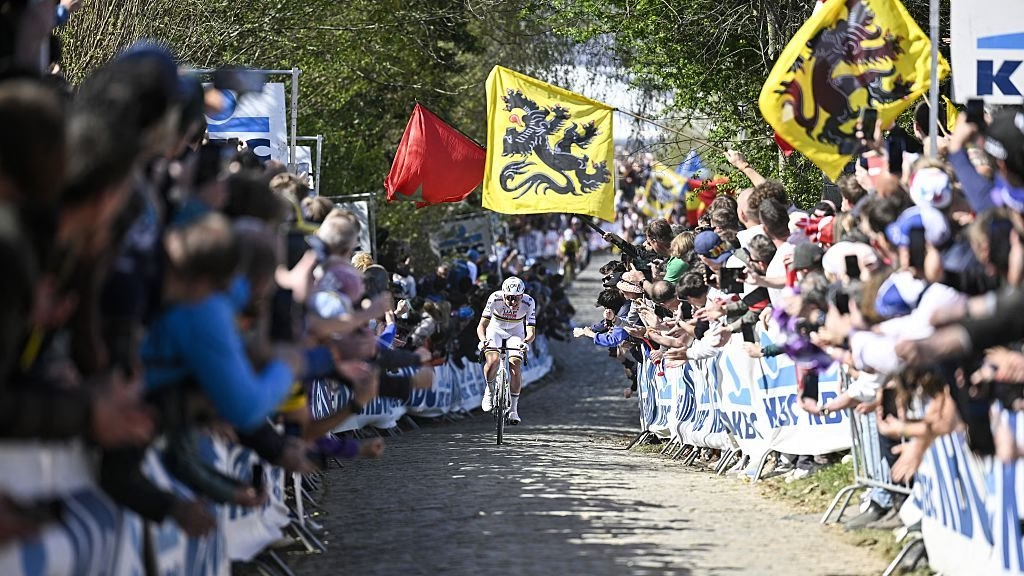
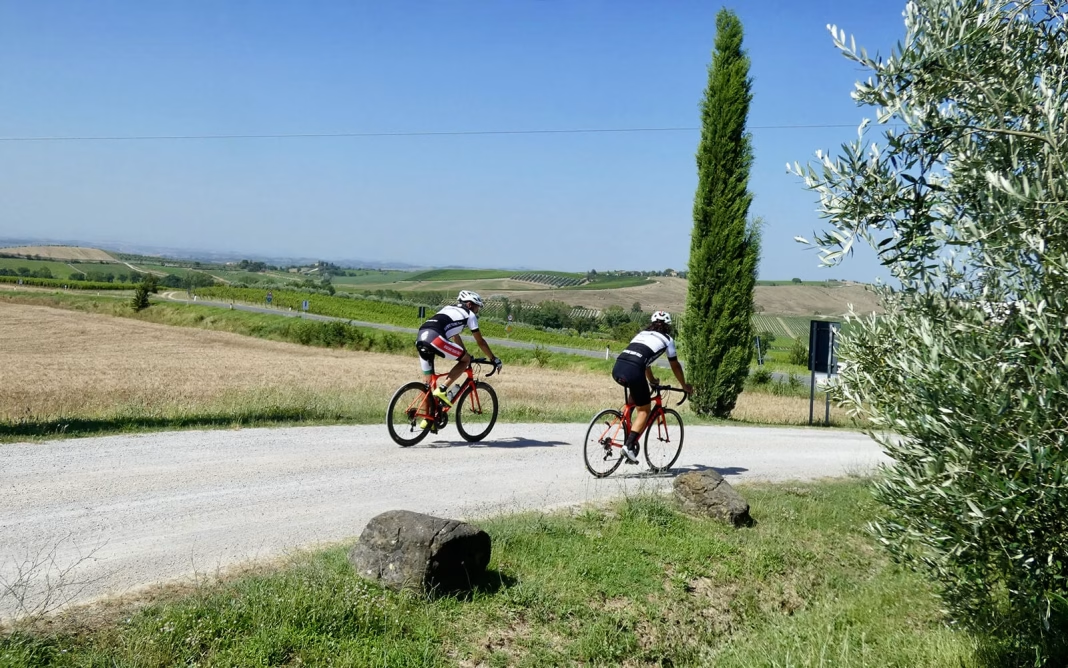
The strade bianche, those unpaved limestone and gravel roads that gave the professional race its name, represent Tuscany’s most distinctive cycling experience. These roads, maintained for agricultural access rather than tourism, wind through vineyards, olive groves, and forests, often climbing steep gradients (12-15% not uncommon) on loose surface that demands different technique from paved riding. The fine limestone dust creates the characteristic white appearance, particularly pronounced during dry periods when every passing vehicle raises clouds that settle on vines and cyclists alike.
The strade bianche vary dramatically in character and condition. Some, like the road from Radda toward Volpaia, maintain relatively firm surfaces suitable for road bikes with wider tyres (28mm minimum, 32mm+ preferable). Others, particularly those through working vineyards, feature deep loose gravel demanding mountain bikes or gravel-specific bikes with appropriate tyres. Weather dramatically affects conditions, with rain transforming dry dust into adhesive mud that clogs tyres and drivetrains within minutes.
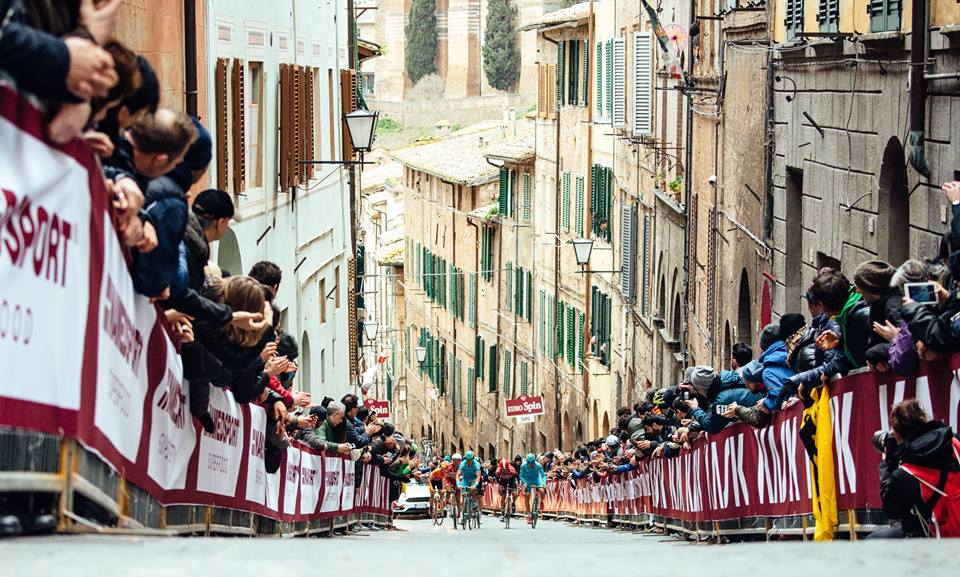
The professional Strade Bianche race, held annually in early March, typically includes 60-80 kilometres of unpaved roads within its 200-213 kilometre total distance (the 2026 edition featured 64.1km of gravel across 14 sectors for the men, 50.3km across 13 sectors for the women). The race route changes each year slightly but always finishes in Siena’s Piazza del Campo after traversing many of the region’s most famous sectors, with the brutal Via Santa Caterina climb (600 metres at 9% average, with ramps to 16%) deciding many editions mere metres from the finish. Key segments include the climb through Monte Sante Marie (11.5 kilometres of gravel, the longest sector and often where the professional race splits apart), the steep ramps around Monteaperti, and the decisive ascent into Siena through the Le Tolfe sector, each testing riders’ bike handling, power, and courage on loose surfaces.
For recreational riders, incorporating strade bianche into routes requires appropriate equipment (gravel or cyclocross bikes, or road bikes with 28mm+ tyres), realistic expectations about speed and difficulty (gradients feel steeper on loose surfaces, and average speeds drop 3-5 km/h compared to paved equivalents), and contingency planning (some sectors become impassable after rain, requiring route changes). The rewards, however, justify the challenges. Riding through a vineyard on a white road as September afternoon light angles across the Sangiovese grapes offers an experience that paved roads simply cannot deliver.
The Crete Senesi: Clay Hills and Lunar Landscapes
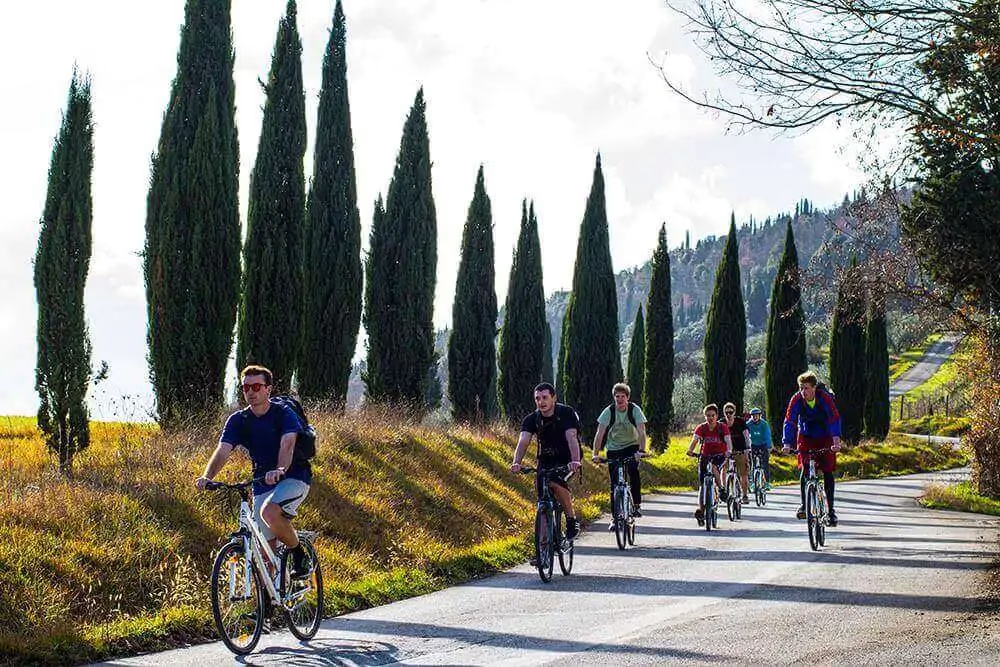
South and southeast of Siena lies the Crete Senesi, an area of distinctive clay hills that create an almost lunar landscape character. The clay-heavy soil supports limited vegetation, creating exposure that reveals the landscape’s underlying forms. Isolated farmhouses crown hilltops, cypress allées march across ridgelines, and roads climb and plunge through this undulating terrain with gradients that rarely relent.
The Dolomites featured prominently in the Renaissance paintings that established Tuscan landscape iconography, and riding here feels like cycling through those compositions. The main roads through this area, particularly the SP451 from Siena toward Asciano and Buonconvento, carry moderate traffic but deliver stunning views. The smaller roads branching into the hills provide quieter alternatives at the cost of steeper gradients and rougher surfaces.
This region hosts much of the Strade Bianche race route, with numerous sectors of white roads climbing through the clay hills. The combination of distinctive landscape and challenging terrain makes the Crete Senesi essential for any serious Tuscany cycling itinerary, though the exposure means summer heat can prove punishing. Spring (March-May) and autumn (September-October) provide ideal conditions when temperatures moderate and dramatic clouds add visual interest to the spare landscape.
Monte Amiata: Tuscany’s Alpine Exception
For cyclists seeking sustained climbing reminiscent of proper mountain passes, Monte Amiata (1,738m), an extinct volcano rising south of the main Chianti region, provides the only option in Tuscany. The climb from Abbadia San Salvatore to the summit measures approximately 12 kilometres with 850 metres elevation gain, averaging around 7% with maximum ramps approaching 12%. The road winds through beech forests, creating a completely different character from the open Chianti hills.
Monte Amiata remains firmly outside the Chianti region proper, requiring 90+ kilometres from Gaiole or Radda to reach the base. However, for those craving a proper mountain ascent during a Tuscany trip, or for those basing themselves in the southern areas around Montalcino, Amiata provides a genuine climbing challenge that rewards effort with panoramic views across much of southern Tuscany.
Classic Loop Routes
Tuscan cycling rewards loop building, creating circuits that return to base whilst incorporating desired segments of strade bianche, quiet paved roads, and destination towns. A classic Gaiole-based loop might run: Gaiole – Radda in Chianti (12km, 300m gain) – Volpaia (6km further, 150m gain via strade bianche) – Panzano in Chianti (15km, rolling) – Greve in Chianti (8km, descending) – return to Gaiole via quiet parallel roads to SR222 (25km, rolling). This approximately 65-kilometre loop incorporates three historic towns, a beautiful strade bianche sector, lunch in Panzano, and constant landscape variation whilst remaining achievable for most cyclists.
Another rewarding circuit runs from Siena into the Crete Senesi: Siena – Asciano (30km, rolling via SP451) – exploring strade bianche around Asciano – Buonconvento (18km) – return to Siena via Monte Oliveto Maggiore and different strade bianche sectors (30km). This 80-kilometre route showcases the distinctive Crete landscape whilst incorporating the famous abbey at Monte Oliveto Maggiore, where the church interior features Renaissance frescoes worth the climb from the road.
The beauty of Tuscan cycling lies in the flexibility to adjust loops based on form, weather, and whim. Feeling strong? Add a detour to Castello di Brolio via the steep white road. Too hot for sustained effort? Cut directly back to base via the main road. Spotted an intriguing side road? Follow it and see where it leads. GPS navigation enables this spontaneity whilst preventing true lostness.
L’Eroica: Celebrating Cycling’s Golden Age
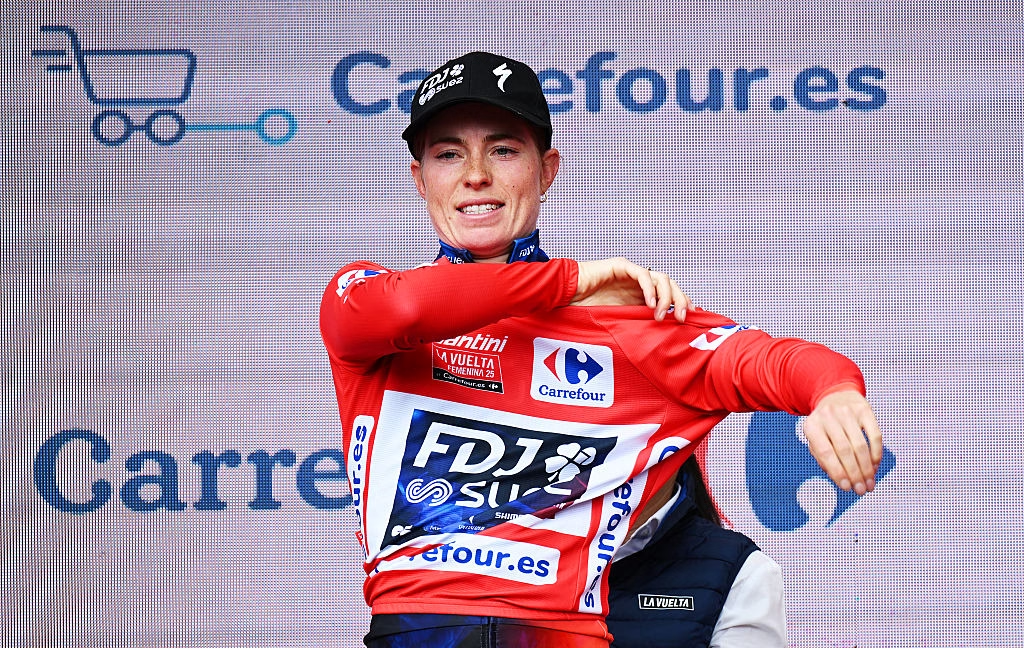
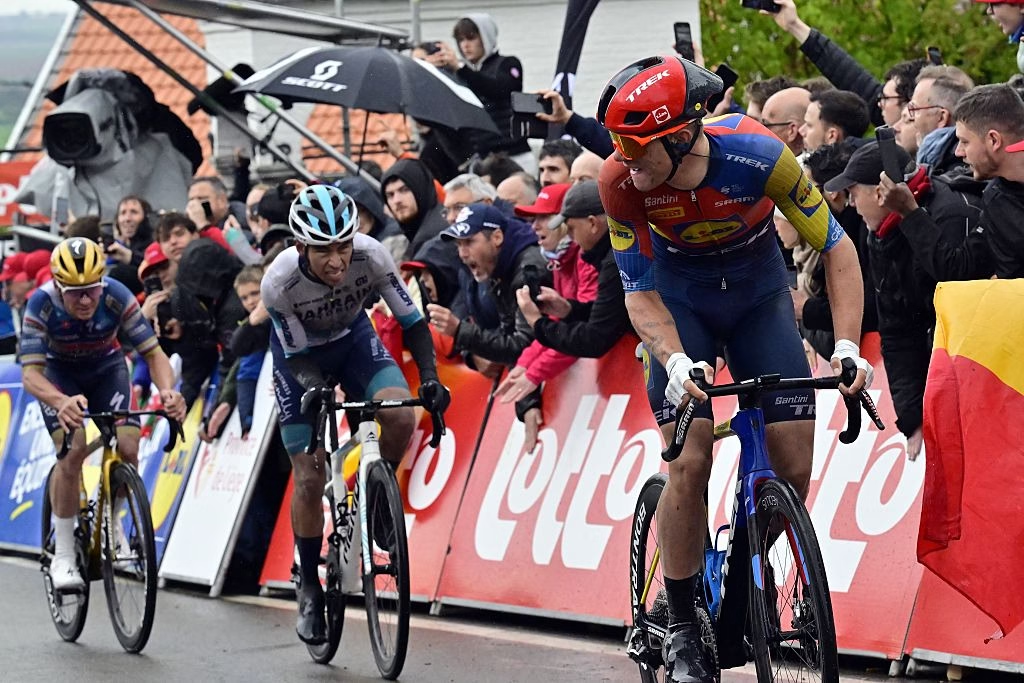
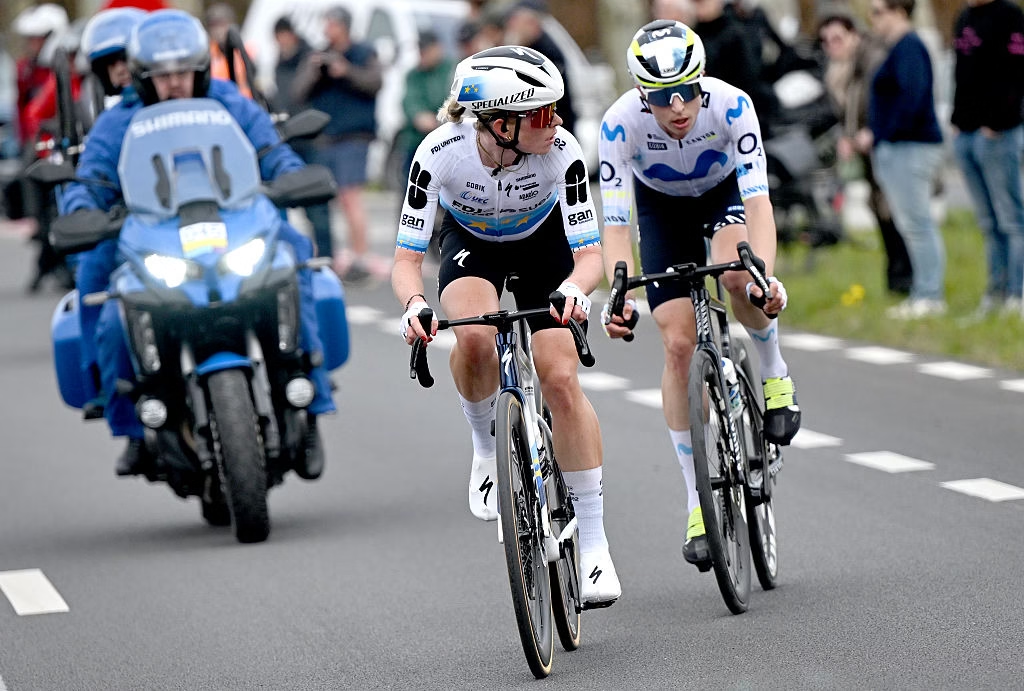
L’Eroica, held annually on the first Sunday of October, transcends typical cycling events to become a cultural celebration of cycling’s heroic past. The event, first organised in 1997 by a group of vintage cycling enthusiasts, requires participants to ride pre-1987 steel-framed bicycles wearing period-appropriate wool clothing. No modern carbon frames, electronic shifting, or synthetic jerseys permitted. This commitment to authenticity creates an extraordinary spectacle when 8,000+ riders depart Gaiole on vintage bikes worth anywhere from hundreds to tens of thousands of euros.
The event offers five distances: 46km, 81km, 106km, 135km, and 209km, each incorporating significant strade bianche sectors. The longest route, a genuine endurance test on vintage equipment, traverses some of Chianti’s most challenging terrain via approximately 70 kilometres of white roads. The atmosphere combines fierce personal challenge with convivial celebration, as riders stop at aid stations for traditional Tuscan food (ribollita soup, pecorino cheese, cantuccini biscuits with Vin Santo), wine, and camaraderie before continuing their suffering.
The weekend around L’Eroica transforms Gaiole into a vintage cycling festival. The piazza fills with bike jumble sales, vintage clothing vendors, and component specialists. Restaurants and cafés overflow with cyclists speaking Italian, English, German, French, and numerous other languages, united by shared love of old bikes and beautiful roads. The town’s cafés display vintage racing photographs and memorabilia, creating a living museum of cycling history.
For those unable to secure entry (the event typically sells out within hours of registration opening), the weekend still offers extraordinary cycling. The roads remain open to traffic, but the sheer number of L’Eroica participants creates a semi-official atmosphere. Simply riding the routes on an old steel bike wearing a wool jersey earns friendly acknowledgement from official participants and locals alike. The experience, even without official entry, captures what makes Tuscany special: the seamless blend of sport, culture, history, and simple pleasure in beautiful places.

Training and Tactical Approaches
Successfully cycling in Tuscany requires a different mindset from mountain regions. Understanding the rhythm of constant undulation, managing heat and exposure, and embracing the cultural dimensions separates memorable experiences from merely tough rides, much like approaching cycling challenges with an appropriate strategy.
The Art of Rolling Terrain
Tuscan cycling demands mastery of rhythm and momentum management. The constant up-and-down creates temptation to attack each climb, burning matches unnecessarily. Instead, successful Tuscan riding involves riding the terrain, using downhill momentum to carry speed into the next climb, settling into sustainable effort on steeper sections, and accepting that Tuscany rewards endurance over explosive power. A typical 80-kilometre Chianti ride might include 30-40 distinct climbs ranging from 50 to 400 metres in length, none individually challenging but collectively demanding if approached incorrectly.
The professional riders in Strade Bianche demonstrate this principle perfectly, maintaining relatively steady power whilst letting the terrain dictate speed variation. On the strade bianche sectors, where loose surfaces reduce traction and increase effort, maintaining consistent power proves more important than trying to maintain speed. Better to spin comfortably at 20 km/h on a steep white road than grind painfully at 18 km/h whilst exhausting leg muscles that will be needed for the next thirty hills.
Heat Management and Summer Strategy
Tuscan summers bring temperatures that make mountain-climbing regions seem temperate. July and August regularly see daytime highs reaching 35-38°C in the valleys, with even hilltops offering limited respite. The dry heat differs from tropical humidity, but the intensity demands respect and strategy. Start rides before 8am, targeting return by early afternoon before peak heat. Carry a minimum of 3 bottles for rides exceeding 60 kilometres, and budget stops for refills (villages, fountains, cafés). Wear light-coloured, loose-fitting clothing to maximise evaporative cooling, and apply sun cream liberally, given the intense UV at southern latitude.
The strade bianche prove particularly challenging in summer heat. The fine white dust reflects sunlight intensely, creating oven-like conditions, whilst the loose surface demands higher effort for equivalent speed. Many experienced riders, including the professional racers who compete on these roads each March, avoid the white roads during peak heat, saving them for morning hours or cooler seasons. Spring (April-May) and autumn (September-October) provide ideal conditions for extensive strade bianche riding, when temperatures moderate to 18-25°C and occasional light rain firms the surfaces without creating full mud.
Cultural Integration and Italian Pace
Perhaps Tuscany’s most important lesson for cyclists involves slowing down enough to embrace the cultural richness surrounding the riding. A Tuscan cycling day should include stops in hill towns, not just for refuelling but for wandering cobbled streets, visiting Renaissance churches, and absorbing the lived history. Lunch becomes an event, not merely calories consumed, ideally enjoyed at a family-run trattoria serving pappa al pomodoro (bread and tomato soup), pici pasta with aglione (garlic sauce), or bistecca alla fiorentina (T-bone steak from local Chianina cattle).
The Italian café culture rewards participation. Stop for espresso mid-morning, exchange pleasantries with locals (even broken Italian wins smiles), watch village life unfold around the bar. This isn’t wasted time but an essential Tuscan experience. The ride matters, but so does everything around it. Cyclists who rush from village to village ticking boxes miss what makes Tuscany special. Those who embrace Italian pace, who linger over cappuccino whilst discussing the day’s route with shopkeepers, who accept an invitation to tour a wine cellar when offered, discover rewards that transcend cycling.
Practical Logistics
Getting There
Florence’s Amerigo Vespucci Airport (FLR), located 5 kilometres from the city centre, provides the primary gateway to Tuscany. The airport handles numerous European connections (British Airways, easyJet, Ryanair from London, direct flights from Paris, Amsterdam, Frankfurt) but limited intercontinental service. Pisa’s Galileo Galilei Airport (PSA), 80 kilometres west, offers additional connections, including some transatlantic options. Both airports provide car rental facilities and train connections to major Tuscan cities.
For those avoiding flying with bikes, high-quality rental operations exist throughout the region. Many cyclists fly to Florence or Pisa, rent a car for transfer to Chianti accommodation (50-90 minutes from either airport), then rent bikes locally. Alternatively, trains connect Florence to Siena (90 minutes) and smaller towns, though reaching Chianti villages by public transport proves challenging, with infrequent bus services and schedules designed for local commuters rather than tourists.
Accommodation
Tuscany offers accommodation ranging from basic agriturismi (farm stays) to luxury villa hotels, with expanding options specifically catering to cyclists. The region’s cycling popularity has created a network of cycle-friendly properties understanding riders’ needs: secure bike storage, early breakfast (7am or earlier), packed lunches for full-day rides, laundry facilities, and staff knowledgeable about local routes.
Gaiole in Chianti provides the highest concentration of cyclist-focused accommodation, unsurprisingly given the town’s L’Eroica heritage. Properties range from simple B&Bs (€80-120 per night) to upscale hotels (€200-350 per night), most offering bike storage, basic tools, and route advice. Radda in Chianti and Castellina in Chianti provide similar options with slightly less cycling-specific infrastructure but equal charm.
For those preferring self-catering, numerous villas and apartments throughout Chianti offer weekly rentals (€800-3,000+ per week depending on size and luxury level), ideal for groups or extended stays. These properties typically provide private grounds for bike storage and washing, kitchen facilities for controlling nutrition, and flexibility that hotels cannot match. Book well in advance for prime periods (May-June, September-October, and L’Eroica weekend).
Bike Rental and Services
High-quality rental operations serve the region, concentrated in Florence, Siena, and Gaiole. Tuscany Bicycle operates throughout the region with premium Scott and 3T bikes, delivery service to accommodation, and knowledgeable English-speaking staff. Chianti Bicycles in Castelnuovo Berardenga specialises in gravel bikes and strade bianche touring, offering guided rides and GPS rental for self-guided exploration. Florence-based Tuscany Cycle provides road bikes, gravel bikes, and guided tours departing from the city.
Rental rates for quality carbon road bikes range €60-100 per day, with multi-day discounts (typically 15-20% off after 3 days). Gravel bikes command similar rates, whilst e-bikes range €70-120 per day depending on specification. All serious rental operations provide appropriate gearing (compact chainrings essential for Tuscany’s short, steep hills) and wider tyres (minimum 28mm, 32mm+ preferable for strade bianche riding). Most include helmets, basic tools, spare tubes, and route advice, with some offering GPS units pre-loaded with local routes.
When to Visit
The optimal window runs April through October, with May-June and September-October offering ideal conditions for most cyclists. Spring brings wildflowers, moderate temperatures (15-25°C), generally stable weather despite occasional rain, and villages awakening after quiet winter. The landscape appears brilliantly green before summer heat dulls the colour. April often proves wet, whilst May and June provide more reliable conditions.
Summer (July-August) delivers the warmest temperatures (25-35°C+), most stable weather, longest daylight hours, and highest tourist traffic. The heat proves punishing during midday riding, making early morning departures essential. Villages and restaurants overflow with tourists, whilst accommodation costs peak. Many serious cyclists avoid July-August entirely, preferring shoulder seasons.
Autumn provides many riders’ favourite season. September maintains warm temperatures (20-30°C) with less intense heat than summer, whilst October cools to 15-25°C, perfect for sustained riding. The grape harvest (late September-early October) adds activity to the vineyard landscape, whilst autumn colours transform the deciduous trees. L’Eroica weekend (first Sunday October) creates carnival atmosphere but requires accommodation booked months in advance. November brings increasing rain and shortened days, though mild temperatures often permit riding into December.
Winter (December-March) offers quietest period with lowest costs but variable weather. Temperatures range 5-15°C, with rain common and occasional snow possible at higher elevations. Many restaurants and hotels close for January-February. However, mild winter days provide excellent riding when rain holds off, and the Strade Bianche professional race (early March) creates excitement that marks the season’s renewal. Serious cyclists training for spring events often use Tuscany for winter base training, accepting weather variability for the opportunity to accumulate early-season kilometres on mostly traffic-free roads.
Comparing Tuscany to Other Regions
Tuscany occupies a unique space amongst cycling destinations. Compared to Alpine or Pyrenean regions, it offers less severe climbing but richer cultural immersion, gentler terrain suitable for a wider range of abilities, unique strade bianche experience unavailable elsewhere, warmer temperatures enabling a longer riding season, and different rewards prioritising beauty and culture over pure physical challenge. Against other Italian regions, Tuscany provides better developed cycling infrastructure than most, more varied terrain than single-destination areas, cooler summer temperatures than coastal regions, and a landscape that has captured artistic imagination for centuries.
For cyclists exploring European cycling destinations, Tuscany represents a distinct experience where the bike serves as a vehicle for cultural discovery as much as athletic challenge, where the journey matters more than summit conquests, and where memories formed include Renaissance art, Brunello wine, and sunset over cypress allées as much as kilometres ridden or metres climbed.
Conclusion: The Tuscan Experience
Tuscany, with the Chianti region at its heart, transcends typical cycling destinations. This is terrain where cycling’s joy lies not in conquered summits but in the rhythm of rolling through vineyards, where success measures itself not in watts sustained but in espressos shared with locals, where the strade bianche through working agricultural landscape offer experiences no paved road can replicate. The compact geography enables extraordinary variety: medieval hill towns, Renaissance art cities, challenging white roads, and gentle vineyard routes all within a single day’s riding from any base.
This is not cycling that prioritises suffering. Tuscany demands different values: patience over aggression, appreciation over conquest, integration over isolation. But for those who embrace what Tuscany offers on its own terms, who understand that the best rides might include long lunch stops and gallery visits, who accept that average speeds matter less than richness of experience, the region delivers rewards that endure long after fitter cyclists have forgotten their latest power records.
Whether you’re a serious cyclist seeking beautiful roads with moderate challenge, a cultural tourist wanting to explore beyond car windscreen, or simply someone who loves Italian food, wine, and landscape whilst also loving bicycles, Tuscany provides an unforgettable experience. The question isn’t whether you’ll enjoy riding here, but whether you can slow down enough to truly experience it.
For more inspiration exploring cycling’s greatest destinations worldwide, visit our guide to cycling around the world.
Frequently Asked Questions
What is the best time of year to cycle in Tuscany and the Chianti region?
The optimal periods are May-June and September-October. Spring (May-June) offers temperatures of 15-25°C, wildflowers, a brilliantly green landscape, generally stable weather despite occasional rain, and moderate tourist numbers. Autumn (September-October) provides 15-28°C temperatures, grape harvest activity, autumn colours, reduced tourist traffic, and L’Eroica vintage cycling festival (first Sunday October). July-August bring most reliable weather but punishing heat (25-35°C+) requiring very early morning starts, whilst April often proves wet and November increasingly rainy. Winter (December-March) offers quiet riding for hardy souls willing to accept variable weather, with the Strade Bianche professional race in early March providing highlight. Avoid peak summer unless heat-tolerant and willing to ride at dawn.
How difficult is cycling in Tuscany compared to mountain regions like the Alps or Pyrenees?
Tuscany presents fundamentally different cycling character from mountain regions. Elevations remain modest (valleys 200-400m, hilltops 500-700m, nothing approaching true mountain passes), but constant rolling terrain accumulates significant climbing through dozens of short ascents rather than single sustained climbs. A typical 80km Chianti ride includes 1,200-1,800m climbing via 30-40 distinct ups and downs averaging 3-8% gradient with occasional 12-15% ramps. This proves less severe than Alpine climbing but demands endurance and rhythm management. The strade bianche (white gravel roads) add a unique challenge, with loose surfaces making gradients feel steeper and requiring different bike handling. Tuscany suits strong intermediate riders and above, rewarding steady pacing over explosive power. More accessible than serious mountain regions but not beginner terrain.
What type of bike do I need for riding the Strade Bianche in Chianti?
For substantial strade bianche riding, a gravel bike or cyclocross bike with 35-40mm tyres provides an ideal setup. These bikes handle loose surfaces confidently whilst remaining efficient on paved sections. Road bikes can tackle some white roads if equipped with wider tyres (minimum 28mm, 32mm+ preferable), though steep sectors with deep gravel may prove challenging and some routes impassable. Mountain bikes work perfectly but prove inefficient on the paved roads connecting strade bianche sectors. Most rental shops offer gravel bikes specifically for Tuscany riding. Tyre choice matters enormously: wider tyres (35mm+) provide better traction and comfort on loose surfaces, whilst tread patterns help climbing steep gravelled sections. Standard road race tyres (23-25mm) prove inadequate for serious white road riding. Consider also lower tyre pressures (35-50 PSI depending on weight and conditions) for better traction.
Do I need to speak Italian to cycle in Tuscany?
Basic Italian proves helpful but not essential for successful Tuscany cycling. In tourist-focused areas (Florence, Siena, Greve, major hotels), English speakers abound and communication presents minimal challenge. In smaller villages and rural areas, Italian becomes more necessary, though warmth and gestures often bridge language gaps. Learning essential phrases enhances experience: “buongiorno” (good morning), “grazie” (thank you), “un caffè per favore” (a coffee please), “dov’è…” (where is…), and “quant’è?” (how much?). Locals appreciate efforts to speak Italian, however broken. For route finding, GPS navigation eliminates language barriers, whilst most bike rental operations employ English speakers. Restaurant menus in tourist areas typically include English translations, though genuine trattorias in small villages may not. Overall, monolingual English speakers manage perfectly well, but Italian learners find Tuscany rewarding for practicing.
What’s the difference between cycling in Tuscany versus other Italian regions like the Dolomites or Amalfi Coast?
Tuscany offers distinctly different cycling from Italy’s other famous regions. Compared to the Dolomites, Tuscany provides less severe elevation (500-700m hilltops vs 2,000m+ passes), rolling rather than sustained climbing, warmer temperatures, unique strade bianche unavailable in mountain regions, richer cultural infrastructure (Renaissance art, medieval towns, wine tourism), and riding suitable for a wider ability range. Against the Amalfi Coast, Tuscany delivers safer roads (wider shoulders, less traffic, fewer cliff-edge sections), more suitable terrain for extended rides rather than single-climb challenges, better developed cycling infrastructure, less spectacular coastal scenery but richer inland cultural landscape, and less stressful riding environment overall. Tuscany prioritises cultural immersion and beautiful riding over pure athletic challenge, rewards steady pacing rather than explosive climbing, and suits cyclists who value quality of experience over bragging rights about conquered passes.