
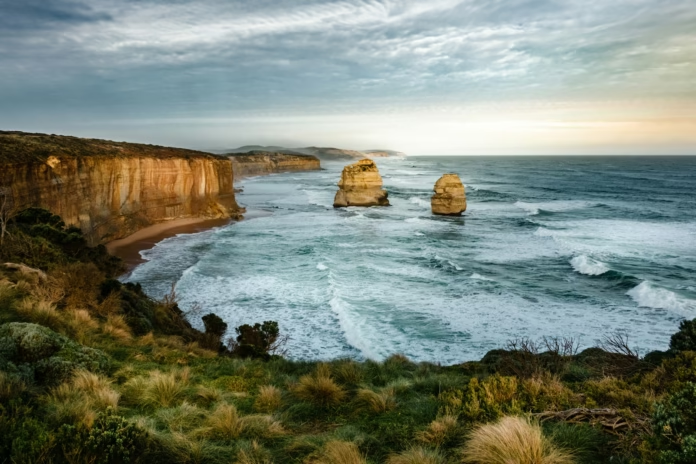
There are riding destinations that build slowly, asking for patience before they reveal their best roads. The Great Ocean Road is not like that. It announces itself almost immediately. The sea sits hard against the land, the road keeps bending towards another headland, and even a relatively easy spin can feel cinematic in a way that very few places manage without trying too hard.
That is the first reason it works so well for a cycling trip. You do not arrive here in search of one famous climb or one famous café stop. You come for a moving coastline, surf towns, wind, cliffs, forest detours and the particular pleasure of a road that feels as if it was made to keep your eyes up.
The second reason is that the Great Ocean Road is broader than the postcard version of itself. It is not one neat afternoon ride. It is a region. You can ride the iconic coastal sections, dip inland into the Otways, use shorter out-and-back loops near Lorne, Apollo Bay or Port Campbell, or turn the whole thing into a multi-day journey. That is what makes it such a strong addition to a wider travel bucket list alongside destinations such as Lake Como, the San Francisco Bay Area and Marin Headlands or Sierra Nevada and Granada.
Why this road stays in cyclists’ imaginations
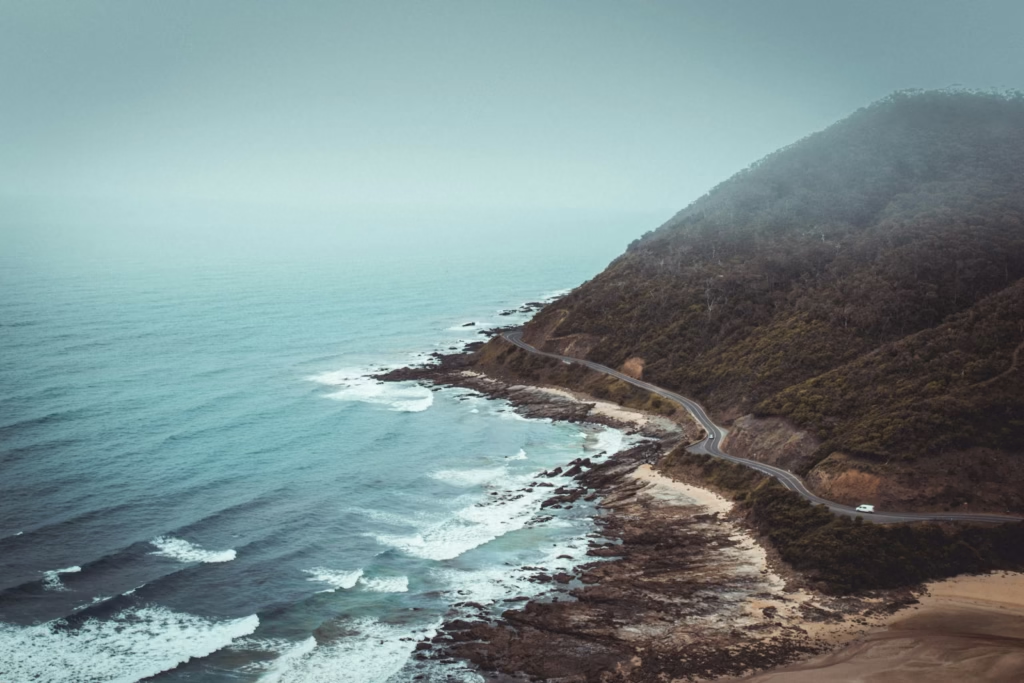
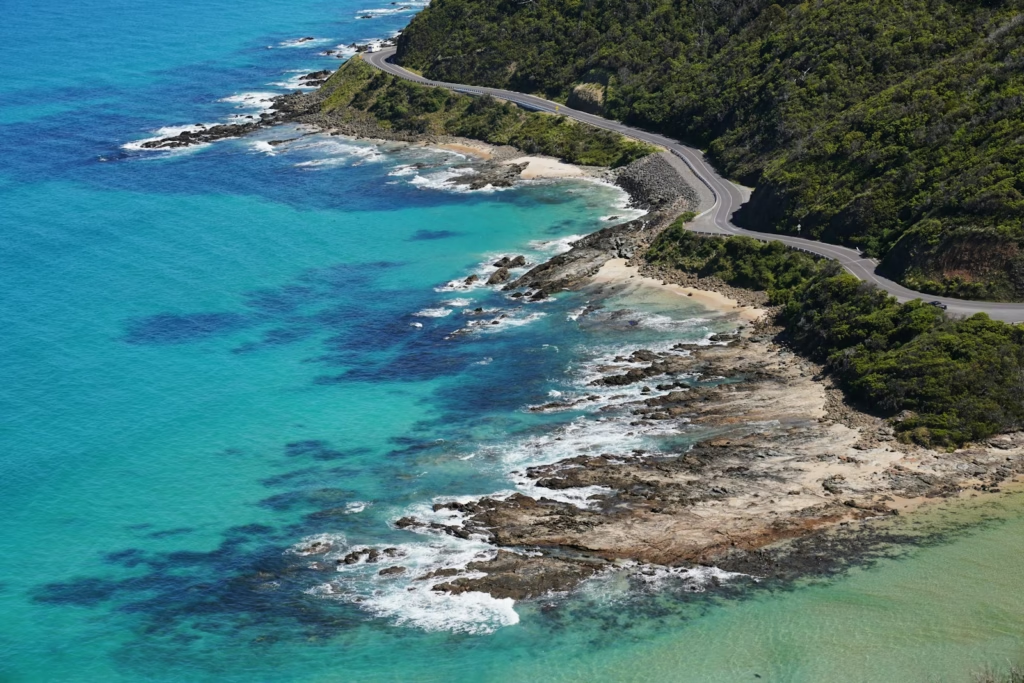
The Great Ocean Road works because it keeps changing mood. One hour feels open, salty and exposed, with the Southern Ocean pushing light back at you from below the cliffs. The next feels darker and quieter as the road pulls you towards the Otways, where the scenery turns greener, heavier and more enclosed. That change in texture is one of the destination’s real strengths.
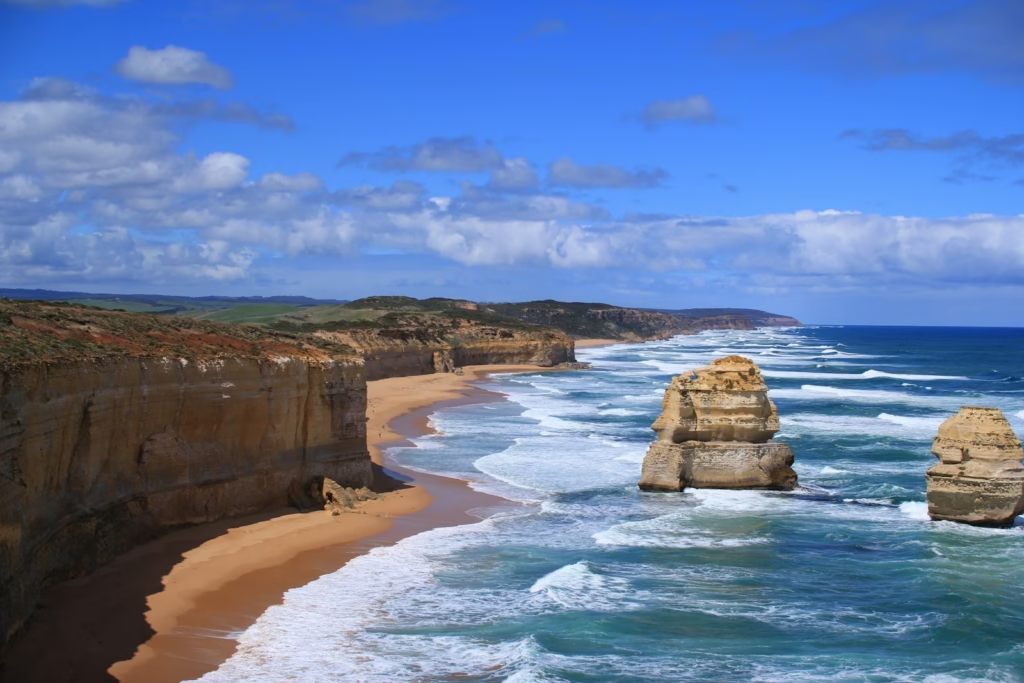
It also helps that the famous parts are genuinely good to ride. The road west of Lorne has the kind of flowing coastal shape that road cyclists instantly recognise as promising. Apollo Bay gives the journey a calmer middle point. Farther west, the Port Campbell side shifts the scenery again, trading surf-town rhythm for bigger limestone drama and the Twelve Apostles coast.
The Great Ocean Road itself is the headline, but it is not the whole trip
The simplest version of a Great Ocean Road trip is to ride the coast and enjoy the obvious views. There is nothing wrong with that. In fact, for a lot of visitors, that is exactly the right starting point. But the area becomes more rewarding once you stop treating it as one long scenic ribbon and start thinking in sections.
The eastern side around Torquay, Anglesea and Lorne tends to feel more lived-in and a little busier, especially in holiday periods. The middle around Apollo Bay is often where the trip breathes. The western side towards Port Campbell and Princetown has a different kind of drama, with quieter early roads, bigger cliff scenery and some very good shorter loops.
That regional variety is what keeps the ride feeling like a genuine cycling journey rather than just a scenic transfer. It is the same quality that makes a destination article useful on a site like ProCyclingUK, where the point is not just to admire a place, but to understand what sort of riding life it offers.
What kind of riding suits the Great Ocean Road best?
This is not really a single-type destination. Road riders will find the obvious attraction first, because the coastal tarmac is the classic image and still the strongest draw. But the Great Ocean Road region also has mountain bike trails, rail trails and mixed-surface options that make it much more rounded than many visitors expect.
That versatility is part of the appeal. If you are travelling with non-cyclists, or simply do not want every day to become a long road stage, the region gives you room to vary the pace. You can ride a harder coastal day, then switch to a gentler trail spin, or build a trip that mixes scenery and effort rather than chasing numbers every morning.
It also means the Great Ocean Road fits naturally into a broader cycling travel mindset, the same sort of one that might draw you to Asheville and the Blue Ridge Parkway or Andermatt and the central Swiss passes. The landscapes differ, but the attraction is similar: roads that feel inseparable from the places they run through.
Lorne to Apollo Bay is where the classic road feeling really clicks
There are other famous stretches, but the Lorne to Apollo Bay section is often where riders feel the road becoming the thing they had imagined before arriving. The coastline tightens and loosens, the ocean sits close, and the road carries just enough climbing to stop the day ever becoming passive. It is not alpine, and it does not need to be. The effort comes in waves, which suits the scenery.
That rhythm makes it more memorable than a route built around one huge test. You are not simply riding to one decisive summit. You are riding through a sequence of bends, rises and exposed sections that keep asking slightly different questions. It is coastal road riding in its most persuasive form.
It also means the Great Ocean Road sits nicely beside other destination rides that work through atmosphere as much as pure altitude. It does not resemble Lake Como or the Marin Headlands in landscape, but it shares the same quality of making the riding feel inseparable from the place rather than just laid over it.
The west gives you a quieter, more surprising version of the region
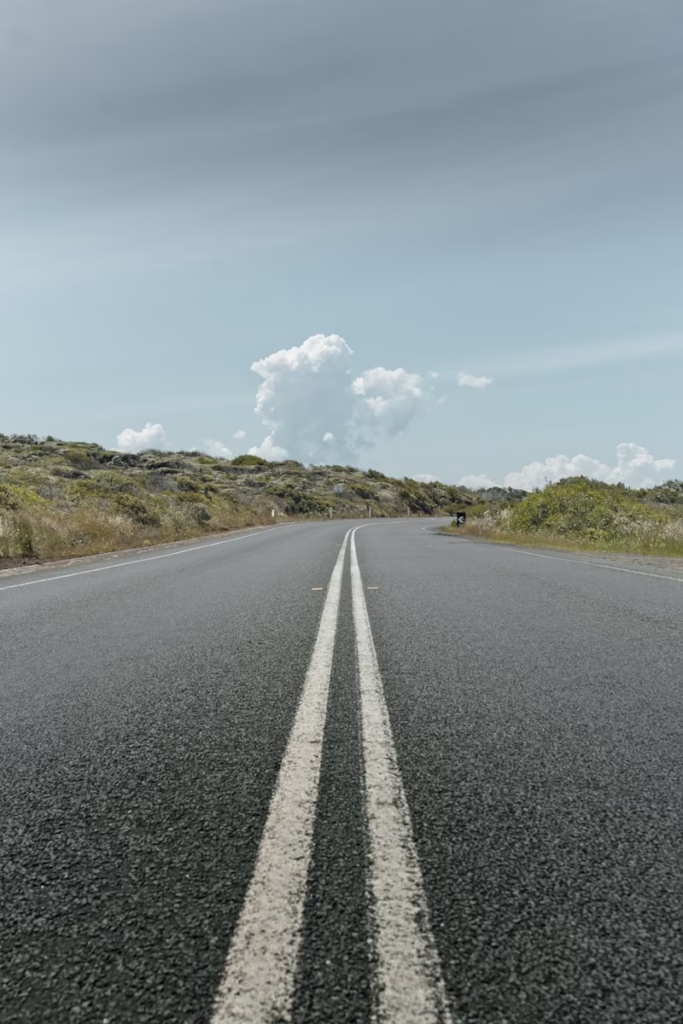
For a lot of riders, the western end becomes the unexpected favourite. Around Port Campbell, Princetown and Timboon, the riding has a quieter confidence. The coastline feels more spacious, the road less performative, and the day more your own.
That part of the trip feels less like a famous road and more like a ride you have somehow got to yourself for a while. The Twelve Apostles area is obviously a major visitor draw, but on a bike, especially early, the coastline can still feel open and spacious in a way that is hard to get from a car. That changes the emotional texture of the road completely.
The western end is also where a more relaxed, mixed trip starts to make even more sense. Rather than obsessing over covering every kilometre, you can build shorter rides, take in the coastal landmarks, and let the landscape do more of the work. That style of travel often produces better memories than trying to turn the whole coast into one overstuffed challenge ride.
You do need to respect the conditions
The Great Ocean Road is beautiful, but it is not decorative riding. Wind matters here. Traffic matters. Summer holiday flows matter. The weather can shift a day’s character quickly, and exposed sections feel very different when the road is busy or the wind is against you. This is a destination that rewards realism as much as enthusiasm.
That does not make it difficult in a discouraging way. It just means you should ride it on its terms. Early starts are a good idea. Flexible route planning helps. If you want the coastal drama without the heaviest vehicle flow, mornings, especially farther west, are often the best answer.
In that sense it behaves like many of the best road-trip destinations. You are rewarded not just for fitness, but for judgement. The riders who tend to enjoy places like this most are usually the ones who know how to read conditions rather than simply charge through them.
Who does this destination suit best
The Great Ocean Road suits riders who like a trip to feel scenic in an immediate, physical sense. If your ideal cycling destination is built around huge alpine climbs and long summit days, there are stronger pure-climbing options. If you like coastal riding, changing weather, sea air, surf-town atmosphere and the ability to build days around either road or trail, this is much harder to beat.
It also suits people who want the ride to live comfortably beside the rest of the trip. This is not just a place for training camps or all-day sufferfests. It works for long weekends, mixed holidays and slower travel. That is one reason it belongs in the same broader travel conversation as Asheville and the Blue Ridge Parkway, Sierra Nevada and Granada and San Francisco and Marin, even though the riding style is very different.
Practical information
Where is it?
The Great Ocean Road runs along Victoria’s south-west coast. Key riding bases include Torquay, Anglesea, Lorne, Apollo Bay, Port Campbell, Princetown and Timboon.
Best for
Road riding is the obvious draw, but the area also works for mountain biking, rail-trail days and mixed-surface riding. That makes it useful for riders who want variety rather than only one type of cycling trip.
How long should you allow?
A long weekend is enough to get a real feel for the region, but four to five days gives you much more room to mix iconic coast riding with quieter inland or western-end routes.
What should you watch for?
Wind, traffic, holiday volume and changing weather all matter. Early rides, especially farther west, often give the best balance of quieter roads and better rhythm.
-
 Photo Credit: Canyon SRAM (supplied media release)
 -
 Photo Credit: Park Tool



Why the Great Ocean Road coast belongs on a cyclist’s list
The Great Ocean Road belongs on a cyclist’s list because it gives you what so many destination rides promise and only some genuinely deliver. The scenery is as strong as the idea of it. The road has enough shape to stay interesting. And the wider region has enough variety to keep the trip from becoming a single famous strip of tarmac ridden once and remembered only as a photograph.
That is its real strength. The Great Ocean Road is not just an iconic drive that also happens to be rideable. It is a proper cycling destination, one that can give you exposed coast, quieter western mornings, trail options, surf-town stops and the sort of day that feels expansive without needing to be enormous. For a rider who wants sea air, movement and a landscape that never really stops presenting itself, that is more than enough.
It also strengthens the wider shape of a travel library. A destination like this broadens the idea of what cycling travel can be on ProCyclingUK, sitting naturally beside mountainous routes, lake rides and bigger continental classics landscapes. Not every memorable trip has to be defined by altitude. Some are defined by horizon, wind and the sense that the road is carrying you along the edge of something much larger.

