
The UK is set to stage the 2027 Tour de France Femmes Grand Depart, a landmark moment for women’s racing on these shores. We have had Tour de France stages here before, but only through the men’s race. If the women’s event arrives with three UK stages of its own, it will be the first time the modern Tour de France Femmes has raced in Britain, and a clear signal that the rebooted race is ready to travel with real intent, not just symbolism.
With official route details still to come, the early picture is being shaped by a mix of confirmed planning work and strong local expectations. Stage 1 has been rumoured to take place in Scotland, while Stage 2 is widely being discussed as a route from Manchester to Sheffield. Stage 3, meanwhile, is being linked to London as an individual time trial, a format that would instantly give the opening block competitive weight as well as headline value.
What is important right now is separating what has been confirmed from what is being trailed, and understanding why the timeline is taking the shape it is. The route is still being built, and the people tasked with turning a concept into a full stage have only recently moved through a key hiring milestone.

What we know, and what we do not, about the UK Grand Depart plans
The broad framework is that the UK will host Grand Departs for both the men’s Tour de France and the Tour de France Femmes in 2027, with three stages expected for each race. Edinburgh has been confirmed as the host city for the men’s Grand Depart. For the women’s event, the starting city has not been confirmed in the same way, and that uncertainty is part of what has allowed multiple plausible opening scenarios to circulate.
Earlier messaging around the UK hosting concept suggested there would be a stage each in Scotland, Wales and England. The complication has always been interpretation. With the men’s race already locked into a Scottish start, it has never been fully clear how much that “one in each nation” framing refers to the men’s route, the women’s route, or an overall UK package across both races. If three stages are expected for each race, there is space to achieve a genuinely UK-wide footprint, but the split only becomes meaningful once the women’s start location is confirmed.
 Photo Credit: A.S.O./Thomas Maheux
Leeds, Manchester, Sheffield: why the English rumour keeps pointing north
Leeds was the initial rumour last February, and it has never really gone away. It also makes geographic sense if Sheffield is being lined up for a finish. A Leeds start and Sheffield finish is a natural pairing for organisers who want a major city launch, a fast early phase, and then a finish area that can be made selective depending on how the final approach is designed.
The newer, stronger English rumour is Stage 2 from Manchester to Sheffield, and it is easy to see why it appeals. It creates a clean narrative line, west to east, two major cities, and a finish location that can be built as anything from a reduced bunch sprint to a genuinely attritional day if the route leans into the terrain around the Peaks and the rolling roads that funnel towards South Yorkshire.
Crucially, a Manchester to Sheffield stage would feel like a proper Tour stage rather than a ceremonial transfer. Even without a mountain finish, it is the sort of day where the race can become selective simply through repetition, positioning stress and cumulative climbing. For a Tour de France Femmes opening block, that matters. The first three days are not just about getting through safely, they are about establishing hierarchy and momentum.
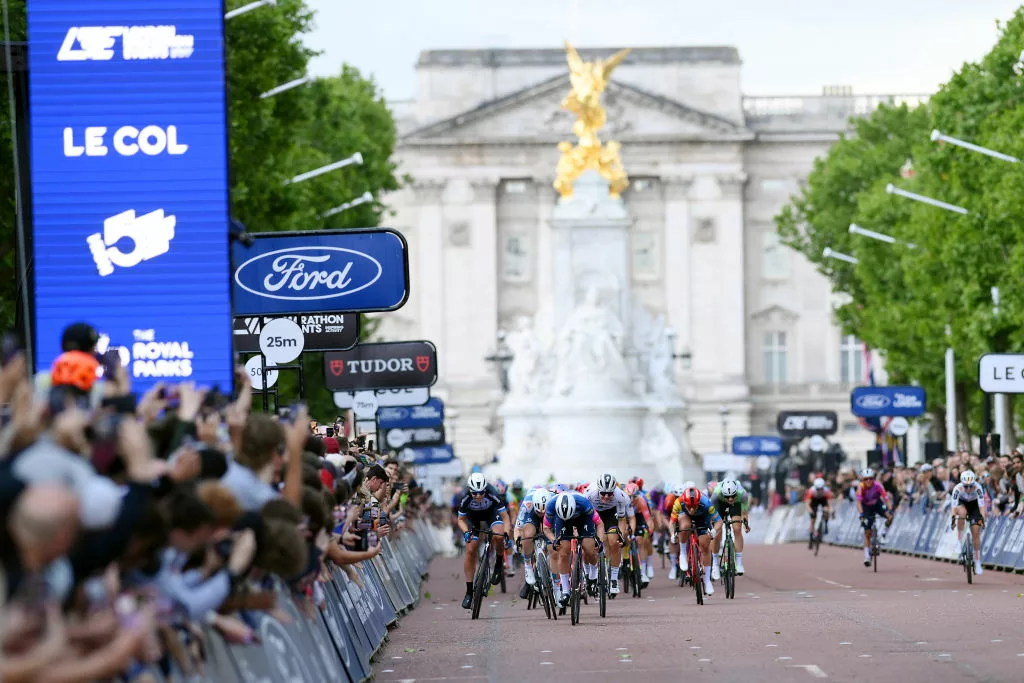
London tomorrow: what an early time trial would signal
A London announcement is set for this week at Lee Valley VeloPark, with local riders due to be involved in promotional filming on the same day as part of the media rollout. That points to a capital city moment being baked into the Grand Depart narrative, and it aligns neatly with the idea of Stage 3 being an individual time trial.
If London does get an ITT, it is not just a scenic decision. It would be a sporting one. A time trial early in a stage race changes everything: how teams resource the opening days, how leaders manage risk, and how quickly gaps appear between riders with different strengths. Even a relatively short ITT would create immediate time differences, and it would demand focus from the first pedal stroke of the UK block.
It would match the set-up for the 2024 Grand Depart from Rotterdam, where an afternoon time trial after a morning road stage helped to establish early time gaps and create a proper general classification that upped the stakes.
 Photo Credit: A.S.O./Pauline Ballet
Stage 1 in Scotland: a rumour that fits the wider UK framing
The rumour that Stage 1 will take place in Scotland fits with the broader UK-wide positioning of the 2027 Grand Depart year. It also keeps the opening story coherent if later stages take the characters into northern England and then conclude in London. Scotland into England is a logical flow, and it offers organisers an immediate choice between spectacle and stress: do you create a big city opener, or do you lean into wind, terrain and positioning to make day one a true race day.
What remains unclear is whether Scotland is the opening anchor for the women’s race in the same way it is for the men’s, or whether the women’s start city will be elsewhere while the broader UK package still includes a Scottish stage. That distinction matters, and it is one of the key pieces still missing.
 Photo Credit: Bob Martin
Why this matters: the first Tour de France Femmes stages in the UK
The UK has a long relationship with the Tour de France, but every chapter to date has been written through the men’s race. Britain has hosted Grand Departs and standalone stages, with huge crowds and a proven appetite for Tour-level road racing as a national event. The difference in 2027 is that the Tour de France Femmes is expected to bring its own stages, on its own timeline, with its own sporting story.
That matters because the women’s race is still in its growth phase. Visibility, course design and the sense of occasion are not secondary concerns; they are part of how the event builds long-term identity. A UK opening block gives the organisers the chance to tap into a cycling culture that has already shown it can turn roadside support into a national moment, and to do it for the women’s peloton for the first time.
A brief history: the modern reboot and the older women’s Tour in the 1980s
The Tour de France Femmes, as we know it now, returned in 2022 as an eight-day stage race under ASO, following the one-day La Course era. The reboot was intentionally built around sustainability and competitive credibility, not a one-off spectacle. In just a few editions, it has become a cornerstone of the calendar, with deeper start lists, clearer team strategies and a growing sense that a strong result here sits alongside the biggest achievements in women’s stage racing.
But the story does not begin in 2022. A women’s Tour de France existed in the 1980s, running from 1984 to 1989, and it remains an important historical reference point. It proved the concept at a time when structural support and commercial stability were nowhere near what they are today. The modern race is not simply a new creation; it is a return to an idea that always deserved a stronger foundation.

Why the full route is still taking shape
One reason the detail is still fluid is simple: the operational work of turning host city ideas into safe, broadcast-friendly, competitively coherent stages is still ongoing. The closing date for the hire of a Race Route Lead expired only a couple of days ago, and that role will help work out how to join the dots between major locations and produce a complete stage design that fits the demands of the Tour.
That “join the dots” element is not trivial. A route is not just a line on a map. It has to account for road closures, safety infrastructure, local authority coordination, transfer logistics, finish zone capacity, and the sporting intention of each day. Until that work is done, even strong rumours can remain concept-level rather than stage-level.
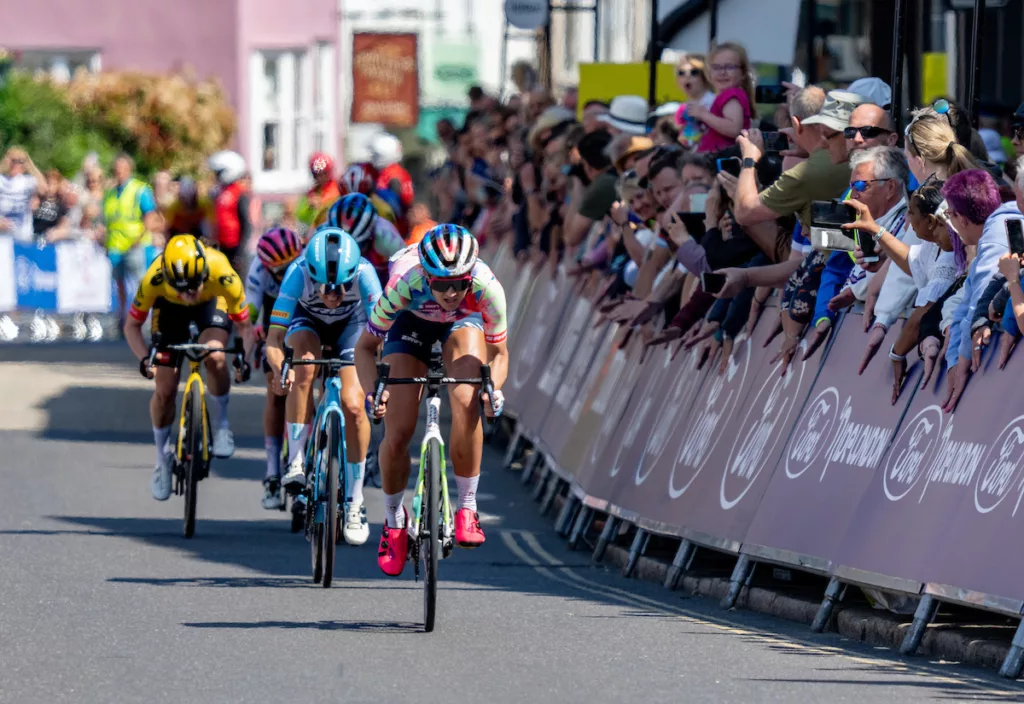 Photo Credit: Bob Martin
What to watch as the 2027 Grand Depart details are announced
The next phase will likely come in layers. First, the anchors: confirmed host cities and stage formats. Then, the connective tissue: intermediate towns, key climbs, and the type of finish each stage is designed to create. Only then will we really be able to say whether a Manchester to Sheffield day is built for sprinters, punchy attackers, or pure attrition.
If London does land an ITT, the detail that matters is intent. Is it a short, technical effort designed for spectacle and small gaps, or a longer, more honest test that immediately forces climbers onto the back foot. London can deliver either. The choice will tell you how ambitious the organisers are with competitive design.
And if Stage 1 is in Scotland, the key question is whether Scotland is the women’s starting point, or whether it is part of the wider UK footprint while the women’s Grand Depart itself begins elsewhere. The earlier “Scotland, Wales, England” messaging suggested a genuinely national spread, but the final split between the men’s and women’s races is the detail that will define how the UK week actually feels.