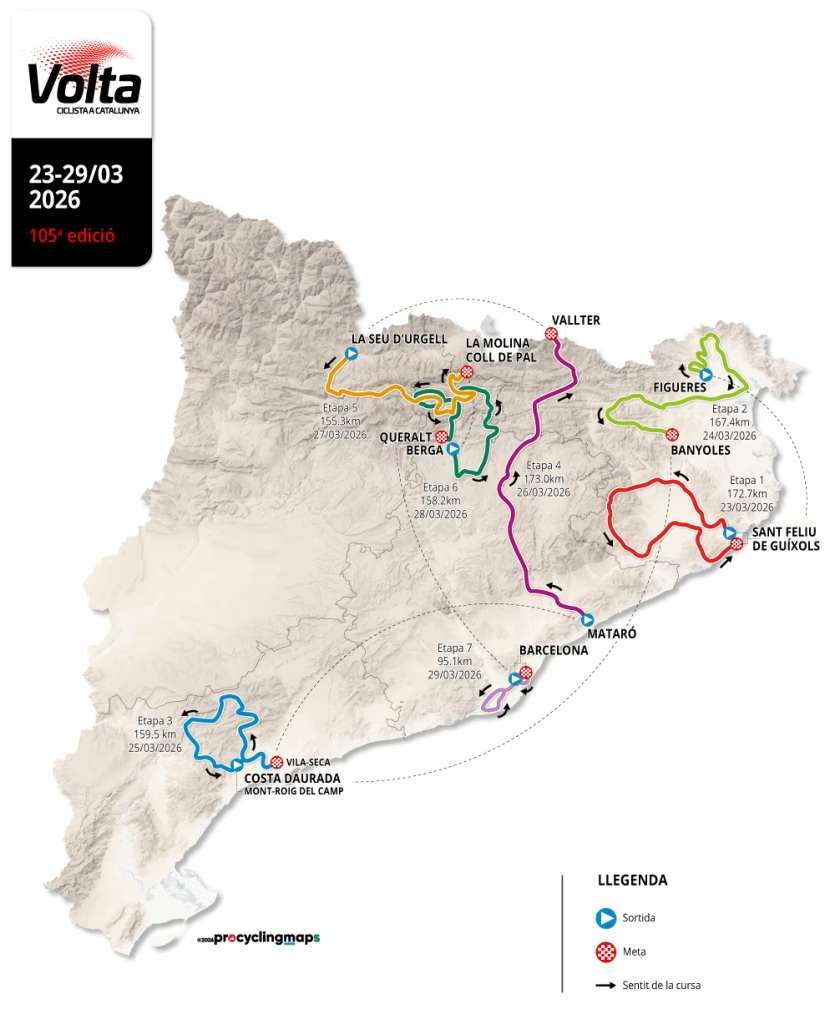
Volta Ciclista a Catalunya 2026 runs from 23 to 29 March and, true to the race’s character, the route gets more serious as the week goes on. It starts in Sant Feliu de Guíxols, finishes in Barcelona and builds towards three major GC tests in the mountains before the usual explosive finale on Montjuïc.
That matters because Catalunya is rarely a race that gives everything away on day one. Instead, it tends to work by escalation. The opening stages keep different rider types interested, then the route turns firmly towards the climbers and stage-racers. By the time the race reaches Vallter, Coll de Pal and Queralt, the general classification should be under real pressure.
If you want the wider race identity first, ProCyclingUK’s Beginner’s guide to Volta Ciclista a Catalunya 2026 explains why this race remains one of the most useful one-week tests on the calendar.
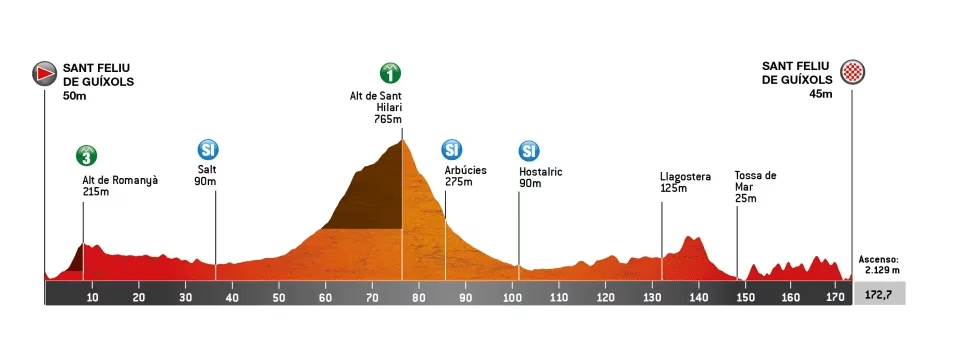
Stage 1 – Sant Feliu de Guíxols to Sant Feliu de Guíxols, 172.7km
The race opens with a stage that is labelled flat, but Catalunya’s definition of flat is usually a little more demanding than that sounds. Stage 1 starts and finishes in Sant Feliu de Guíxols over 172.7km and includes the Alt de Romanyà early on plus the category 1 Alt de Sant Hilari in the middle of the day.
That immediately tells you this is not a pure sprint opener in the easiest sense. The final outcome still looks more likely to favour a puncheur or a resilient fast finisher than a pure climber, but there is enough terrain in the middle of the stage to stop teams from assuming the bunch will arrive fresh and orderly. It is the sort of opening day that can reward riders who are already sharp rather than simply quick.
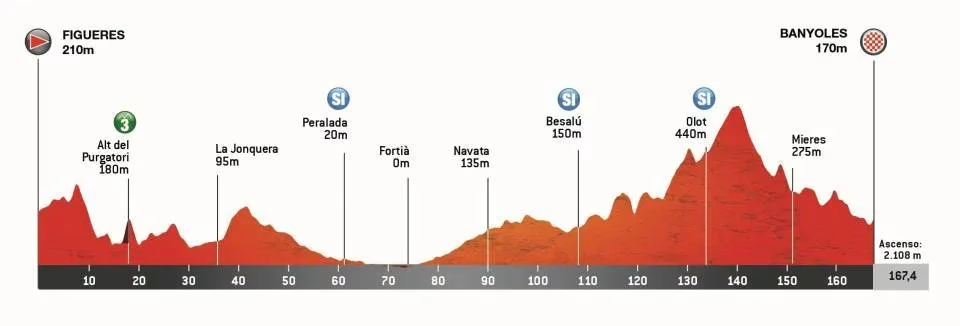
Stage 2 – Figueres to Banyoles, 167.4km
Stage 2 runs 167.4km from Figueres to Banyoles and is also classed as flat. Even so, flat in Catalunya usually means a stage that can still be awkward, especially if the pace is high and the roads begin to wear riders down.
This looks more likely to end in a sprint or reduced sprint than the mountain stages later in the week, but it is still an important part of the route. Stages like this help define who can conserve energy properly before the race really turns upwards. They also matter for teams trying to control momentum before the GC battle becomes dominant.
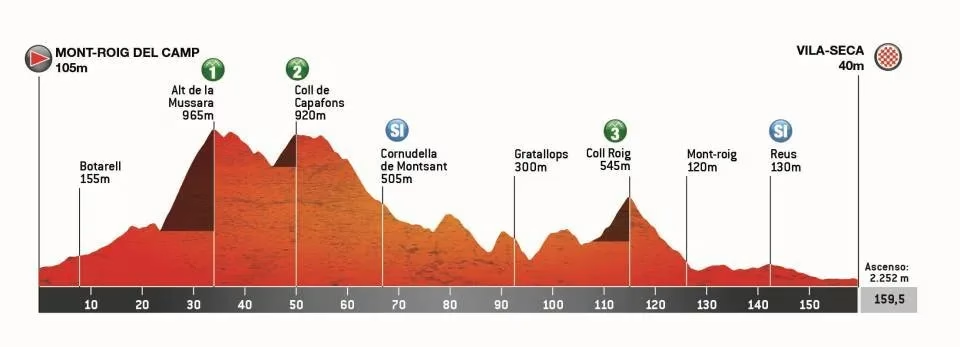
Stage 3 – Costa Daurada, Mont-roig del Camp to Vila-seca, 159.4km
Stage 3 stays in the Costa Daurada area, running 159.4km from Mont-roig del Camp to Vila-seca. Officially, it is another flat day, which means the first half of the race offers a real opening for the faster men before the high mountains take over completely.
That does not make it straightforward. Transition stages in Catalunya often have more nervous energy than the label suggests, because everyone in the peloton knows the mountain block is coming. Sprint teams want to cash in while they still can, GC teams want a quieter day, and breakaway riders know their chances will narrow later in the week.
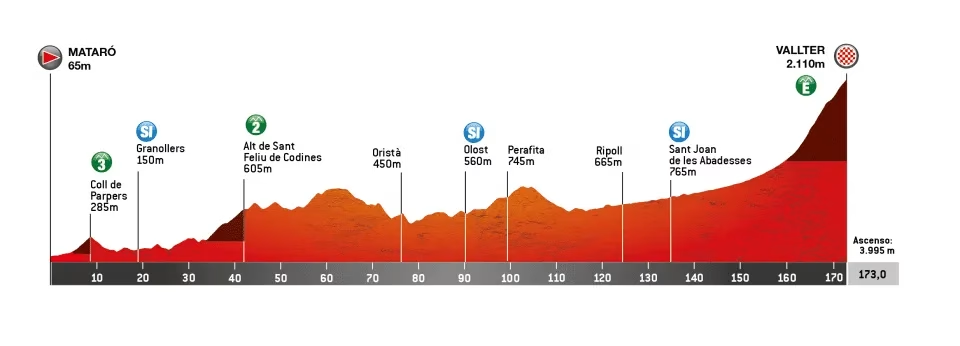
Stage 4 – Mataró to Vallter, 173km
This is where the race changes. Stage 4 runs 173km from Mataró to Vallter and delivers the first summit finish of the week. Vallter is a proper mountain test and the point where the climbers should stop waiting and start shaping the race.
For the general classification, this is the first truly direct mountain exam. Riders can hide a little on the flatter opening stages, but Vallter tends to expose who has come to Catalunya in real climbing shape. It may not settle the whole race, yet it should establish the first clear hierarchy among the top contenders.
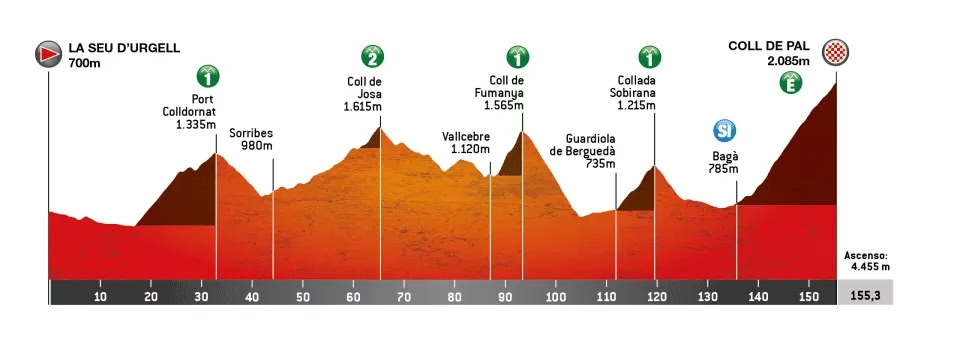
Stage 5 – La Seu d’Urgell to La Molina / Coll de Pal, 155.3km
Stage 5 is the queen stage. It runs 155.3km from La Seu d’Urgell to La Molina / Coll de Pal and is the hardest day of the race on paper, with around 4,500 metres of climbing across five ascents.
This is the stage most likely to produce the biggest GC gaps. Vallter can reveal the strongest climbers, but Coll de Pal should tell you which of them can dominate. A stage like this goes beyond one final effort. It is about repeated fatigue, team support, pacing and who still has the legs to attack when the race reaches its deepest point.
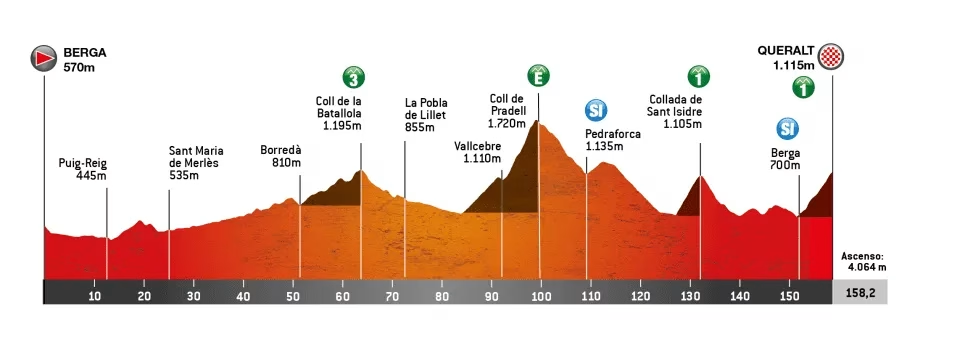
Stage 6 – Berga to Queralt, 158.2km
If Stage 5 is the queen stage, Stage 6 is the day that makes sure nobody relaxes. It runs 158.2km from Berga to Queralt and includes the Coll de la Batallola, the HC-rated Coll de Pradell, the category 1 Collada de Sant Isidre and a category 1 finish at Queralt.
That is a serious mountain stage in its own right, and in some editions it would be the defining day of the race. Here it comes after Coll de Pal, which makes it even more dangerous. Riders who lose time on Stage 5 may have to attack. Riders who gain time will need to defend on tired legs. Either way, it gives the route the kind of back-to-back mountain pressure that makes Catalunya such a revealing race.
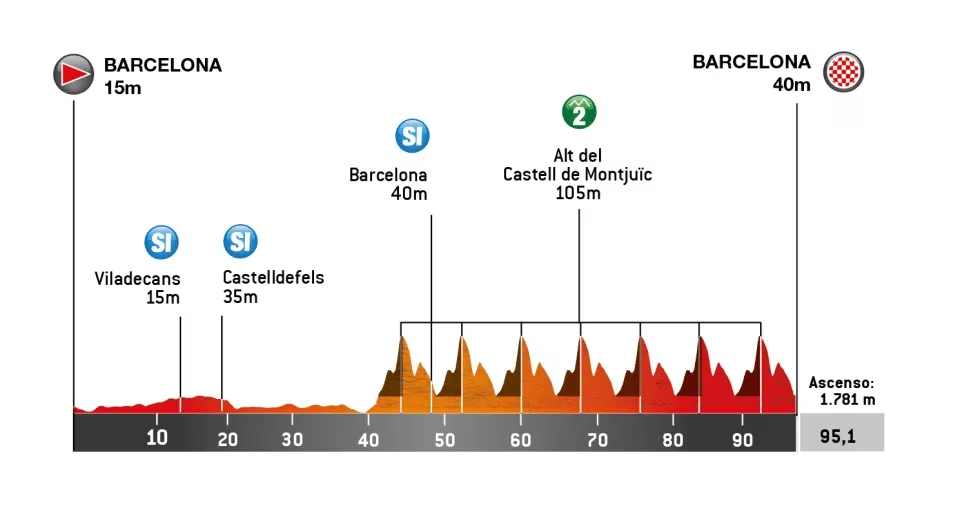
Stage 7 – Barcelona to Barcelona, 95.1km
The race ends with the usual short, intense Barcelona stage over 95.1km, built around repeated ascents of the Alt del Castell de Montjuïc. The route includes seven climbs of Montjuïc before the final finish in Barcelona.
This stage has become one of the race’s signatures because it keeps the GC alive far later than a conventional final day would. Rather than a processional finish, Catalunya closes with a stage that is short enough to encourage aggression and selective enough to reward it. If the time gaps are tight, Barcelona can still change everything.
What the route means for the race
The overall shape is clear enough. The opening three stages give opportunities to puncheurs and sprinters who can cope with a little more than a textbook flat day. Stage 4 at Vallter brings the climbers into the foreground. Stage 5 at Coll de Pal is the race’s hardest test. Stage 6 to Queralt makes sure the pressure does not drop. Then Stage 7 in Barcelona gives the whole week one last tactical sting.
That is why Volta Ciclista a Catalunya 2026 looks like such a strong stage-race route. It is not just mountainous. It is structured well. The difficulty rises in sensible steps, the GC tests are properly spaced, and the final day is still dangerous enough to stop the race going stale. For climbers and complete stage-racers, that is exactly what you want from Catalunya.
For more on how the race fits into the spring calendar, ProCyclingUK’s Beginner’s guide to Itzulia Basque Country 2026 is a useful next read, especially because Itzulia follows soon after and offers a very different sort of pressure.