
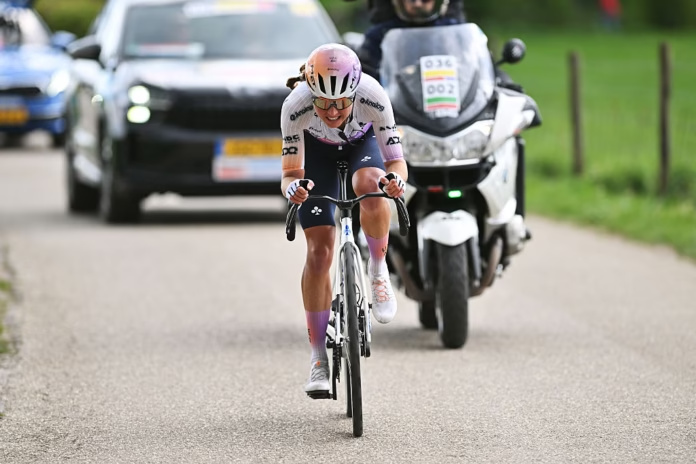
Amstel Gold Race Women 2026 gave the season one of its most revealing results so far. Paula Blasi did not simply win from a late move. She changed the reading of the Ardennes week, exposed the difficulty of controlling the strongest women’s races, and gave UAE Team ADQ a victory that feels bigger than a single result.
Her solo win in Valkenburg was built from instinct rather than inevitability. Blasi attacked late, first joining Nienke Vinke before pushing clear on the Cauberg and holding off a chase that contained Kasia Niewiadoma-Phinney, Demi Vollering and several of the most reliable one-day riders in the peloton. That alone would have made it notable. The fact she had been under pressure earlier in the race made it even sharper.
“Five minutes before I attacked I was dropped,” Blasi said afterwards, a line that neatly captured the strangeness of the day. Amstel was not won by the rider who looked strongest from a distance. It was won by the rider who found the right moment, trusted the hesitation behind, and then had enough left to survive the most demanding part of the finale.
That makes this result more useful than a simple upset. It says something about where the Women’s WorldTour is now, how the favourites are being raced, and why the Ardennes block still has room for invention even on routes everyone thinks they understand.
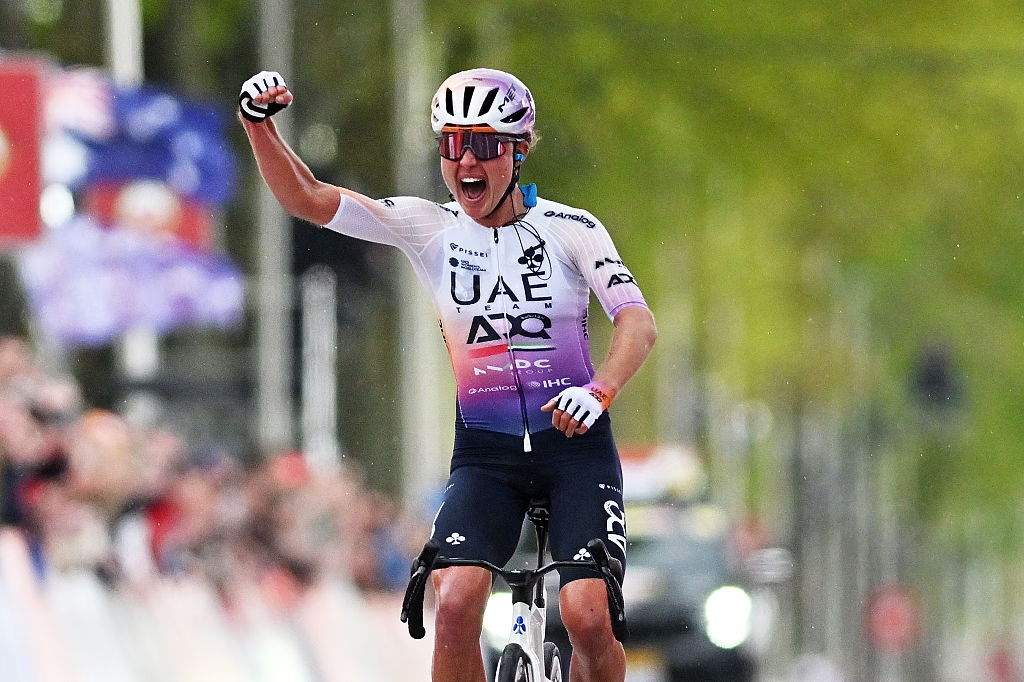 Photo Credit: Getty
Paula Blasi has changed her own ceiling
For Paula Blasi, this is the kind of victory that immediately alters how she is viewed. Before Amstel Gold Race Women, she was a promising rider with a strong engine, a good development curve and useful versatility. After Amstel, she is a WorldTour one-day winner who has shown she can read a major race and finish it off under extreme pressure.
That distinction is important. There are riders who can attack, riders who can climb, and riders who can take advantage of a tactical lull. There are fewer who can do all three in the final 20km of a WorldTour Classic while the biggest names in the race are behind them. Blasi’s move was not protected by anonymity for long. Once she had gone clear, every team knew the danger. The chase still did not bring her back.
This does not mean Blasi suddenly becomes a favourite for every hilly Classic. That would be too simplistic. But it does mean she now has a different relationship with races like these. She has proof that she can win them, not merely place highly or support someone else. For a 23-year-old rider, that can be the difference between being sent into finals as an option and being sent into them as a protected card.
UAE Team ADQ will have to handle that carefully. Blasi’s strength is partly that she can race with freedom. If she is overburdened too quickly, the same spontaneity that won Amstel could be dulled. But the team now has a rider who can shape the Ardennes and punchy one-day races in a way that was not fully priced into the season before Sunday.
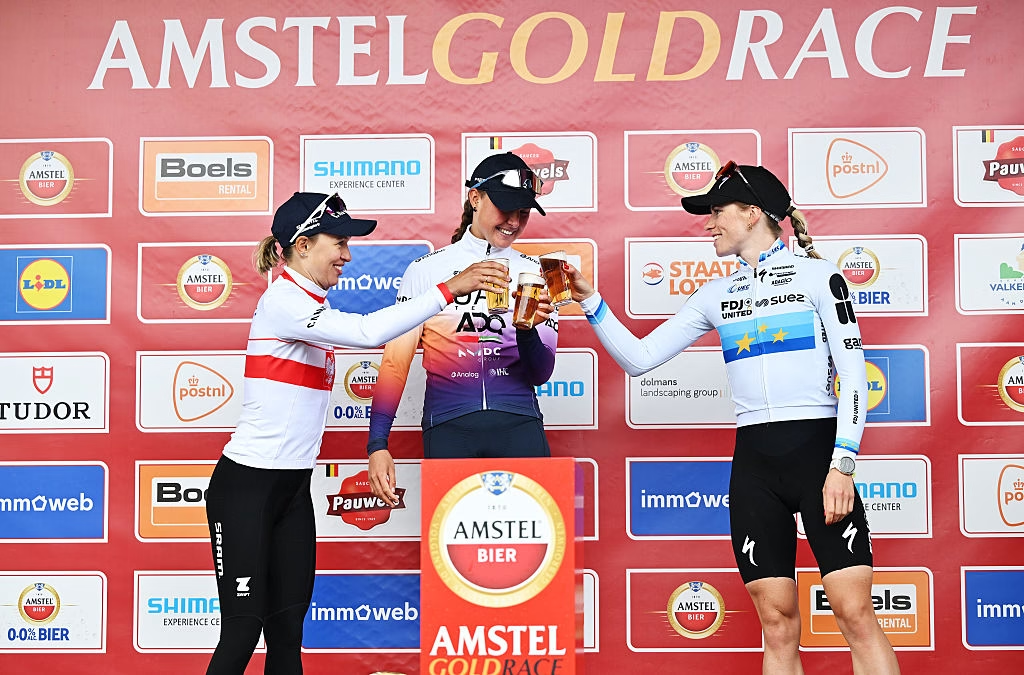 Photo Credit: Getty
The favourites are still strong, but control is getting harder
The podium behind Blasi was not weak. Kasia Niewiadoma-Phinney finished 2nd, Demi Vollering was 3rd, Letizia Paternoster took 4th and Noemi Rüegg was 5th. That is a serious top five, and it confirms that the established contenders were still present when the race became decisive.
What it also showed is that being present is no longer enough. The best riders can mark each other perfectly and still lose the race if the right move goes before the final climb. That is the lesson Amstel keeps teaching in different forms. The Cauberg is decisive, but it is not the only decision point. The run-in, the descents, the short climbs and the small hesitations all create space for a rider with the nerve to go.
For Vollering, this was not a bad performance, but it was a missed opportunity in a race that suits her range. She was strong enough to make the podium, yet the race did not fully bend around her. Since moving to FDJ United-SUEZ, she has often looked powerful, but the pressure of converting that strength into one-day dominance is still different from simply being the rider everyone expects to follow.
Niewiadoma-Phinney’s 2nd place was another reminder of her consistency at the highest level. She is rarely absent from the critical phase of this kind of race, and Amstel again rewarded her durability. The slight frustration is that she was once more close without winning. Her form looks good, her positioning was strong, and her sprint for 2nd showed there was still plenty left. The issue was not weakness. It was timing.
The Ardennes are becoming less predictable
Amstel Gold Race Women 2026 also fits a broader pattern. The Ardennes races still favour the same broad rider types: punchy climbers, durable Classics riders, and those who can repeat high-intensity efforts after four hours of racing. But the way they are being won is becoming harder to script.
That is healthy for the sport. For years, many women’s races were framed around a small group of dominant names. The best riders are still there, but the gap between favourite and opportunist is not as wide as it once looked. Teams are deeper. Younger riders are more tactically confident. Domestiques and secondary leaders are stronger. That means a late move from a rider like Blasi cannot be dismissed as a hopeful attack. It has to be treated as a potential winning move immediately.
This matters for La Flèche Wallonne Femmes and Liège-Bastogne-Liège Femmes. Teams will not be able to assume that everything can be brought back on demand. If Amstel taught anything, it is that the chase behind a dangerous solo rider can become complicated very quickly when several favourites are present but none wants to spend the decisive energy for someone else.
That dynamic could make the rest of Ardennes week much more aggressive. Riders who do not want to wait for Vollering, Niewiadoma-Phinney or another favourite to launch on the final climb now have a clear example of how to beat them. Go late enough to make the move hard to organise against, but early enough that the favourites cannot simply rely on one final acceleration.
UAE Team ADQ now look more dangerous across different race shapes
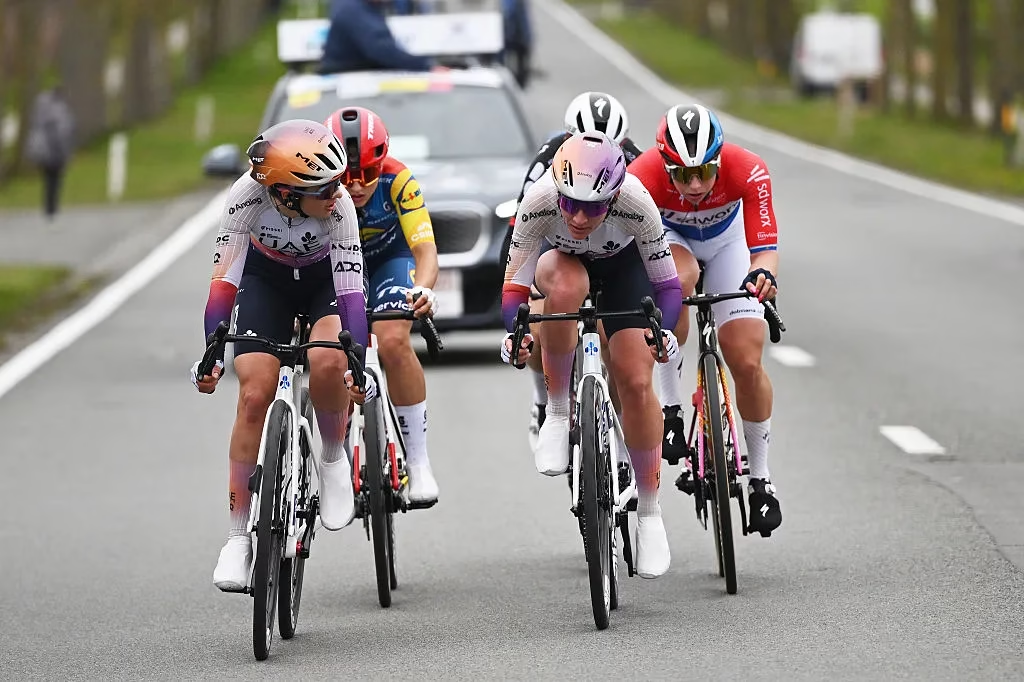
For UAE Team ADQ, Amstel Gold Race Women 2026 was a major result because it showed depth as well as ambition. Blasi won, but Karlijn Swinkels also finished 6th, giving the team two riders inside the top six. That matters in tactical terms because it suggests UAE were not dependent on one perfect card.
The team have been building towards a broader identity in the Women’s WorldTour. They are no longer just a squad trying to survive the biggest finales or collect results through isolated individual performances. They now have riders who can attack, follow, finish and disrupt. In races where SD Worx-Protime, FDJ United-SUEZ, Canyon SRAM zondacrypto and Lidl-Trek are expected to dictate the shape, UAE’s ability to break that rhythm becomes valuable.
Blasi’s win also gives the team something less visible but just as important: authority. Once a rider has won a race of this level, rivals cannot give her the same space again. That changes future tactical meetings, future chase decisions and future pre-race planning. UAE Team ADQ now have another rider who has to be actively marked in hilly WorldTour races.
SD Worx-Protime still influence the race, but not always the result
SD Worx-Protime remain central to how these races unfold, even when they do not win. Nienke Vinke’s role in the decisive move was important because it showed the team still has riders capable of putting pressure on the race before the final selection. Anna van der Breggen finishing inside the top 10 also added another layer to their presence in the finale.
Yet this was also another example of the team being influential without being decisive. That is a subtle but meaningful difference. For much of the last decade, SD Worx and its previous forms have been able to turn influence into control. In 2026, the field is making that more difficult. They can still place riders in strong positions, but the race does not always resolve in their favour.
That could become one of the central themes of the season. SD Worx-Protime are still too strong to ignore, and their depth remains one of the most important forces in the peloton. But the automatic dominance has softened. Other teams are less willing to wait for them, and more riders now believe they can win by making the race messy before the final script has a chance to settle.
Paternoster and Rüegg strengthen the Classics picture
Letizia Paternoster’s 4th place was another strong sign that she belongs in these harder one-day conversations. She has always had speed, but Amstel is not a race for a pure sprinter. To finish 4th here requires much more than a fast kick. It requires repeated climbing, positioning, patience and the ability to keep something in reserve after a difficult final hour.
That broadens how Liv AlUla Jayco can use her. Paternoster is not limited to waiting for reduced bunch sprints on flatter terrain. If the race is selective but not completely broken apart, she becomes a very awkward rider for rivals. Nobody wants to take her to the line, but she is strong enough to survive deeper into hilly races than many sprinters.
Noemi Rüegg’s 5th place was another useful marker for EF Education-Oatly. She has the kind of profile that fits the modern Women’s WorldTour: punchy, technically sharp, aggressive and increasingly reliable across different race types. A top five at Amstel is not a small result. It suggests she can be a serious factor in races where the favourite group is reduced but not fully emptied out by the final climb.
-
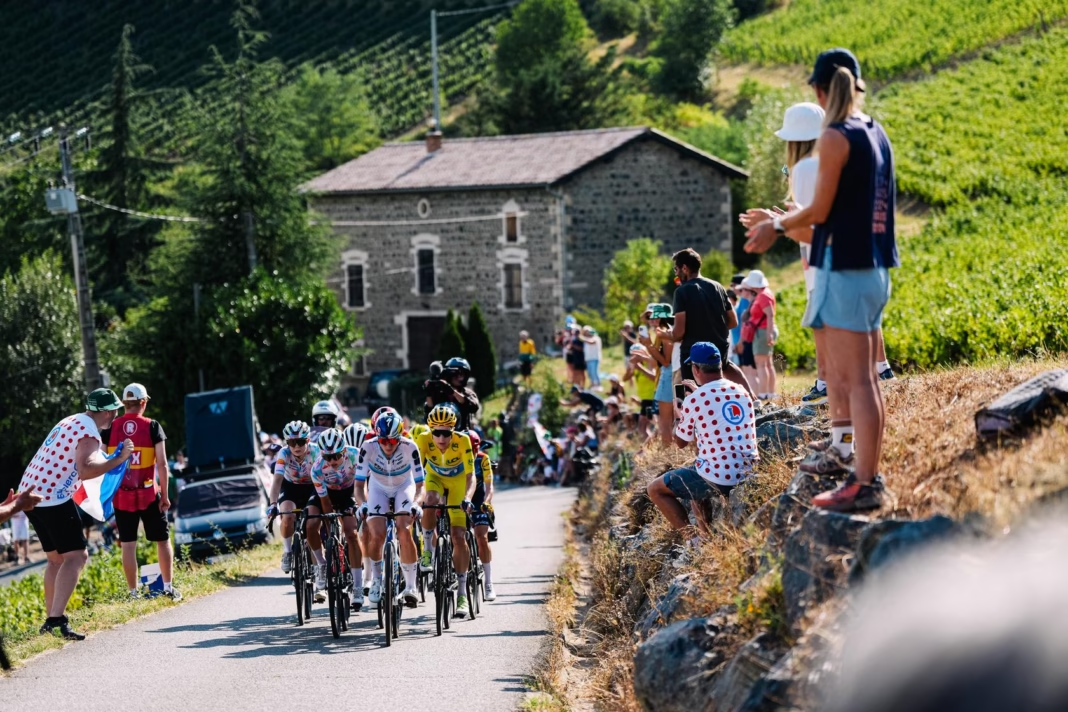
 Photo Credit: A.S.O./Billy Ceusters
The season now feels wider open
The biggest meaning of Amstel Gold Race Women 2026 is not that the favourites failed. It is that the race gave the rest of the peloton evidence. Blasi’s victory showed that the strongest riders can be beaten by timing, courage and tactical confusion. It showed that the decisive move does not always have to come from the most obvious name. It showed that a rider who looks in difficulty can still recover, reset and win.
That is a powerful message heading into the next part of the season. La Flèche Wallonne Femmes is more controlled by its finish, but even there, teams will be alert to earlier pressure. Liège-Bastogne-Liège Femmes is broader, longer and more open to tactical variation. Beyond the Ardennes, the same lesson will carry into stage races and summer one-day targets: the favourites are strong, but the peloton is no longer waiting politely for them to decide everything.
For Blasi, Amstel may become the result that changes the trajectory of her career. For UAE Team ADQ, it confirms that they can win the biggest races through more than one route. For Vollering, Niewiadoma-Phinney and the other established leaders, it is a warning that strength alone will not always close the gap once the right rider has gone.
Amstel Gold Race Women 2026 did not tear up the hierarchy completely. The best riders were still there. But it did stretch the season open, and that may prove more important than the result itself.

