
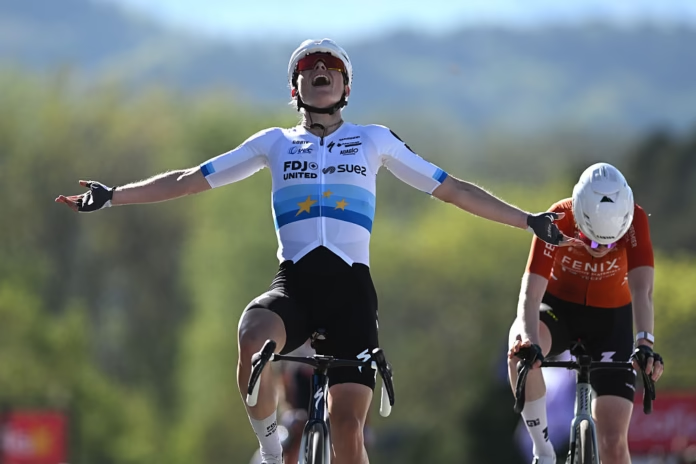
La Flèche Wallonne Femmes 2026 was won by Demi Vollering after the FDJ United-SUEZ rider launched early on the final ascent of the Mur de Huy and held off a fast-finishing Puck Pieterse in a tense uphill finale. Rather than waiting for the final straight, Vollering attacked on the steep curves of the Mur and built just enough of a gap to survive Pieterse’s late surge towards the line.
Pieterse finished strongly and closed much of the distance in the final metres, but Vollering had already done enough. Paula Blasi continued her superb Ardennes campaign by taking 3rd, with Kasia Niewiadoma-Phinney 4th and Anna van der Breggen 5th after fading on the steepest part of the final climb.
The race had been shaped by early tactical moves, a dangerous mid-race chase group, a late attack by Axelle Dubau-Prévot and Katrine Aalerud, and another controlled but forceful display from FDJ United-SUEZ. Elise Chabbey’s acceleration on the final Côte de Cherave brought the late escape back and delivered Vollering into exactly the position she needed before the Mur.
-
 Photo Credit: quentinphotographiebe
 -
 Photo Credit: Getty
Early attacks make FDJ work before the local circuit
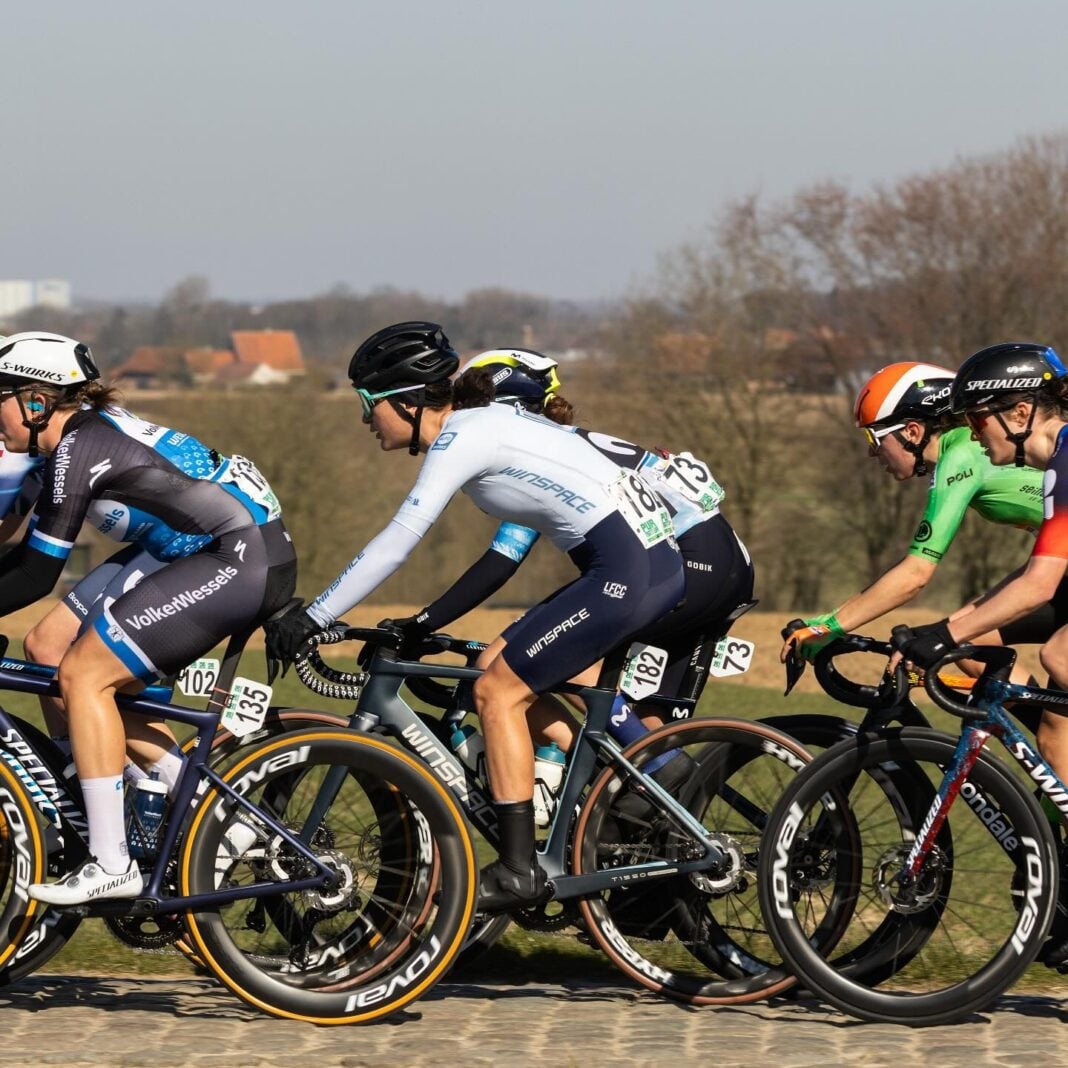
The 148km race began with a flat opening before the first of nine climbs, the Côte de Bohissau. The early kilometres were active rather than settled, with Lucie Fityus abandoning in the opening phase and several riders already distanced on the first ascent.
Malou Eisen of VolkerWessels was the first rider to establish a proper gap, moving clear before Lotte Claes of Fenix-Premier Tech joined her. Heidi Franz sat in between for St Michel-Preference Home-Auber 93, while the peloton remained within reach but did not immediately shut the move down.
The tactical picture became more complicated when a strong nine-rider chase group went clear. Evita Muzic was there for FDJ United-SUEZ, alongside Clara Czapla, Viktoria Chladoňová, Ricarda Bauernfeind, Mikayla Harvey, Erica Magnaldi, Maëlle Grossetête, Daniela Hezinova and Debora Aranguren. With several major teams represented, the move had enough quality to worry the peloton, but also enough internal conflict to prevent it from fully taking control.
Movistar and EF Education-Oatly were among the teams without riders in the move, while the presence of Muzic gave FDJ a useful card to play. The pace remained high, with the first 50km covered at around 40kph, a notable figure given the route profile and the climbs still to come.
The early break is brought back before Huy
The chase group eventually made contact with the front, creating an 11-rider lead group. Yet the peloton had already reduced the advantage to around 25 seconds, and the move began to lose its threat before the race reached the local circuit around Huy.
The Côte de Durnal was the final climb before the flat section into the circuit, and the front groups were steadily reeled in. Ilken Seynave abandoned, Czapla dropped back to the bunch, and the peloton’s pressure eventually ended the early breakaway’s hopes.
Émilie Morier briefly counter-attacked for St Michel-Preference Home-Auber93 with around 70km to go, but she too was brought back as the race entered the local laps. From that point, the structure of the day shifted. The early tactical moves had forced a hard pace, but the contenders were now preparing for the climbs that would properly define La Flèche Wallonne Femmes.
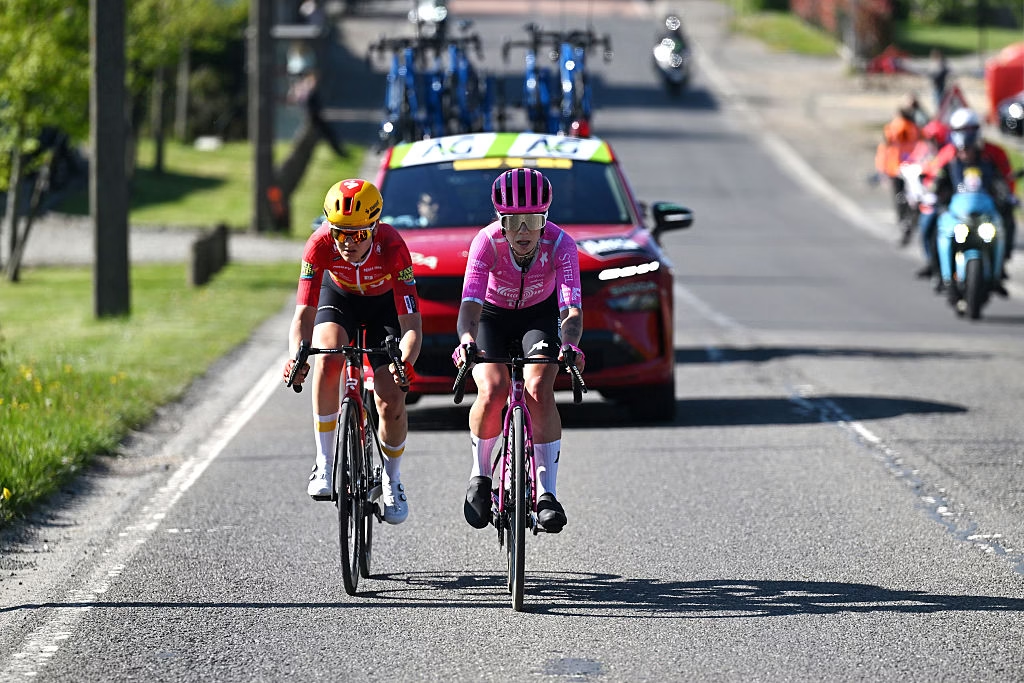 Photo Credit: Getty
Dubau-Prévot and Aalerud animate the final lap
The first ascent of the Mur de Huy saw the race thin further. Lidl-Trek had an important scare when Loes Adegeest and Niamh Fisher-Black crashed, but both returned to the peloton. Yara Kastelijn was dropped, removing a key worker for Pieterse before the final phase.
Axelle Dubau-Prévot then attacked on the Mur, giving EF Education-Oatly a useful move ahead of the final lap. The young French rider quickly built a lead of around 20 seconds, then extended it on the plateau as a tailwind helped her effort.
Katrine Aalerud of Uno-X Mobility bridged across, and the pair worked together to reach the final lap with a meaningful advantage. Paula Blasi, fresh from her Amstel Gold Race Women victory, also tried to bridge, but her move was neutralised. With 30km to go, FDJ United-SUEZ took responsibility in the peloton, with Eva van Agt and Evita Muzic helping to bring the gap down to around 50 seconds.
Dubau-Prévot and Aalerud still had a minute at one point, helped by a strong tailwind, but the final sequence of climbs was always going to test them. By the time they reached the Côte d’Ereffe, their gap was falling quickly.
Chabbey splits the race on the Cherave
The Côte d’Ereffe reduced the leaders’ margin to around 20 seconds before it grew slightly again over the top. Visma-Lease a Bike, UAE Team ADQ and SD Worx-Protime all showed at the front of the peloton, but it was FDJ United-SUEZ who looked most structured as the final climbs approached.
Femke Markus positioned Lidl-Trek neatly before the Côte de Cherave, with Fisher-Black back in contention after her earlier crash. The gap to Aalerud and Dubau-Prévot was still 35 seconds with 10km remaining, but the penultimate climb changed everything.
Dubau-Prévot attacked again on the Cherave, trying to go clear of Aalerud, but behind them Elise Chabbey accelerated hard for FDJ United-SUEZ. That move immediately caused splits. The former Swiss champion brought the escape back and forced the race down to a select group of around 15 riders.
Most of the major contenders survived the Cherave, but the damage was clear. Ashleigh Moolman-Pasio was among those distanced, while Mavi Garcia and Monica Trinca Colonel had to work back towards the front near the top. EF Education-Oatly still had numbers, with Dubau-Prévot remarkably remaining in touch after her long attacking effort, alongside Magdeleine Vallieres and Noemi Rüegg.
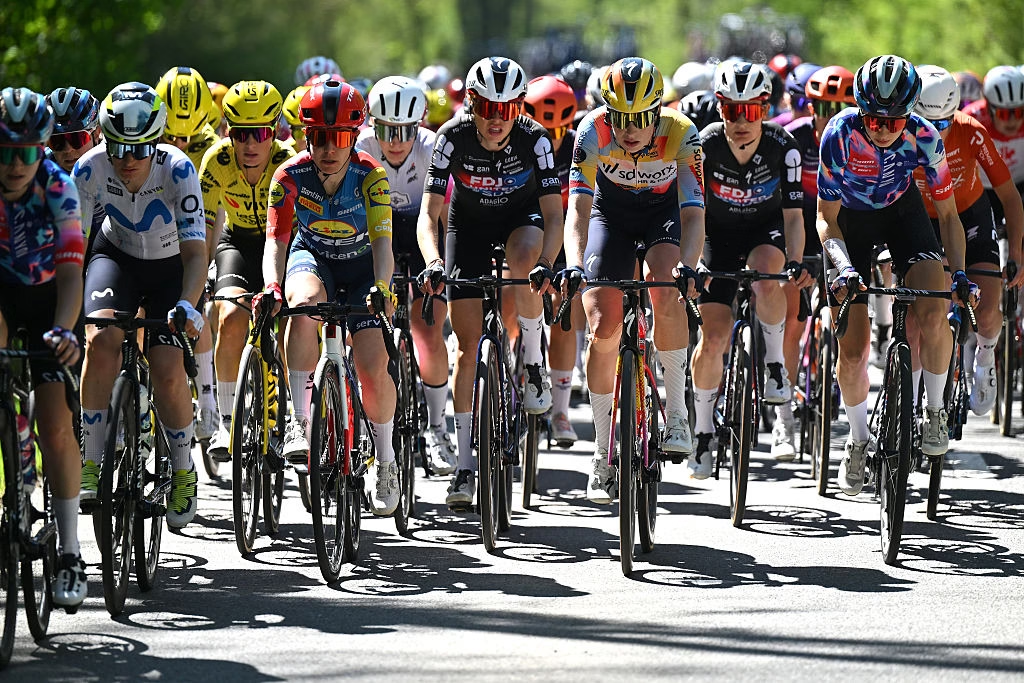 Photo Credit: Getty
Vollering goes early on the Mur de Huy
With 5km to go, the front group was around 15 riders strong. On the descent into Huy, riders began to organise for the final climb. Isabella Holmgren helped bring Fisher-Black forward for Lidl-Trek, while Dubau-Prévot led EF Education-Oatly’s options towards the foot of the Mur.
FDJ United-SUEZ took over for the final approach. Juliette Berthet led onto the Mur, with Chabbey then positioned on the early part of the climb. Vollering had placed herself carefully, sitting on Pieterse’s wheel as the gradient began to bite.
The decisive move came earlier than expected. Rather than waiting for the steep final straight, Vollering hit the front on the sharp bends of the Mur. Niewiadoma-Phinney was initially on her wheel, with Pieterse close behind, but Vollering punched clear on the steepest pitches and opened a gap.
Anna van der Breggen went backwards at that moment, as did Fisher-Black. Behind Vollering, Blasi, Niewiadoma-Phinney, Pieterse and Vallieres tried to organise the chase, but the European champion had already created the separation she needed.
Pieterse refused to let the race go. The defending champion finished the strongest of the chasers, closing rapidly in the final straight and pushing Vollering all the way to the line. Yet Vollering’s early acceleration had given her just enough room, and she held on for a major Ardennes victory.
Pieterse pushes close, Blasi continues her Ardennes rise
Pieterse’s 2nd place underlined her consistency through the spring. She had said before the race that she wanted one real standout result more than a sequence of podiums, and although this was not the win she wanted, her final surge showed why she remains one of the most dangerous riders on this type of finish.
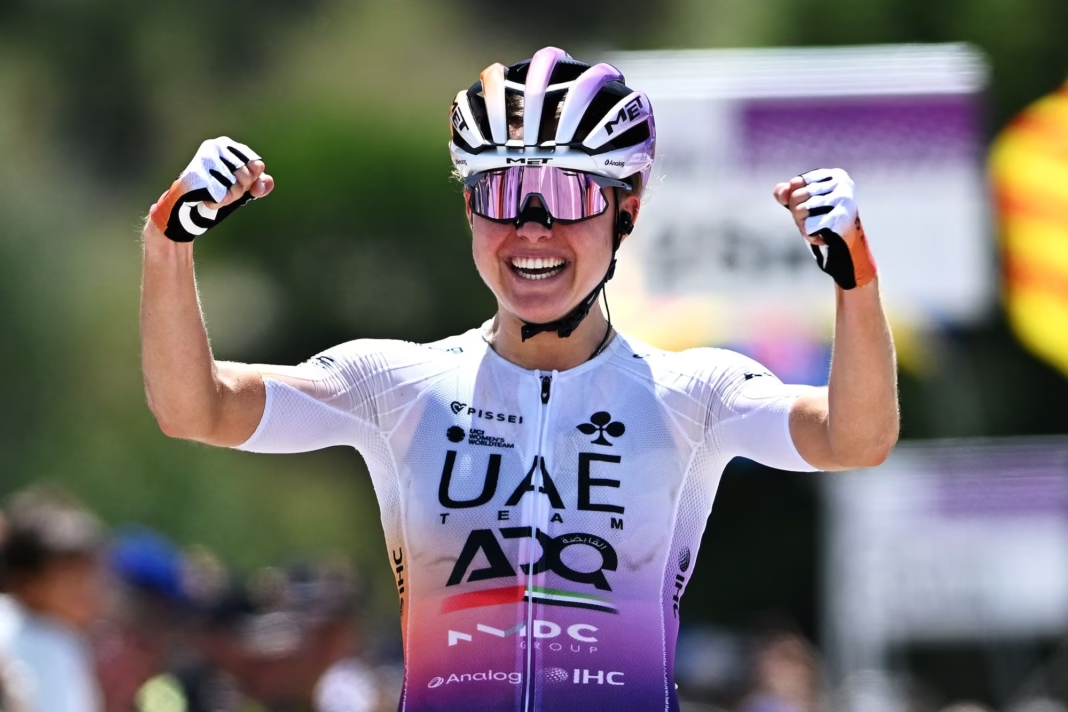
Blasi’s 3rd place was another statement after her Amstel Gold Race Women victory. The UAE Team ADQ rider was active earlier in the finale and still had enough left to drive the chase on the Mur. For a rider still early in her rise at this level, a podium on the Mur de Huy adds further weight to a breakthrough Ardennes week.
Niewiadoma-Phinney had to settle for 4th after once again being close to a major result, while Van der Breggen finished 5th in her latest attempt to return to the top step of a race she once dominated. The seven-time winner had spoken before the start about the higher level in the peloton compared with her previous era of dominance, and the final climb showed just how fierce that front group has become.
For FDJ United-SUEZ, this was another race won through clear structure. Muzic gave the team representation in the early move, Van Agt helped control the final lap, Chabbey split the race on the Cherave, Berthet positioned Vollering into the Mur, and Vollering finished the job herself. On a climb that leaves little room for error, their timing was close to perfect.
La Flèche Wallonne Femmes 2026 Result
Results powered by FirstCycling.com
Main photo credit: Getty

