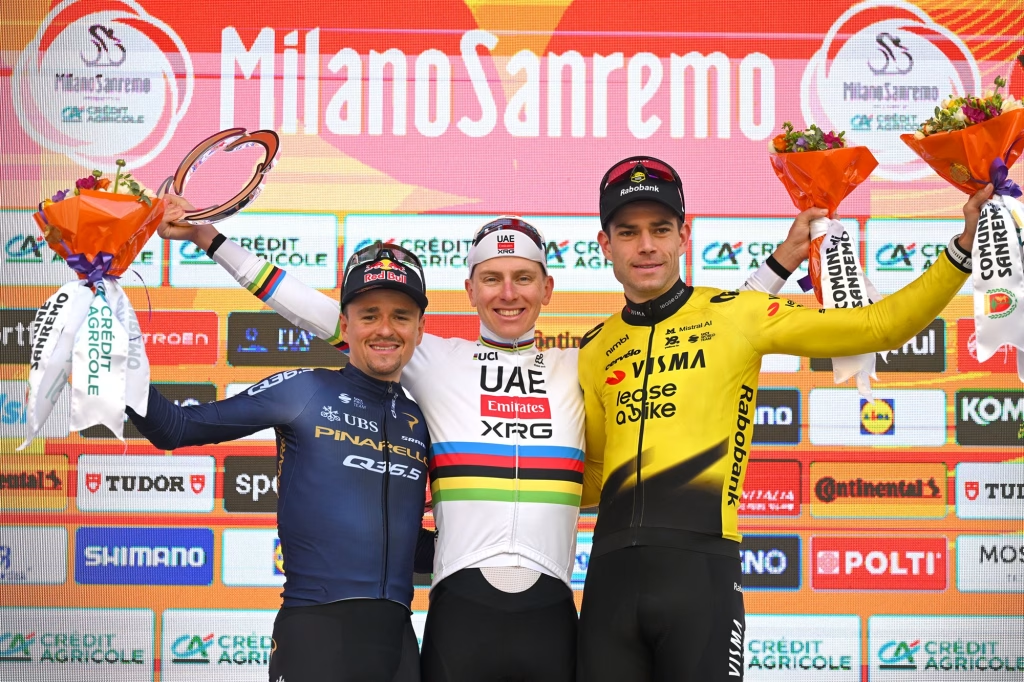
Men’s Milano-Sanremo 2026 did more than finally give Tadej Pogačar the Monument that had kept slipping away from him. His win on Via Roma, after forcing the race on the Cipressa and then finishing it off against Tom Pidcock, immediately changed the tone of the spring. It confirmed that Pogačar’s pressure on this race is no longer just a recurring theme, it is now a solved problem, and it showed that the men’s Classics season will once again be defined by how rivals respond to him rather than the other way round.
That matters because Milano-Sanremo has often been the awkward Monument in Pogačar’s otherwise overwhelming one-day profile. He had already shown he could bend the race closer to his will, especially with the Cipressa becoming more central to the decisive action, but until now the final result had still escaped him. Winning in 2026 means one of the few obvious gaps in his major one-day record has narrowed again.
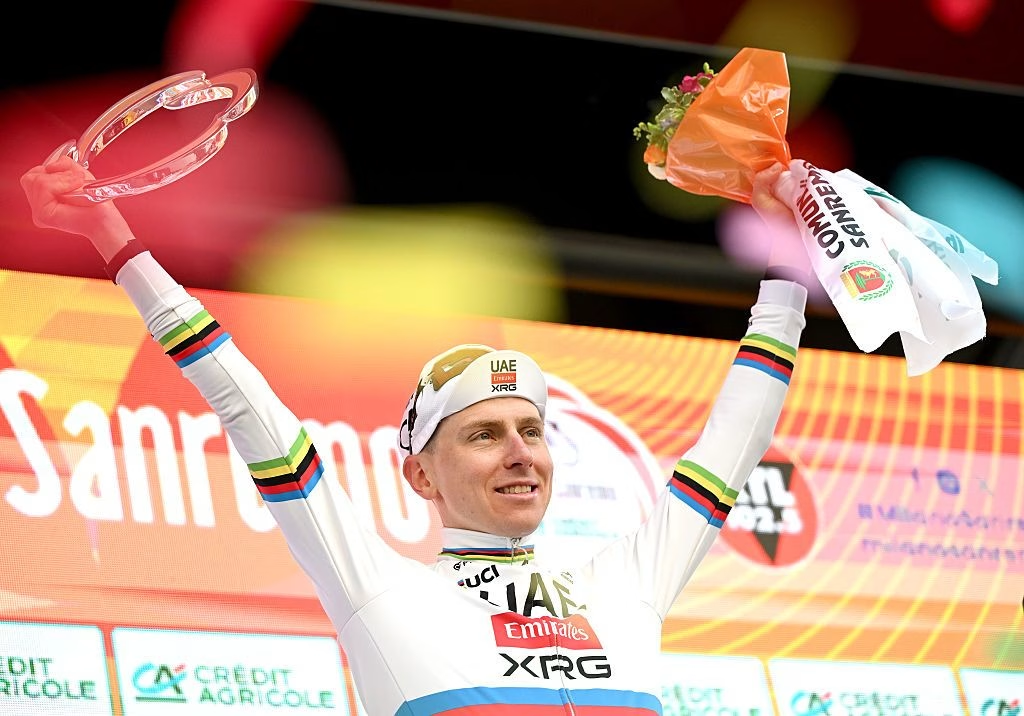
Pogačar has made the spring even more about him
The clearest implication is that Pogačar remains the central figure of the men’s spring. That sounds obvious, but Sanremo has often been the race that resisted even him. In 2026 he changed that by making the key move with Pidcock and Mathieu van der Poel on the Cipressa, then finishing the job on the Poggio and in the sprint.
For the rest of the season, that sharpens the pressure on everybody else. Rivals are no longer just trying to contain Pogačar in races that naturally suit him. They are now trying to beat him in a Monument that had historically asked for a slightly different answer. If he can now win Sanremo in this style, the broader Classics picture becomes even more uncomfortable for the rest.
That is especially true with the next phase of spring bringing races such as E3 Saxo Classic, Dwars door Vlaanderen and Tour of Flanders, where his presence changes the whole tactical temperature of the race before the flag has barely dropped.
The Cipressa is no longer just a prelude
One of the most important tactical conclusions is that the Cipressa continues to grow as a true launch point rather than merely the climb before the climb. For a long time, men’s Milano-Sanremo was framed around the Poggio as the only place that really mattered. That is no longer enough as an explanation.
If UAE Team Emirates-XRG keeps racing this way, Sanremo becomes less about surviving to the Poggio and more about who is already at their limit before they even reach it. That makes the race more selective, more demanding, and far less comfortable for pure fast finishers hoping to arrive fresh.
It also reinforces a broader theme in modern Monument racing. The strongest teams are no longer content to wait for the traditional decisive point if they think they can reshape the race earlier. That gives Milano-Sanremo more tactical depth and makes future editions harder to control.
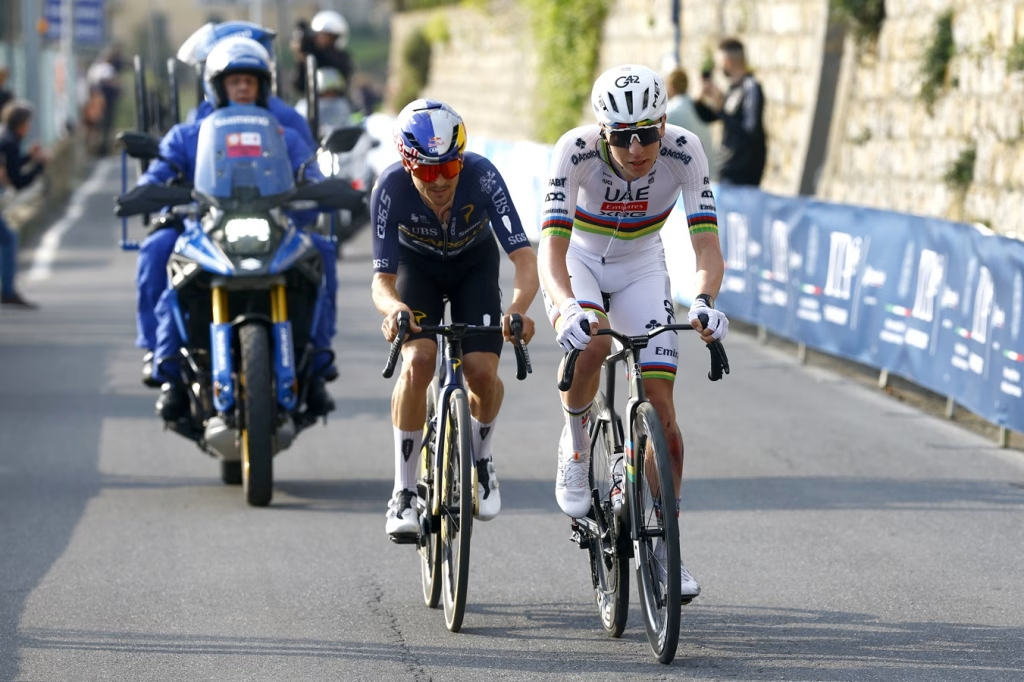 Photo Credit: Getty
Tom Pidcock has moved into the very top tier of Monument contenders
Pidcock’s second place is not simply a strong podium. It looks like a genuine elevation. He came into Sanremo in excellent condition and translated that form straight into the biggest near-miss of his Monument career by surviving the decisive selection and pushing Pogačar all the way to the line.
That matters for the season because it changes how he is read in the biggest one-day races. Pidcock is no longer just a rider who can animate a finale, descend brilliantly, or seize an opening if the race breaks awkwardly. In Sanremo he matched the defining move, held off the rest, and only lost by the smallest of margins. That puts him into a different bracket for the rest of spring and probably for the Monuments more broadly.
From a British perspective, that is significant too. A rider who can get that close in Milano-Sanremo is not arriving at the rest of spring as a hopeful outsider. He is arriving as one of the genuine names that others have to account for.
Mathieu van der Poel is still central, but not untouchable
Van der Poel was again exactly where he needed to be when the race broke open, but this time he could not turn that position into victory. He was part of the crucial move when the race split, yet ultimately did not convert it into another Sanremo win.
That does not really diminish him, but it does make the spring feel more vulnerable around him. He remains one of the defining one-day riders of the era and will still be one of the major reference points for the cobbled Monuments. But Sanremo denied him the psychological lift of another big early-season statement in one of his best races.
So the takeaway is not that Van der Poel is suddenly on the back foot. It is that the margin over his biggest rivals looks thinner than it sometimes has, and that matters when the calendar moves into races where raw power, positioning and repeated efforts are even more brutal.
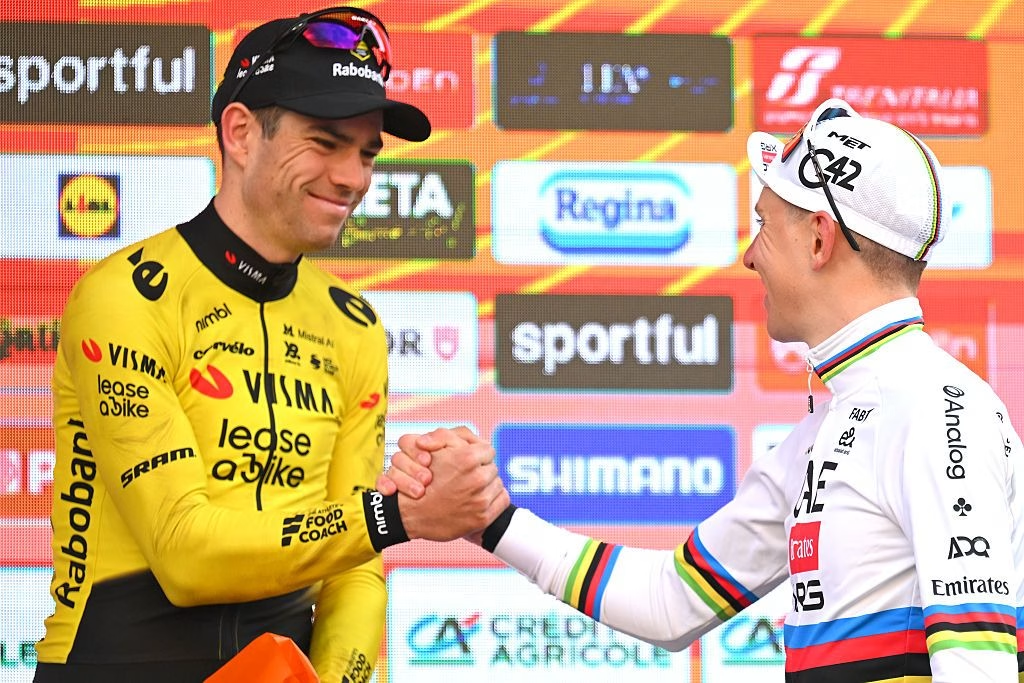
Wout van Aert is back in the conversation properly
Van Aert finishing on the podium was one of the quieter but more important stories of the day. He did not make the front two, but he did enough to come away with a result that carries real weight.
For the season, that matters because Van Aert does not need Sanremo to prove he is relevant, but he did need a ride that restored some clarity around his current level. A major result in this sort of race, against this quality of opposition, suggests he is moving into the next block of Classics with far more substance than if he had simply been dropped out of contention.
It does not make him the man to beat, but it does put him firmly back into the serious conversation for what comes next. For Team Visma | Lease a Bike, that matters almost as much as the result itself, because a spring built around Van Aert is very different from one built around uncertainty.
The race is becoming less friendly to traditional sprinters
Milano-Sanremo will always retain an element of uncertainty because of its length, its rhythm and the way hesitation can still bring riders back. But the 2026 edition reinforced a trend that many teams already feared. If the strongest all-rounders force the issue hard enough on the Cipressa and Poggio, the race increasingly stops being a controlled stage for the purest sprinters.
That is significant for the season because it changes how teams choose their leaders and how they spend their domestiques. A fast finisher with only one card to play becomes a more fragile proposition when the race can be detonated that early. By contrast, teams with a rider who can climb, descend and still sprint from a tiny group now have a much more convincing Sanremo model.
That is one reason Milano-Sanremo now feels even more important as a reading of the wider spring. It does not just tell us who won that day. It tells us which rider types are becoming harder to beat across the biggest one-day races.
UAE Team Emirates-XRG can keep dictating terms
Another important takeaway is how comfortably UAE Team Emirates-XRG continues to set the terms of racing when Pogačar is present. The team came into Sanremo with a clear understanding that waiting rarely helps them, and the race unfolded accordingly.
That matters for the season because it pushes the tactical burden onto everyone else. Teams are not merely trying to follow the strongest rider. They are trying to resist a collective plan designed to make races selective in very specific places. The more often that works, the harder it becomes for others to improvise a counter.
This is one of the defining features of the current Classics era. The strongest individual rider is backed by a team willing to race aggressively and early, which means rivals are often reacting to a script that has already been imposed on them.

Resilience is now part of Pogačar’s Sanremo story too
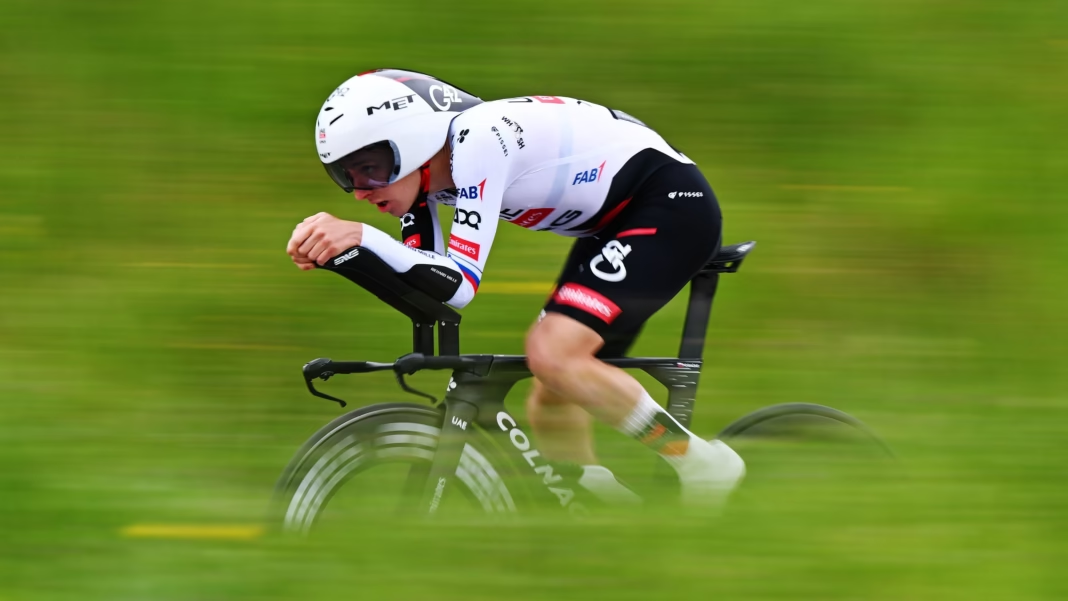
There is also a symbolic layer to this win. Pogačar did not take Milano-Sanremo in a clean, untouched ride where everything fell into place. He had to absorb disruption and still come through it to win.
That gives the result more weight than if it had come from a simple, controlled script. Sanremo had become the race that seemed to resist his logic, the one Monument where repeated brilliance did not automatically lead to victory. Winning it in a hard, slightly chaotic way adds to the sense that Pogačar is not just strong, but increasingly difficult to destabilise even when things go wrong.
That is a dangerous message for the rest of the spring. Riders can sometimes take confidence from seeing a rival look vulnerable. This race offered very little of that.
The rest of spring is clearer, but not closed
The biggest conclusion is not that the season is over. It is that the hierarchy is sharper now. Pogačar has removed another obstacle. Pidcock has strengthened his standing dramatically. Van der Poel remains central but leaves Sanremo with a little less momentum than he wanted. Van Aert comes away with a result that keeps him fully live for the next races.
That is what men’s Milano-Sanremo 2026 means for the season. It has not simplified the spring into one inevitable script, but it has clarified the starting positions. Pogačar is even harder to frame as anything other than the defining rider of the campaign. The race itself is moving further towards an aggressive, selective identity. And the next Monuments now arrive with a stronger sense of who has gained, who has almost arrived, and who still needs an answer.
If you place it in the context of the wider 2026 men’s WorldTour spring calendar, that is the real significance. Milano-Sanremo did not settle everything, but it did give the season a firmer shape.