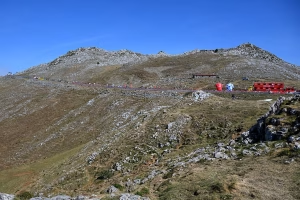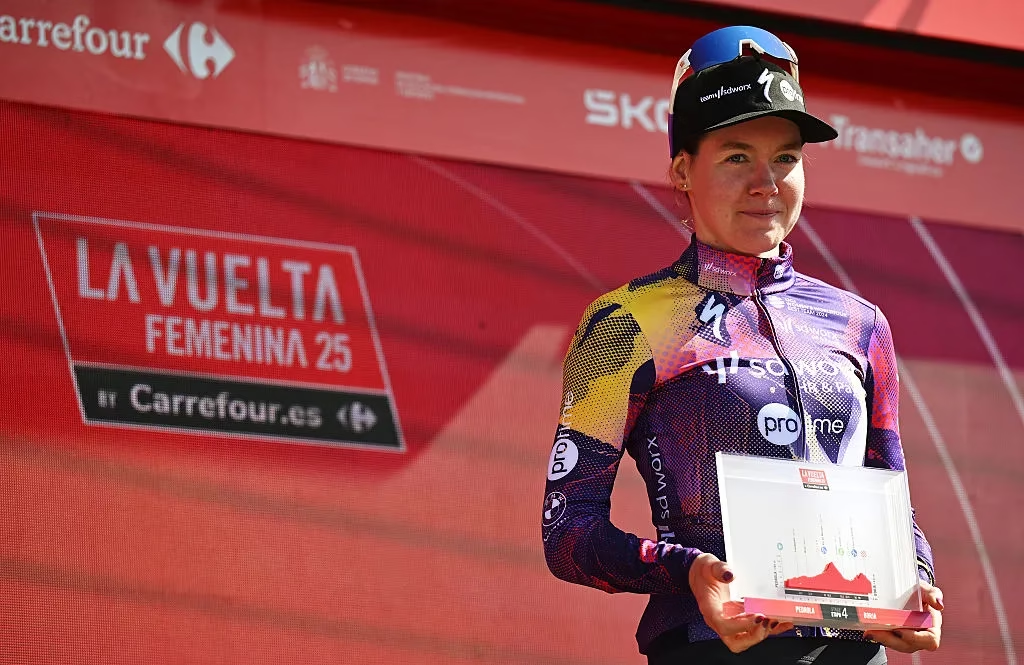
The Angliru is the image everyone carries from La Vuelta Femenina 2026, and for obvious reasons. The race finishes there on Saturday, 9th May, after a final weekend that also includes Les Praeres. But the route’s real shape starts much earlier than that. The opening block in Galicia is not a soft prelude before the climbers take over. It is four days of racing that can unsettle the hierarchy, drain teams and force mistakes before Asturias ever arrives.
The race opens with four straight stages in Galicia: Marín to Salvaterra de Miño, Lobios to San Cibrao das Viñas, Padrón to A Coruña and Monforte de Lemos to Antas de Ulla. Only stage 3 is flat. Stages 1, 2 and 4 are all hilly, which already tells you the race is designed to create pressure long before the summit finishes.
Stage 1 already asks real questions
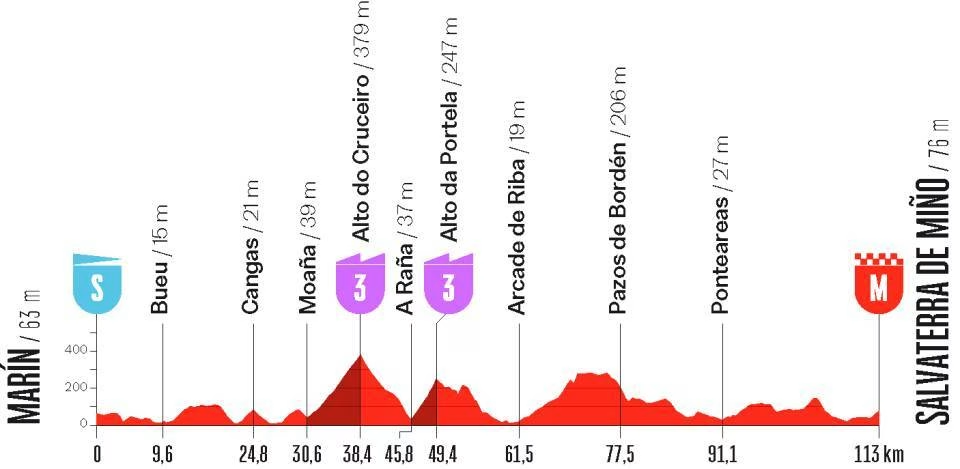
The opening day from Marín to Salvaterra de Miño is only 113.9km, but it is not a gentle first stage. The route includes two categorised climbs and finishes uphill, which should be enough to put immediate strain on the bunch.
That sort of stage is important because it prevents the race from settling into an easy rhythm. There is no neutral opening weekend here. A rider who is slightly short on form, a team that is not organised on narrow roads, or a GC contender who loses position at the wrong moment can start conceding ground immediately. The stage is not hard enough to decide the race on its own, but it is awkward enough to expose weakness.
Galicia gives the race a more nervous identity
The wider route table is what really sharpens the point. Stage 2 from Lobios to San Cibrao das Viñas is also hilly, stage 3 to A Coruña is flat, and stage 4 from Monforte de Lemos to Antas de Ulla returns to hilly terrain. That means the first half of the race is built around constant variation rather than one clear pattern.
That is useful because it stops the race being read too neatly. It is not only a climbers’ Vuelta and it is not only a final-weekend Vuelta either. It is a race where the early days can force teams to spend energy, reveal who has arrived sharp, and place real pressure on positioning and control. By the time the race reaches León and then Asturias, the best riders should already be carrying the cost of what happened in Galicia.
The flat day does not really offer a reset
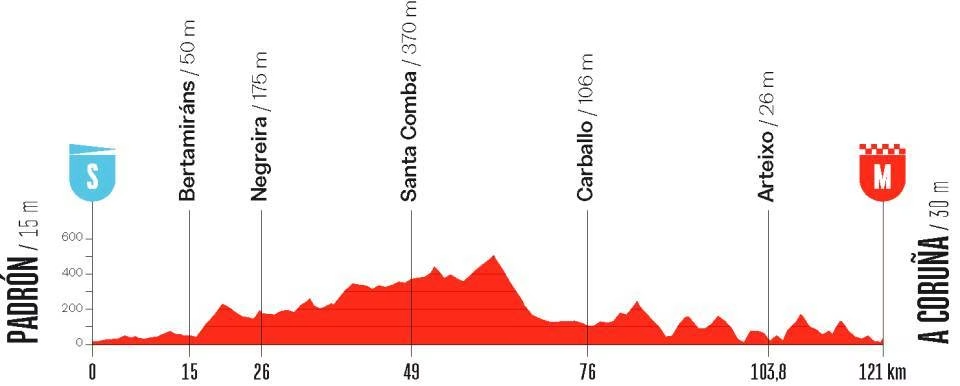
On paper, stage 3 from Padrón to A Coruña looks like the easiest day in the middle of the Galician block because it is the only stage listed as flat. But its place in the week may make it more important than it first appears. After two hilly opening stages, teams with sprinters will want control, while GC teams will still need to stay switched on because crashes, splits and bad positioning on flatter stages can be just as costly in a one-week race as a small climbing loss.
That is why Galicia feels so significant here. The route gives the race movement before the mountains. The flat day is not a full release from pressure. It is more likely a different type of pressure, one where the sprint teams briefly come forward but the GC teams still cannot relax.
The opening week should reward complete teams
This part of the route is also a test of team structure. A pure climbing team may still be excellent once the race reaches the final weekend, but Galicia asks for a broader skill set first. Teams need riders who can position a leader, manage awkward roads, control hilly finales and still keep enough in reserve for what comes later.
That can shape the race before the strongest climbers even have the terrain they want. A GC favourite with a well-drilled team can move through this section with relative calm. A favourite whose team is weaker on mixed terrain may reach the mountains already having spent too much energy just protecting position.
The final mountains will decide the winner, but perhaps not from a blank slate
Les Praeres and the Angliru will still dominate the final result. The route makes that obvious enough, with stage 6 and stage 7 both designed as mountain stages. But the point of the Galician opening is that those final climbs should not be approached from a blank slate. The race is designed to make riders carry fatigue, positioning stress and small time gaps into the final block.
That gives the opening four days much more meaning than scenery before Asturias. Galicia should decide which riders arrive at the decisive weekend with calm, which arrive under pressure, and which teams still have enough left to support a serious GC bid. The Angliru may deliver the final verdict, but the opening region can still write a large part of the case beforehand.