Dwars door Vlaanderen Women occupies a particularly important place in the spring calendar. Positioned just days before the Tour of Flanders, it is often treated as both a major objective in its own right and a final high-level rehearsal for the riders targeting the biggest cobbled Monument of the season. That dual role gives the race a distinctive feel. It is selective enough to reward genuine Classics strength, but short and explosive enough that aggression can be more effective here than in the races that follow.
The race has steadily built its own identity through a route that mixes cobbled sectors with short climbs and constant changes of rhythm. Unlike the flatter sprint-oriented Belgian races, Dwars door Vlaanderen Women tends to reward riders who can handle repeated accelerations and still arrive late in the race with enough force to attack or finish strongly from a reduced group. It is not usually a race for pure sprinters, nor is it one that always suits the strongest climber. Instead, it favours riders who can read the race well and exploit the succession of selective moments before Waregem.
 Photo Credit: Getty
Recent editions have shown how different those winning scenarios can be. Elisa Longo Borghini won in 2025 with a long-range solo move, underlining how dangerous a committed attack can be when the strongest teams hesitate behind. Marianne Vos took the 2024 edition from a reduced front group, while Demi Vollering won in 2023 through sustained pressure on the climbs. The common thread is not the finish type, but the way the race repeatedly creates opportunities for a decisive split before the line.
The 2026 edition follows that same pattern. The route once again builds through the Flemish Ardennes with enough climbing and cobbles to fracture the field, but without the sheer weight of difficulty found in the Tour of Flanders. That makes timing even more important. Riders who attack too early can be dragged back, but those who wait too long risk arriving in Waregem with too many rivals still in contention. As ever, Dwars door Vlaanderen rewards conviction.
Previous Winners
2025
Elisa Longo Borghini
2024
Marianne Vos
2023
Demi Vollering
2026 Dwars door Vlaanderen Women route
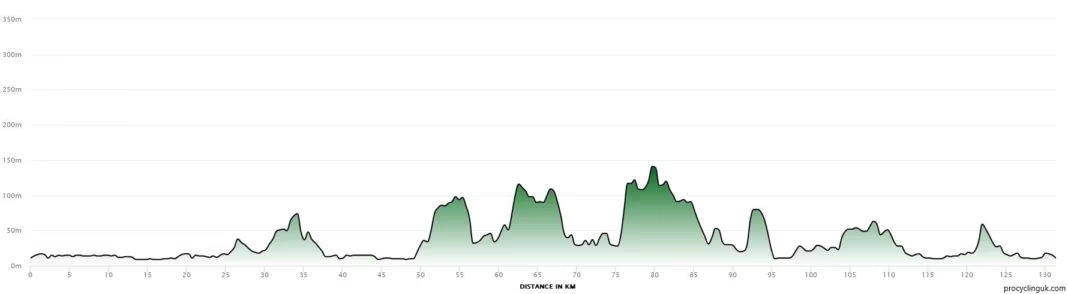
The route once again combines cobbled sectors with a compact sequence of hills that gradually strip the race down to its strongest contenders. The key challenge is not one single climb but the accumulation of pressure. Riders must repeatedly accelerate over short rises, reposition before cobbled sectors, and stay near the front as the race twists through narrow Flemish roads. The repeated need to move up and react makes the race more selective than its profile first suggests.
The decisive phase usually comes in the final third of the race, where the rhythm of climbs and cobbles encourages both long-range attacks and selective group moves. If the strongest riders are isolated, the finale into Waregem can reward opportunists prepared to commit from distance. If several major teams still retain numbers, the race may instead be controlled into a reduced sprint. That uncertainty is exactly what makes Dwars door Vlaanderen such an effective bridge between the early spring races and the Monument to come.
2026 Dwars door Vlaanderen Women live TV coverage
Race Date: Wednesday 1st April 2026
United Kingdom
Live coverage is available via HBOMax and TNT Sports
International broadcasters
In Europe, coverage is available via Discovery+ and HBOMax. In Belgium, the race is typically broadcast via Sporza. In the United States, coverage is available via FloBikes.
2026 Dwars door Vlaanderen Women startlist

2026 Dwars door Vlaanderen Women Contenders

The strongest single reference point in the field is Lotte Kopecky, and her 2026 form makes that even clearer. Winning Nokere Koerse and then backing it up with victory at Milan San Remo shows she has both sides of the skillset you need for Dwars, the ability to survive and shape a selective finale, and the ability to finish it off when the race comes down to speed on tired legs. Six starts and five top 10s here also tells you she almost always lands in the decisive phase. Team SD Worx-Protime can make the finale uncomfortable for everyone else without sacrificing their winning card, with Mischa Bredewold as the obvious attacking lever and riders like Femke Gerritse and Barbara Guarischi able to keep the team forward when the race becomes a positioning war.
A harder, more selective Dwars suits UAE Team ADQ, and 2026 has already underlined why. Elisa Longo Borghini winning Trofeo Oro in Euro is a proper statement result for this time of year, because it shows she is already ready to force races rather than wait for them. She has already won Dwars in the past and has three top 10s from six appearances, which is a strong marker of course fit. The way UAE wins is by making the late climbs and the run-in to them feel relentless, using depth to keep pressure on rather than relying on one move. Silvia Persico is the rider who can follow and still finish strongly, while Eleonora Gasparrini gives them sprint insurance if the race comes down to a reduced group rather than a solo winner.
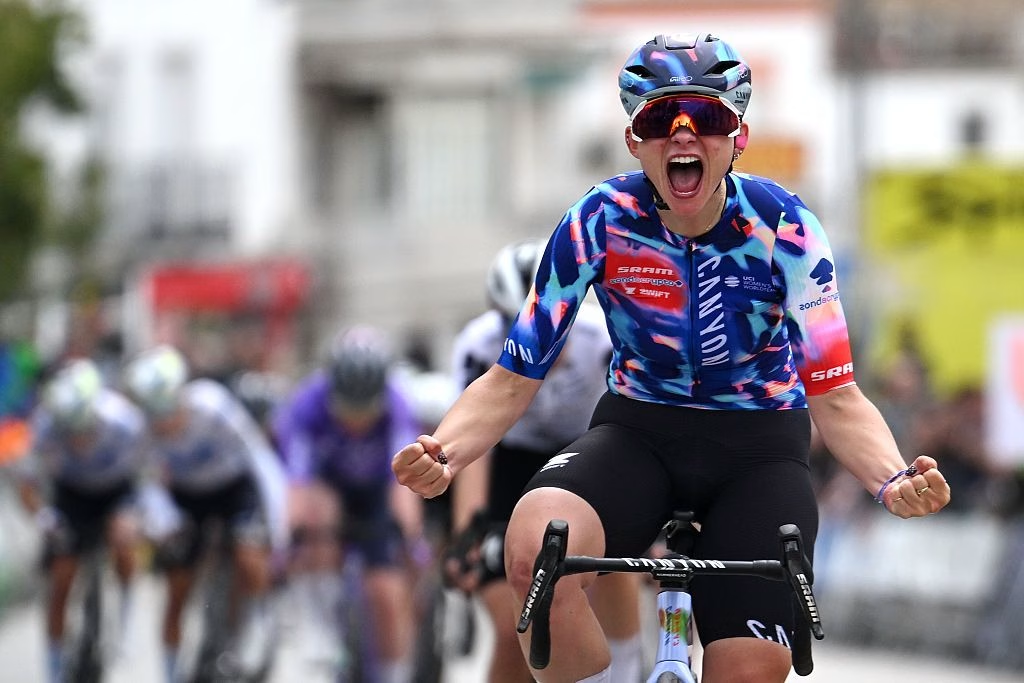
Canyon SRAM have one of the most compelling riders for this race because she can sprint, but she can also survive the climbs well enough to matter. Chiara Consonni has a win, two podiums and three top 10s from only five Dwars appearances, which is an unusually strong record for a rider with genuine finishing speed. Her 4th place at Ronde van Brugge this spring is also a useful form indicator because it suggests she is already sharp in fast one-day racing where positioning and timing decide the sprint. If the race comes down to a reduced group finish, Consonni is absolutely a winning-level threat.
If the race is decided on the climbs rather than in a sprint, Demi Vollering is still one of the clearest favourites on the start list, and her early 2026 results back that up. Winning Omloop het Nieuwsblad is exactly the sort of form marker that translates to Dwars, because it shows she can handle repeated accelerations and still deliver when the race tightens. The 20th at Strade Bianche looks disappointing on paper, but the context is important; being sent the wrong way and then puncturing is the sort of double setback that can wreck the result without telling you much about the legs. FDJ United-SUEZ also have the perfect secondary card for Dwars in Elise Chabbey, a rider with a podium and two top 10s from only three appearances here, and exactly the sort of rider who can punish hesitation if Vollering makes the selection but the group behind starts looking at each other.
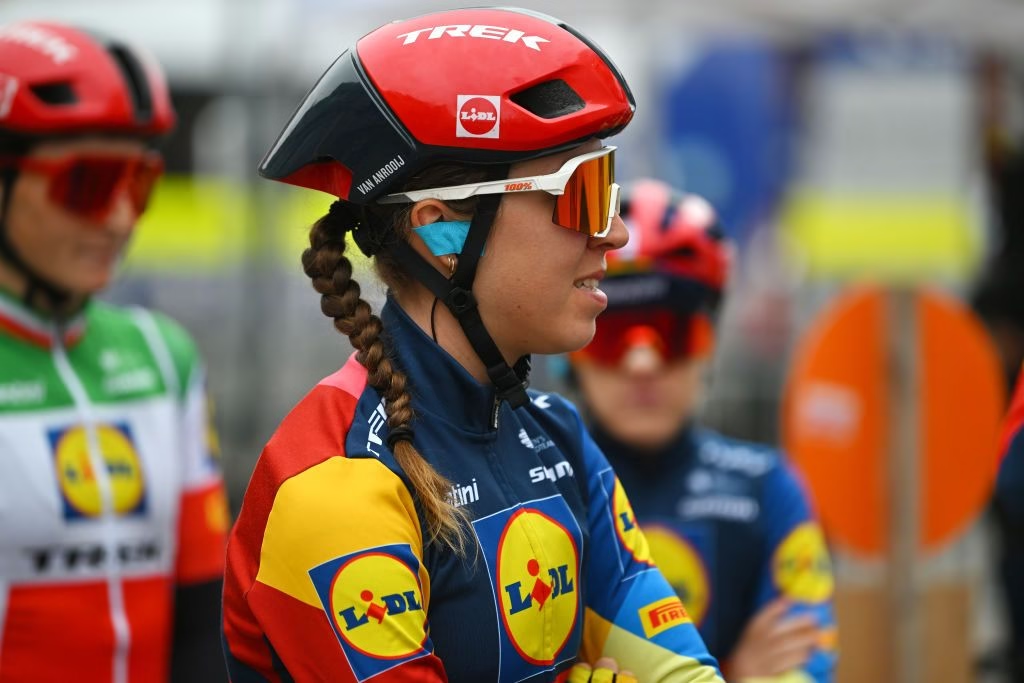
Lidl-Trek have a line-up that suits the version of Dwars where the best teams keep trying to thin the group but cannot fully snap it. Lucinda Brand has a podium and three top 10s from seven starts, and while she has often been riding in a domestique role in the bigger races, her 2nd place at the Giro dell’Appennino Elite is a strong reminder that she can still deliver a big result when given the space to race for herself. Shirin van Anrooij is the more direct “Dwars style” card because she has been consistently in the mix in 2026, with top 10s at Strade Bianche and Trofeo Alfredo Binda, and she has the punch to race the late climbs aggressively rather than waiting. If it does come down to a reduced sprint, Lidl also have options through riders like Emma Norsgaard, but the real strength is having Brand and van Anrooij capable of making the race hard enough that the finale becomes selective.
The most reliable sprint threat in a reduced group remains Marianne Vos, and her 2026 spring already suggests she is close enough to win if the race comes back together. Sixth at Trofeo Alfredo Binda and seventh at Strade Bianche is the kind of consistency that matters in late March, because it shows she is already riding at a level where she can survive the hardest races and still be present when the finale is decided. Her Dwars history is also extraordinary, a win and multiple podiums from only three starts, which speaks to how well she reads the timing of this race. Team Visma | Lease a Bike does not need to control the day for Vos to be dangerous. They just need her in the front group over the final climbs.
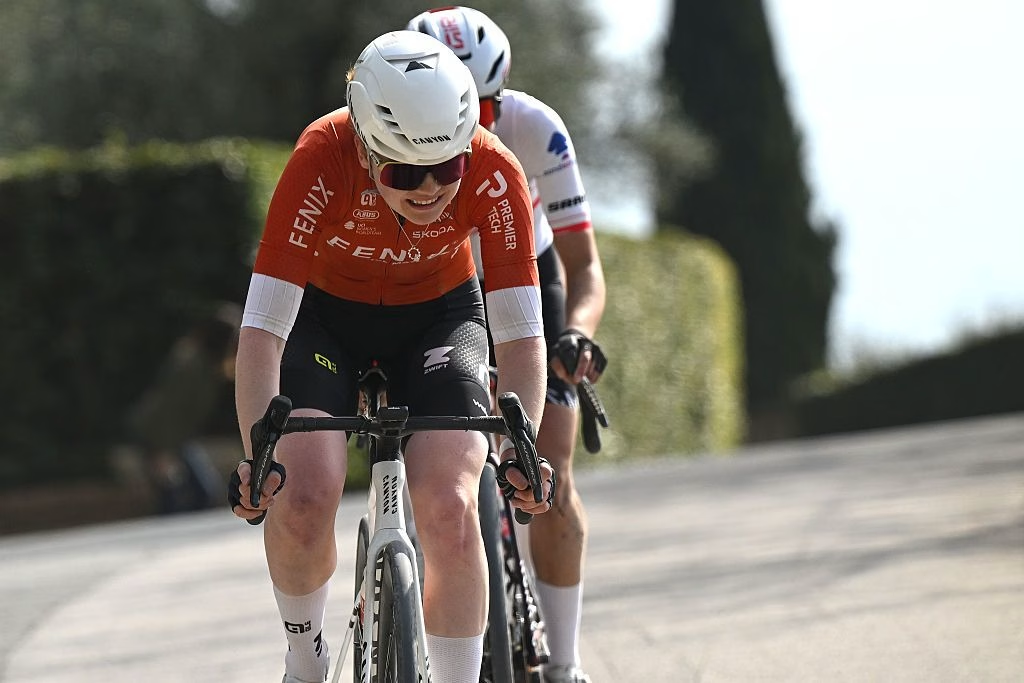 Photo Credit: Getty
Fenix-Premier Tech looks like the team most likely to animate the final climbs rather than wait for a sprint, and 2026 has already backed that up through Puck Pieterse. 4th at Milan San Remo is a strong marker for Dwars because it shows she can handle big-race intensity and still be there when the selection forms. She is at her best when the finale becomes repeated accelerations rather than a steady tempo, and Dwars often delivers exactly that. The other name that fits that shape is Julie De Wilde, because she can survive the hard racing and still be dangerous if a small group hesitates.
A reduced sprint remains a realistic outcome in Dwars Door Vlaanderen Women, especially if the late climbs thin the bunch without fully snapping it, and that is where Liv AlUla Jayco can come into play. Letizia Paternoster is the clearest finisher in this line-up because she thrives when the sprint is messy, and the group is reduced, the exact kind of finale Dwars often produces when riders are arriving on tired legs rather than fresh ones. The other card that fits that scenario is Ruby Roseman-Gannon, who can still sprint strongly after a hard day and is well-suited to a race where positioning through the final 10 kilometres often matters as much as the final launch. If the day is raced harder and becomes more attritional, Quinty Ton is the rider who can keep making the selection and give the team a second route to a result when the sprint group is smaller and more selective.
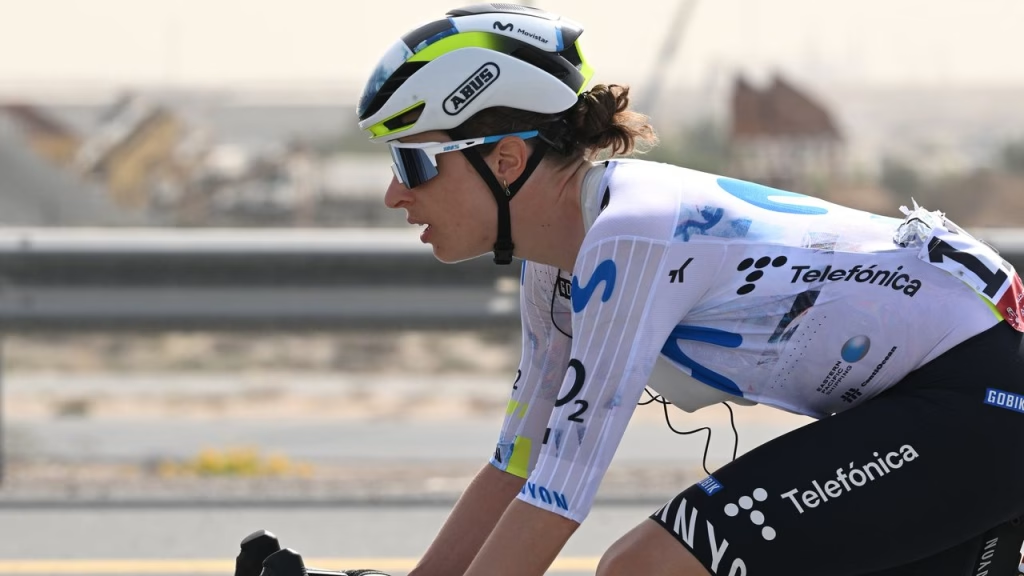 Photo Credit: Getty
Movistar have a deep set of tools for Dwars because they can race for a result even if the finale is not a clean sprint. Marlen Reusser gives them a power rider who can dictate rhythm on the flat and in the run-in to the climbs, which is important in Dwars because so many selections are made by speed and positioning rather than pure gradient. The rider most likely to profit if it comes down to a reduced sprint is Arlenis Sierra, because she can still launch well from imperfect wheels, and that is often how Dwars is decided when the lead-outs disintegrate. Floortje Mackaij is the stabiliser here, a rider with a long history of delivering at this race and the kind of calm positioning that keeps a team in the right place before the decisive climbs. If the race becomes more selective and punchy, Liane Lippert remains the most natural Movistar attacker, because she suits repeated accelerations and can still finish if she crests the last climb with a small group.
AG Insurance-Soudal arrive with a profile that often works in Dwars, one strong all-round leader and multiple riders who can still sprint from a reduced group. Kim Le Court is the rider most likely to turn this into a real result because she can handle the repeated climbing and still finish fast when the group is thinned, and that combination is exactly what Dwars rewards. The sprint angle comes through Shari Bossuyt, who can be dangerous if the finale is messy and tactical rather than clean and controlled, while Gladys Verhulst-Wild adds another fast option if the group is still sizeable. Letizia Borghesi is the rider who becomes relevant when the pace is hard enough to remove pure sprinters but not hard enough to leave only climbers, because she can survive and still finish strongly when others are fading.
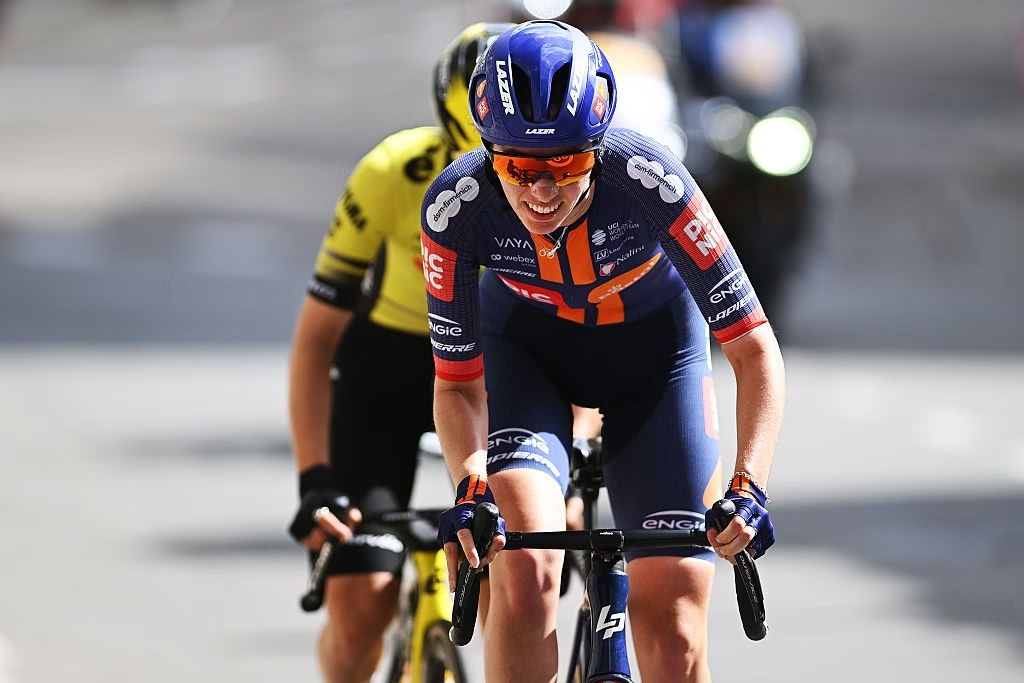 Photo Credit: Getty
A team that can profit when the race becomes tactical late is Team Picnic PostNL, because they have riders who can both survive the hard part and still finish strongly. Pfeiffer Georgi is the obvious headline because she suits the repeated accelerations and the gritty run-ins to the climbs, and she is also the kind of rider who can go with the decisive move rather than waiting for a sprint. If the race comes back together into a reduced sprint, Megan Arens is a useful card, while Ella Heremans can still be relevant if the finale is messy and the winner comes from timing rather than perfect speed. The key for Picnic is not controlling the race, it is being present when it splits, then having enough finishers left to turn that into a result.
A reduced sprint after a hard, selective day is exactly the scenario where Linda Zanetti becomes most dangerous, because she tends to finish best when the pace has been high for hours, and the final group is made up of riders who have already been forced into repeated efforts. That suits Uno-X Mobility well, especially if the climbs and run-ins are raced hard enough to make positioning decisive. If the race becomes chaotic and selective rather than controlled, Ingvild Gåskjenn is the rider who can keep pressing on the climbs and help turn the group smaller, while Alessia Vigilia adds another option if the finale is shaped by attacks and regrouping rather than one clean selection.
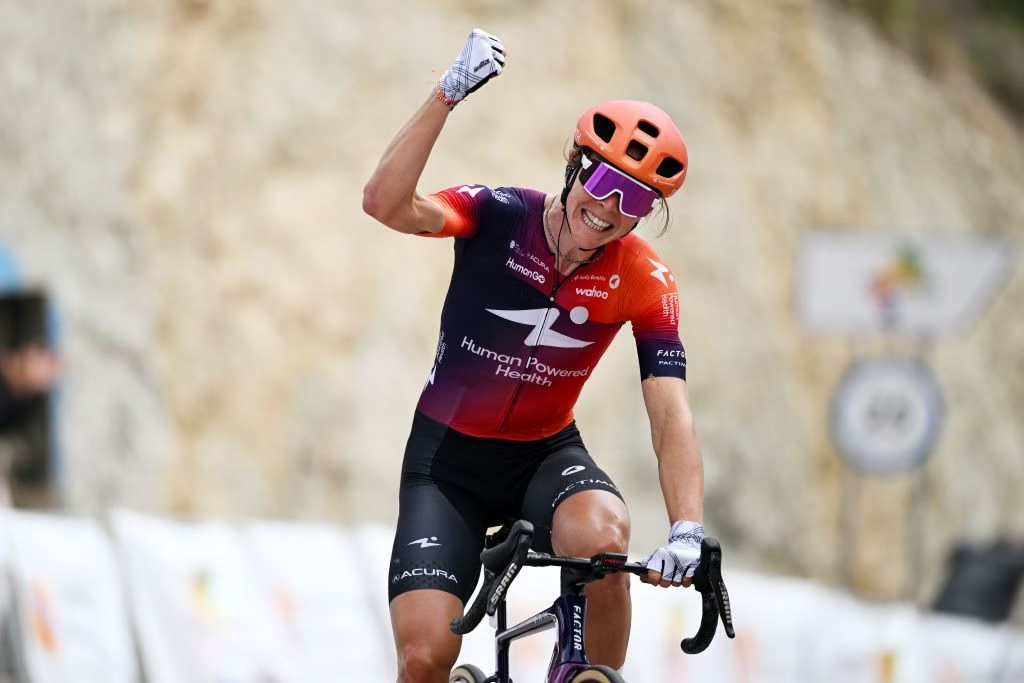
The deeper Dwars goes into attrition, the more the Human Powered Health line-up starts to make sense, because Thalita de Jong is built for the version of this race where survival and resilience decide who even gets to sprint. She has already shown top-10 level here in the past, and that sort of course fit matters when the finale is fought out on tired legs rather than fresh ones. Alongside her, Maggie Coles-Lyster is a genuine threat if the sprint is reduced and chaotic, especially when the lead-outs have collapsed, and the winner is the rider who finds the cleanest line late. If a smaller group goes clear and stays away, having both de Jong and Coles-Lyster, riders who can work and still finish, gives the team more ways to turn presence into a result.
A messy, selective Dwars is where Nina Berton can turn herself into a real factor, because she has the kind of toughness that keeps her in the right group when the race becomes uncomfortable, and teams start losing riders through positioning rather than pure climbing. That is why EF Education-Oatly can still land a result even without controlling the day. The other useful card is Henrietta Christie, not because she changes the sprint dynamic on paper, but because she can help the team survive the chaotic phases and make the right split, which is often the difference between contesting a reduced sprint and chasing a group that has already gone.
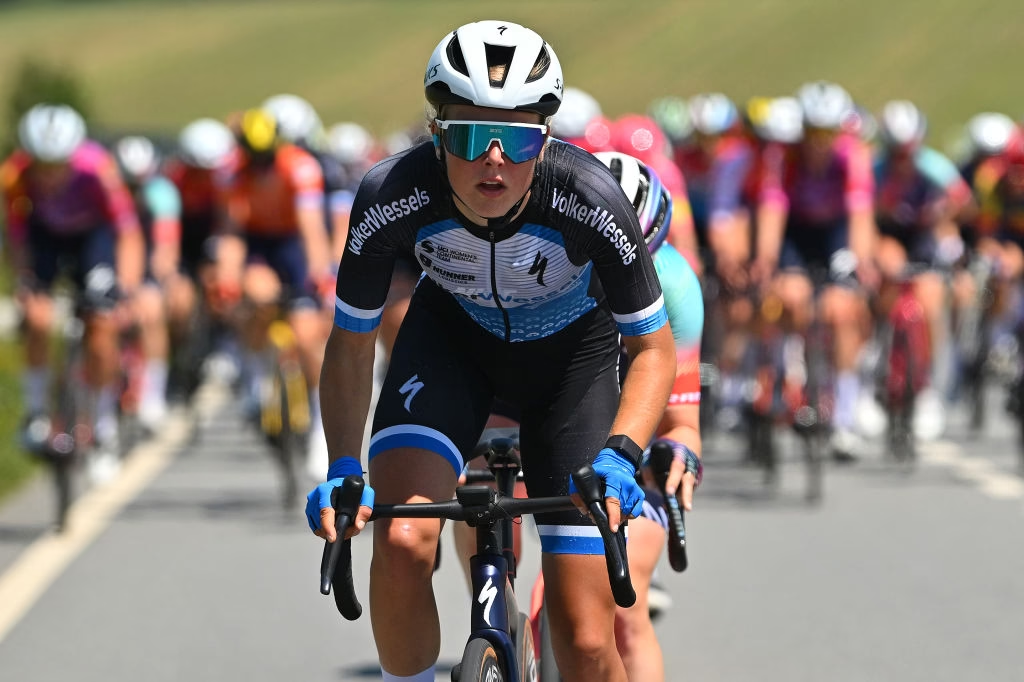
If the bigger sprint teams lose control and the final group is still sizeable but disorganised, Eline Jansen is the kind of rider who can quietly turn good positioning into a standout result. That is the clearest route for VolkerWessels Cycling Team, because in a race like Dwars, the difference between 6th and 16th can simply be who arrives in the final kilometre with a clear run and who gets boxed in. The value here is not forcing the selection, it is surviving it, then being sharp enough to profit when the sprint opens late and gaps appear suddenly.
Aggression tends to be the most realistic pathway for Laboral Kutxa-Fundacion Euskadi, and the rider who fits that script best is Usoa Ostolaza, because she can keep pushing when others want to reset and can help ensure the race stays selective deep into the finale. If the front group does come back together, Marjolein van ’t Geloof is the kind of rider who can survive into that reduced bunch and still finish well when the sprint is not pure. A more tactical edition also opens the door for Catalina Soto Campos, because being in the right move matters as much as being the strongest, and Dwars often gives a committed group just enough space if the favourites start watching each other.
Top 3 Prediction
⦿ Lotte Kopecky
⦿ Marianne Vos
⦿ Marlen Reusser