
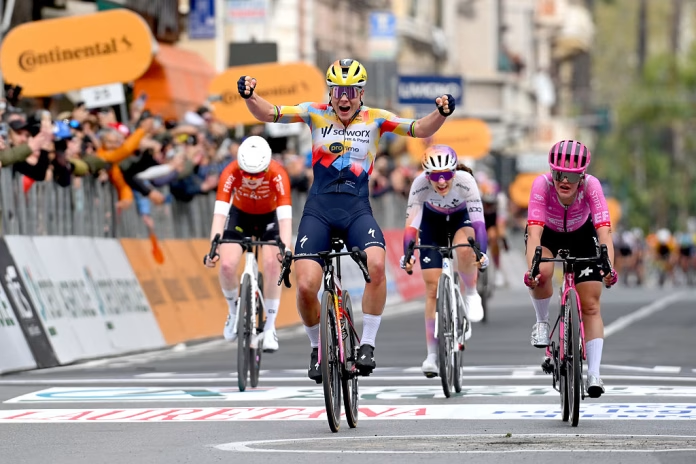
Lotte Kopecky of SD Worx-Protime survived the Poggio selection and then held her nerve in Sanremo to win Milan-San Remo Women 2026, beating Noemi Rüegg in a tense sprint from a five-rider lead group after 156km of racing from Genoa. The former world champion had to respond to repeated attacks on both the Cipressa and the Poggio before finishing off the job herself, a result that underlined both her condition and her composure in a race that never fully settled until the final kilometre.
How the early part of the race unfolded
The first hour was stubborn and tightly controlled. Repeated attacks failed to gain any real freedom as the bigger teams kept a close grip on the race, with SD Worx-Protime notably visible at the front through Femke Gerritse. The bunch rolled out along the Ligurian coast at a controlled speed, but there was little generosity when it came to letting the break go.
Eventually, a move did stick. Eleonora La Bella, Constance Valentin and Sofia Arici were the first to create daylight, before the move expanded into a much larger front group. Katia Ragusa, Lara Crestanello, Heidi Franz, Sara Luccon, Bodine Vollering and Eleonora Deotto also made it across, while Fariba Hashimi and Victoire Berteau tried and failed to bridge from behind. Once the elastic snapped, the nine-rider break built an advantage of around four minutes.
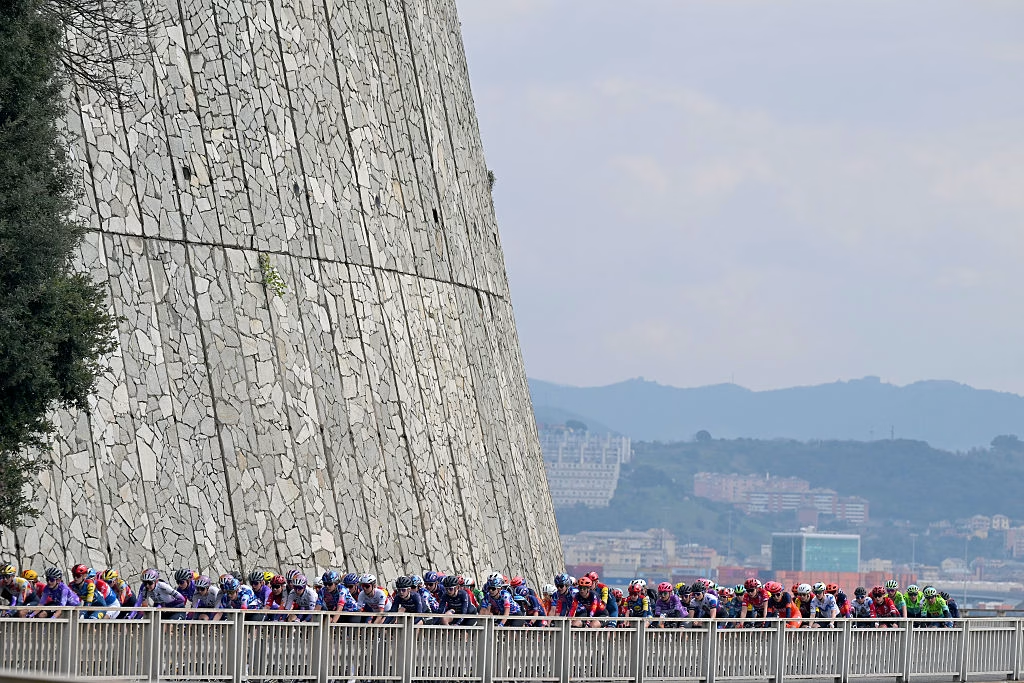 Photo Credit: Getty
For a while, that suited the favourites. SD Worx-Protime controlled the bunch without panic, and there was no sign of a full commitment behind. Gerritse did much of the early labour, while teams with realistic options for a reduced sprint or a late selective finale began to gather in the first rows. EF Education-Oatly were attentive for Noemi Rüegg, while Movistar, Lidl-Trek and UAE Team ADQ all showed themselves as the race moved closer to the Tre Capi.
The gap began to come down heading towards the climbing sequence. By the time the race reached Capo Mele, the escape was already losing shape. Maya Kingma also tried to anticipate from the peloton, but she too was reeled back in as the pace sharpened. Capo Berta was the point where the race began to feel less like a long controlled Monument and more like a final already starting to take shape. UAE Team ADQ, Team Picnic PostNL and Canyon SRAM zondacrypto all pushed forward before the climb, and the pressure on the break rose sharply.
By the top of Capo Berta, the move had been reduced to three, and that advantage was rapidly disappearing. The favourites were now moving into position in earnest. Kim Le Court and Kasia Niewiadoma were already near the front, with the message clear enough: the race was about to begin properly.
The break was caught with around 30km to go, and the battle for position into the Cipressa was immediate. UAE Team ADQ looked especially intent on making the race hard, while EF Education-Oatly and SD Worx-Protime also held strong positions. Soraya Paladin surged forward for Canyon SRAM zondacrypto with Niewiadoma tucked in behind, and that proved to be the signal for the most aggressive racing of the day.
The Cipressa stretches the race
The Cipressa did not produce one decisive move, but it forced the race into layers. Femke de Vries attacked first for Team Visma | Lease a Bike. Niamh Fisher-Black and Niewiadoma followed, while Rüegg brought that move back with Lorena Wiebes on her wheel. Shortly afterwards, Mavi Garcia increased the pressure again for UAE Team ADQ.
Then came the first serious acceleration from Niewiadoma. It was not a one-off attack. She made it a sustained effort, and for a moment it did split the race. Some of the biggest names were briefly distanced, including Kopecky and Wiebes, before the group stalled and they came back.
That moment mattered. It showed that the Cipressa was hard enough to expose the fastest finishers if the pressure stayed on, but it also showed that hesitation among the attackers would allow the strongest all-rounders back into contention.
Team Visma | Lease a Bike, then tried a different approach. Lieke Nooijen attacked, was brought back, and then went again on a flatter section near the top. This time, the move stuck. She crested the Cipressa with around 20 seconds in hand and began the descent alone, helped by the fact that she still had a team-mate in the group behind to disrupt the rhythm.
Behind her, the group of favourites had been thinned to around 20 and then swelled again as riders came back on during the descent and run-in to the Poggio. Elisa Balsamo was still there. So were Cat Ferguson and Rüegg. UAE Team ADQ had numbers. The uncertainty behind Nooijen was obvious. Nobody wanted to close the gap only to deliver Wiebes to the finish.
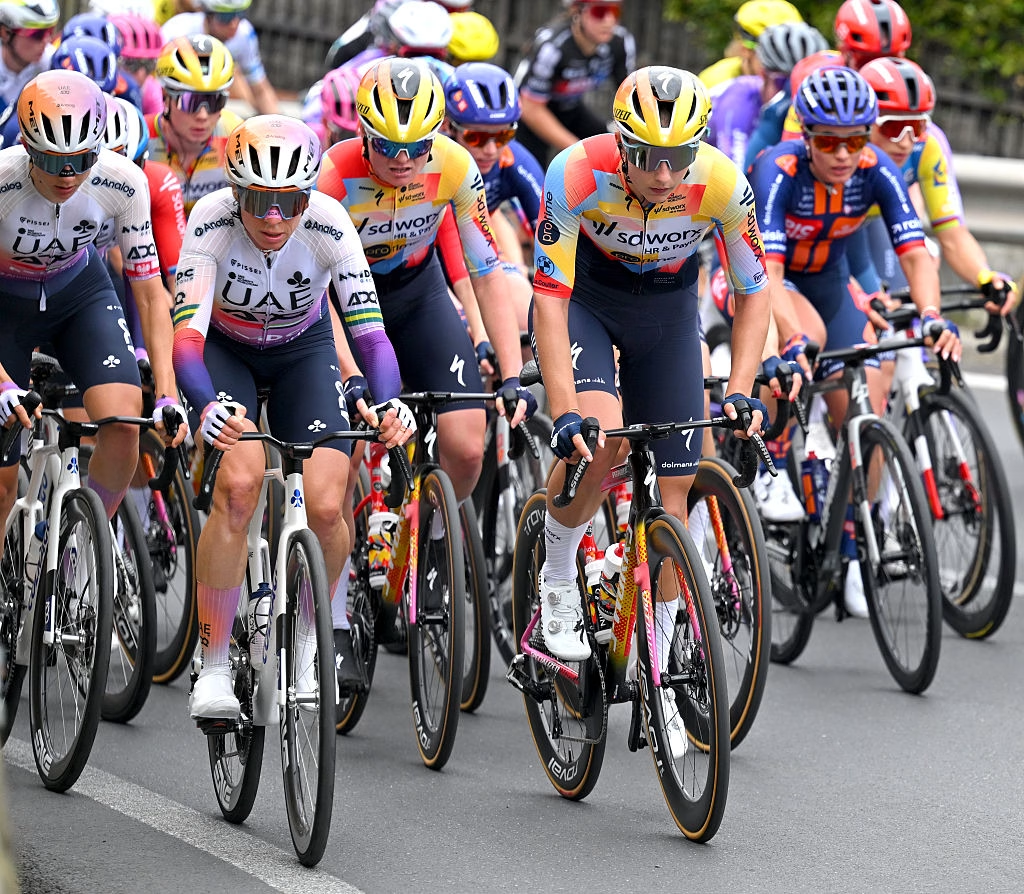 Photo Credit: Getty
Crash changes the shape before the Poggio
The descent after the Cipressa also brought a pivotal crash. Niewiadoma went down while chasing hard, with Kim Le Court, two Human Powered Health riders and British champion Millie Couzens also involved. Couzens was able to get back up, but the incident removed one of the race’s most aggressive figures from the decisive phase.
Without team-mates around her, Niewiadoma had already been doing much of the chasing herself before that crash, and once she hit the road the race moved on without one of the riders most likely to force a sharper selection on the Poggio.
Up ahead, Nooijen kept pressing on. She hit the foot of the Poggio with a few seconds still in hand, but the front of the race had reorganised behind her. Movistar led onto the climb with Ferguson well placed. Lidl-Trek and UAE Team ADQ were also prominent, and Wiebes was sitting on Kopecky’s wheel as the gradient started to bite.
The Poggio decides it
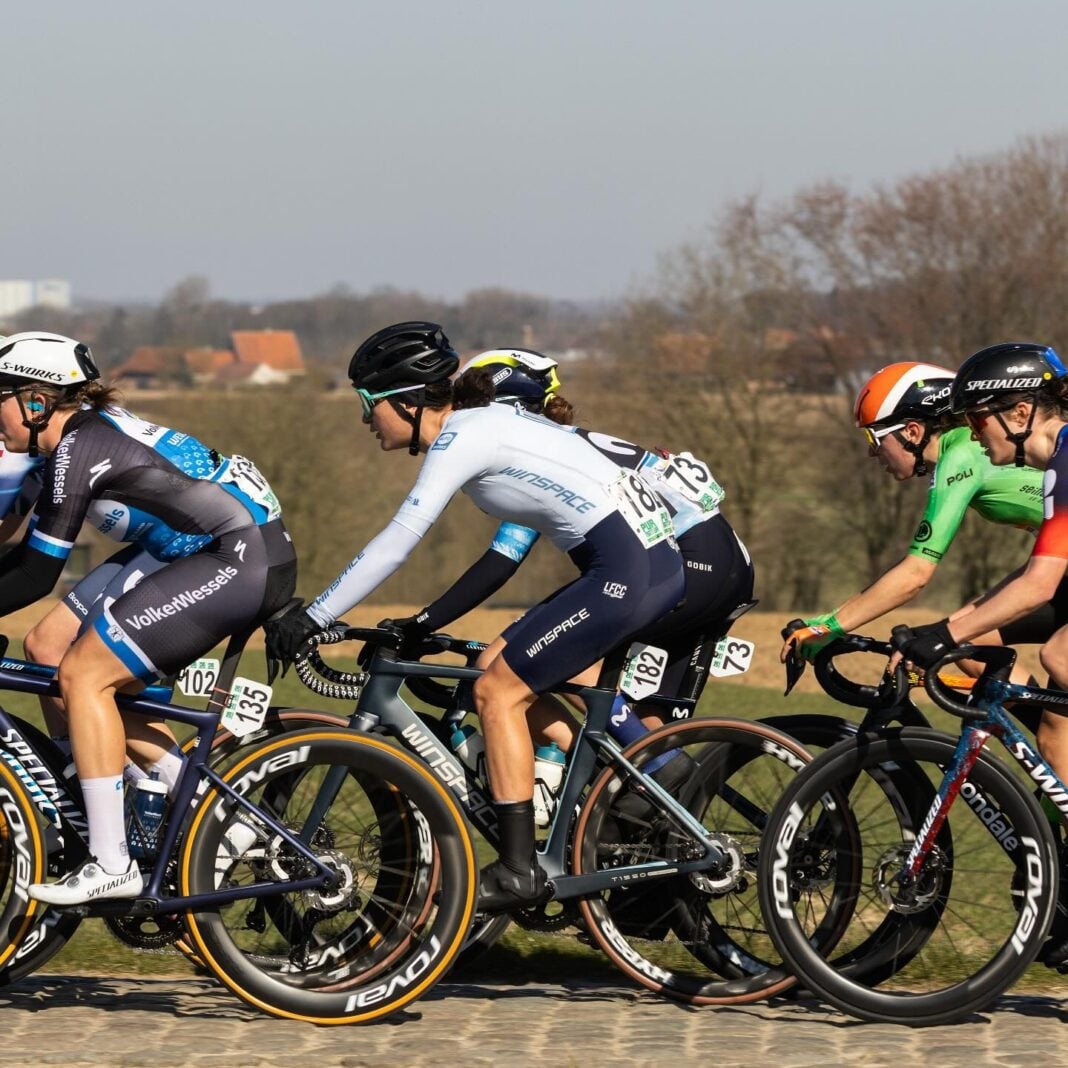
The pace through the first part of the Poggio was high, but not high enough to shed every fast finisher. Balsamo, Ferguson and Rüegg were all still in contention. Then the road kicked up towards the steepest ramps, and the race finally fractured for good.
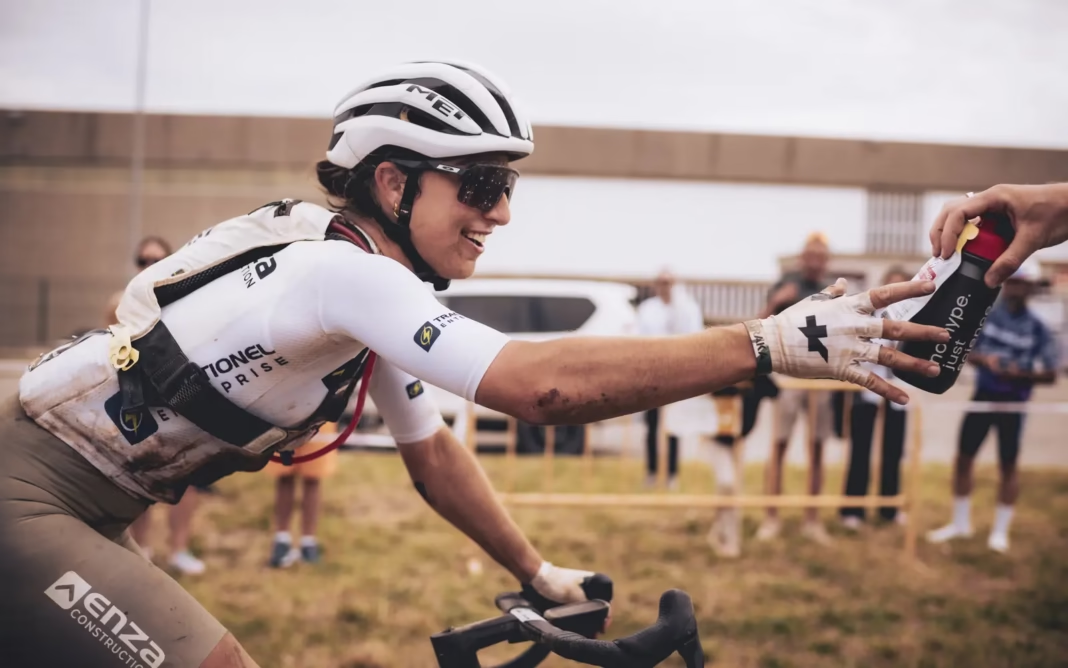
Puck Pieterse was the first to make the defining move. Rüegg followed. Kopecky was there too. Over the top, Dominika Wlodarczyk then attacked and briefly gained a few metres. Kopecky committed fully to the chase and pulled her back just as they crested, creating a five-rider front group made up of Wlodarczyk, Kopecky, Rüegg, Pieterse and Eleonora Gasparrini.
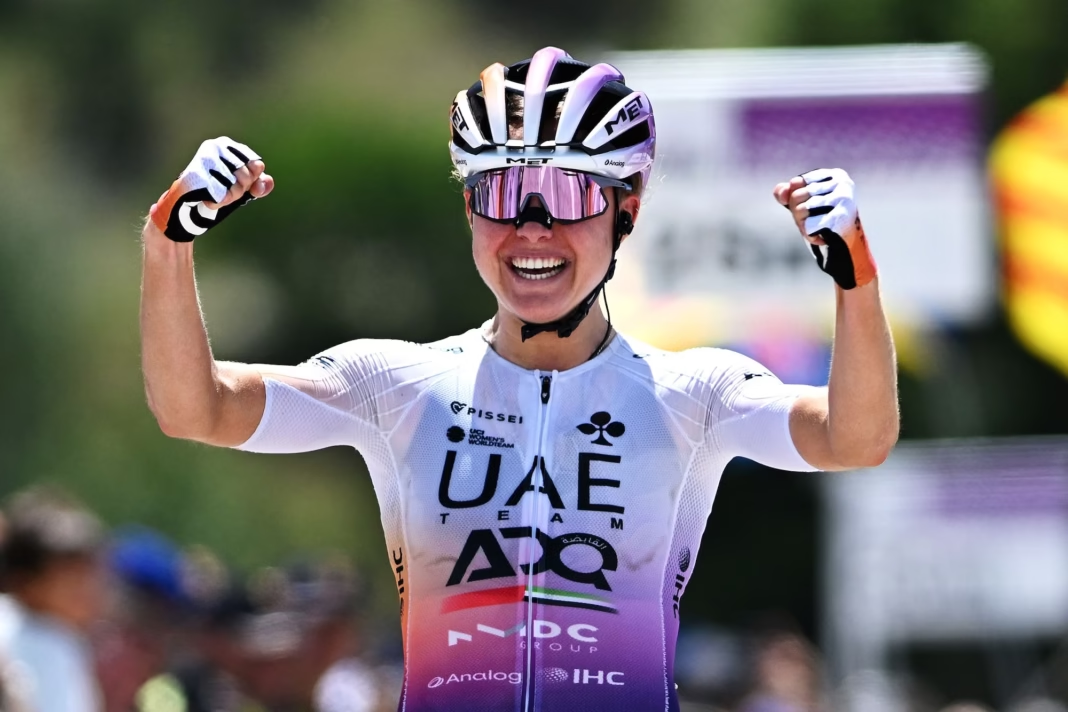
That composition mattered as much as the gap itself. UAE Team ADQ had two riders in the move, which should have given them a tactical advantage on the descent and run-in. Wlodarczyk did much of the work at the front, while Gasparrini could sit on. Behind, however, the chase never found a clear purpose. Pieterse led parts of the descent, but the gap remained slim rather than comfortable. Then the stall came.
The riders behind were assessing rather than committing. Nobody wanted to drag Wiebes back into contention. That hesitation gave the leaders exactly what they needed. With 5km to go the quintet had a small but workable gap, and by 2km to go the momentum in the front group was no longer smooth, but the hesitation behind was even greater.
Lidl-Trek chased from the second group, but by then the front five had already reached the point where the win would come from among them.
-
 Photo Credit: quentinphotographiebe
 -
 Photo Credit: Getty
Finale
The final kilometres were all about nerve and positioning. Wlodarczyk continued to contribute heavily, effectively making the race for UAE Team ADQ, while Gasparrini sat on and preserved her sprint. That was the correct use of numbers, but the front group also lost some fluidity as the line approached and each rider began to calculate her own chances.
Kopecky handled that uncertainty best. She was second wheel before the sprint, with Rüegg directly behind her. Wlodarczyk opened things up, Kopecky launched first, and that was the decisive detail. Rüegg tried to come around, but Kopecky had timed it well enough and still had enough left after the Poggio effort to hold her off to the line.
It was not an overwhelming victory. It was tighter than that, and more tactical. But Kopecky did two key things right. First, she refused to let Wlodarczyk’s attack over the top of the Poggio go. Then, in the sprint itself, she committed before anyone could trap her or force her to wait too long. In a finish shaped by fatigue, caution and calculation, that clarity won the race.
What it means
This was a major statement from Kopecky. She did not win Milan-San Remo Women 2026 by sitting on and relying purely on speed. She had to close moves herself, survive repeated aggression on the Cipressa and Poggio, and then still finish the job in Sanremo. For Rüegg, another excellent Monument ride confirmed that her mix of climbing and finishing speed makes her one of the most reliable riders for this kind of finale. For UAE Team ADQ, there will be some frustration. They placed two riders in the winning move, but could not quite convert that advantage into victory.
Milan-San Remo Women 2026 Result
Results powered by FirstCycling.com
Main photo credit: Getty

