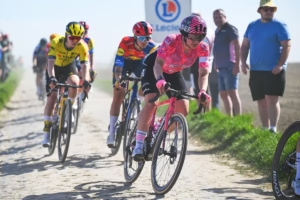
The Women’s Cadel Evans Great Ocean Road Race has become one of the most recognisable one-day tests on the early aprt of the Women’s WorldTour calendar, combining coastal exposure with a finale that rewards both strength and timing. The race winds through the Bellarine Peninsula and Surf Coast before repeatedly forcing the peloton onto the decisive climbs in Geelong, where the pace rarely dips, and the strongest teams tend to dictate the terms. As the centrepiece of the elite weekend in Victoria, it draws a deep field and often delivers a winner who has survived both the terrain and the tactical pressure of the closing circuits.
Last year’s edition underlined how selective the event has become. Ally Wollaston capped a standout week by taking victory on the Geelong waterfront, completing a notable double after her earlier win at the Surf Coast Classic. That result also reinforced the race’s modern identity, hard enough to strip away many pure sprinters, but still capable of producing a reduced sprint when teams neutralise late attacks and arrive in Geelong with numbers to control the finale.
 Photo Credit: Getty
The race’s history has been shaped by its ability to produce different kinds of winners depending on how the final circuits are raced. Amanda Spratt won the inaugural UCI-sanctioned edition in 2016, Annemiek van Vleuten followed in 2017, and Chloe Hosking was the last rider before 2025 to have won from a more sprint-oriented outcome, back in 2018. Later editions increasingly leaned towards late attacks and selective pressure, with Arlenis Sierra and Liane Lippert both winning through decisive moves, and Loes Adegeest taking the first WorldTour win of her career when the women’s race returned in 2023 after the pandemic disruption.
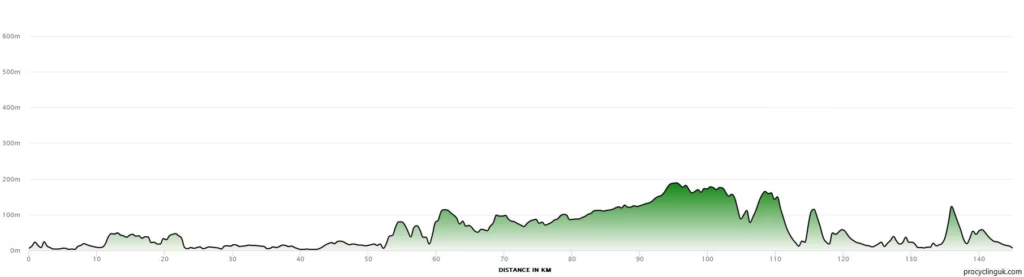
The 2026 route once again sets up that same tension between aggression and control. The decisive phase centres on Geelong, with repeated ascents of Challambra Crescent expected to thin the bunch and force teams into repeated matches of positioning, pacing, and commitment. If the strongest squads maintain control, a reduced group could race to the line on the waterfront. If the pace on the climb is hard enough, or if the finale fractures under attacks, the winner is more likely to come from a smaller selection of riders who can combine climbing resilience with a finishing kick.
Previous Winners
2025
Ally Wollaston
2024
Rosita Reijnhout
2023
Loes Adegeest
2026 Women’s Cadel Evans Great Ocean Road Race profile
2026 Women’s Cadel Evans Great Ocean Road Race live TV coverage
Race Date: Saturday 31st January 2026
- Live coverage: 01:40–05:30 GMT
2026 Women’s Cadel Evans Great Ocean Road Race startlist

2026 Women’s Cadel Evans Great Ocean Road Race Contenders

A home-road one-day race on rolling circuits is exactly where Liv AlUla Jayco can play their depth, because they have multiple fast riders who can still sprint after a hard day. If the sprint comes from a smaller front group rather than a full peloton, Georgia Baker and Ruby Roseman-Gannon remain the primary finish threats, especially in the kind of chaotic run-in this circuit often produces. Their depth also helps them cover late moves without panicking, keeping at least one finisher protected while others respond, which is often the difference between arriving at the line ready to contest and arriving out of position.
The pure sprint benchmark remains the same for Fenix-Premier Tech, even on a more selective day, because Charlotte Kool is still the rider with the highest top-end speed on this start list if she is present in the front group. The challenge is simply getting her there with enough freshness to finish it off after repeated climbs and surges, and that is where team organisation becomes decisive. If the race becomes too selective for a pure sprint, Julie De Wilde gives them a second path, because she can survive harder racing and still deliver in a reduced-group sprint where instinct and positioning matter more than a textbook lead-out. When the bunch begins to stall late on, Xaydee Van Sinaey is the kind of rider who can exploit that hesitation, either by slipping into a late move or by forcing the sprint teams to chase earlier than they want.

FDJ United-SUEZ arrive with one of the most dependable reduced sprint cards in the field, and that matters more here than in a flatter one-day race. Ally Wollaston brings the clearest proof of course fit after winning this race in 2025, and her ability to sprint after repeated surges makes her a reference point if the front group is thinned down by the circuits. If the finish becomes messy or positioning decides the outcome, Sofia Bertizzolo offers valuable depth, while Marie Le Net becomes increasingly dangerous the harder the race is ridden because she can survive a selective day and still finish strongly. For the late escape scenario, Amber Kraak is the rider most likely to force the issue, particularly if teams start looking to each other for control rather than committing to a chase.
Lidl-Trek look well suited to the selective sprint outcome because Emma Norsgaard does not need a perfectly controlled lead-out to win when the group is reduced and the finale is chaotic. Their course pedigree still gives them extra weight in the narrative, and Amanda Spratt stands out with a record that includes 2nd in 2023, 3rd in 2019 and 2020, and victory in 2016, a reminder that this race consistently rewards riders who understand the circuit rhythm. It is also worth remembering that Loes Adegeest won here in 2023, not as a second sprint route to lean on, but as a rider whose experience can be useful in the final 20 kilometres when positioning and timing matter as much as speed. Riders such as Ricarda Bauernfeind remain important for keeping Lidl organised and well placed when the pace surges and the fight for wheels becomes decisive.
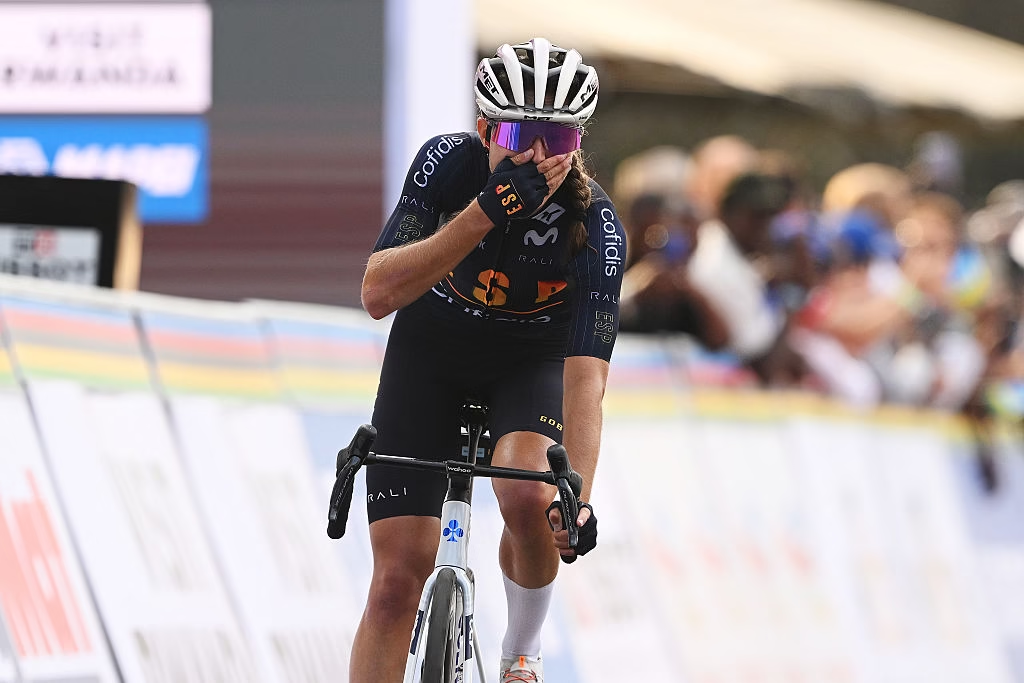
UAE Team ADQ can shape this race because the circuit profile rewards teams willing to make it uncomfortable, and that plays into their best strengths. Dominika Wlodarczyk remains the rider most likely to turn hesitation into a committed late move, and her 2nd place here in 2024 is a clear reminder that she understands the timing this circuit demands. If the finale comes down to a reduced sprint, Paula Blasi is the primary finishing threat for the team, particularly if repeated surges have removed some of the pure speed specialists and left a tougher group to contest the line.
A selective sprint is still the most realistic route for Team Visma | Lease a Bike, with Martina Fidanza the rider most likely to convert it if the finish comes from a reduced, disorganised group. The recent race history also keeps them firmly on the radar because Rosita Reijnhout arrives as the reigning winner after taking the 2024 edition, proof that a late move can still stick if the chase is not ruthless. If the bunch stalls and teams begin watching each other, Reijnhout’s presence alone is a reason for rivals to stay alert, while Sarah Van Dam remains the rider most likely to go searching for a late-attack outcome if the sprint looks too predictable.
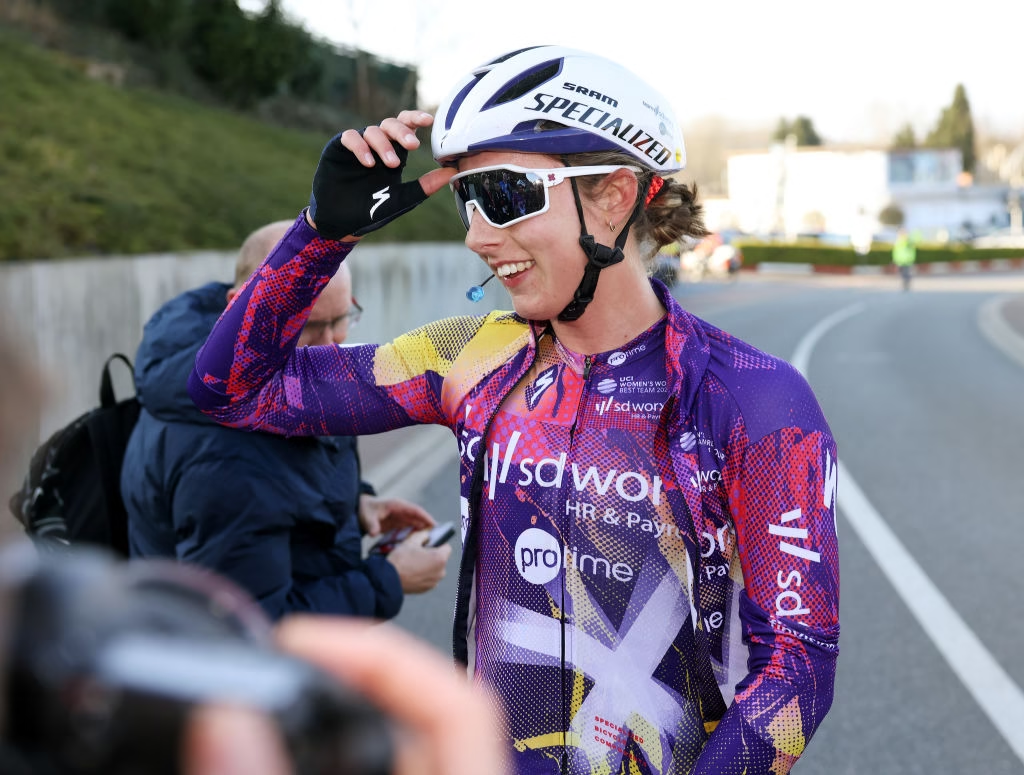
Team SD Worx-Protime remain central to how a reduced sprint could be shaped, because they bring both speed and the organisational strength to ride the final hour well. Femke Gerritse is the type of finisher who benefits when the sprint is chaotic, and the lead-outs are fractured, while Marta Lach remains the clearest outright sprint threat if the finale stays on the table. The key advantage here is that they are less likely to be caught out by the repeated circuit surges, because they can keep multiple riders near the front and still arrive with someone capable of sprinting when the group is reduced.
The best path for Movistar is still to embrace the selective nature of the circuits rather than try to out-control the pure sprint teams. Carys Lloyd and Olivia Baril look like their most credible finish options because both can benefit from a hard race that removes some of the pure sprinters, then turns the finale into a reduced-group sprint where endurance and positioning matter. If the winning move goes late, Floortje Mackaij remains the rider most likely to animate it, particularly when the bunch starts to hesitate, and teams protect sprinters rather than chase.
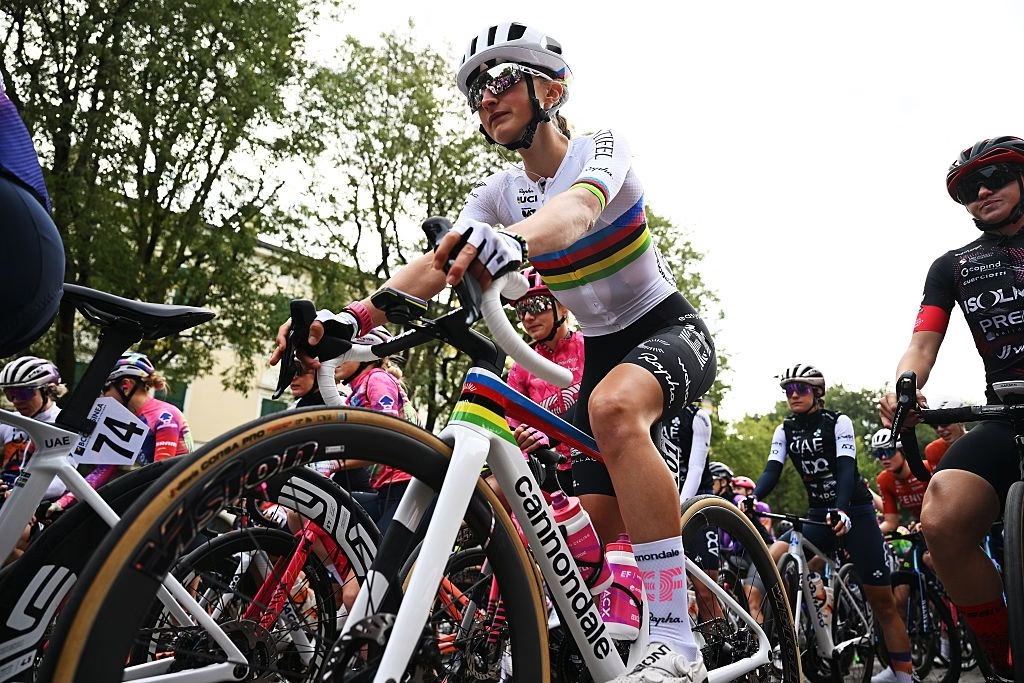
A tight sprint scenario still suits EF Education-Oatly, but the Cadel Evans Great Ocean Road Race offers extra space for aggression, and that makes their balance particularly interesting. Magdeleine Vallieres looks more likely to animate the final hour than simply wait for a sprint that may never become clean, especially on a parcours that rewards riders who can go over the top of a rise and keep pushing while the bunch reorganises. If the finish does come down to a reduced sprint, Noemi Rüegg remains the primary finisher, and she has already proved she can deliver on this circuit by finishing 3rd in 2025 behind Ally Wollaston and Karlijn Swinkels. When the decisive move is a late escape rather than a sprint, Alice Towers still fits the profile of a rider who will commit when others are still calculating.
A race that can tip from sprint to late move suits Human Powered Health, because they have both finishing speed and riders who can animate the circuits. Nina Buijsman offers the strongest course reference in the line-up after finishing 3rd here in 2023, proving she can handle the repeated surges and still deliver a result when the sprint is selective. If the finale comes back together for a reduced sprint, Maggie Coles-Lyster is the clear finishing card, particularly in a run-in where timing and positioning decide as much as raw speed. Should the late escape become the winning move, Katia Ragusa is the rider most likely to commit to it, trying to make the sprint teams burn matches too early.

The rolling nature of the Geelong circuits can suit Canyon SRAM because they are built to thrive when the race becomes uncomfortable. Rather than waiting for a neat sprint, Chloé Dygert gives them a way to turn the decisive phase into sustained pressure, making it far more likely that only a reduced group survives to contest the line. If that selective sprint scenario emerges, Soraya Paladin is the most natural finisher, especially in a finale where instinct and positioning matter more than a textbook lead-out.
Speed and race craft make AG Insurance-Soudal Team a credible factor late on, with Julie Van De Velde and Nicole Steigenga the riders most likely to lean into the late-attack scenario if the bunch begins to hesitate over the final laps. That kind of aggression matters here because one committed move on the rollers can force sprint teams to burn their lead-outs too early. If the race still comes back together, Alexandra Manly remains the obvious finishing card, particularly if the front group is large enough for a more conventional sprint, but still disorganised enough that positioning and timing decide as much as raw speed.
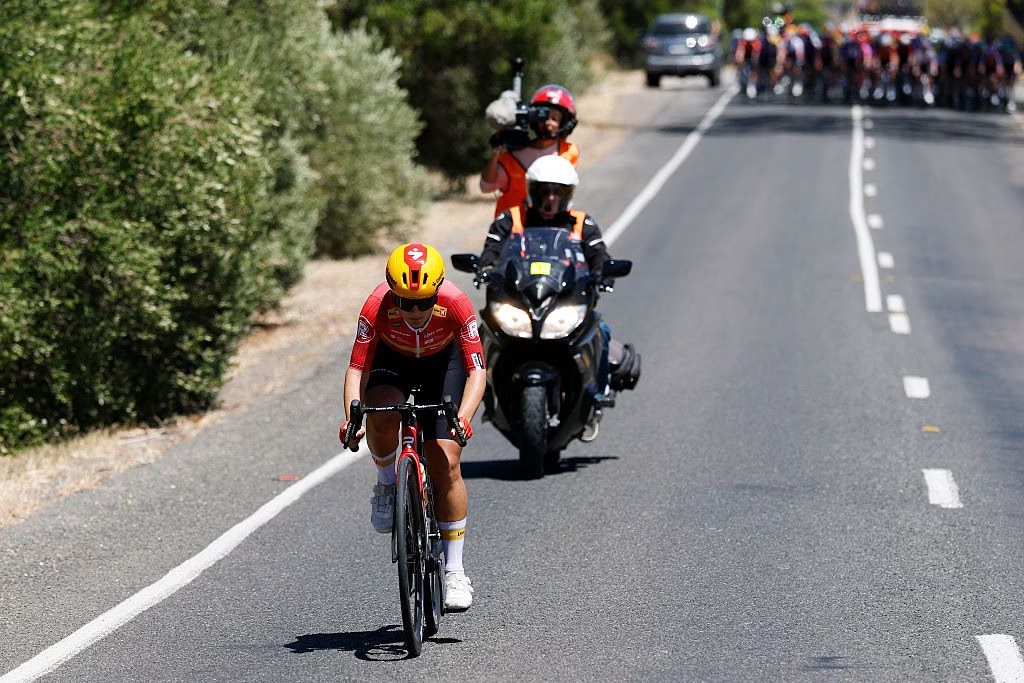 Photo Credit: Getty
Uno-X Mobility are built to profit from the selective sprint scenario, and the circuits make that outcome more likely than a full bunch finish. Alessia Vigilia is still the main threat, especially if she arrives in the front group with enough snap to contest a reduced sprint. If the group is still large enough for a more traditional sprint, Francesca Pellegrini can also be in the mix, but the team’s best outcome usually comes when the finale is chaotic, and the sprint is decided by timing rather than a perfect train.
Aggressive racing is often the only reliable way for Team Picnic PostNL to win this kind of one-day race, and the circuit profile encourages exactly that. If the late move is going to decide the outcome, Juliana Londono and Lucie Fityus are the riders to watch, because they can commit to an attack when others are still waiting for the sprint teams to do the work. If the race still comes down to a reduced and messy sprint, Josie Nelson is the one most likely to be competitive when positioning and timing become decisive.
Top 3 Prediction
⦿ Femke Gerritse
⦿ Ally Wollaston
⦿ Josie Nelson