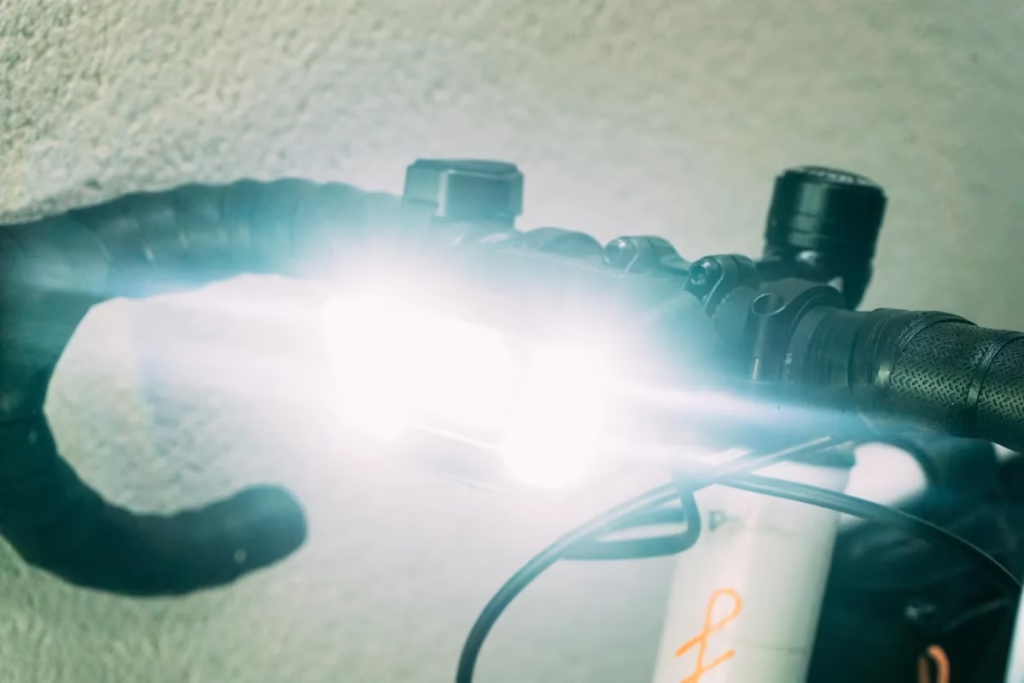
British riders deal with a mix of dimly lit suburbs, bright city streets and pitch-black country lanes. That variety means the question of how bright your lights should be rarely has a single answer. Instead, the right brightness depends on where you ride, how fast you ride and what sort of hazards you encounter on typical routes.
A good lighting setup is not about chasing the biggest lumen number. It is about choosing a front and rear light that give you enough visibility to ride confidently without blinding everyone else on the road.
Why lumens matter – but not as much as people think
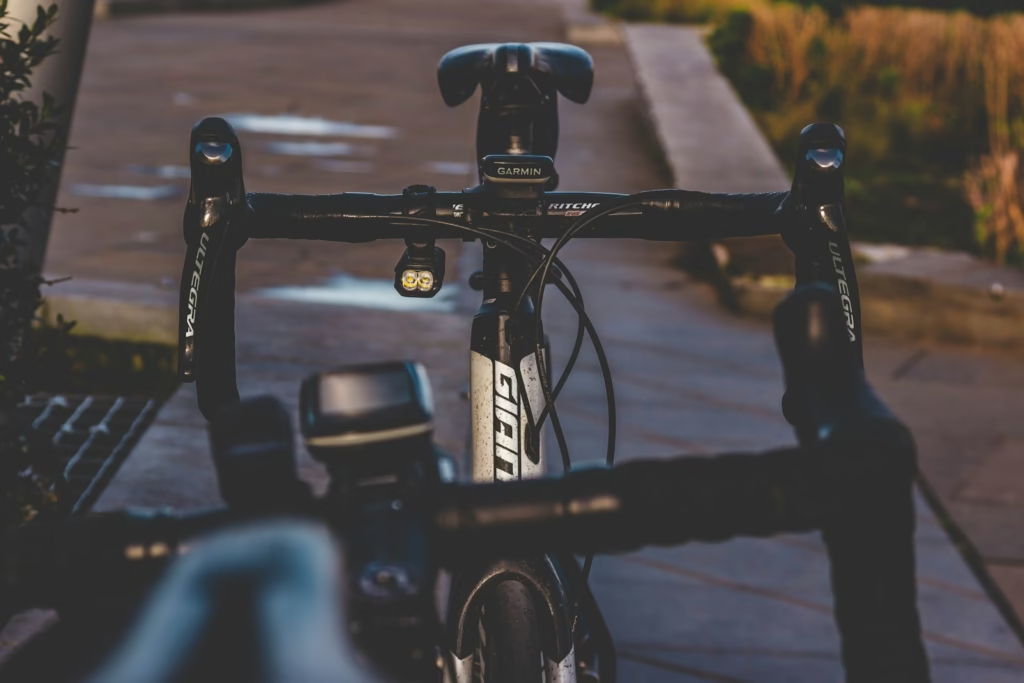
Manufacturers like to shout big numbers, but lumens on their own tell only part of the story. Two lights with the same lumen rating can behave completely differently depending on how that light is shaped and delivered. Beam pattern, lens design and how long the light holds its brightness all affect real-world performance.
A tightly focused 600-lumen beam can outperform a sloppy 1200-lumen flood on dark lanes. Likewise, a light that drops from 1000 lumens to 200 lumens after 20 minutes is less useful than something that holds 400-600 lumens for your full commute or training ride.
Still, lumen ranges are a good starting point, as long as you understand what they translate to on UK roads.
Riding in urban areas
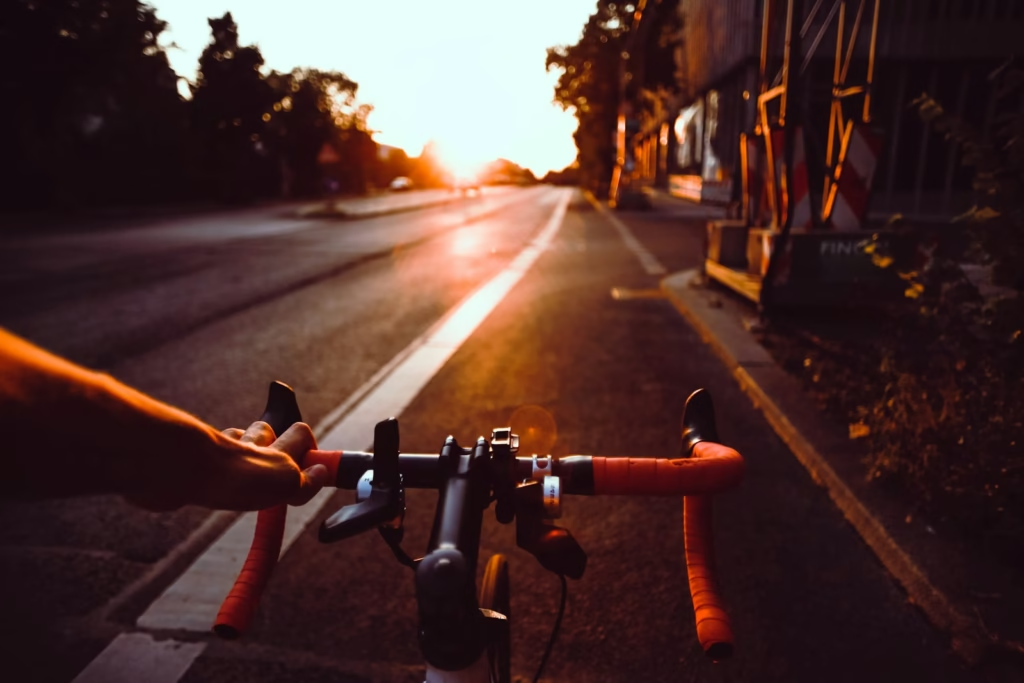
In well-lit cities, your lights are mainly there so that other road users can see you and so you can pick out potholes, metal covers and debris. You do not need a huge output because ambient light fills in the gaps.
For most riders, something in the region of 200-400 lumens on the front feels natural. It gives enough visibility to read the road, especially at lower speeds or in traffic, without overpowering oncoming cyclists or drivers. A small, well-designed beam often feels smoother than a brighter, cheaper unit.
Your rear light does not need to be a laser cannon either. A bright and stable 20-100 lumen rear light is generally ideal for cities. Anything too powerful can be uncomfortable for riders behind you, especially in groups or at junctions.
Riding in suburbs and semi-lit areas
Suburban roads often catch riders out. Lighting can be patchy, with bright streetlamps suddenly giving way to long shadows or completely unlit cycle paths. This is where you begin to need more punch from your front light, not for speed, but to maintain confidence as the environment shifts around you.
A front light in the 400-800 lumen range usually hits the sweet spot. It gives you time to react when a bend suddenly goes dark or when a pothole appears at the edge of a streetlight’s reach. The difference between 400 and 800 lumens becomes clear on faster sections, where you simply need more throw to see comfortably ahead.
Rear lights sit slightly brighter here too, ideally 50-150 lumens, especially on roads where traffic moves quickly. A clear, broad lens helps drivers recognise your shape from a distance.
Riding on dark country lanes
A British country lane in winter behaves differently to almost anywhere else you might ride. It absorbs light. Even a decent commuter light can vanish into the darkness, leaving the road ahead feeling vague and unpredictable.
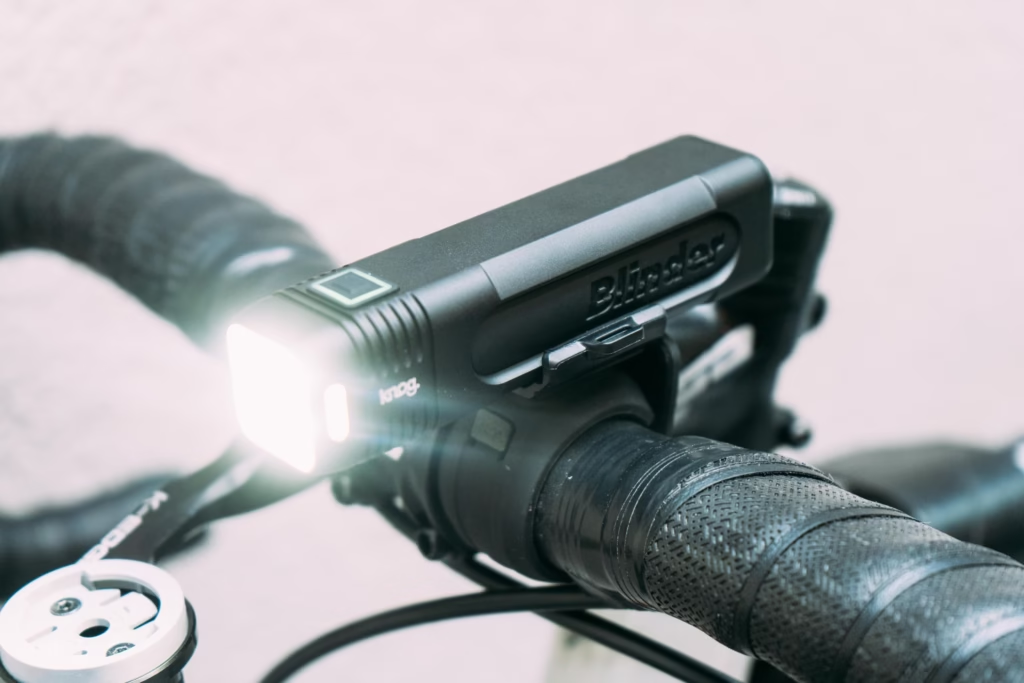
This is the environment where a front light needs genuine power. Something in the region of 800-1200 lumens is usually enough to create a wide, confident beam that reveals surface texture, gravel patches and the edge of the road. Lights designed with a “dipped beam” shape are particularly helpful because they spread usable light without dazzling oncoming traffic.
Rear lights also deserve attention. On narrow, twisty lanes, drivers approach fast and often from blind corners. A 100-200 lumen rear light with a strong, well-defined glow gives them more time to recognise you, especially in fog, spray or winter rain.
For riders who regularly train at higher speeds or descend quickly, going beyond 1200 lumens can also be worthwhile – not for showing off, but for reaction time.
Supplementary lighting & when you might need more
Some riders add a second front light or a helmet-mounted light for specific scenarios. This is not essential for everyone, but it can be transformative in three cases:
- Fast descending, where your primary beam may not cover the full distance you travel between corner entries.
- Off-road or gravel riding, where ruts, roots and uneven surfaces are harder to read with a single handlebar-mounted beam.
- Navigating junctions or tight corners, where a small helmet light lets you look into the bend before your handlebars turn.
These are optional rather than mandatory upgrades, but they are worth considering once you know your riding habits.
Rear lights – brightness is not the whole story
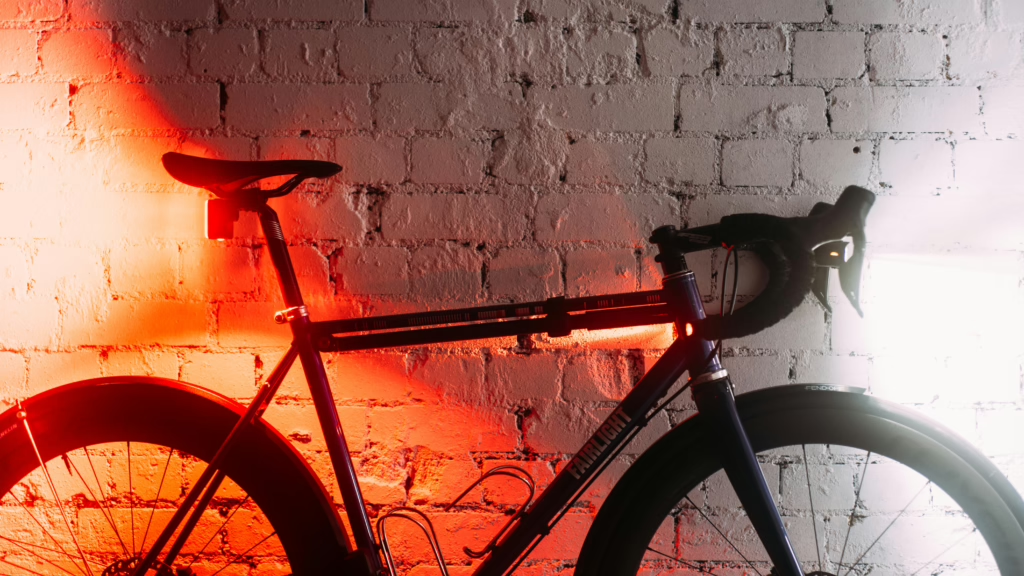
Rear lights are often judged by their lumen numbers, but much of their effectiveness comes from how they shape that light. A simple 80-lumen light with a large, well-designed lens can appear clearer and safer than a 200-lumen strobe that scatters light wildly.
What matters most is:
- A steady mode that is bright but not overwhelming
- A pulse mode that adds contrast without becoming distracting
- Side visibility for junction-heavy areas
- A battery life that comfortably covers your longest rides
Too many riders run the brightest flashing mode constantly. In reality, a clear, steady glow with a supplementary pulse is usually the safest setting.
Simple recommendations based on where you ride
Rather than memorising lumen numbers, try matching your riding environment to a simple rule:
- City commuting: 200-400 lumens front, 20-100 lumens rear
- Suburban and mixed routes: 400-800 lumens front, 50-150 lumens rear
- Dark lanes and winter rides: 800-1200 lumens front, 100-200 lumens rear
- High-speed or off-road night riding: 1200 lumens and above
Most riders fall into one of the first three groups. Once you know where you ride most often, the right range becomes obvious.

The bottom line
The best lighting setup for UK roads is not necessarily the brightest. It is the one that gives you clarity and predictability on the surfaces you ride every day. A well-made 600-lumen light with an even beam will outperform a cheap 1200-lumen torch-style light in almost every real-world situation. Likewise, a thoughtfully designed rear light makes you far easier to spot than a blinding strobe.
Match the brightness to your environment, choose quality over raw lumens, and you will ride with far more confidence, no matter how dark the road ahead becomes.