The Trofeo Alfredo Binda has long held a unique position on the Women’s WorldTour calendar. As one of the oldest races in the women’s peloton and the first major Italian one-day test of the spring, it consistently delivers racing that rewards both climbing punch and tactical awareness. Held around Cittiglio in Lombardy, the event bridges the gap between the early cobbled Classics and the Ardennes-style races, demanding versatility rather than pure specialisation.
A fixture since the Women’s WorldTour began in 2016, the race has built a reputation for unpredictability. Its repeated circuit format, combined with the short but selective climbs scattered through the closing kilometres, creates a constant rhythm of acceleration and recovery. Attacks can succeed, particularly when riders use the penultimate or final ascent to split the race, but the structure also allows small groups to reform and sprint for victory if teams hesitate behind.
 Photo Credit: Getty
The roll of honour reflects that balance between aggression and control. Elisa Longo Borghini, Marianne Vos, Annemiek van Vleuten and Demi Vollering have all added their names to the palmarès in recent years, each using slightly different strategies to secure victory. Some editions have been decided by decisive late attacks on the climbs above Cittiglio, while others have produced reduced bunch sprints where positioning through the final corners proves decisive.
For many riders, the Trofeo Alfredo Binda also acts as a critical form marker in the early spring campaign. Positioned between the cobbled Classics and the Ardennes block, it often reveals which all-rounders are beginning to find their rhythm on repeated climbs. Teams that can control the race on the circuits and position their leaders for the final ascent frequently dictate the outcome, but the race has repeatedly shown it can reward opportunists willing to attack when others hesitate.
Previous Winners
2025
Elisa Longo Borghini
2024
Elisa Balsamo
2023
Shirin van Anrooij
2026 Trofeo Alfredo Binda route
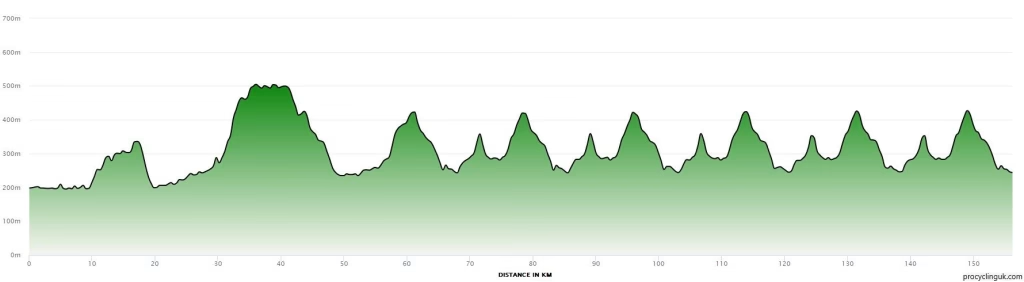
The race traditionally unfolds on circuits around Cittiglio, where the repeated climbs gradually wear down the peloton. While none of the ascents are especially long, their rhythm and positioning within the circuit create constant pressure. Riders must repeatedly accelerate over the climbs, descend technical sections, and quickly reorganise for the next lap. This structure often leaves the final group small enough that both attacking riders and punchy sprinters remain in contention.
The decisive moment frequently comes on the final ascent before the run back into Cittiglio. A well-timed attack here can force a split that carries to the finish, particularly if hesitation spreads through the chasing group. Equally, if teams with strong finishers maintain control over the final lap, the race can arrive at the line with a reduced group sprinting for victory.
2026 Trofeo Alfredo Binda live TV coverage
Race Date: Sunday 15th March 2026
United Kingdom
Live on Discovery+, Max and TNT Sports
International broadcasters
In Europe, coverage is available via Discovery+ and Max. In the United States, the race is broadcast on FloBikes. In Italy, the race is typically shown via RAI sports coverage.
2026 Trofeo Alfredo Binda startlist

2026 Trofeo Alfredo Binda contenders
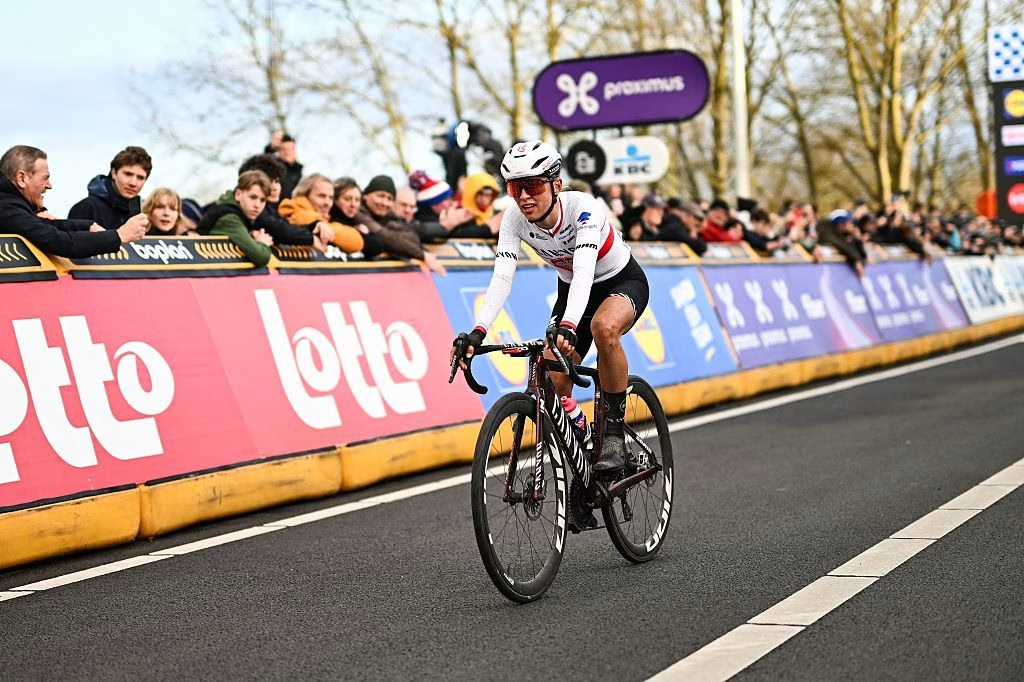 Photo Credit: Getty
A hard, selective Binda suits Canyon SRAM if the team commit to making the race uncomfortable early enough that pure sprint trains never fully settle. Kasia Niewiadoma-Phinney arrives with a major confidence marker after finishing 2nd at Strade Bianche, and that matters because Binda rewards the same rider type, someone who can keep responding to accelerations and still have the clarity to choose the decisive move rather than simply survive. If the final group is bigger and the race turns tactical, Soraya Paladin becomes the practical option, because she can stay present on repeated climbs and still finish well when the sprint is more about who has legs left than who has the cleanest launch.
A select sprint is still the most common Binda outcome, and that makes Ally Wollaston a headline winner’s card. She has started 2026 brilliantly, winning the Women’s Tour Down Under stage 1 and then doing it again on Women’s Tour Down Under stage 2, which is exactly the kind of early-season signal that translates to Binda: sharp finishing speed combined with the ability to handle hard racing. The protected finisher status at FDJ United-SUEZ suits her, but the real strength is the built-in safety net if the climbs bite harder than expected. If Wollaston is dropped, either Lauren Dickson or Sofia Bertizzolo becomes the next option, depending on who makes the front group, and both fit the Binda profile of riders who can survive the hard part and still sprint from imperfect positions.
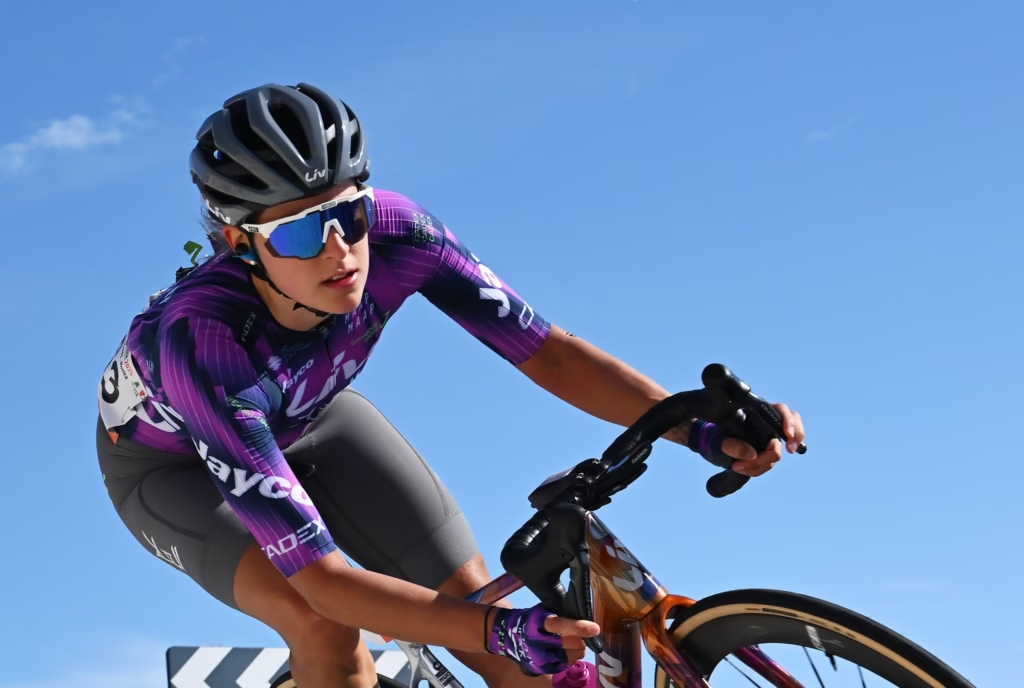
The most compelling Liv AlUla Jayco story is that they can win in two different ways, depending on whether the finale is a sprint or a late-attack chess match. Monica Trinca Colonel is the rider who can thrive if the final circuits are raced aggressively, because she has the type of climbing and persistence that lets her keep going when the group starts to fracture. If the finish comes back together into a reduced sprint, Letizia Paternoster is the clear finisher, and her 10th in Omloop Het Nieuwsblad Women 2026 plus 2nd on Setmana Valenciana 2026 stage 2 is strong evidence that she is already racing well on the exact terrain mix that Binda tends to produce. For the outsider top-10 angle, Nadia Gontova is a rider who benefits when the race lands in that chaotic middle ground, too hard for a pure sprint train, not selective enough for only five climbers, leaving a front group where survival and timing can produce a result.
Momentum is often the difference between being present in the finale and shaping it, and Cat Ferguson brings that into Binda. Two wins already this season means she will not arrive to simply follow wheels, and if she is still in the front group after the last repeated climbs, she becomes a genuine threat in a select sprint. The other part of Ferguson’s danger is tactical. Riders who are winning tend to commit earlier, they do not wait for permission, and Binda can be won simply by being the one who goes when everyone else is calculating.

A race like Binda often rewards riders who combine endurance with a willingness to race proactively, and that is why Pfeiffer Georgi is such an interesting Team Picnic PostNL card. She was 5th here in 2024, which is a strong course marker, and it shows she can make it through the repeated climbing and still deliver in the finale. The complicating factor is that her early 2026 UAE Tour, including 13th on Jebel Hafeet and 13th overall, points to a solid level without the explosive edge you sometimes need to win Binda from a sprint. That is why her best pathway looks more aggressive: attacking, forcing a smaller group, and trying to arrive at the finish with fewer pure sprinters left.
Laboral Kutxa are a team where the race shape decides the hierarchy, because their best outcomes depend on whether the finish is a reduced sprint or a small climbers’ group. If it comes down to a sprint from a thinned bunch, Arianna Fidanza is the obvious finisher to build around. If the climbers are successful and the race is won from a smaller group, Usoa Ostolaza is the rider who fits that outcome, even if the early 2026 results suggest she is still building, with a best of 14th on stage 3 in Vuelta a Extremadura. The way those selective stages can still flip expectations late is captured neatly in Vuelta a Extremadura 2026 stage 3.
 Photo Credit: Getty
The SD Worx-Protime approach is always uncomfortable for everyone else because they can win from multiple race shapes without needing to commit too early. Lotte Kopecky is the obvious headline, because she can win from a reduced sprint or a small group, and she rarely needs the race to be perfect to still be there when the decisive move forms. Anna van der Breggen adds the option to make the race harder on the climbs and turn it into a pure selection, especially if teams try to keep too many fast finishers in contention. The wildcard is Blanka Vas, because she thrives when the race is chaotic and punchy, and even though this will be her first road race of 2026, her last outing was 4th at the cyclocross Worlds, which is a strong indicator that the engine and sharpness are already there. If SD Worx want an attacking lever, Mischa Bredewold fits that role, the rider who can go into the hesitation zone and force others to chase earlier than they want.
A smaller team can still matter in Binda if they have one rider capable of surviving into the final selection, and Nikola Noskova gives Cofidis that route. Her 4th overall at Vuelta a Extremadura is exactly the kind of early-season sign that she can handle selective racing and stay close enough that one tactical moment can turn into a big result. If the favourites neutralise each other or hesitate behind a late move, Noskova is the sort of rider who can profit simply by being in the right place when the decisive group goes clear.
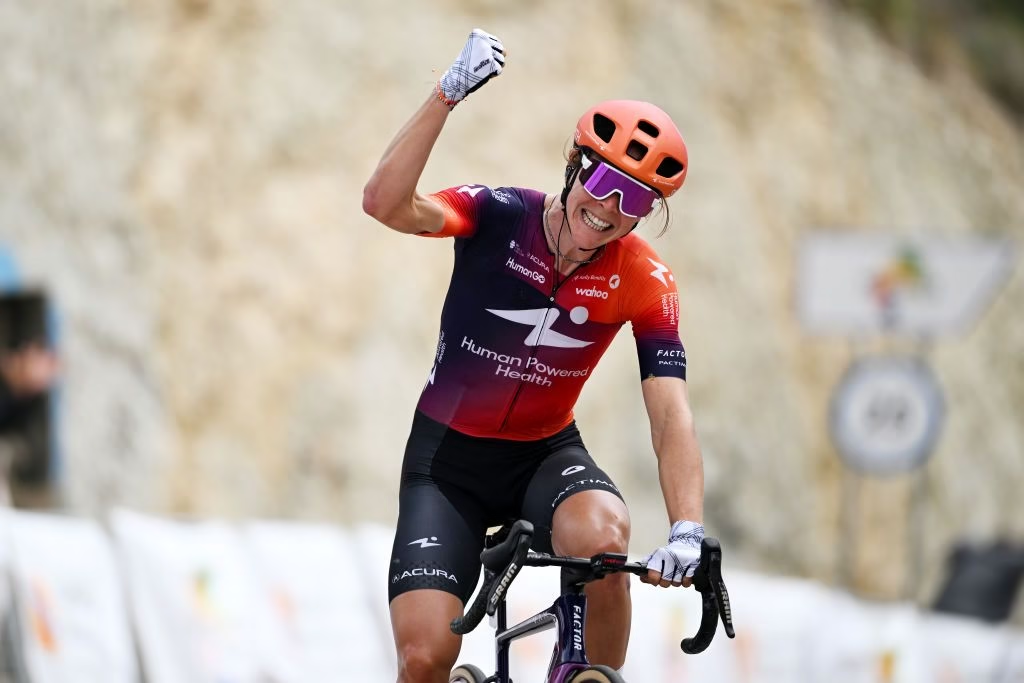
A clearer stage and GC approach sits with Human Powered Health than it sometimes appears on paper, because they have riders suited to both chaos and a hard reduced sprint. Part of a 66-kilometre breakaway in 2025, Nina Buijsman arrives with the kind of aggressive reference point that matters at Binda, where long-range moves are often the only way to beat the fastest finishers. Alongside her, Thalita de Jong carries unfinished business after last year’s spring was disrupted by an unfortunate incident with a fan, and she is the sort of rider who can turn Binda into a hard race through persistence and repeated pressure. If the finale is selective rather than a full sprint, that combination becomes dangerous, because they do not need to control the race to still end up with a result.
Course history also gives AG Insurance-Soudal Team a slightly different look at Binda, because Ashleigh Moolman-Pasio has four top 10s here but has never finished higher than 10th, which underlines both her reliability and the challenge of turning that into a win against the very fastest finishers. She last raced Binda in 2022, and this line-up also includes a rider with a clearer recent reference point, Justine Ghekiere, 8th in 2023 and 17th last year, suggesting she can survive the decisive selections even if the final step up to podium level is still a big ask. Letizia Borghesi can suit the shape of the race when it is hard and selective, but her best finish here is 30th from 2022, so the most realistic expectation is improvement through a reduced group sprint rather than treating her as a likely top-10.
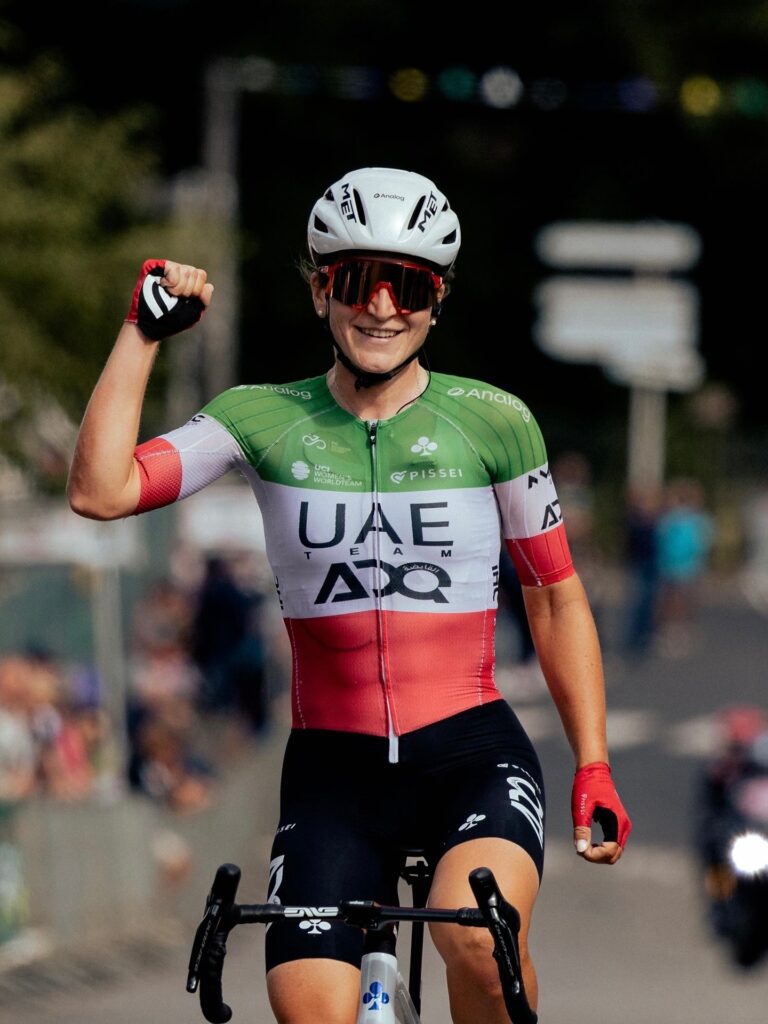
For UAE Team ADQ, the most obvious pillar is Elisa Longo Borghini, because she can win Binda by making it a pure selection and then committing fully on the decisive climbs. Her win at Trofeo Oro in Euro sets the tone of what is possible here – a solo break is possible again. The presence of Eleonora Gasparrini changes the team’s shape, because it gives them a sprint card if the group is still large enough to finish fast, particularly in the kind of reduced sprint where she can hold wheels and launch late. The extra strength is in the depth of options around them. Mavi Garcia is the rider who can make the race uncomfortable from distance, turning steady circuits into an endurance test, while Silvia Persico offers the kind of reliable all-round threat that can follow the right move and still finish strongly if the race comes back together. Karlijn Swinkels adds another layer as a rider who can survive repeated climbing and still contribute to either a late attack or the lead-in to a reduced sprint, giving UAE Team ADQ multiple ways to force rivals into decisions rather than letting them race on their own terms.
The race always feels more open once Puck Pieterse is on the start list, because she thrives when the tempo is jagged, and the favourites are forced into repeated accelerations rather than one clean attack. If Binda is raced aggressively from far out, Pieterse has the punch to go with the decisive move and the grit to keep it going over the final climbs. That makes her dangerous in both likely outcomes, either a small group that stays clear, or a reduced sprint where the legs are heavy and positioning decides everything. A similar logic applies to Yara Kastelijn, who is at her best when the race becomes a pressure cooker, climbing hard enough to remove the pure sprinters, then racing with the stubbornness to keep the front group moving when others start looking for a free ride. If the finale turns tactical rather than flat-out, Kastelijn is exactly the kind of rider who can exploit hesitation and turn a strong placing into a genuine win chance.
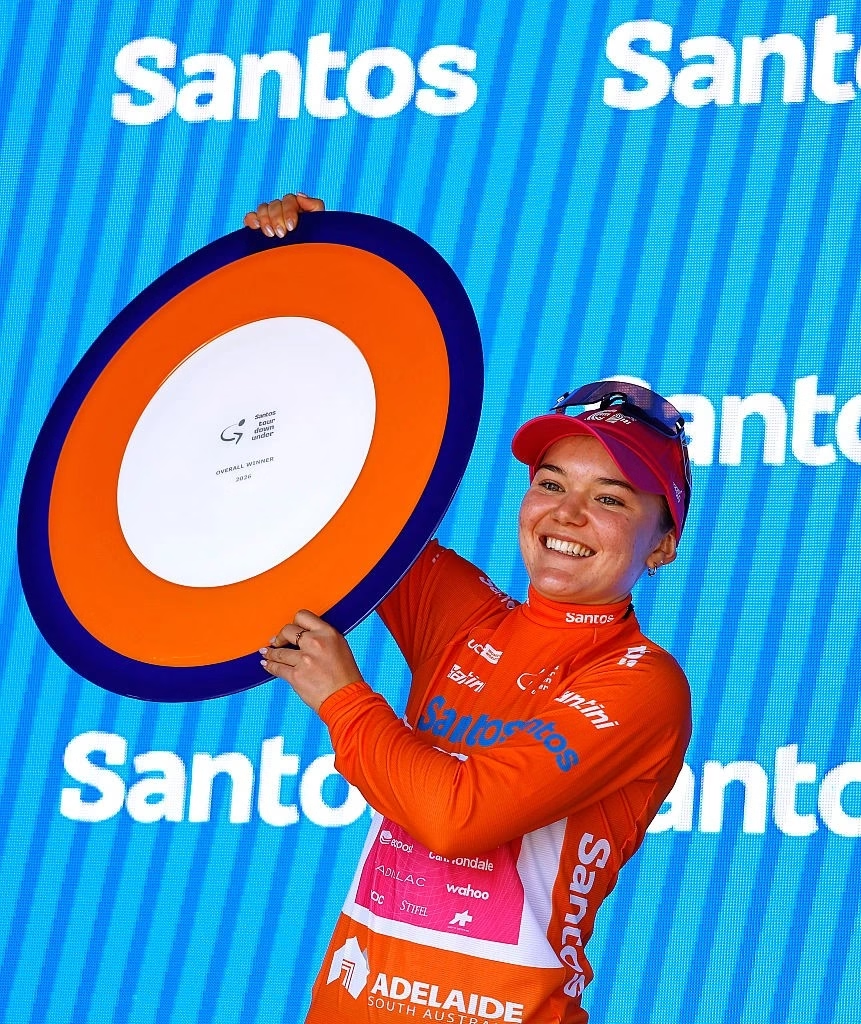 Photo Credit: Getty
A reduced sprint is often the most realistic EF Education-Oatly route at Trofeo Alfredo Binda, and that immediately puts Noemi Rüegg at the centre of their plan because she has the best finishing speed in this trio while still climbing well enough to survive the punchy climbs when the race is raced hard. Her 2026 form reads like a rider who can handle exactly this kind of Italian one-day, 7th at Trofeo Oro in Euro, 11th at Strade Bianche, 7th at the Cadel Evans Great Ocean Road Race, and the overall win at the Tour Down Under so far this season, which adds up to consistency across very different race shapes rather than one isolated hit. The other important detail is the support she has for alternative scenarios. Nina Berton showed at Omloop het Nieuwsblad that she can arrive in the front group and finish strongly, and a top 10 there makes her a genuine secondary card if the finale becomes tactical or Rüegg is forced into an imperfect position. If the climbs are raced hard enough to strip away the fast finishers, Magdeleine Vallieres gives EF the ability to flip the script, and 5th at Strade Bianche is the clearest sign that she has the climbing and durability to be present when the decisive selection forms rather than simply hanging on and hoping for a sprint.
Top 3 Prediction
⦿ Elisa Longo Borghini
⦿ Elisa Balsamo
⦿ Ally Wollaston