
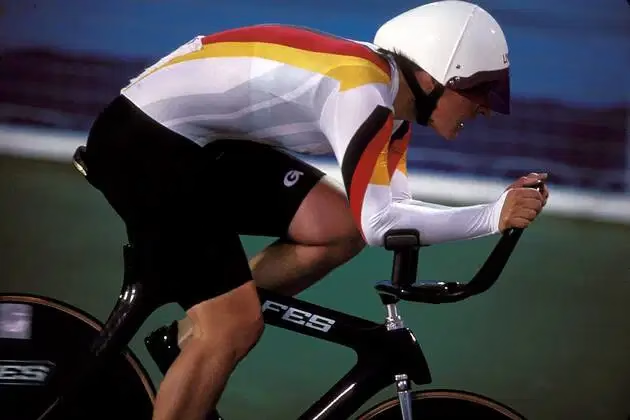
Petra Rossner was one of the most successful riders of the 1990s and early 2000s, a cyclist who built her reputation first on the track and then turned herself into one of the most prolific winners on the road. She won Olympic gold, a world title on the track, the overall Women’s Road World Cup and an extraordinary run of major one-day races, most famously the Liberty Classic, which she won seven times. By the time she retired after the 2004 season, she had left behind one of the strongest win records of her era.
What makes Rossner especially interesting in women’s cycling history is that her career sits across two slightly different traditions of the sport. She came through the East German system, excelled in track pursuit, then adapted into a road rider whose finishing speed and durability made her a constant threat in one-day races and flatter stage-race stages. In that sense, she belongs naturally within the wider women’s cycling history hub, because her story helps explain how women’s cycling moved from the late Cold War era into the more international professional calendar of the 2000s.
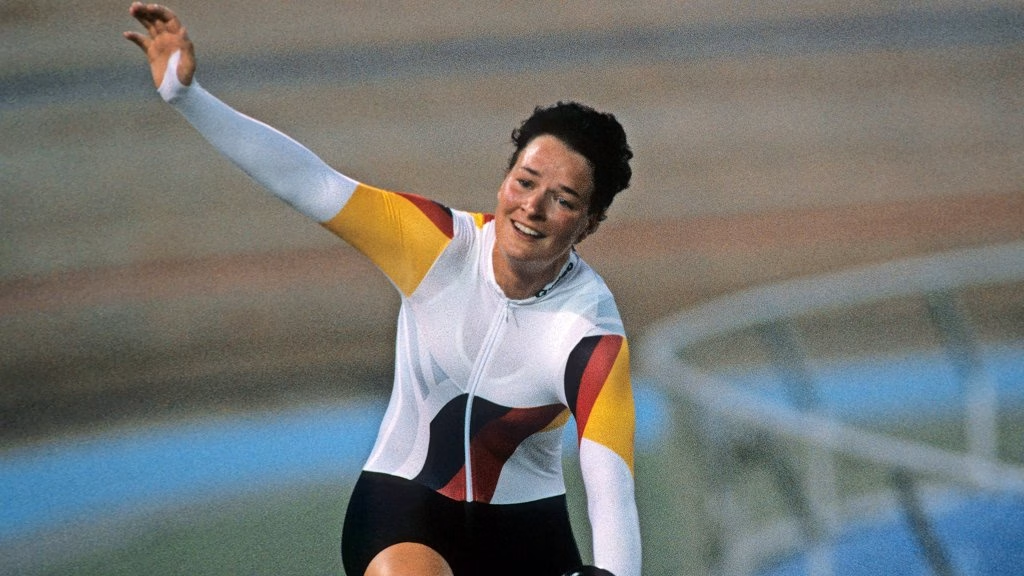
Before the road success, Petra Rossner was a track champion
Rossner was born in Leipzig on the 14th November 1966 and first made her name on the track. Her key early results came in the individual pursuit, where she was world championship runner-up in 1989 before becoming world champion in 1991. That track background mattered because it shaped the rider she became later on the road: controlled, powerful and highly efficient over sustained efforts.
The defining early moment came at the 1992 Barcelona Olympics, where Rossner won gold in the 3km individual pursuit for unified Germany. It remains one of the strongest markers of her place in German cycling history. She was not just a rider who happened to collect a big road palmarès later. She had already reached the top of the sport in a completely different discipline.
How Petra Rossner became a road racing force
Rossner’s transition into road racing is what gave her career its bigger historical weight. By the late 1990s and early 2000s she had become one of the peloton’s most dependable finishers. She was never simply a pure flat sprinter in the narrow sense. Her best road results came from races that still required toughness, repeat effort and enough resilience to survive the hard parts before the sprint.
Her road palmarès grew into something enormous. She built one of the best one-day records of her era and added a huge number of high-level wins along the way. That tells you something important about the rider she was. Rossner was not living off one Olympic title or one world title. She kept winning over and over again, and did so in a way that made her one of the constants of women’s road racing in that period.
What kind of rider Petra Rossner was
Rossner is often remembered as a sprinter, and that is fair up to a point. She won repeatedly from fast finishes and was especially dangerous in races where a reduced or still substantial front group came to the line together. But that label does not quite cover her range. She could win difficult one-day races, perform well in stage races and handle hard road conditions better than many riders who were nominally faster in a pure sprint.
That is what makes her career hold up so well historically. Rossner was not just quick. She was one of those riders who could absorb a hard day and still finish with control. In modern terms, she would probably be described as a hard-race sprinter, but even that feels slightly too narrow because of her track pedigree and the broader durability she carried into road racing.
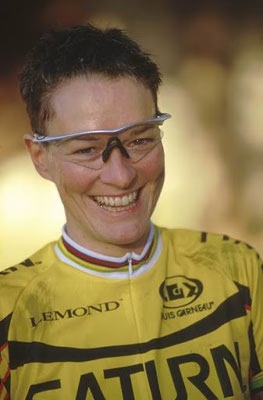
Petra Rossner’s greatest years on the road
Rossner’s strongest road phase came in the late 1990s and early 2000s. She finished third overall in the 1988 Giro d’Italia Femminile, which showed early on that she could handle stage racing, but her later career became more defined by major one-day races and the Women’s Road World Cup.
That 2002 season stands out in particular because she won the overall World Cup title. In that era, the Women’s Road World Cup was the clearest test of elite one-day consistency. To win it, a rider had to deliver across the best races on the calendar. Rossner doing so tells you that she was not simply a specialist picking off isolated sprint wins. She was one of the defining one-day riders of that period.
The Liberty Classic and the races that define her legacy
The race most closely associated with Rossner is the Liberty Classic. She won it seven times, in 1996, 1998, 1999, 2000, 2001, 2002 and 2004. That is one of the most striking race records in women’s cycling history and still stands out because the Liberty Classic was never a routine finishers’ race. The Manayunk Wall and the repeated city-centre circuit pressure meant riders had to survive a hard day before still having the power to win.
That repeated success is a big part of why Rossner still matters historically. Plenty of riders win one famous one-day race. Much fewer come back year after year and make it feel almost theirs. In that sense, Rossner belongs alongside some of the specialist rulers of the spring and summer one-day scene, even if her biggest legacy came more from accumulation and repeated control than from one iconic myth-making ride.
She also won major World Cup races and built a strong relationship with the biggest events in the international calendar. That puts her naturally beside the riders who shaped the kind of events covered in A brief history of the road cycling world championships and Women’s Olympic road race winners, even if her biggest titles came in slightly different forms.

The Olympic career and what it meant
Rossner competed at three Olympic Games: Seoul 1988 for East Germany, Barcelona 1992 for unified Germany and Sydney 2000. The first of those ended with a DNF in the road race, the second delivered her pursuit gold medal, and the third was less successful on the road. That sequence gives her Olympic story a clear shape. It is not the story of a repeated Olympic medallist like Leontien van Moorsel, but of a rider who reached the absolute summit once and secured a place in history by doing so.
That 1992 gold is still the cleanest way to understand Rossner’s level. Winning Olympic pursuit gold means mastering a discipline built on rhythm, pain tolerance and absolute focus. It also helps explain the road rider she later became. The patience and pacing of the track never really left her. They simply found a new form on the road.
Petra Rossner and the 2004 Athens controversy
One of the most famous off-bike moments linked to Rossner’s career came at the 2004 Olympics, even though she was not racing there. She had won the German national road title that year, yet was left out of the Olympic team. That decision sparked the famous reaction from Judith Arndt, then Rossner’s partner, who crossed the line with an obscene gesture directed at German officials after taking silver.
That incident matters in Rossner’s story because it shows how highly she was still regarded right at the end of her career. This was not a rider fading quietly into retirement. Her omission was controversial precisely because her level and status still made selection seem realistic and defensible.

Petra Rossner’s retirement and post-cycling career
Rossner retired after the 2004 season. The clearest picture of her immediate post-racing path is that she moved into team management and support roles rather than building a highly public-facing second career.
That quieter post-racing presence is worth noting because it slightly changes how her legacy sits today. Riders who remain in public view as directors, commentators or organisers often keep their historical profile more easily. Rossner did not disappear completely, but she became a more private figure than some other champions of her generation.
What remains verifiable is that retirement did not mean a clean break from the sport. She stayed connected to elite cycling through team support and management work. That is more modest than some later stars’ post-racing careers, but it still fits the larger shape of her story. Rossner was a career cyclist, first as a champion and then as someone still able to contribute experience from the other side of the sport.
Why Petra Rossner still matters in women’s cycling history
Rossner matters because she represents a type of great rider that is easy to underrate if you only search for the biggest narrative moments. She did not build her legacy around one Monument or one Olympic road race. She built it through sustained excellence, through repeated victories, through a Road World Cup title, through Olympic pursuit gold and through owning one of the most prestigious one-day races in North America for the better part of a decade.
She also matters because she helps bridge several strands of women’s cycling history. She came from the East German sporting system, won on the track at the highest level, then became one of the dominant road finishers of the international peloton. In that sense, she belongs alongside figures covered in Jeannie Longo: the full story of one of women’s cycling’s most complex greats, Leontien van Moorsel: the full story of a rider who rebuilt herself and changed women’s cycling and Ina-Yoko Teutenberg: the full story of one of women’s cycling’s great sprinters and team-builders. Her career is a reminder that women’s cycling history is full of dominant riders whose greatness came through repetition as much as drama.
-
 Photo Credit: quentinphotographiebe
 -
 Photo Credit: Getty
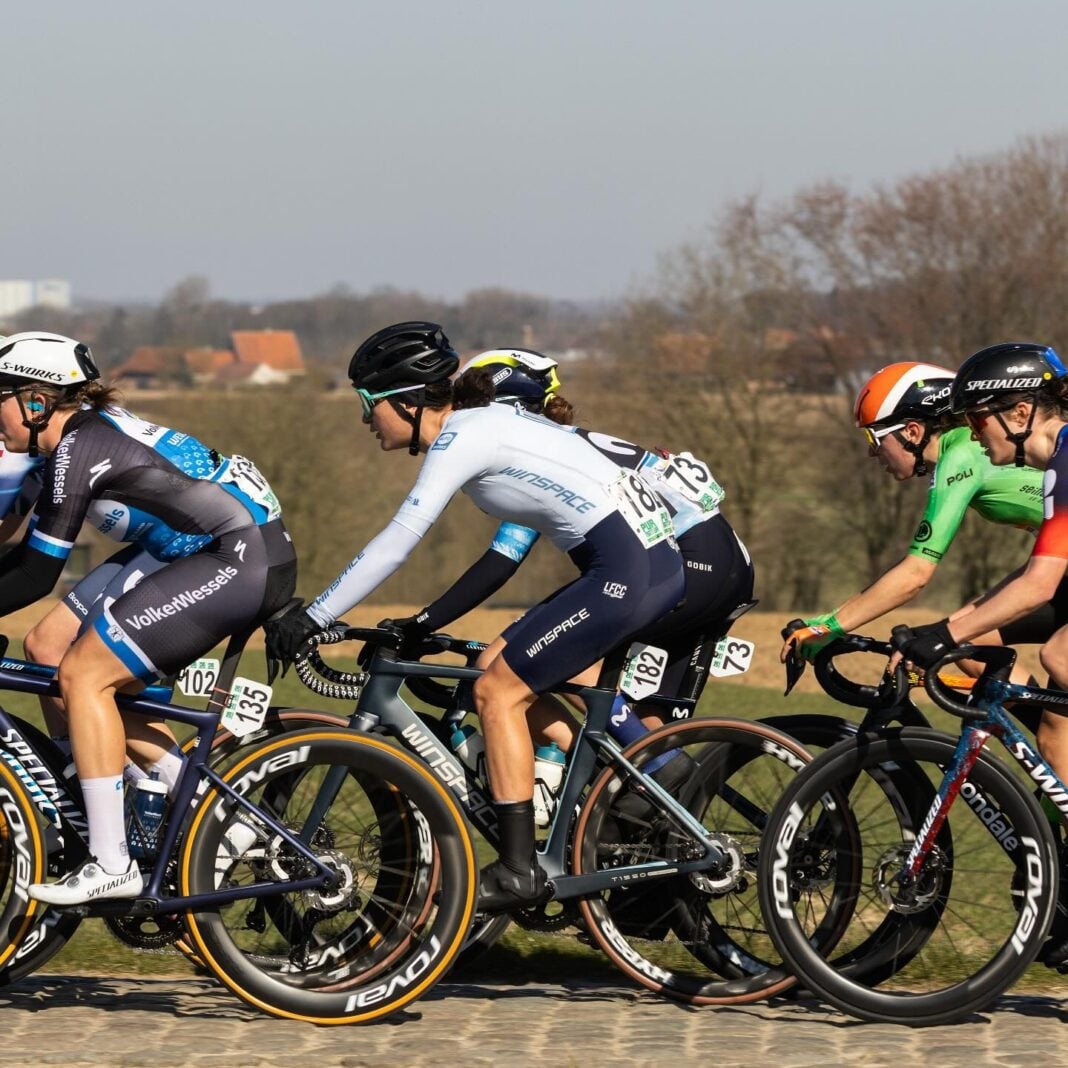
Petra Rossner career highlights
- Olympic gold medal in the 3km individual pursuit at Barcelona 1992
- Individual pursuit world champion in 1991
- Winner of the 2002 Women’s Road World Cup overall
- Seven-time winner of the Liberty Classic
- One of the most successful Women’s Road World Cup riders of her era
- Third overall at the 1988 Giro d’Italia Femminile
- Retired after the 2004 season and moved into team management and support roles

