
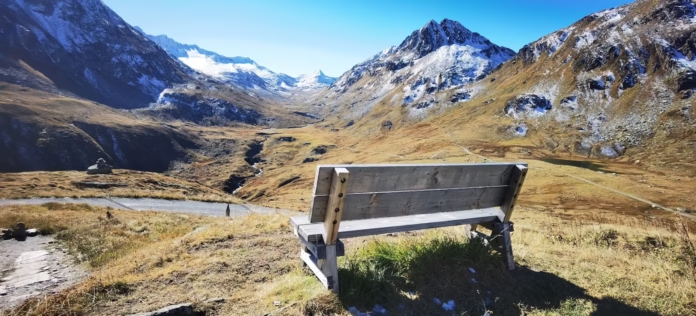
There are cycling destinations that impress because they are hard, and others that work because they are beautiful. Andermatt stands out because it does both at once. This small alpine base in central Switzerland sits at the meeting point of several of Europe’s most recognisable mountain roads, with the Furka, Gotthard and Oberalp all close enough to turn a ride into a proper high-mountain day without needing a long transfer first.
What makes that special on the bike is not just the list of famous names. It is the shape of the place. Andermatt feels like a crossroads town built for movement. Roads radiate out in different directions, each one carrying a different character. One road drags you towards glaciers and the Furka. Another sends you over the historic spine of the Alps on the Gotthard. Another climbs more gently towards the Oberalp and the open landscape of the Surselva. It gives the whole area a rare sense of possibility. You can stay in one base and still feel as though each ride begins a new story.
For readers building out a wider mountain riding shortlist, this sits naturally alongside ProCyclingUK’s travel features on Annecy & Lake Annecy and Queenstown & Central Otago, even if the atmosphere in central Switzerland is more alpine and more severe.
Why Andermatt works so well as a cycling base
A lot of mountain destinations ask you to choose between scenery and practicality. Andermatt largely avoids that problem. Its position puts several major passes within reach as direct out-and-back rides or as parts of bigger loops. That changes the mood of a trip. Instead of spending half your time driving to the start of a climb, you clip in and go.
Within minutes, you are already on roads that feel serious. The village itself is high enough to give the whole place a mountain atmosphere from the first pedal stroke, but not so high that every day starts in survival mode. There is a sense of calm before the riding begins, and then suddenly the road tilts upwards and you are in it.
The visual side helps too. This is a place where the landscape changes repeatedly within a single ascent. The colour palette shifts from green valley floors to grey rock, then to old snow, and sometimes to the hard white light of a pass still shaking off winter.
The Furka Pass – the dramatic one
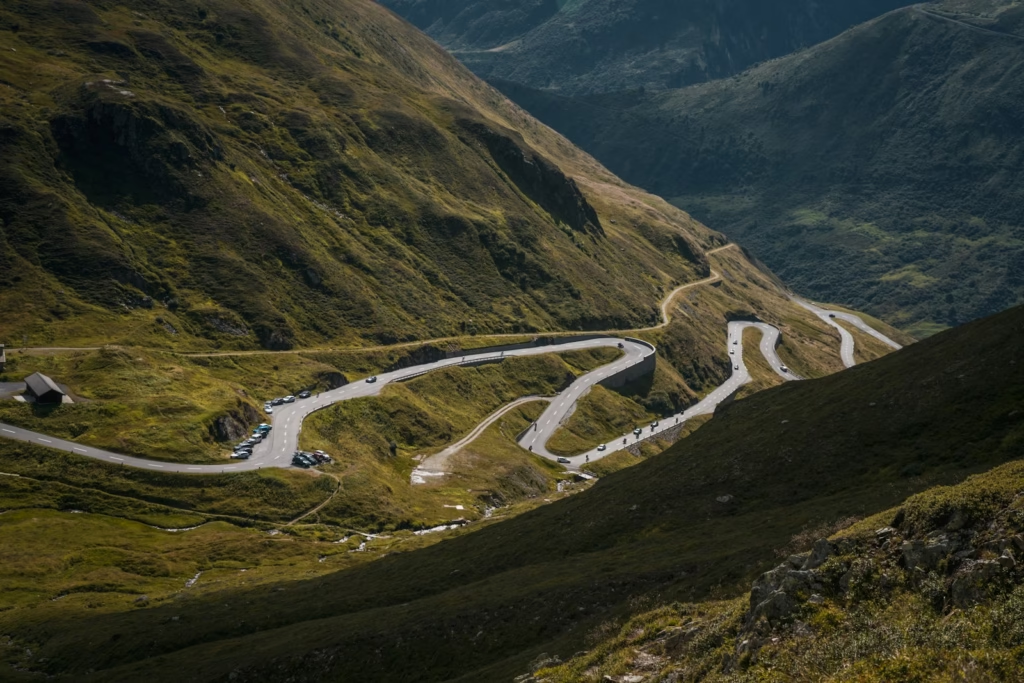
If one climb captures the idea of Andermatt as a serious road-cycling base, it is the Furka. The height alone tells you what sort of day this is. From the Andermatt side, the Furka feels exposed in a way that many great climbs do. It is not just steepness that stays with you, but space. The valley opens, the road traces across it, and you can often see long sections of what still lies ahead.
That creates a particular kind of pressure. There is nowhere to hide from the scale of it.
This is the climb for riders who enjoy theatre. The hairpins have shape, the mountain walls feel close, and the higher you go the more the pass begins to look like the sort of road people daydream about in winter. It is also one of the reasons the area’s season needs careful planning. Andermatt may feel like a summer playground, but these are still proper mountain roads governed by snow rather than marketing calendars.
 Photo Credit: PatitucciPhoto.com
The Gotthard Pass – the historic one
The Gotthard has a different pull. If the Furka feels dramatic, the Gotthard feels storied. This is not just a climb near Andermatt. It is one of the old ways through the Alps.
For cyclists, the extra detail that matters is the Tremola. The historic cobbled road on the southern side gives the pass a texture unlike the others nearby. Even riders who usually prefer perfect tarmac tend to remember the Tremola because it feels so visually distinctive, a ribbon of old stone switchbacks that turns the climb into something more than a numbers exercise. The newer road exists, but the older line is what gives the Gotthard its romance.
That contrast is a large part of the climb’s appeal. The Gotthard is not only about effort. It is about atmosphere, about feeling connected to an older alpine route that mattered long before modern cycling turned it into a destination. There is a gravity to it. You do not just ride over it, you pass through something.
The Oberalp Pass – the deceptively important one
The Oberalp is usually described as the easier pass from Andermatt, and compared with the Furka or the Gotthard that is fair enough. But that does not make it lesser. It makes it useful, versatile and often quietly memorable.
Some climbs impress because they are savage. Others stay with you because they flow. The Oberalp is more in that second category. It gives riders a way to stretch the legs, to build a longer day, or to link one side of the region to another without every kilometre feeling like a fight. It also tells you something about why Andermatt works. Not every ride from town has to be maximal. There is room here for rhythm as well as spectacle.
That is important on a multi-day trip. A destination built only around brutal days can become one-dimensional. Andermatt avoids that because the Oberalp changes the tone. It lets you breathe, look around and settle into the landscape rather than always battling it.
The roads and the feel of the place
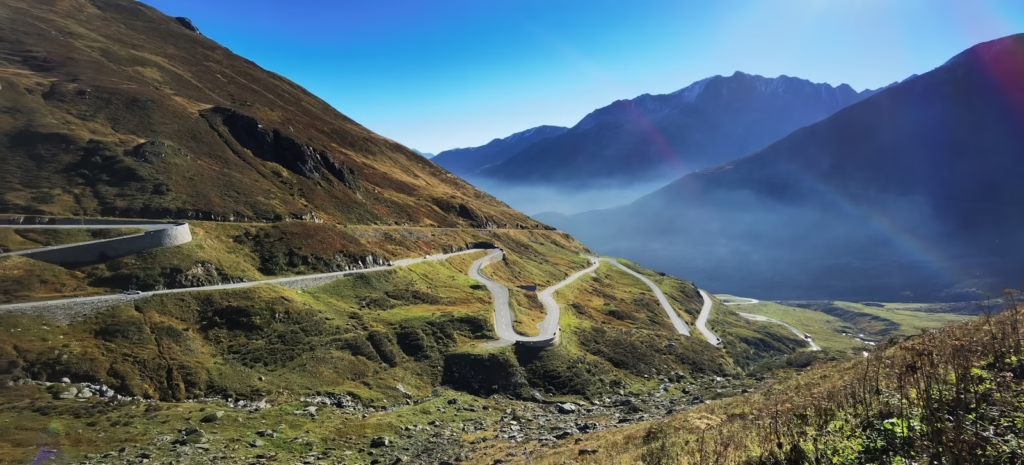
Part of the appeal here is the roads themselves. Swiss pass roads tend to carry a certain visual clarity. The line of the road is easy to read, the engineering feels deliberate, and the mountains frame the riding in a way that makes every bend feel earned. Even when traffic appears, there is often still a sense of order and purpose to the road.
Andermatt also carries the atmosphere of a place that knows cyclists belong there. You feel that in the way the area presents itself, in the signposting, and in the simple fact that so many iconic roads meet here.
There is also a seasonal edge to the atmosphere. Because pass openings depend on snow clearance, a trip here always has a slight sense of timing. Early season rides can feel tentative and sharp, with winter still visible on the mountainsides. High summer is more expansive and relaxed. Late season can bring that quieter, thinner-air feeling that makes alpine riding so addictive. The place changes with the mountain calendar, not just the tourist one.
That broader mountain mood is one reason these rides sit comfortably alongside other place-led cycling trips, whether that is the lake-and-climb balance of Annecy & Lake Annecy or the bigger travel-and-riding blend found in Queenstown & Central Otago. Andermatt feels more concentrated than either, with the riding beginning almost as soon as you leave town.
-
 Photo Credit: Cor Vos

Why Andermatt stays in the mind
Some cycling destinations are brilliant for ticking off famous climbs. Andermatt can do that, clearly. But the reason it tends to stay in the mind is that it feels complete. The roads are serious, the scenery is world-class, the town makes sense as a base, and the riding has variety even within a relatively tight area.
You can spend one day on the Furka in full alpine drama, another on the Gotthard taking in the weight of the route beneath your tyres, and another on the Oberalp finding a steadier rhythm through open country. That range is what gives Andermatt its staying power. It is not just a place of famous names. It is a place where the geography genuinely shapes the mood of each ride.
In the end, that is what makes cycling in Andermatt and the central Swiss passes feel special. The climbs are big enough to satisfy your ambition, the roads are beautiful enough to slow your thoughts, and the atmosphere never lets you forget that these are old mountain crossings with a life beyond sport. On a bike, that combination is hard to beat.

