
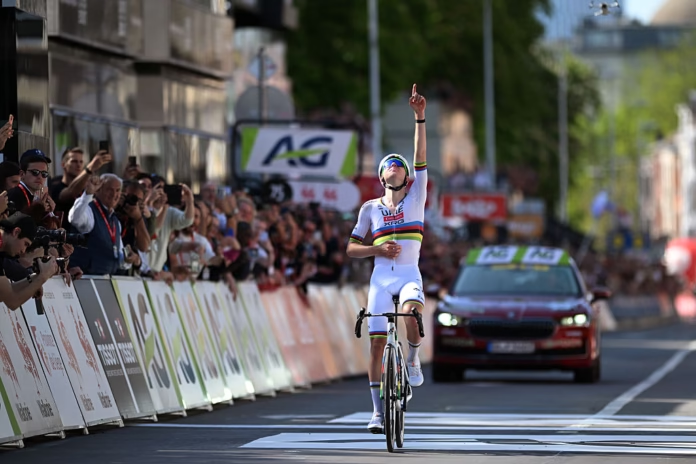
Liège-Bastogne-Liège 2026 takes place on Sunday, 26th April and covers 259.5km from Liège back to Liège. The overall structure is familiar, but that is no weakness. This remains one of the best route designs in men’s one-day racing because it lets the distance do its work before the better-known climbs begin to split the race properly. The 2026 route keeps the same broad modern pattern, with the finish in Liège and the decisive final climb still coming at Roche-aux-Faucons.
For readers wanting wider context around the Ardennes week, this sits naturally alongside ProCyclingUK’s beginner’s guide to Men’s Liège-Bastogne-Liège 2026, the Liège-Bastogne-Liège Femmes 2026 route guide and the Amstel Gold Race Women 2026 route guide.
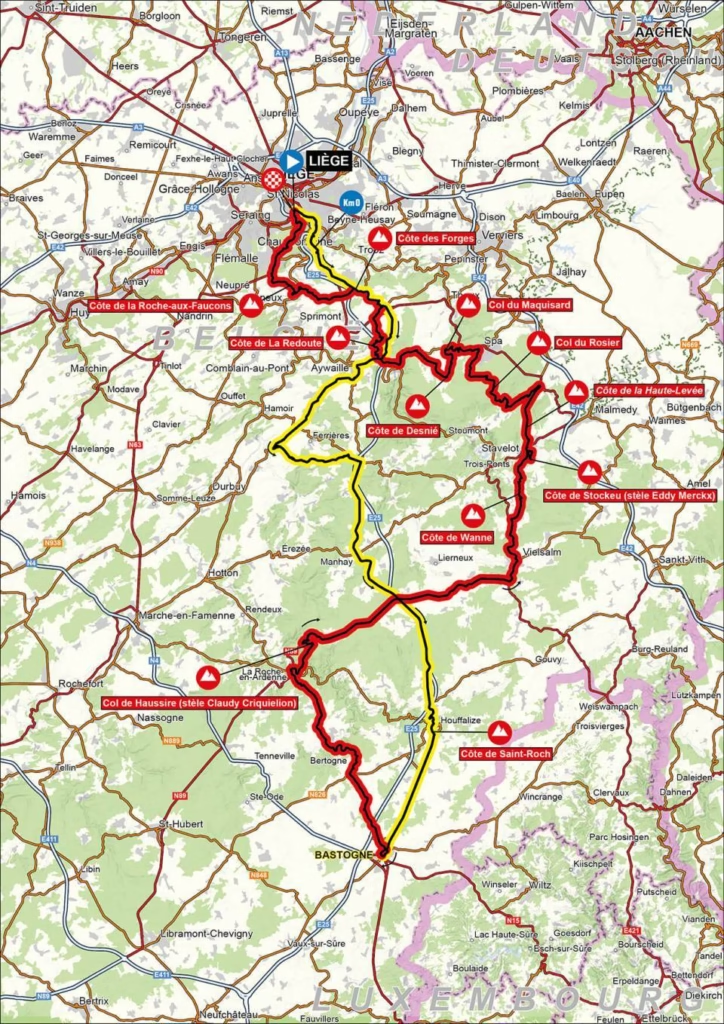
What the route looks like
The race starts in Liège, heads south towards Bastogne, then turns and comes back north through the Ardennes for the more selective half of the day. That basic shape is one of the reasons Liège-Bastogne-Liège feels so different from the other spring Monuments. It is not simply about a cluster of late climbs. It is about riders carrying fatigue into those climbs after already spending hours racing across constantly rolling roads.
This is a route built on accumulation. Riders do not arrive at the final hour fresh enough to treat every climb as a clean one-minute effort. They arrive there after more than 170km of racing, which changes the meaning of every gradient and every acceleration. That is why Liège so often rewards the strongest all-round puncheur or climber in the field rather than a rider who can simply time one late move.
The key climbs on the Men’s Liège-Bastogne-Liège 2026 route
The principal climbs on the 2026 route are:
- Côte de Saint-Roch, 1km at 11.2%
- Col de Haussire, 3.9km at 6.8%
- Côte de Wanne, 3.6km at 5.1%
- Côte de Stockeu, 1km at 12.5%
- Côte de Haute-Levée, 2.2km at 7.5%
- Col du Rosier, 4.4km at 5.9%
- Col du Maquisard, 2.4km at 5.7%
- Côte de Desnié, 1.6km at 8.1%
- Côte de la Redoute, 1.6km at 9.4%
- Côte des Forges
- Côte de la Roche-aux-Faucons, 1.3km at 11%
The important detail is the order. Wanne, Stockeu and Haute-Levée come in quick succession after around 171km. Rosier follows as the longest climb on the route, then Maquisard and Desnié add another layer before the riders even reach La Redoute. That sequence does a lot of the race’s hidden damage. By the time the favourites hit the climbs that casual viewers know best, many domestiques are already gone and weaker contenders are already in trouble.
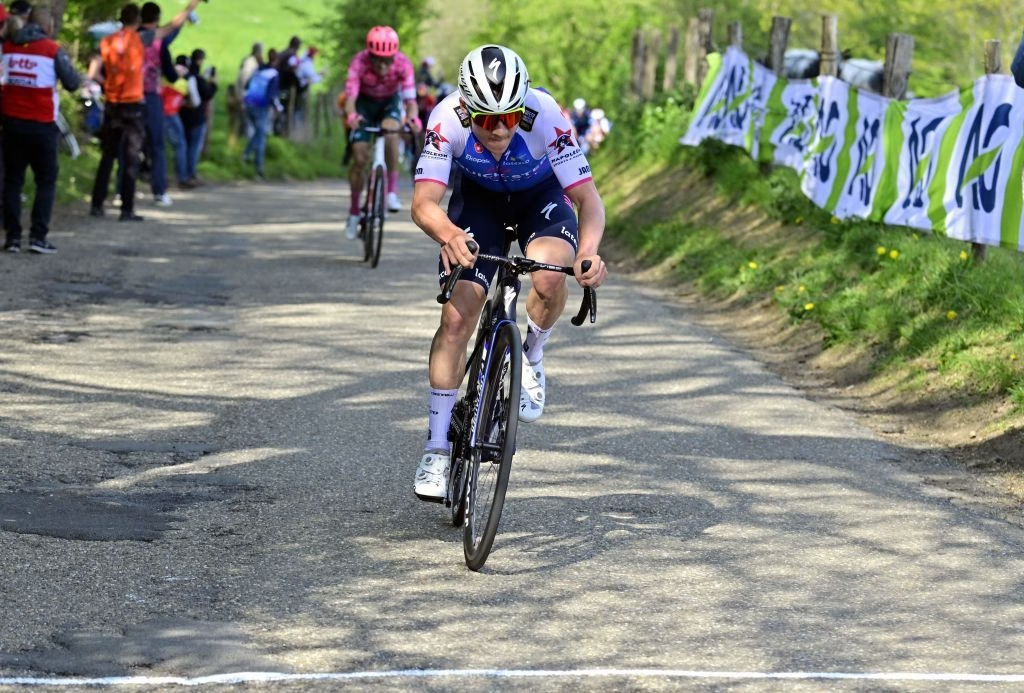 Photo Credit: Peter de Voecht/BELGA/AFP
Where the race starts to take shape
For most riders, the route becomes properly serious from the Côte de Wanne onwards. It is not a climb that usually decides the race on its own, but it marks the start of a denser and more meaningful block of terrain. The run through Wanne, Stockeu and Haute-Levée is the point where teams can start to force selection rather than simply hold position.
Stockeu in particular always has a psychological effect because of how steeply it bites for such a short climb. Combined with the surrounding sequence, it can pull support riders out of the race earlier than expected. Then Rosier arrives as the longest climb of the day, not usually the place for the decisive attack, but often the place where the race begins to feel properly reduced.
The decisive final sequence
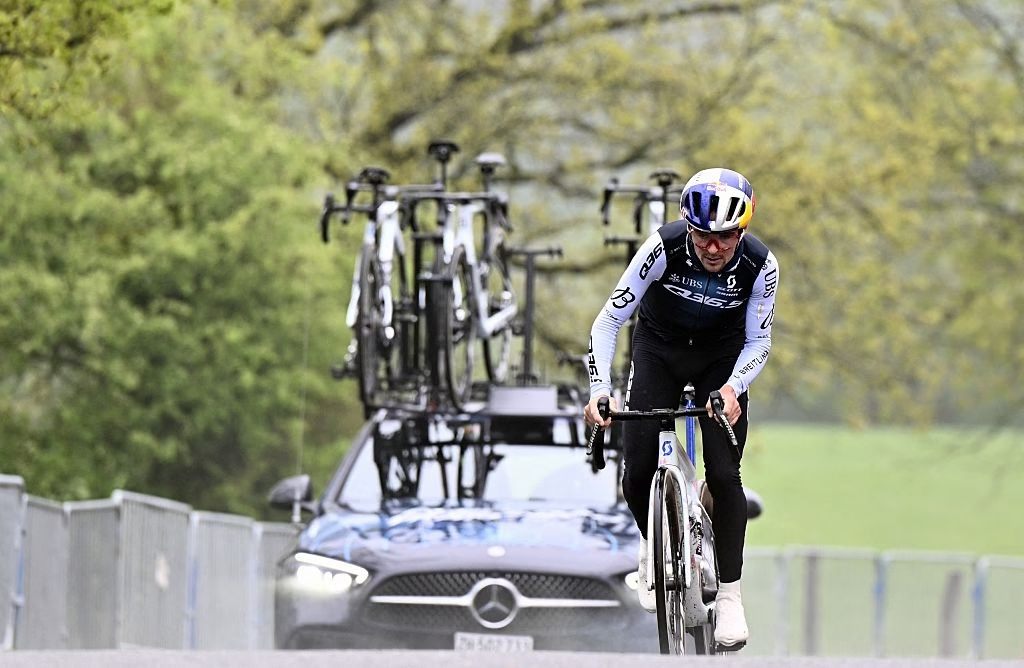
The modern Liège finale is now very well established. Maquisard and Desnié soften the field further before La Redoute, and that makes the run-in feel more layered than the older versions that seemed to wait more obviously for one headline climb.
La Redoute remains the symbolic heart of the race. It comes at roughly 34km to go, close enough to matter immediately but still far enough from the finish that an attack there needs real conviction and legs to survive. Often it works more as a sorting climb than a winning climb. It tells everyone who still has the strength to force the race and who is starting to run short.
Côte des Forges follows with around 23km remaining. It tends to be discussed less, but it often has genuine tactical value because it arrives at the point where a front group can start to settle and where a chase behind can begin to lose shape. Then comes Côte de la Roche-aux-Faucons, still the last real launchpad and, in many editions, the place where the winner is effectively chosen. At 1.3km at 11 per cent, and with only 13.3km left afterwards, it is the climb most likely to reward the rider who is strongest rather than merely smartest.
How the 2026 race could unfold
Everything about this route points towards a selective race rather than a larger sprint from a reduced peloton. The sequence from Wanne to Roche-aux-Faucons is simply too demanding, especially after more than 250km, for many riders to survive unless they are genuine Ardennes specialists or Grand Tour-level climbers with a sharp finish.
That does not automatically mean a solo winner. Liège can still produce a finish from a two or three-rider move if the strongest riders mark each other too closely on Roche-aux-Faucons or hesitate in the final kilometres. But the route is clearly built to reward aggression under fatigue rather than patience for a bigger sprint. The winners’ list is usually strong for exactly that reason.
-
 Photo Credit: Getty

Why this route still works so well
Liège-Bastogne-Liège does not need yearly reinvention. Its strength lies in the way the route builds. The early and middle phases drain the race, the climb sequence becomes progressively more pointed, and the final run into Liège leaves just enough room for tactics without blunting the value of raw strength. The current format already gives the race what it needs.
That is what makes it such a fitting conclusion to the Ardennes week. Amstel is more nervous and stop-start. Flèche is more concentrated around one famous finish. Liège is heavier, slower-burning and more complete. Riders have to manage distance, repeated climbs, changing race rhythm and tactical timing across almost 260km, and very few routes in modern cycling test that mix better.
Men’s Liège-Bastogne-Liège 2026 route at a glance
- Start: Liège
- Finish: Liège
- Distance: 259.5km
- Route type: hilly Monument
- Key middle-race climbs: Wanne, Stockeu, Haute-Levée, Rosier
- Key finale climbs: Desnié, La Redoute, Côte des Forges, Roche-aux-Faucons
- Most decisive climb: Côte de la Roche-aux-Faucons
- Route style: long, attritional and highly selective

