
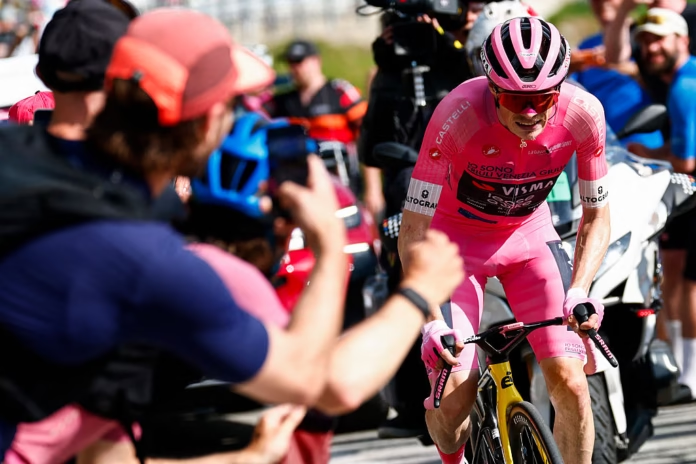
Giro d’Italia 2026 stage 17 gives the peloton a very different problem after the brutal Swiss summit finish to Carì. The race returns to Italy with a 202km stage from Cassano d’Adda to Andalo, moving from the Lombardy plains into Trentino for a long, awkward day that looks far more suited to attackers than to a fully controlled general classification showdown.
Jonas Vingegaard strengthened his grip on the maglia rosa on stage 16, taking his fourth stage win of the race with another decisive uphill attack. Felix Gall moved into second overall, Jai Hindley again showed climbing strength, and Afonso Eulálio slipped further away from the lead after losing time on the final climb. That leaves stage 17 in an interesting position: the GC battle has been reshaped, but the route to Andalo is not quite hard enough to guarantee another direct fight between the main favourites.
This is the kind of stage where the breakaway should believe. It is long, it has early climbing, a demanding middle section, a late categorised rise and an uphill finish, but it does not have the obvious summit-finish brutality of Carì or the Dolomite stages still to come. For riders outside the general classification, it may be one of the best remaining chances to win a Giro stage.
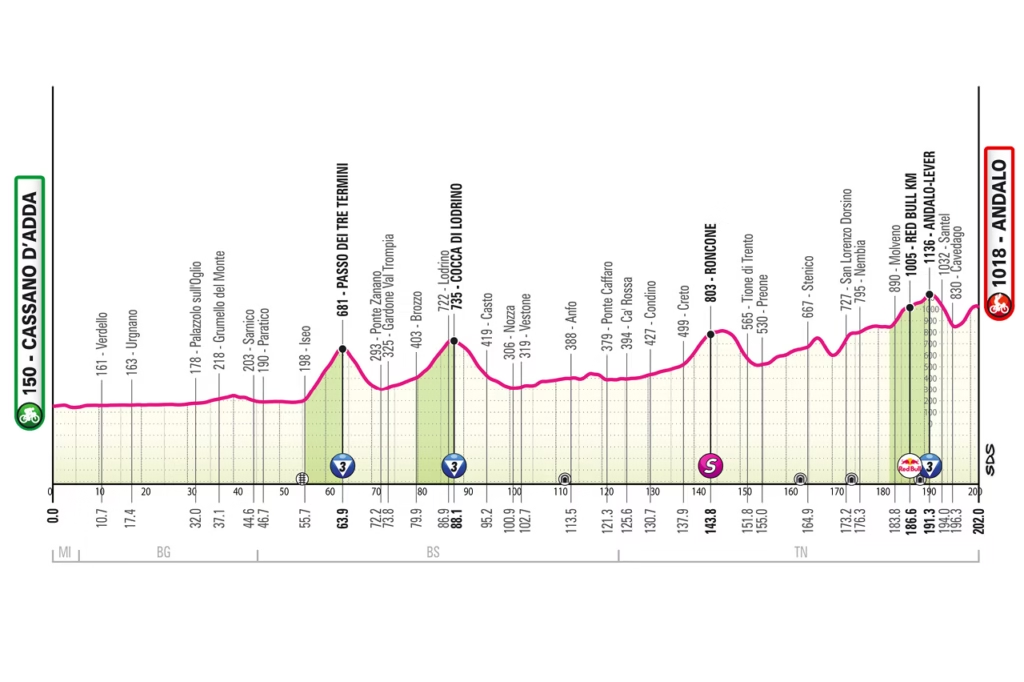
Giro d’Italia 2026 stage 17 route
Stage 17 runs from Cassano d’Adda to Andalo over 202km. The start town sits east of Milan, close to the Adda River, and the opening part of the route is relatively gentle compared with what follows. The first 55km are largely flat as the race heads north-east towards the first climbs of the day.
The profile changes with the Passo dei Tre Termini, a category 3 climb placed after around 64km. It is followed by another category 3 climb, the Cocca di Lodrino, after around 88km. Neither climb is likely to decide the stage outright, but together they should help form or reshape the day’s breakaway.
After those early climbs, the race moves into the Valle del Chiese and gradually begins to feel more mountainous without immediately becoming explosive. The intermediate sprint at Roncone comes after around 144km, before the route continues towards Trentino and the approach to Andalo.
The final 20km are where the stage becomes tactically sharper. The road narrows after Tione di Trento, with more technical sections before the riders reach the Andalo-Lever climb. That late category 3 ascent crests inside the final 10km, making it the most important launch point for the stage win.
For the full shape of the race, ProCyclingUK’s Giro d’Italia 2026 full route guide breaks down how stage 17 fits into the final week.
What’s on offer on stage 17?
- Stage: Stage 17
- Date: Wednesday 27th May
- Route: Cassano d’Adda to Andalo
- Distance: 202km
- Stage type: Hilly to medium mountain
- Elevation gain: around 3,200 metres
- Key climbs: Passo dei Tre Termini, Cocca di Lodrino, Andalo-Lever
- Intermediate sprint: Roncone
- Expected stage start: around 11:10 BST
- Expected finish: around 16:00 BST
The climbs on Giro d’Italia stage 17
The Passo dei Tre Termini is the first categorised climb of the day. Coming after the flatter opening, it should act as the point where the stage properly begins. If the early break has not already formed, this is where stronger puncheurs, climbers and rouleurs may try to force their way clear.
The Cocca di Lodrino follows before the halfway point and adds another layer of difficulty. Its position matters because it comes early enough to encourage a strong move, but not so late that GC teams are forced to take full responsibility. That balance is exactly why the stage looks attractive for a breakaway.
The most important climb is Andalo-Lever. It is not a monster climb, but it comes late enough to decide the stage and steepens the tactical pressure inside the final 15km. The climb is followed by a quick descent and then another uphill push towards the finish. Timing will be crucial. A rider who attacks too early may be brought back before Andalo, but a rider who waits too long may lose the chance to split the front group.
Why stage 17 suits the breakaway
Stage 17 has the classic shape of a late-Giro breakaway day. It is long enough to make control expensive, hilly enough to discourage pure sprinters, and not quite severe enough to force the main GC contenders into a full-scale battle from distance.
After Vingegaard’s performance on stage 16, several teams may be reluctant to spend too much energy chasing if they do not have a realistic chance of changing the overall race. Visma-Lease a Bike have little reason to control for a stage win unless the situation becomes dangerous. Their priority will be keeping Vingegaard safe, avoiding unnecessary stress and making sure no serious GC threat is allowed too much freedom.
That opens the door for riders further down the standings. Teams who have missed stage wins so far will see Andalo as a major opportunity. The right breakaway will need climbing legs, but also enough flat-road strength to survive the long approach. A pure climber may struggle if the move forms early and has to work for more than 150km. A rouleur who cannot handle the final ascent may also run out of road. The ideal rider is somewhere between the two.
Could the GC riders attack?
The general classification riders cannot ignore stage 17, but it does not look like the most obvious day for a major GC ambush. Vingegaard now has enough of a lead to ride defensively, and his rivals may prefer to save their biggest efforts for the harder mountain stages still to come.
That said, the final approach to Andalo is tricky enough to punish poor positioning or hesitation. If a rival team senses weakness, the Andalo-Lever climb gives them a platform to test the maglia rosa group. Even a small attack could force Visma-Lease a Bike to respond, especially if riders such as Gall, Hindley, Thymen Arensman or Derek Gee are still close enough to apply pressure.
The most likely GC scenario is a reduced favourites group arriving behind the breakaway, with small gaps possible but not a complete reshaping of the podium. The bigger risk may come from accumulated fatigue. Stage 16 was short but savage, and stage 17 asks riders to go straight into a 202km day with repeated climbing and a late uphill finish.
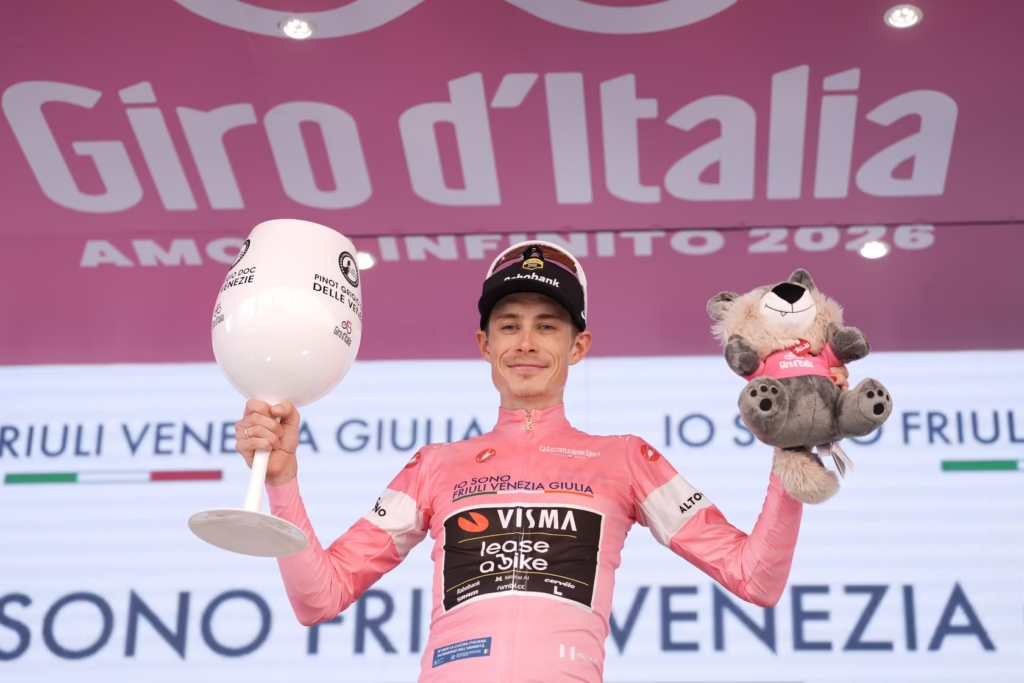 Photo Credit: RCS
Key tactical question: who controls the middle of the stage?
The decisive part of stage 17 may come long before the Andalo-Lever climb. If a strong breakaway goes clear early with no major GC threat, the peloton may allow it to build a significant advantage. If the move contains riders close enough to threaten the top 10 or riders from teams with multiple tactical options, the race could become more complicated.
Visma-Lease a Bike do not need to chase every stage win. That changes the burden of control. Sprint teams will not be interested in the finish, and several GC teams may prefer to conserve riders. That leaves the stage open to teams still chasing their first win or looking for a result after losing GC relevance.
The middle section through the valleys could become a negotiation between breakaway cooperation and peloton hesitation. If the gap goes out too far before the final 50km, the stage winner will almost certainly come from the front. If the peloton keeps the gap manageable, the final climb could become a launchpad for late counter-attacks.
Riders to watch on Giro d’Italia stage 17
Michael Storer looks like an obvious fit for this kind of day. He has the climbing range, the ability to handle a long breakaway and the experience to judge late attacks. If Tudor Pro Cycling Team are given freedom, Storer could be one of the most dangerous riders on the road to Andalo.
Mathys Rondel is another Tudor option who could suit a breakaway stage if given freedom. He has shown enough climbing quality to be dangerous, and the team may have more than one card to play depending on how the early move forms.
Thymen Arensman is more likely to be watched closely because of his GC position, but the stage suits his diesel climbing style. Netcompany INEOS may prefer to keep him protected for harder days, yet a late move on the Andalo approach would not be out of character if the GC group becomes tactical.
Jai Hindley finished third on stage 16 and remains one of the riders most capable of taking time when the road rises. This stage may not be hard enough for a full Hindley assault, but he is strong enough to follow or force a move if the GC contenders decide to race the final climb properly.
Felix Gall has been the most consistent direct challenger to Vingegaard on the hardest climbs. He may not need to attack from distance on this terrain, but Decathlon CMA CGM have reason to stay alert. If the stage becomes more selective than expected, Gall could again be one of the few able to respond.
Derek Gee is another rider who should suit a long, attritional day if the race becomes tactical rather than explosive. He has the engine for a hard stage and the resilience to handle a long-distance effort, although his GC position may limit how much freedom he is allowed.
-
 Photo Credit: A.S.O./Gaëtan Flamme
What stage 17 means for the maglia rosa
Vingegaard’s stage 16 victory changed the feeling of the final week. His lead is now large enough that the race is beginning to look less like a contest for pink and more like a fight for the remaining podium places, unless something dramatic happens in the mountains.
That makes stage 17 a test of control rather than domination. Vingegaard does not need another stage win, although his form suggests he could still take one if the race comes back together. What he needs is a calm day, no mechanical drama, no crash, and no dangerous move involving riders close enough to threaten his race lead.
For everyone else, the question is whether they still believe they can weaken him. Stage 17 is probably not the ideal terrain to do it, but it is a useful day to probe. A small acceleration, an exposed section, a technical descent or a late split can all reveal whether the strongest rider in the race is still carrying the previous day’s effort.
Giro d’Italia 2026 stage 17 prediction
This looks more like a breakaway stage than a GC stage. The distance, early climbs and late uphill finish make it difficult to control, while Vingegaard’s advantage reduces the need for Visma-Lease a Bike to chase aggressively. The winning move may need to form early, but the final selection should come on Andalo-Lever and the uphill run towards the line.
Prediction: Michael Storer
Storer has the right profile for the day: strong enough for the repeated climbs, experienced enough for a long breakaway and dangerous on a finish that rewards timing rather than a pure sprint. If he makes the right move, Andalo is exactly the sort of stage he can win.
How to watch Giro d’Italia 2026 stage 17 in the UK
UK viewers can watch Giro d’Italia 2026 stage 17 live on TNT Sports and HBO Max. The stage is expected to start at around 11:10 BST, with the finish due around 16:00 BST. TNT Sports’ live coverage is listed from 11:20 BST.
For full broadcast details across the race, ProCyclingUK’s how to watch Giro d’Italia 2026 in the UK guide explains the TV and streaming options for British viewers.
Giro d’Italia 2026 stage 17 verdict
Stage 17 is unlikely to be as explosive as the Carì summit finish, but it could still be one of the most tactical days of the final week. The GC contenders have to stay alert, the maglia rosa’s team must manage the race without wasting energy, and the breakaway riders should see a real chance to take the stage.
The final climb to Andalo is not long enough to guarantee huge time gaps, but it is hard enough to decide the day. After Vingegaard’s latest show of strength, the race for pink may be narrowing. The race for stage wins, podium places and final-week redemption is still very much alive.

