
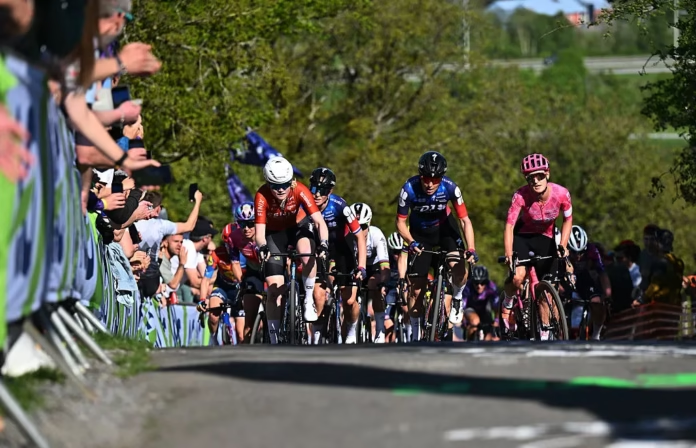
Liège-Bastogne-Liège Femmes 2026 takes place on Sunday, 26th April and covers 156km from Bastogne to Liège. For the 10th edition of the race, the organisers have slightly toughened the route and, in doing so, made the final hour even more interesting. The race already sat at the more selective end of the women’s Ardennes block, but this version looks better built to create fatigue before the decisive sequence begins.
For readers looking for a wider context around the race itself, ProCyclingUK also has a beginner’s guide to Liège-Bastogne-Liège Femmes 2026 and a brief history of Liège-Bastogne-Liège Femmes.
What the 2026 route looks like
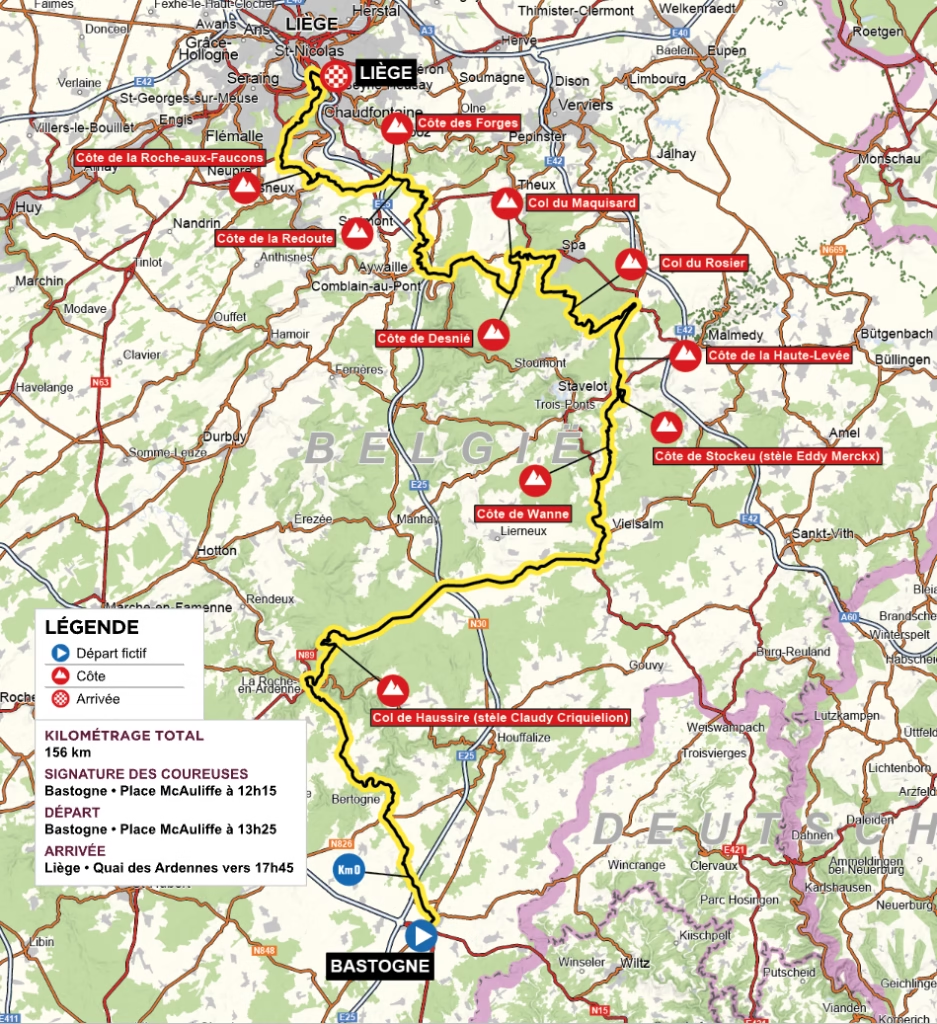
The 2026 course runs from Bastogne to Liège over 156km and includes ten classified climbs. That is enough on its own to make this a draining race, but the more important detail is how those climbs are arranged. Liège-Bastogne-Liège Femmes has never been only about one final uphill burst. It is a race that rewards riders who can absorb repeated efforts, stay calm through the constant changes in rhythm, and still have the judgement to attack at the right moment.
The opening phase should still be controlled compared with what comes later, but it is not soft. The race begins to take shape through the Col de Haussire and then through the middle section of the course, where Wanne, Stockeu, Haute-Levée and the Rosier steadily wear the field down. By the time the riders head into the final run of climbs, many domestiques will already be gone and the strongest teams will be trying to keep more than one option alive.
That broader Ardennes context matters too. If you have followed the earlier races in this block, the shape of this route makes sense alongside the Amstel Gold Race Women 2026 route guide and the La Flèche Wallonne Femmes 2026 route guide. Amstel is more open and tactical across repeated shorter climbs, Flèche is built around one famous finish, and Liège usually feels like the most complete test of the three.
The classified climbs on the route
The ten classified climbs on the Liège-Bastogne-Liège Femmes 2026 route are:
- Col de Haussire, 3.9km at 6.8%
- Côte de Wanne, 3.6km at 5.1%
- Côte de Stockeu, 1km at 12.5%
- Côte de Haute-Levée, 2.2km at 7.5%
- Col du Rosier, 4.4km at 5.9%
- Col du Maquisard, 2.4km at 5.7%
- Côte de Desnié, 1.6km at 8.1%
- Côte de La Redoute, 1.6km at 9.4%
- Côte des Forges, 1.3km at 7.8%
- Côte de la Roche-aux-Faucons, 1.3km at 11%
The most notable change for 2026 is the addition of the Col du Maquisard and Côte de Desnié before La Redoute. That does not completely reinvent the race, but it does make the route feel more layered. Instead of everything building in a straight line towards La Redoute as the first major flashpoint of the finale, the race now gets a more demanding run-in that should strip away support riders and expose anyone who is even slightly under level.
Where Liège-Bastogne-Liège Femmes 2026 will be decided
La Redoute remains the symbolic centre of the race. It is still the climb that carries the most emotional weight, and it is still one of the places where the favourites are most likely to show themselves. Coming with 33.9km left, it is close enough to the finish to matter immediately but still far enough out that an attack there needs either overwhelming strength or the right tactical support behind it.
That is why La Redoute is often more important as a sorting point than a finishing move. It can expose who is strong, who is isolated, and which teams still have multiple cards to play. Once the race leaves that climb, the margin for error shrinks quickly.
Côte des Forges follows at 23.2km to go and may prove more important than it first appears. It does not have the reputation of the bigger named climbs, but it comes at exactly the point where chases can begin to break down. A rider who is dangling after La Redoute may finally lose contact here, and a small front group can start to settle if there is hesitation behind.
Then comes the decisive climb in most editions, Côte de la Roche-aux-Faucons, with 13.3km remaining. This is usually the last proper climbing launchpad of Liège-Bastogne-Liège Femmes. At 1.3km at 11 per cent, it is steep enough to create real gaps between the very best riders, and close enough to Liège that a successful move there is often race-winning. If the strongest rider wants to go alone, this is the most likely place.
How the race could unfold
The 2026 route points towards a more selective Liège-Bastogne-Liège Femmes than ever. The added Maquisard-Desnié section should make the approach to La Redoute harder, which in turn should mean a smaller and more vulnerable lead group by the time the race reaches its best-known climbs.
That does not automatically mean a solo winner. Liège can still produce a small-group finish when the strongest riders hesitate or when several contenders arrive at Roche-aux-Faucons close enough in level that nobody wants to do too much too early. A two or three-rider move is entirely plausible, especially if one team can place more than one rider into the decisive phase and force others to chase.
What looks much less likely is a larger sprint from a heavily reduced bunch. This route is built to reward riders who can climb repeatedly, recover quickly and make sharp decisions under fatigue. Pure sprinters are unlikely to survive unless they are also among the strongest puncheurs in the field.
-
 Photo Credit: Getty


Why the 2026 change matters
It is a sensible adjustment rather than a dramatic redesign. Liège-Bastogne-Liège Femmes already had a strong identity, so the organisers did not need to rebuild it. What they have done instead is make the race a little more coherent in the way it reaches its decisive phase. By adding extra difficulty before La Redoute, they have increased the chance that the final battle is fought between riders who have already been properly tested.
That should make the race harder to control and more rewarding for riders willing to race aggressively. It also reinforces Liège’s place as the most complete of the women’s Ardennes Classics. Amstel Gold Race Women asks questions all day, La Flèche Wallonne Femmes narrows everything towards the Mur, but Liège-Bastogne-Liège Femmes remains the race that most often feels won through accumulation of effort, judgement and resilience.
Liège-Bastogne-Liège Femmes 2026 route at a glance
- Start: Bastogne
- Finish: Liège
- Distance: 156km
- Route type: hilly Ardennes Classic
- Classified climbs: 10
- Key finale climbs: La Redoute, Côte des Forges, Roche-aux-Faucons
- Main 2026 route change: Col du Maquisard and Côte de Desnié added before La Redoute

