
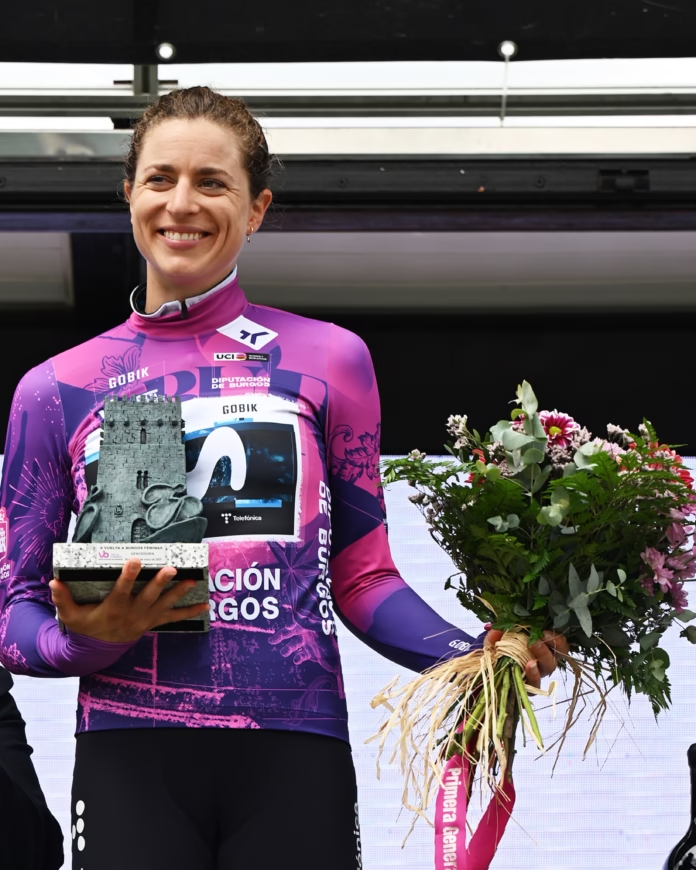
Vuelta a Burgos Feminas 2026 runs from Thursday 21st May to Sunday 24th May and is part of the UCI Women’s WorldTour. It lasts four days, which makes it shorter than the biggest women’s stage races, but that does not make it a minor event. It sits in an important place on the calendar, comes at a point when form is sharpening across the peloton, and has become one of the key Spanish stage races of the women’s season.
For newer fans, it is a race that is quite easy to understand once you know where it fits. It comes after La Vuelta Femenina and Itzulia Women, but before the Giro d’Italia Women, so it often works as both a target in its own right and a useful reference point for riders heading into the next phase of the season. That wider stage-race context is one reason it sits naturally alongside ProCyclingUK’s Beginner’s guide to La Vuelta Femenina 2026, the Beginner’s guide to Itzulia Women 2026 and the site’s Giro d’Italia Women coverage.
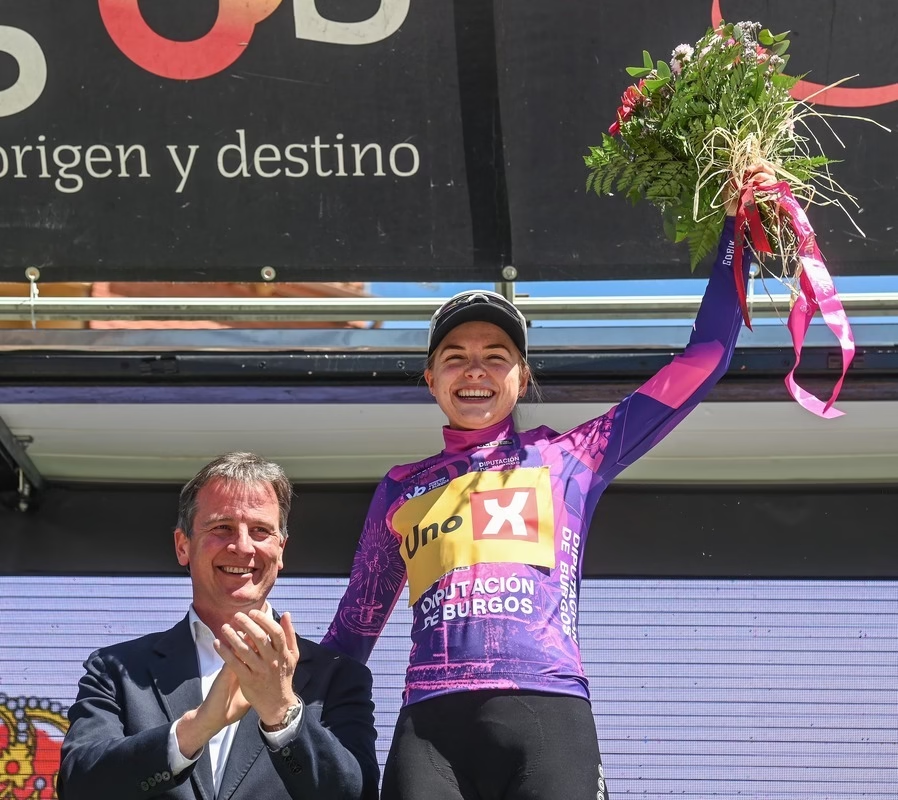 Photo Credit: Vuelta a Burgos
What kind of race is Vuelta a Burgos Feminas?
This is a four-stage women’s stage race held in the province of Burgos in northern Spain. It is part of the Women’s WorldTour, which means it sits at the top level of the women’s road calendar. The race began at national level in 2015, moved up through the ranks and joined the Women’s WorldTour in 2019.
The race is usually best understood as a compact stage race for strong all-rounders, climbers and riders who can deal with varied terrain over several days. It is not normally a pure sprinters’ race, but it is not built like a high-mountain Grand Tour either. That balance is a large part of its appeal. The short format leaves little room to recover from a bad day, and one strong stage can change the whole race.
Where does it sit in the women’s calendar?
The calendar position is one of the first things worth knowing. In 2026, Vuelta a Burgos Feminas comes immediately after Itzulia Women and just before the Giro d’Italia Women. That gives it a useful role in the season. Some riders arrive with form already built from the spring and from the earlier Spanish block. Others use it as one final high-level stage-racing test before the Giro.
That timing also helps explain why the field is often stronger than casual viewers might expect. Burgos is not just filling space in the calendar. It sits in a very active part of the season, and that gives the race more weight than a four-day format might suggest at first glance.

How long is the race?
Vuelta a Burgos Feminas 2026 lasts four days, from Thursday 21st May to Sunday 24th May, with four stages in total. There is no long opening team time trial or week-long build. It is a short, concentrated race, and that means the action usually comes quickly. A rider who loses time early may not get many chances to repair the damage.
That short format is one reason the race can be easier for newer fans to follow than a longer Grand Tour. You do not need to hold a week and a half of storylines in your head. The shape of the race tends to become clear quickly.
What is the route usually like?
Full stage details for the 2026 edition may still emerge closer to the race, but the profile is already familiar from how Vuelta a Burgos Feminas has developed in recent seasons. It is held in Castile and León and is generally made up of flat and hilly stages rather than a race designed entirely around extreme high mountains.
That usually creates a more balanced race than people might assume from the word Spain. Burgos often gives opportunities to different rider types across the four days, but the overall classification still tends to favour the strongest complete rider rather than a pure sprinter. Riders need to be able to climb, handle changes in terrain and finish stages consistently well.
For readers wanting a better feel for how terrain shapes race outcomes, this guide pairs well with ProCyclingUK’s What do the jerseys mean in women’s stage races? and How women’s cycling team tactics work.
What sort of rider usually wins?
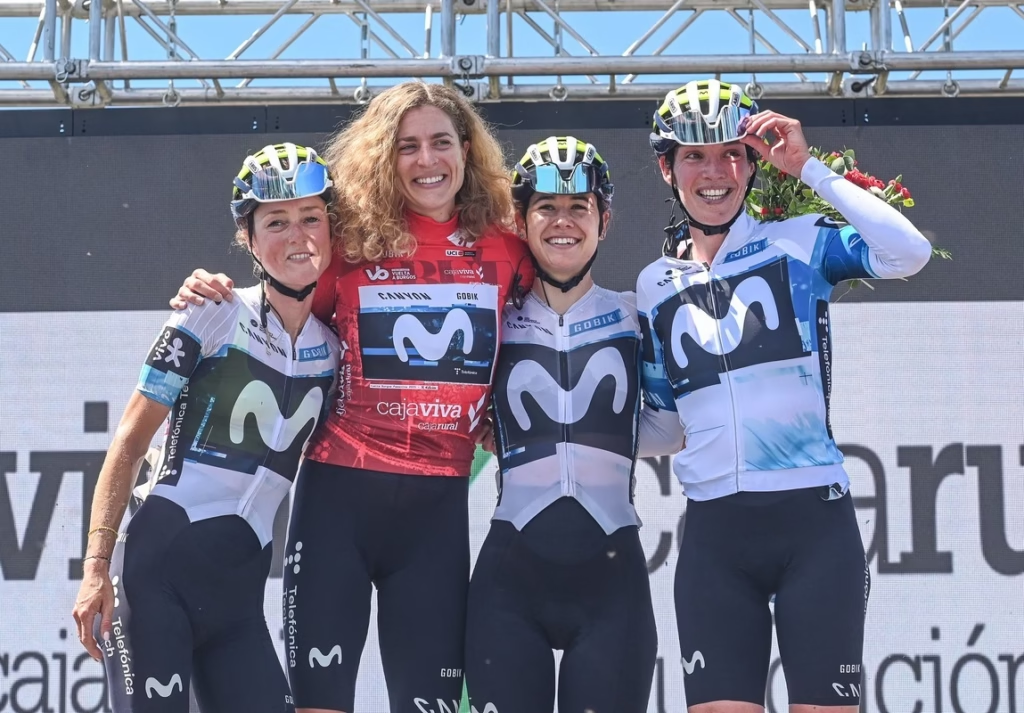
Recent winners give a good guide to the type of rider this race suits. Marlen Reusser won in 2025, Demi Vollering won in both 2023 and 2024, Juliette Labous won in 2022, and Anna van der Breggen won in 2021. That is a list built around high-level stage racers and strong climbers or puncheurs rather than pure specialists.
That tells newer viewers quite a lot. Burgos is not normally decided by one type of stage alone. It rewards riders who can stay near the front every day and then make the difference when the terrain becomes more selective. If you are strong uphill, tactically sharp and hard to drop across four days, you are usually the sort of rider who thrives here.
That also helps place Burgos in the wider WorldTour picture. It is not just about who is fastest on one afternoon. It is about who can control a short race across several different demands.
-
 Photo Credit: Cor Vos
Why is it worth watching?
Vuelta a Burgos Feminas tends to matter because it sits between bigger storylines. It is important in its own right, but it also helps explain what the rest of the season might look like. Riders heading towards the Giro d’Italia Women or the summer stage-race block can show real form here, and the short format usually means teams race with more urgency than they might in a longer event.
It is also a good race for newer fans because the format is compact, the level is high and the tactical picture is usually clear quite quickly. You are watching a WorldTour race, but not one so long that the story disappears into repetition.
Readers who want to follow that part of the calendar more closely can also look at ProCyclingUK’s Vuelta a Burgos Feminas coverage and broader women’s cycling TV guide hub for the surrounding races.
The simple version
Vuelta a Burgos Feminas 2026 is a four-stage Women’s WorldTour race in Spain running from Thursday 21st May to Sunday 24th May. It sits between Itzulia Women and the Giro d’Italia Women, and it usually suits strong all-rounders, climbers and stage racers rather than pure sprinters. Recent winners such as Marlen Reusser, Demi Vollering, Juliette Labous and Anna van der Breggen show the kind of rider profile the race tends to reward.

