

La Vuelta Femenina 2026 runs from Sunday 3rd May to Saturday 9th May and covers seven stages from Galicia to Asturias. The route opens with four hilly days in the north west, gives the sprinters their clearest chance on stage 5, then turns sharply uphill with summit finishes at Les Praeres and L’Angliru to decide the general classification. Across the week, the race adds up to 815km.
That gives the race a very clear shape. This is not a Vuelta built around a team time trial opening or a long run of sprint stages before the mountains. Instead, it starts with repeated pressure, short climbs and awkward terrain, then saves the two hardest days for Asturias at the end. The route is more selective than the single flat stage label might suggest, because even the so-called hilly days are full of leg-sapping roads and nervous finales.
For readers wanting wider context around the race, this guide sits naturally alongside ProCyclingUK’s Beginner’s guide to La Vuelta Femenina 2026, the What do the jerseys mean in women’s stage races? explainer and the site’s broader Giro d’Italia Women coverage.
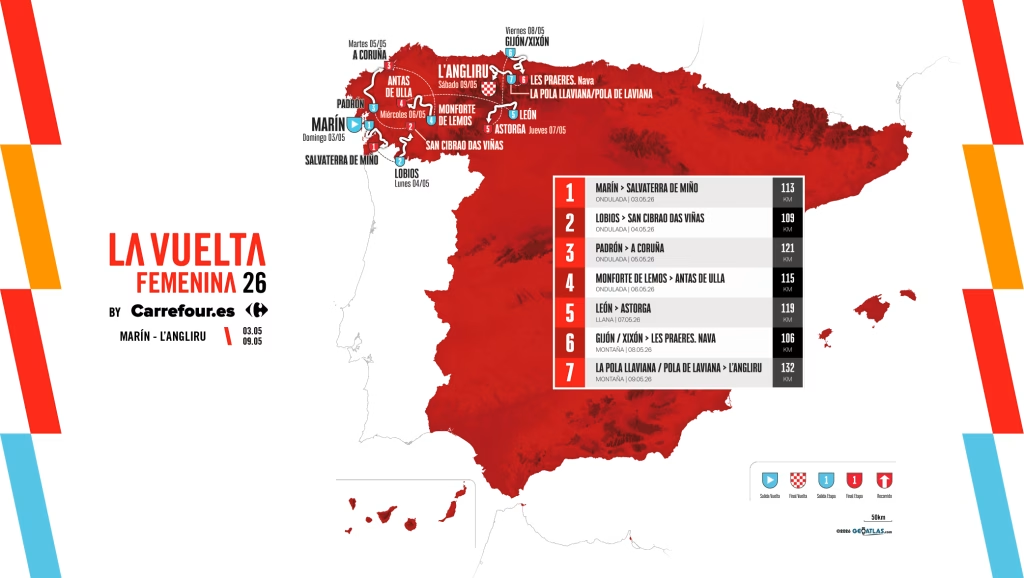
The overall shape of the race
The 2026 edition begins in Galicia with stages from Marín, Lobios, Padrón and Monforte de Lemos before moving east into León and then north into Asturias for the closing mountain block. Stages 1 to 4 are all officially marked as hilly, stage 5 is the only flat day, and stages 6 and 7 are both mountain stages. The final weekend is built around Les Praeres and then L’Angliru, with the race’s official presentation making it clear that the last day is the longest and most demanding stage of the edition.
That matters tactically because the overall contenders do not get much space to settle into the race. The first four days are not summit-finish mountain stages, but they are hard enough to create stress, gaps through positioning and cumulative fatigue. Then, once the race reaches Asturias, the organisers remove any ambiguity. Les Praeres should show which riders can genuinely win overall, while L’Angliru is built to decide the final winner.
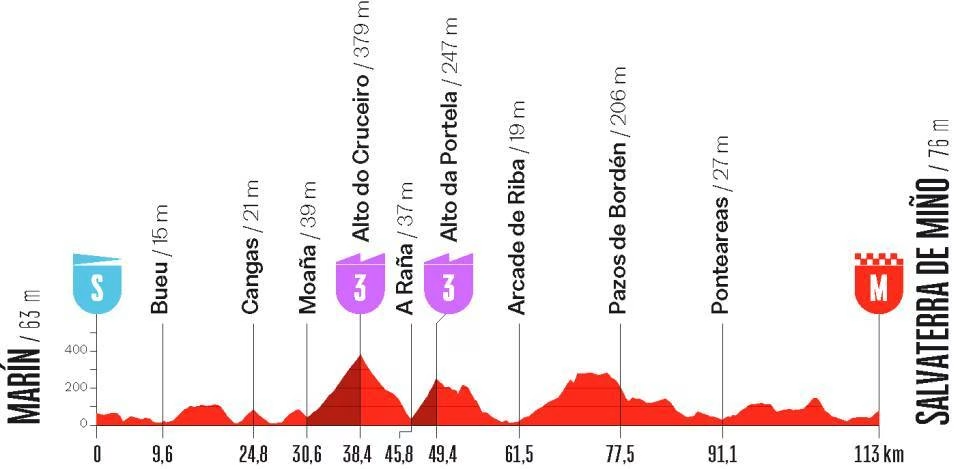
Stage 1 – Marín to Salvaterra de Miño, 113km
The race opens in Galicia with a hilly 113km stage from Marín to Salvaterra de Miño. It is the sort of opening day that should immediately put the peloton under pressure. The terrain is full of short climbs and awkward roads, and the finish comes after a final uphill rise.
This is a good opening day for a strong puncheur or a sprinter who can handle climbing. It is not the sort of first stage where a pure flat-finisher can simply sit in and wait. The race should start aggressively, and the first red jersey is likely to go to a rider with both punch and positioning rather than just raw speed.
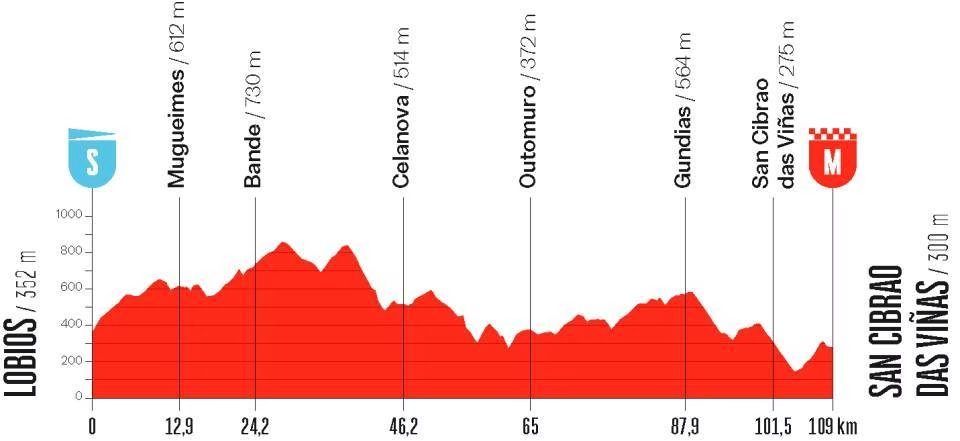
Stage 2 – Lobios to San Cibrao das Viñas, 109km
Stage 2 is another hilly Galician day, 109km from Lobios to San Cibrao das Viñas. There are no classified climbs, but that does not make it an easy stage. The terrain keeps rising and falling, and there are very few genuinely flat sections where the bunch can relax.
This looks like one of those stages where the label hilly only tells part of the story. There may not be a huge mountain, but the constant changes of rhythm should keep the race under pressure. A reduced sprint feels more likely than a full bunch finish, and it is also a day where a strong break could become dangerous if the peloton misjudges the terrain.
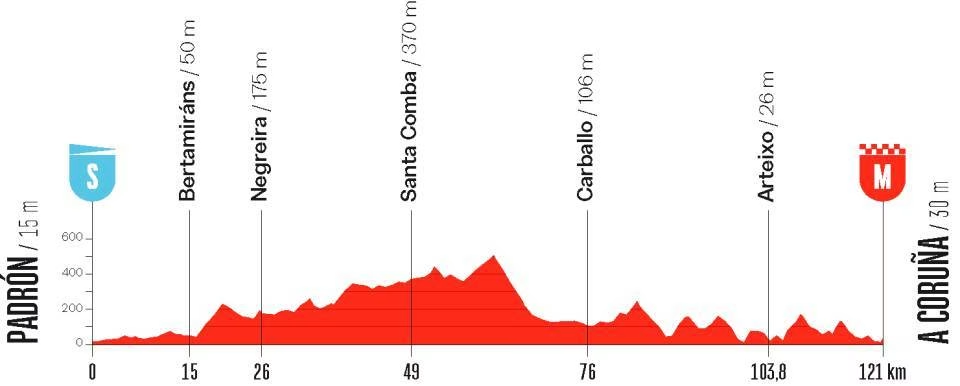
Stage 3 – Padrón to A Coruña, 121km
The third stage runs 121km from Padrón to A Coruña and brings the riders towards the coast. It is another rolling day, but with a slightly different feel because positioning into the finish should matter just as much as the climbing. The run-in near the shoreline and the final kilometres in A Coruña give the stage a nervous, classic-style shape.
This is probably the most obviously one-day-race style stage of the Galician block. The profile is still lumpy, but the coastline and final positioning battle should be just as important as the climbs themselves. Fast finishers can win here, but only if their teams still have enough control left to deliver them in good order.
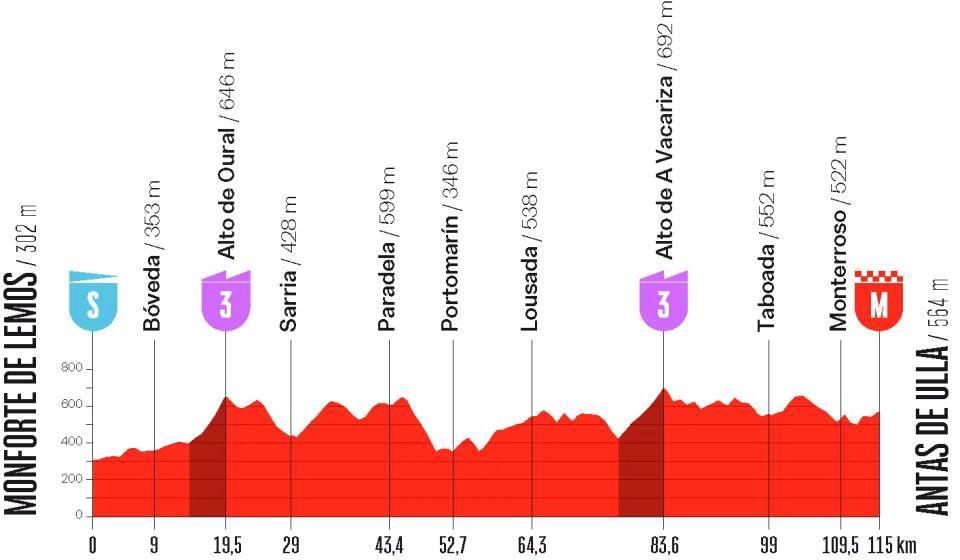
Stage 4 – Monforte de Lemos to Antas de Ulla, 115km
Stage 4 stays in Galicia for 115km from Monforte de Lemos to Antas de Ulla. It includes two classified climbs and again looks designed to stop the race becoming too comfortable before the move east towards León. The roads should be twisting enough to keep the bunch stretched and alert.
This stage feels like a transition point in the race. It is still not a pure GC summit finish, but it looks harder and more selective than the distance alone suggests. Riders who have survived the first three days well can keep building pressure here, and any team chasing the mountains jersey should be very active.
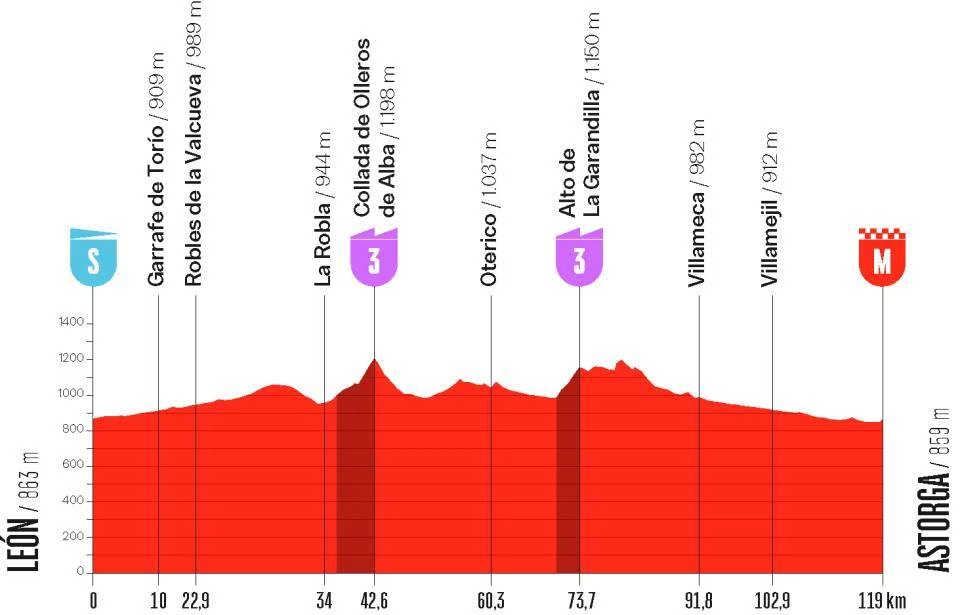
Stage 5 – León to Astorga, 119km
The fifth stage is the one true sprint opportunity on paper. It covers 119km from León to Astorga and is the only stage officially labelled flat. Even here, though, it does not look entirely gentle. The roads are open enough that wind could become part of the story, and that should keep the finale tense.
So this is the day the pure sprinters will circle, but it may not be as straightforward as the flat label suggests. If the wind gets involved late, the finale could still become nervous and selective. It remains the best chance for the fastest riders, but it does not look like a stage where teams can switch off until the final kilometre.
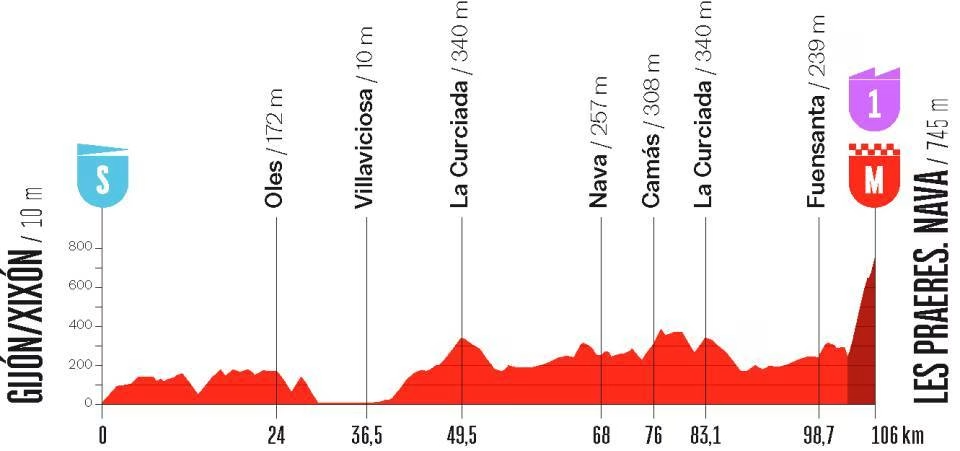
Stage 6 – Gijón/Xixón to Les Praeres, 106km
Stage 6 is where the race changes completely. The shortest stage of the week at 106km starts in Gijón/Xixón, follows part of the Asturian coast, then turns inland for the finish at Les Praeres.
This is one of the key days of the whole race. Les Praeres is brutally steep, short enough to reward explosive climbers as well as pure GC strength, and severe enough to expose anyone who arrives even slightly below level. If the overall is still relatively tight after the Galician block and Astorga, this is the point where the hierarchy should become much clearer.
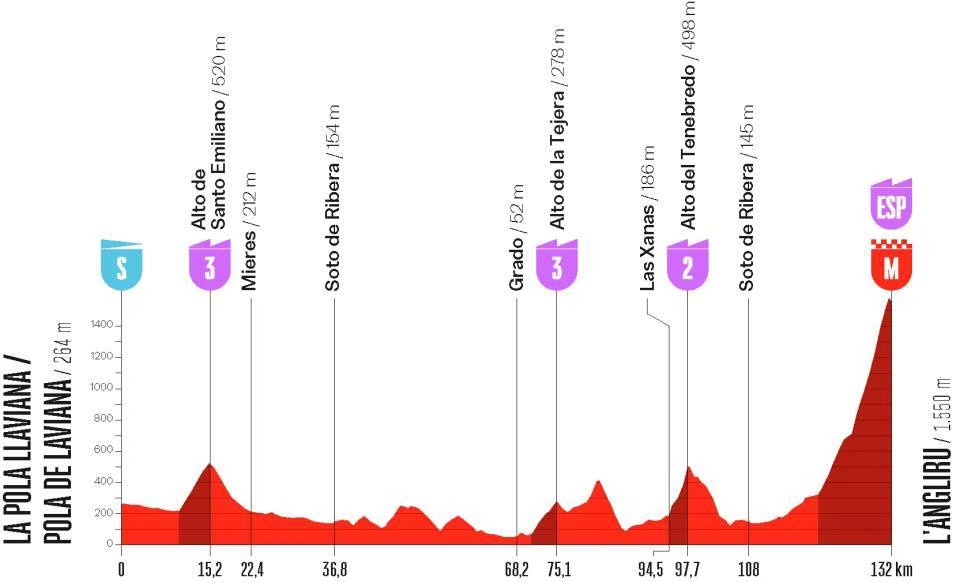
Stage 7 – La Pola Llaviana/Pola de Laviana to L’Angliru, 132km
The final stage is 132km from La Pola Llaviana, also listed as Pola de Laviana, to L’Angliru. It is the edition’s longest and most demanding stage, and it closes on one of the most famous climbs in Spanish cycling.
This is the sort of finale that gives the race real stature. Angliru is not just a hard climb, it is one of the defining names of the sport in Spain. Ending the race there means the organisers are committing fully to a mountain-climax structure rather than a more balanced or ambiguous finish. If the gaps are small after Les Praeres, the final overall winner may not be decided until the last few kilometres of the race.
What the full route tells us about the race
The clearest thing about the 2026 route is that it is not built for pure sprinters or for riders who need a long flat start to settle into a stage race. The opening four hilly stages should keep the race under tension from the beginning, stage 5 offers one obvious sprint day, and then the final weekend is pure climbing selection. That points towards a winner who can cope with repeated daily pressure as well as produce high-end climbing on steep summit finishes.
It also means the race could be more open than a route with multiple long mountain stages from the start. Galicia gives attackers, puncheurs and reduced-group finishers real opportunities before the climbers take over. Then Asturias should turn the whole week into a proper GC fight. It is a smart route in that sense: varied enough to make the early days matter, but hard enough at the end to ensure the overall winner has earned it in decisive terrain.
That structure is one reason La Vuelta Femenina continues to grow in importance. It now feels like a race that can showcase several kinds of rider while still producing a clear and worthy overall winner. Readers wanting the stage-racing context beyond this week can also pair this guide with ProCyclingUK’s Beginner’s guide to Vuelta a Burgos Feminas 2026 and What do the jerseys mean in women’s stage races?.
-
 Photo Credit: Getty

La Vuelta Femenina 2026 route at a glance
Stage 1 – Marín to Salvaterra de Miño, 113km, hilly
Stage 2 – Lobios to San Cibrao das Viñas, 109km, hilly
Stage 3 – Padrón to A Coruña, 121km, hilly
Stage 4 – Monforte de Lemos to Antas de Ulla, 115km, hilly
Stage 5 – León to Astorga, 119km, flat
Stage 6 – Gijón/Xixón to Les Praeres, 106km, mountain
Stage 7 – La Pola Llaviana/Pola de Laviana to L’Angliru, 132km, mountain

