Amstel Gold Race 2026 takes place on Sunday 19th April and returns as one of the key transition points between the cobbled Classics and the Ardennes block. It sits in that useful middle ground where pure puncheurs, riders coming out of the northern races with strong condition, and stage-race men with sharp one-day legs can all make a case for themselves. That is one reason the start list usually feels deeper here than in some of the more specialised spring races.
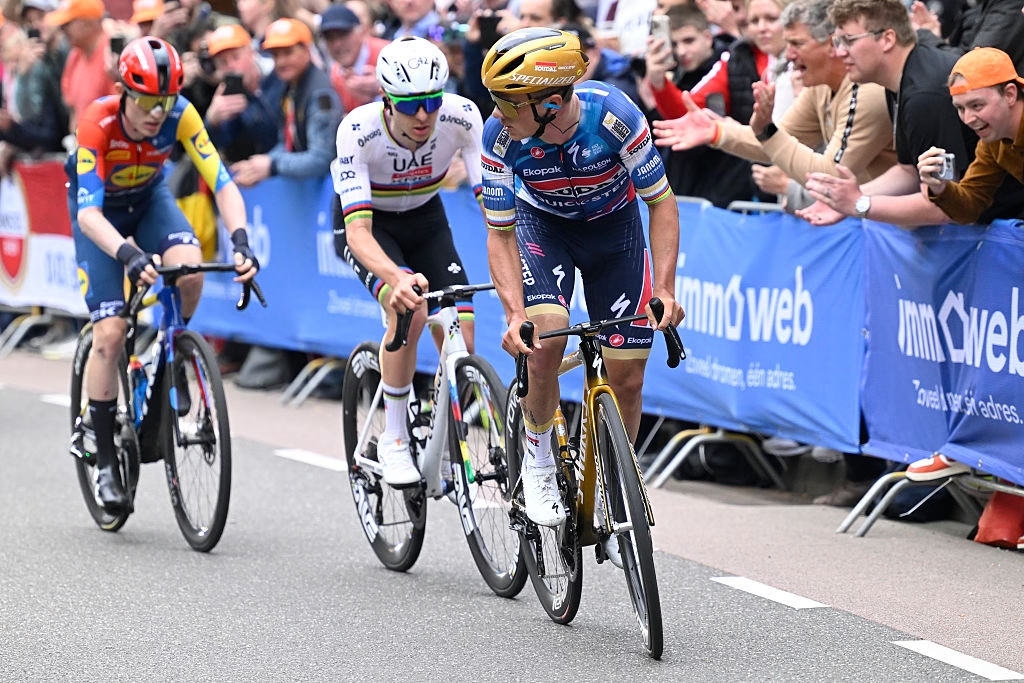
The 2026 edition also comes with a little more intrigue than usual because Amstel rarely belongs fully to one rider type. The route asks for repeated efforts, race intelligence and the ability to judge the final sequence properly rather than simply survive one famous climb. That tends to make the line-up especially interesting, because riders who look slightly below the top rank on paper can still become central once the race starts breaking apart. Defending champion Mattias Skjelmose adds another layer to that picture after his 2025 victory, which keeps Lidl-Trek naturally near the centre of the pre-race conversation.
For readers following the wider race week, this piece pairs naturally with the Men’s Amstel Gold Race 2026 route guide, Men’s Amstel Gold Race 2026 contenders preview and How to watch Men’s Amstel Gold Race 2026 in the UK.
Why the Amstel Gold Race start list usually matters more than most
A lot of start list pieces are really just name collections. Amstel Gold Race usually gives you something more useful than that. The repeated climbs and awkward rhythm mean teams often arrive with more than one realistic card, and that makes the start list a better clue to how the race might unfold than in a simpler sprint Classic or a one-day race built around one final effort.
That is why this race tends to reward teams that can still place two or three riders near the front deep into the day. If the line-up is strong enough, Amstel can become a numbers race just as much as a legs race. Riders who can survive the final sequence around the Cauberg, Geulhemmerberg and Bemelerberg are usually the ones who matter, but the teams around them still shape how they get there.
What the line-up should tell you
The full start list for Amstel Gold Race 2026 gives the clearest snapshot of which teams are treating this as a major target and which riders are using it as part of a bigger Ardennes week. That distinction matters. Some riders will arrive needing to win here. Others will arrive wanting to confirm condition ahead of La Flèche Wallonne and Liège-Bastogne-Liège.
That is one reason the men’s Amstel Gold Race often feels slightly less predictable than the biggest cobbled Monuments. The line-up can include genuine favourites, aggressive outsiders, stage-race riders with one-day potential and puncheurs who fit this exact terrain better than any race still to come.
 Photo Credit: Getty
Full start list for Amstel Gold Race 2026
Use the start list embed below to view the full confirmed line-up for the 2026 men’s race.
Data powered by FirstCycling.com
What matters once the start list is final
Once the line-up is fully confirmed, the real value is not just seeing who is there. It is seeing which teams have depth.
A team with one obvious leader can still win Amstel Gold Race, but a team with two or three riders capable of surviving late into the race is usually in a much stronger tactical position. That is especially true on this route, where the final hour often becomes a sequence of partial selections rather than one clean split. If one rider attacks and another can sit behind, the race becomes harder to read immediately.
That is why the start list matters here more than in many other one-day races. It is not just a roll call. It is the first clue to how the finale may be shaped.
The bigger picture around Amstel Gold Race 2026
Amstel Gold Race sits in a very useful place on the calendar. It comes before La Flèche Wallonne and Liège-Bastogne-Liège, which means this start list is not just about one race. It also gives a strong hint about who is carrying momentum into the full Ardennes week.
That wider context is what makes the race so interesting. Amstel is often the point where the spring changes tone. The cobbled specialists begin to give way to the sharper climbers and puncheurs, but there is still enough overlap that the line-up can produce unusual combinations. That is often where the most interesting racing starts.
For more around the same block of races, this also fits naturally with the Men’s Liège-Bastogne-Liège 2026 route guide, How to watch La Flèche Wallonne 2026 in the UK and the broader Men’s cycling route guide hub.