

Men’s Amstel Gold Race 2026 looks like one of the more open major one-day races of this spring, not because there is a shortage of elite names, but because several arrive with slightly different kinds of form. Remco Evenepoel is in the mix, Ben Healy and Romain Grégoire look well suited, Mattias Skjelmose returns as the defending champion, and Team Visma | Lease a Bike has the sort of depth that should matter in a race like this.
That gives the race a very particular feel. Amstel Gold Race rarely belongs fully to one rider type anyway, and this year the likely contenders range from pure puncheurs to riders coming out of the cobbled spring with good condition, to stage-race men sharp enough to handle repeated short climbs. It is that spread which should make the race tactically interesting rather than straightforward.
For readers wanting the wider race context first, this sits naturally alongside ProCyclingUK’s Men’s Liège-Bastogne-Liège 2026 route guide, the How to watch Amstel Gold Race Women 2026 in the UK guide and the Updated season form guide after Women’s Paris-Roubaix 2026, even if the men’s race brings a different mix of rider types.
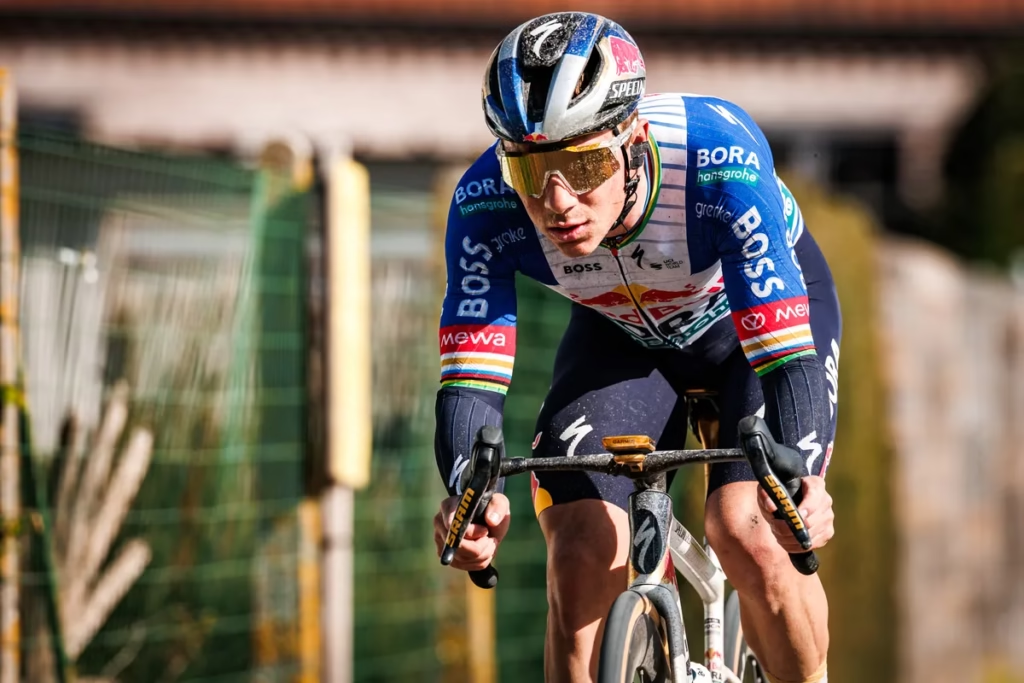 Photo Credit: Getty
Remco Evenepoel
Evenepoel is the most obvious headline name, and in a race like Amstel that matters immediately. He has the engine to make the race selective from distance, the acceleration to go clear on the sharper climbs, and the confidence to ignore more conservative scripts.
The main question is less about suitability and more about timing. Amstel can punish riders who are strong enough to force the race but isolated too early, and the field around him should be deep enough that one long move may not simply scare everyone into submission. Still, if the race becomes a hard uphill drag of repeated efforts and small selections, he is one of the clearest favourites.
Ben Healy
Healy remains one of the most natural Amstel riders in the field. His profile for this race is obvious: aggressive, comfortable attacking from awkward distances, and strong enough on repeated climbs to keep the pressure on more controlled riders.
He is often at his best when the race becomes slightly untidy and the favourites hesitate. Amstel can do exactly that. If a bigger team misjudges the point where it needs to commit, Healy is one of the riders most likely to turn that hesitation into a winning gap.
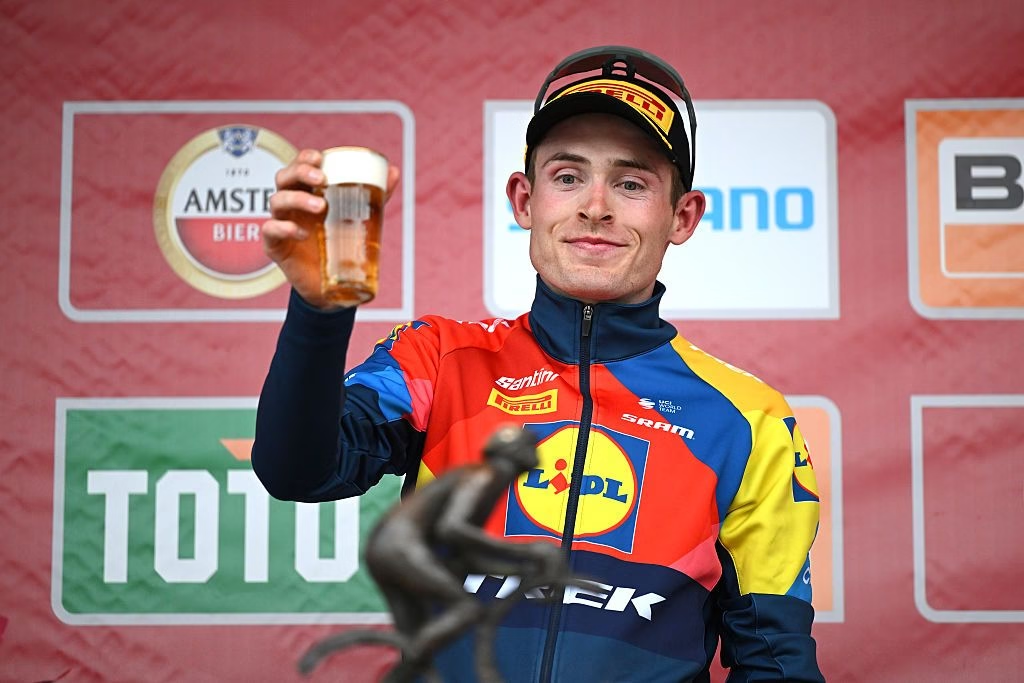 Photo Credit: Getty
Mattias Skjelmose
Skjelmose returns not just as a contender but as the defending champion, which gives him a slightly different place in the race. He knows he can win here, and that matters in a race where timing and patience are often just as important as raw force.
What makes Skjelmose interesting is that he does not need the race to be ridden only one way. He can handle a selective uphill finale, but he is also calm enough to manage a more tactical race if the favourites arrive together later than expected. He is not the loudest favourite, but he is one of the most complete ones.
Matteo Jorgenson
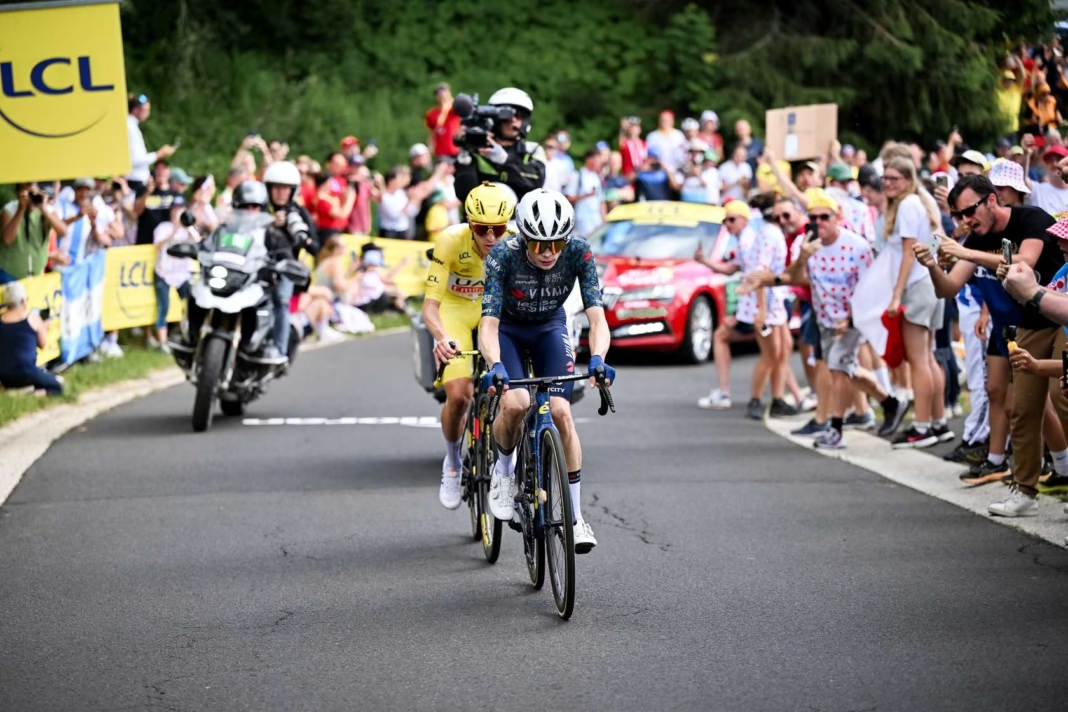
Jorgenson looks like one of the safest high-end picks. He has the skill set Amstel often rewards: strong on rolling terrain, tactically mature, and able to sustain hard efforts without needing the race to explode completely.
He is the kind of rider who can benefit if others mark the flashier names too closely. In that sense, Amstel may suit him even better than some of the bigger Ardennes races that narrow more cleanly to one final climb. If the race is selective but not fully shattered, he becomes very dangerous.
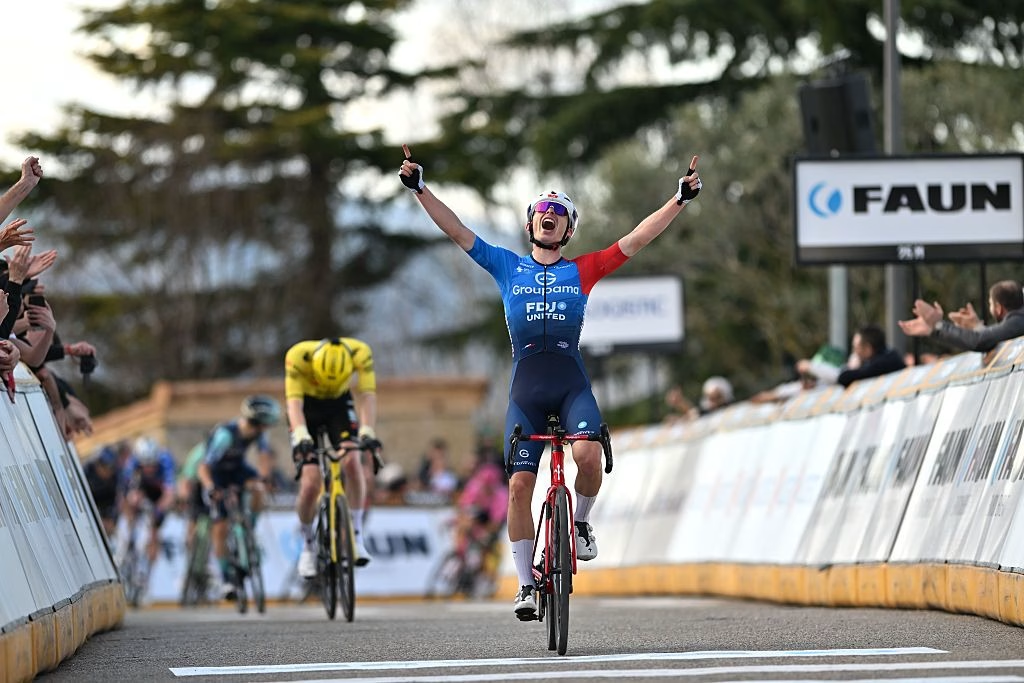 Photo Credit: Getty
Romain Grégoire
Grégoire is one of the more intriguing names because his ceiling in this sort of race is high. He has the punch and the feel for one-day racing to be a factor if the race turns aggressive before the final kilometres.
He is not yet in the category of the most bankable favourite, but Amstel is exactly the sort of race where a rider can move from exciting contender to established major-race threat. If the race opens earlier than expected, Grégoire has the profile to go with it.
Michał Kwiatkowski
Kwiatkowski’s name always carries extra weight here because he is already a two-time winner of the race. Even if he no longer arrives as the single most feared rider in the field, that history matters because this race rewards judgement and timing as much as raw force.
If the pace stalls at the wrong moment or the bigger favourites begin to play games, Kwiatkowski is exactly the sort of rider who can read the finale better than everyone else. He may not be the first name on most lists now, but he is still one of the most credible outsiders among the elite group.
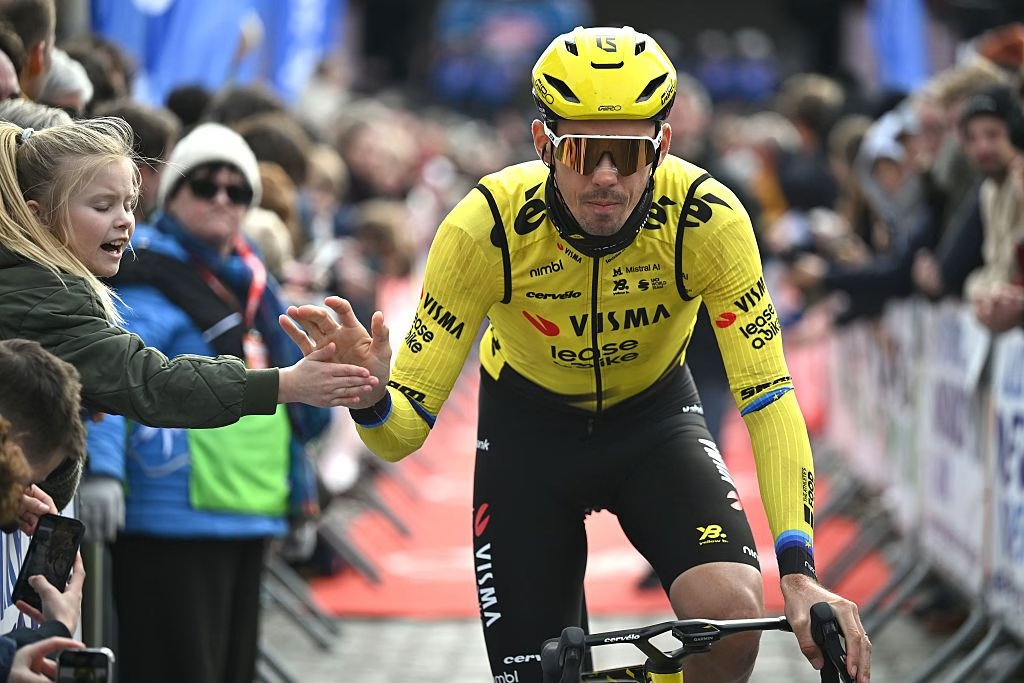
Christophe Laporte
Laporte may start in support of Jorgenson, but Amstel is often the kind of race where a second card becomes a genuine winning card. His versatility and finishing speed make him useful in almost any scenario short of a pure climbers’ race.
If the strongest attackers are brought back late and a small group arrives together, Laporte becomes much more than a helper. That makes him one of the most dangerous secondary names in the field.
Tom Pidcock, if he starts
Pidcock is the rider who could change the shape of the favourites list most dramatically, but he is also the least certain. If he does make the line, his Amstel profile is obvious. He has already won the race before, and this terrain suits his punch, bike handling and ability to accelerate repeatedly.
But until his participation is clearer, it is difficult to place him in the very front rank of this preview with full confidence. If he is healthy and sharp, he belongs near the top of the conversation immediately. If not, Amstel can be too unforgiving a race to bluff your way through.
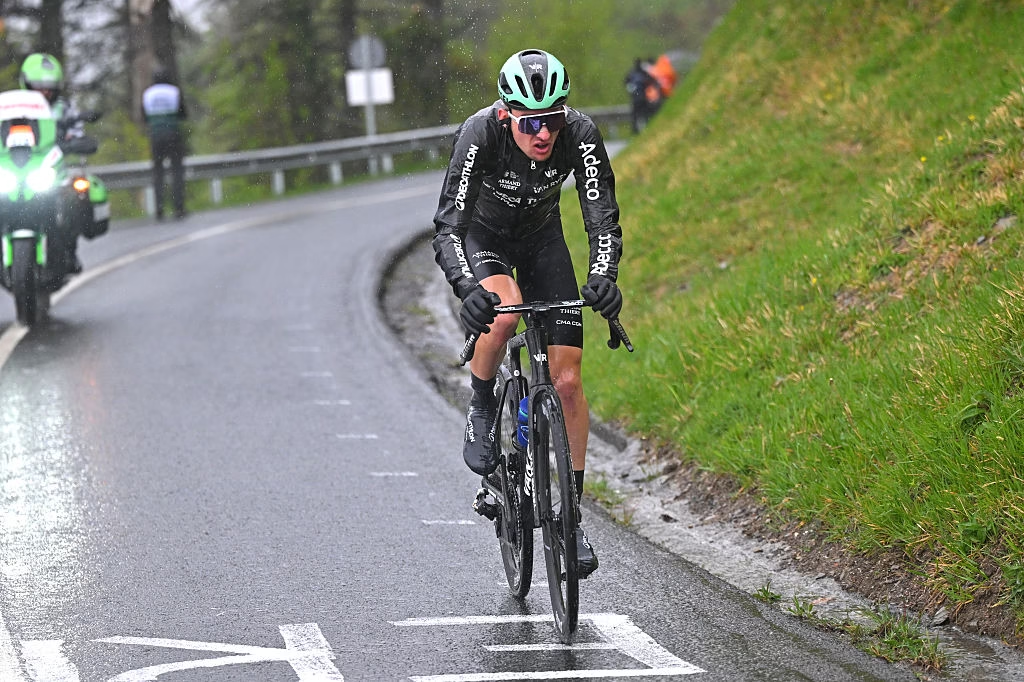 Photo Credit: Getty
Paul Seixas as the younger wildcard
Seixas is not yet the default name for a race like Amstel, but his recent rise has forced him into the wider conversation. Riders who can dominate difficult rolling terrain over a week are not easily dismissed when the road starts going up and down all afternoon.
The caution is obvious. A WorldTour stage race and Amstel Gold Race are not the same problem. But this is the sort of race where a rider can jump a level very quickly if the legs are there. He is not the safest pick, but he is now a much more serious one.
The shape of the race
One of the reasons this contenders list feels so deep is that the strongest riders are unlikely to be isolated early without several teams still having options. That usually matters in Amstel because the race can punish over-commitment.
The best contender is not always the rider with the biggest one-off acceleration, but the one who can keep making the right move as the race shifts from one shape to another. On paper, that slightly favours the more rounded contenders over the pure headline attackers. ProCyclingUK’s Men’s Liège-Bastogne-Liège 2026 route guide gives the natural follow-on from that, because Liège asks a heavier version of some of the same questions.
-
 Photo Credit: A.S.O./Billy Ceusters
The leading contenders
The clearest front-rank names are Evenepoel, Healy, Skjelmose and Jorgenson. Laporte, Grégoire and Kwiatkowski sit just behind that group, while Pidcock belongs near the top only if his recovery moves quickly enough for him to start. Seixas is the fresher wildcard rather than the obvious pick, but he arrives with more momentum than most young riders ever do for a race like this.
Right now, Evenepoel looks like the biggest name, Healy the most naturally dangerous attacker, Skjelmose the most quietly complete contender, and Jorgenson the rider most likely to benefit if the bigger stars watch each other too closely.
If you want to place this race in the wider spring sequence, ProCyclingUK’s How to watch La Flèche Wallonne 2026 in the UK and How to watch Men’s Tour de Romandie 2026 in the UK help show what comes next in the calendar.

