
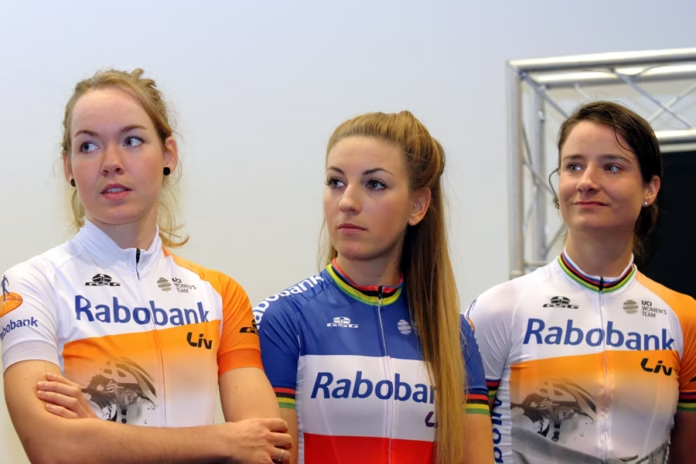
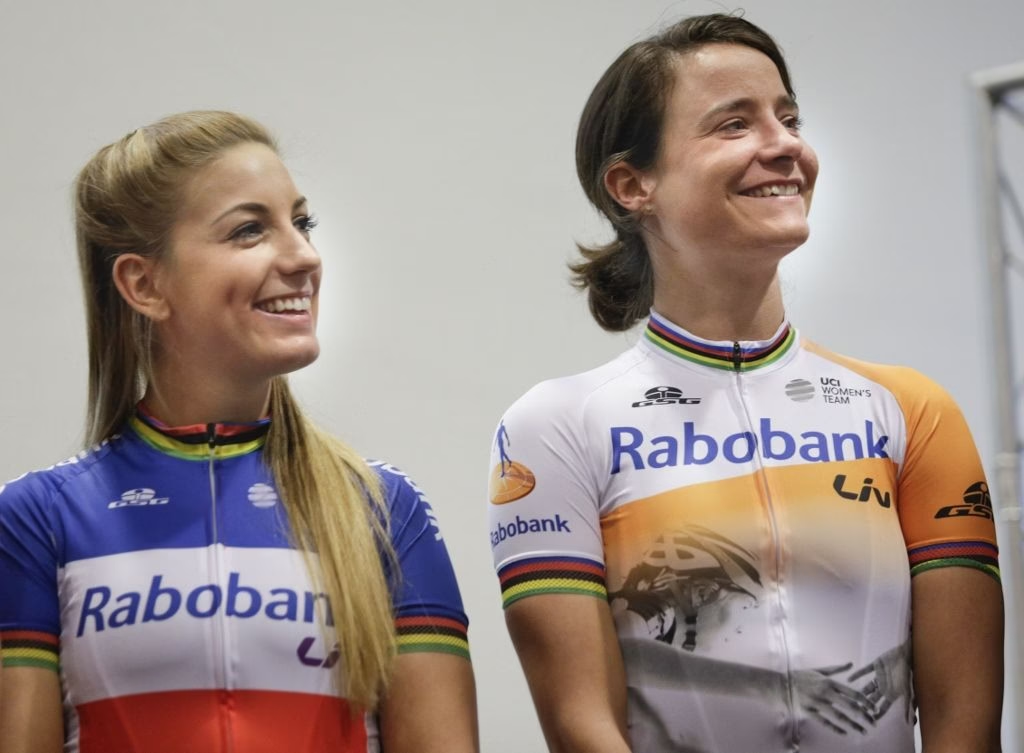
Rabobank Women’s Team was never just a cycling team built around Marianne Vos, even if Vos was the unavoidable centre of gravity. It became one of the defining women’s squads of the early 2010s because it combined Dutch structure, long-term sponsorship, tactical freedom and a rare concentration of future champions. At its peak, the team did not simply win races. It shaped the careers of riders who would go on to define an era.
The Rabobank era formally began in 2012, when the Dutch bank extended its cycling presence into a women’s team built around Vos. That came after the earlier DSB Bank and Nederland Bloeit years, which had already given the project a strong Dutch identity and a deep connection to the national racing structure. Rabobank’s arrival gave the squad sharper visibility, greater commercial weight and the sense of a proper flagship project at a time when women’s cycling still lacked the professional scaffolding it deserved.
It was also a team that reflected the state of the sport at the time. Women’s cycling was still some distance from the Women’s WorldTour structure that exists now, prize money was modest, calendar visibility was inconsistent, and too much of the sport relied on a small number of committed backers. Rabobank did not solve all of that. But for a few years, it gave one of the strongest women’s teams in the world the platform to race with authority.
The outcome was extraordinary. Vos won the Olympic road race and the road world title in 2012, then retained the rainbow jersey in 2013. Pauline Ferrand-Prévot became a world champion while part of the squad. Anna van der Breggen developed from elite prospect into one of the most complete riders in the sport. Lucinda Brand, Annemiek van Vleuten, Katarzyna Niewiadoma and Thalita de Jong all passed through the structure. Few teams have ever produced, refined or housed that much winning capacity in such a short period.
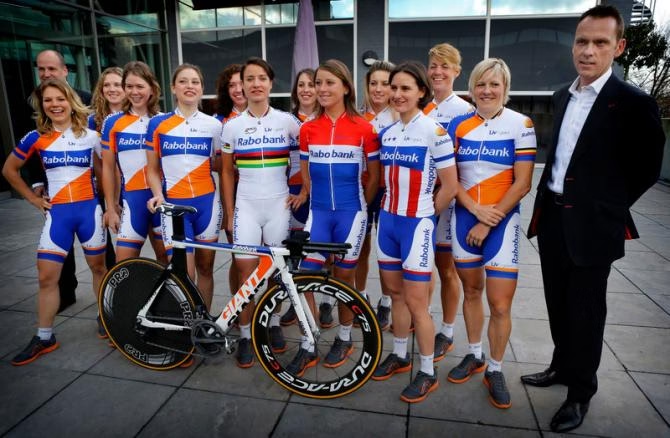
From Nederland Bloeit to Rabobank
The story did not begin from nowhere in 2012. The team’s roots stretched back through earlier Dutch-backed projects, including DSB Bank and Nederland Bloeit, both of which helped establish the structure that Rabobank later elevated. Those teams were important because they gave Vos a home, but also because they built the culture around her rather than treating her as a detachable star.
That distinction matters. Some teams are assembled around whoever is currently winning. Rabobank Women’s Team was more coherent than that. It had a Dutch base, a clear sporting identity, and a development logic that made sense for a national cycling scene with strong domestic depth. The squad could serve Vos while still bringing through riders who were not simply expected to work for her forever.
In that sense, Rabobank arrived at exactly the right moment. Vos was already the dominant all-round cyclist of her generation, but the women’s peloton was becoming broader and harder to control. The calendar was changing. More riders were specialising. The best teams needed more than one way to win. Rabobank gave Vos support, but it also gave the team enough strength to avoid becoming one-dimensional.
By 2012, the project had the feel of a proper Dutch superstructure: Vos as the franchise rider, Rabobank as the established sponsor, Giant and later Liv strongly associated with the equipment side, and a roster that mixed Dutch riders with select international talent. It was not the biggest-budget women’s project by modern standards, but in its own period it stood out because it had stability, identity and a winning habit.
-
 Photo Credit: A.S.O./Billy Ceusters

Marianne Vos gave the team its defining image
Every great team history needs a visual shorthand, and for Rabobank Women’s Team it is Vos in orange, arms raised, carrying the authority of a rider who could win almost anywhere. She was already world-class across road, cyclo-cross and track before the Rabobank period, but the 2012 season gave the team its cleanest public identity.
Vos won the Olympic road race in London in one of the defining performances of her career. It was a victory that mattered beyond the team jersey, because Olympic success gave women’s road racing a visibility that ordinary calendar wins rarely could. Later that year, she also won the road world title in Valkenburg, on home roads, in front of a Dutch crowd that understood exactly what it was watching.
That combination set the tone. Rabobank had backed women’s cycling and immediately found itself attached to the most visible female rider in the world winning the sport’s biggest prizes. Vos then carried the rainbow jersey through 2013, winning another world road title in Florence. By then, the team’s identity was clear: Vos was the reference point, and everyone else had to race against that reality.
Yet Vos was not simply a finisher protected until the final kilometre. Her range shaped the team. She could sprint, climb, attack, race cyclo-cross, survive attritional days and read finales with unusual clarity. That meant Rabobank did not need to race in one fixed pattern. The team could control, provoke or improvise, because Vos herself was so difficult to categorise.
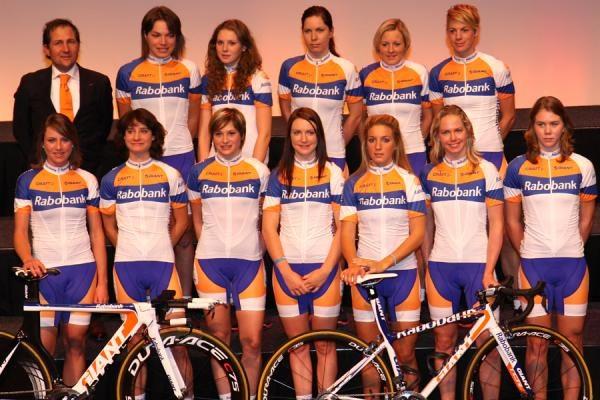
The 2014 roster was close to absurd
The 2014 Rabobank-Liv team has a strong claim to being one of the greatest women’s rosters ever assembled. Vos was still the headline rider, but the depth behind her now looks almost unreasonable with hindsight. Pauline Ferrand-Prévot, Van der Breggen, Van Vleuten, Brand and Niewiadoma all featured in or around this period of the team’s history.
At the time, not all of those names carried the same weight they do now. That is partly what makes the team so interesting. Rabobank was not only collecting already-finished champions. It was creating the conditions in which riders could become them. Van der Breggen was emerging as a rider of enormous tactical and physical range. Niewiadoma was still young, but already clearly more than a standard climbing prospect. Ferrand-Prévot was developing into one of the most versatile riders the sport had seen.
The Giro Rosa that year showed the depth clearly. Vos won the general classification, Ferrand-Prévot finished 2nd, Van der Breggen placed inside the top 10, and Van Vleuten also won a stage. The final podium was not a full Rabobank sweep, with Elisa Longo Borghini taking 3rd, but the broader point still stands. Rabobank could arrive at the biggest stage race on the calendar with several riders capable of shaping the overall contest.
That kind of strength can flatten a race, but it can also reveal the sophistication of a team. Rabobank had riders who could win from different scenarios. Vos could sprint or attack. Van der Breggen could climb, time trial and race from distance. Ferrand-Prévot had explosive range and off-road sharpness. Brand could win hard rolling races and contribute enormous tactical value. Van Vleuten brought endurance and attacking instinct, even before she became the Grand Tour force of later years.
Pauline Ferrand-Prévot added a different kind of brilliance
Ferrand-Prévot’s time in the Rabobank structure is easy to compress into a few big results, but her importance was broader than that. She gave the team a different kind of athletic profile: explosive, technically gifted, adaptable and dangerous across disciplines. In a squad already defined by Vos, that mattered. It meant Rabobank’s identity was not simply Dutch, not simply Vos-led, and not simply road-focused.
Her 2014 season was exceptional. She won La Flèche Wallonne Féminine, took 2nd overall at the Giro Rosa behind Vos, and became road world champion later that year. In the same wider period, she was also building one of the most unusual multi-discipline palmarès in modern cycling. For Rabobank, that added prestige, but also complexity. A team with Vos and Ferrand-Prévot did not have to wait for races to come to it. It could pressure opponents from several angles.
The presence of Ferrand-Prévot also showed one of the project’s strengths: it could attract and support riders whose ambitions went beyond a narrow road calendar. That suited women’s cycling at the time, where many of the best athletes still moved between disciplines more often than their male equivalents. Rabobank’s ability to sit inside that reality, rather than resist it, helped make the team feel more modern than some of its peers.
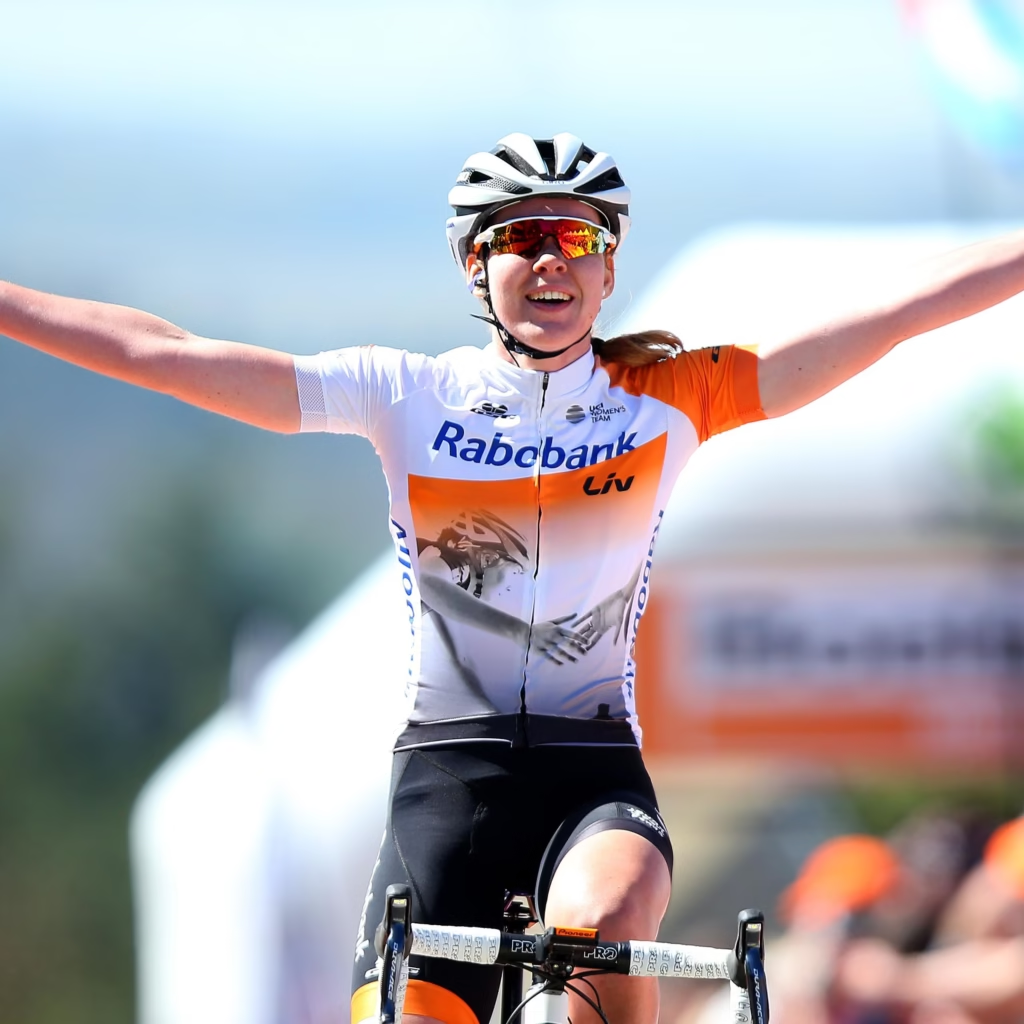 Photo Credit: Getty
Anna van der Breggen became the next great winner
If Vos gave Rabobank its defining image, Van der Breggen gave the project one of its most important development stories. She arrived as a major talent and left as one of the strongest riders in the world. Her later years with Boels-Dolmans and SD Worx-Protime would become part of a different team history, but the Rabobank period was central to her rise.
Van der Breggen’s 2015 season was particularly important. With Vos largely absent from the road because of injury and fatigue, Rabobank needed a new competitive centre. Van der Breggen provided it. She won Omloop Het Nieuwsblad, La Flèche Wallonne Féminine and the Giro Rosa, showing the complete skill set that would define her peak: climbing control, tactical patience, one-day sharpness and stage-race durability.
That season changed how the team was understood. Rabobank was no longer only the Vos team with strong support. It had produced another rider capable of carrying the biggest races. That is the mark of a serious sporting structure. Injuries and form shifts usually expose teams that are too dependent on one star. Rabobank lost its most important rider for much of 2015 and still remained at the centre of the sport.
Van der Breggen’s Olympic road race victory in 2016, while still part of the wider Rabo-Liv period, gave the team another historic association with the biggest stage. Four years after Vos had won in London, another rider from the same structure won Olympic gold in Rio. That continuity is hard to ignore. Rabobank did not merely support champions. It kept producing them.
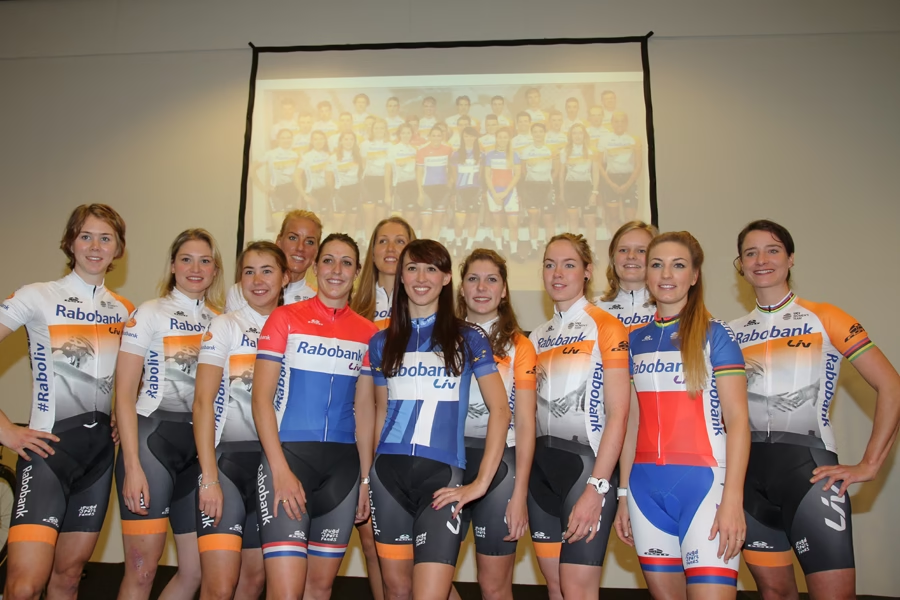
The team was also a bridge for Van Vleuten, Brand and Niewiadoma
The most impressive part of the Rabobank history may not even be the victories won in the jersey. It may be the list of riders who passed through the system and later became central figures elsewhere. Van Vleuten, Brand and Niewiadoma each illustrate a different part of that legacy.
Van Vleuten was already a high-level rider during the Rabobank years, but her later transformation into one of the most dominant stage racers in the sport gives her time there extra historical weight. She was part of an environment that valued attacking racing, endurance and multi-dimensional strength. Those qualities would later become the foundation of her own period of dominance.
Brand brought a different profile: hard, durable, tactically useful and capable of winning across demanding one-day terrain. Her presence reflected the team’s depth beyond pure star power. She was not just a name on a roster. She helped give Rabobank the ability to race aggressively before finales, to cover moves, and to keep pressure on rivals who already had to account for Vos and Van der Breggen.
Niewiadoma’s time with the team was especially important in developmental terms. She entered the structure as a young Polish rider with a clear climbing and attacking profile, then used those years as a platform for the career that followed. Her later identity as one of the most consistent and aggressive riders in the women’s peloton did not appear by accident. Rabobank gave her exposure to the highest level while surrounded by champions who understood how to win.
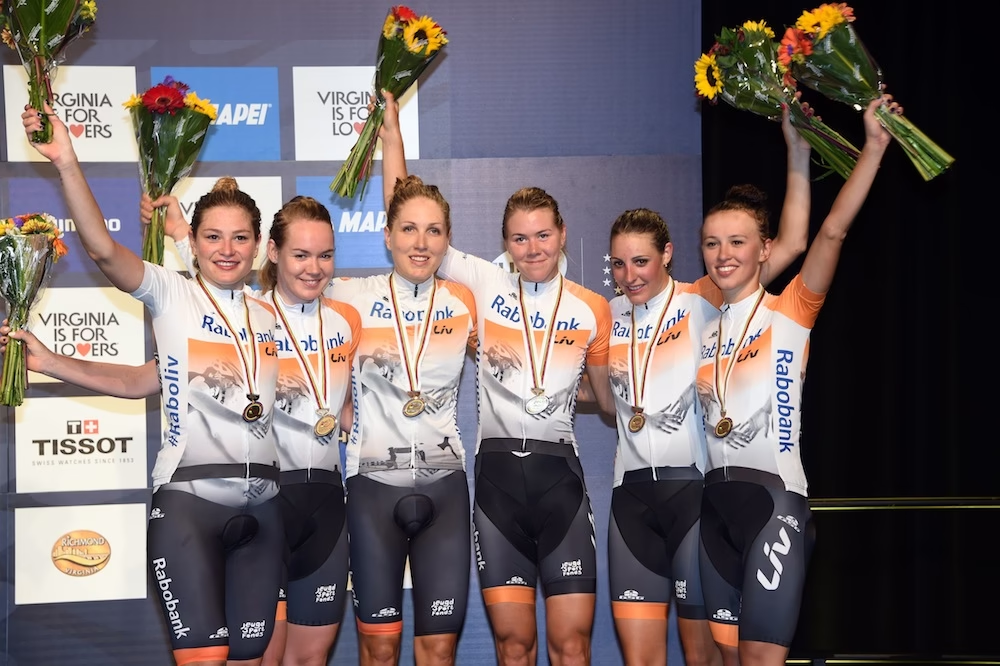
Rabobank’s strength sat in its racing culture
The easiest way to describe Rabobank Women’s Team is to call it a superteam. That is not wrong, but it misses part of the point. The team’s greatest strength was not only the talent it contained. It was the racing culture that allowed that talent to keep producing winners.
The squad had a rare ability to absorb different types of rider. Vos was the all-round genius. Van der Breggen was the developing stage-race and Ardennes master. Ferrand-Prévot was the multi-discipline phenomenon. Brand gave the team hardness and range. Van Vleuten brought endurance and attacking instinct. Niewiadoma represented the next wave. De Jong, who became cyclo-cross world champion in 2016, added another example of the project’s off-road and cross-discipline reach.
That variety created internal pressure, but it also made the team tactically resilient. If one rider was absent, another could step forward. If a race did not suit Vos perfectly, it might suit Van der Breggen. If the finale became more explosive, Ferrand-Prévot could take over. If the race demanded repeated aggression, Brand or Van Vleuten could influence the shape before the final selection.
Modern women’s teams often talk about multi-leader structures as if they are a recent development. Rabobank was already operating with that logic during a less developed commercial era. Its leaders were not always equal in status, because Vos’s stature was too large for that, but the team’s best seasons showed that hierarchy did not have to prevent opportunity.
The sponsorship ending exposed the fragility of the era
The Rabobank era ended not because the team had stopped producing results, but because sponsorship priorities changed. Rabobank confirmed that it would end its professional sports sponsorship after 2016, including its support of the women’s team. For a squad that had been one of the most recognisable in the sport, it was a reminder that even successful women’s projects were vulnerable when their commercial backing shifted.
That was the uncomfortable truth of women’s cycling in the mid-2010s. Results did not automatically guarantee security. A team could have Olympic champions, world champions, Giro Rosa winners and one of the greatest riders of all time, yet still face uncertainty when a sponsor stepped away. The sporting case for the team was overwhelming. The commercial structure of the sport was not yet strong enough to make that decisive.
The team continued beyond Rabobank under new identities, including WM3 Pro Cycling, WaowDeals, CCC-Liv and later Liv Racing. Those later years deserve their own treatment, because they were not simply the same project wearing different colours. But the through-line was clear: the post-Rabobank structure still carried traces of the same Dutch foundations, the same association with Vos, and the same reliance on committed backers who believed women’s cycling was worth supporting before the wider market had fully caught up.
How the Rabobank era should be remembered
Rabobank Women’s Team should be remembered as one of the most important women’s cycling projects of its time, but not only because it won so often. Its deeper importance lies in what it gathered together: a generational rider in Vos, a developing great in Van der Breggen, a multi-discipline world champion in Ferrand-Prévot, and a supporting cast that included riders who would later shape the sport in their own right.
The team also helped normalise the idea that women’s cycling could support proper sporting structures. It showed the value of identifiable teams, long-term backing and multi-year development. It gave fans a clear reference point in an era before the Women’s WorldTour had the visibility it has now. For Dutch cycling in particular, it connected national strength with international dominance.
Its legacy can be seen in several directions. Vos remained the sport’s great all-round reference. Van der Breggen became one of the defining riders and later one of the defining sporting directors of the next generation. Van Vleuten became a Grand Tour and world championship force. Brand built a long career across road and cyclo-cross. Niewiadoma became one of the most recognisable attacking riders in the modern peloton. Ferrand-Prévot eventually returned to the road to win Paris-Roubaix Femmes and the Tour de France Femmes in 2025 after years of off-road dominance.
That is why the Rabobank Women’s Team story still carries weight. Some teams are remembered for one dominant rider. Some are remembered for one golden season. Rabobank was different. It was a Dutch project that kept producing winners, not just through recruitment, but through environment, opportunity and a racing culture built around excellence. The sponsor eventually left, but the riders it helped shape continued to define women’s cycling long after the orange jersey disappeared.
-
Photo Credit: A.S.O./Billy Ceusters
Notable wins from the Rabobank era
- Marianne Vos – Olympic road race, 2012
- Marianne Vos – World road race championship, 2012
- Marianne Vos – World road race championship, 2013
- Marianne Vos – Giro Rosa general classification, 2014
- Pauline Ferrand-Prévot – La Flèche Wallonne Féminine, 2014
- Pauline Ferrand-Prévot – World road race championship, 2014
- Anna van der Breggen – Omloop Het Nieuwsblad, 2015
- Anna van der Breggen – La Flèche Wallonne Féminine, 2015
- Anna van der Breggen – Giro Rosa general classification, 2015
- Anna van der Breggen – Olympic road race, 2016
- Thalita de Jong – Cyclo-cross world championship, 2016
Notable riders from the Rabobank era
- Marianne Vos
- Anna van der Breggen
- Pauline Ferrand-Prévot
- Annemiek van Vleuten
- Lucinda Brand
- Katarzyna Niewiadoma
- Thalita de Jong
- Roxane Knetemann
- Anouska Koster
- Riejanne Markus
- Jeanne Korevaar

