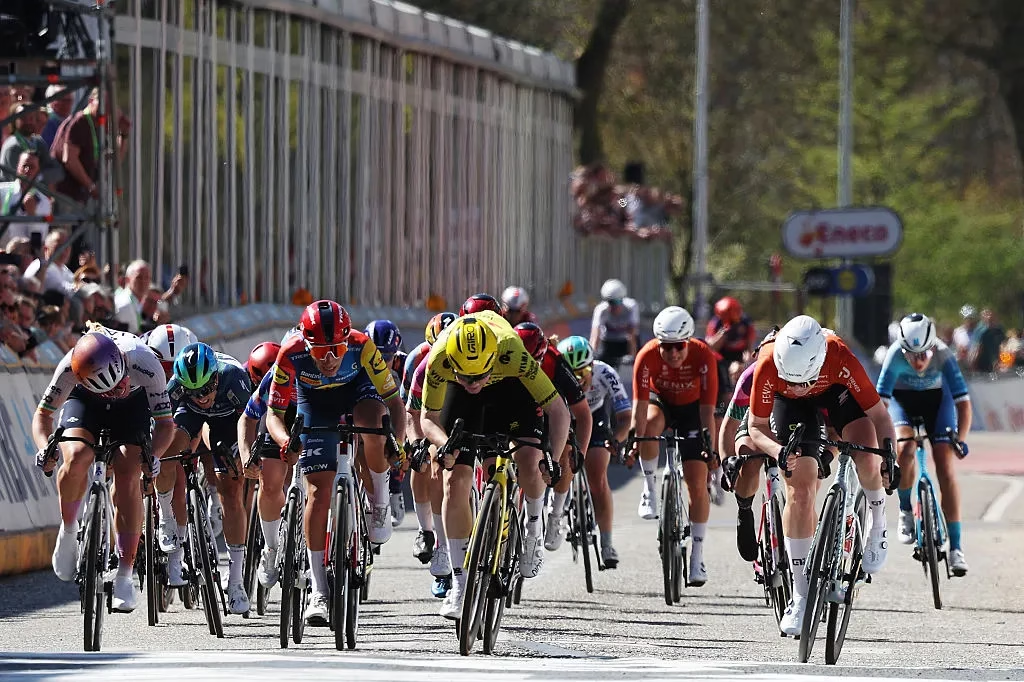
Sprint lead-outs in women’s cycling are often described as if they are simple. A team lines up, rides fast, drops its sprinter into position and watches her finish the job. In reality, a good lead-out is far more fragile than that. It is a moving negotiation between speed, timing, trust, fatigue, road position and the uncomfortable truth that every other team is trying to occupy the same piece of tarmac at the same moment.
At its best, a lead-out looks almost calm. The sprinter sits protected, one teammate after another takes over, the speed rises, rivals are pushed backwards, and the final rider releases the sprinter at exactly the right moment. At its worst, the same plan collapses in seconds. A corner comes too soon. A rider hesitates. Another team surges across the road. The sprinter is left boxed in, too far back, or forced to open the sprint before she wants to.
That is why sprinting in the women’s peloton is not just about the fastest rider. Speed matters, obviously. But positioning usually decides whether that speed can be used. A sprinter with the strongest final 150 metres can still lose if she starts the sprint from the wrong wheel, while a slightly slower rider can win if her team controls the final kilometre more intelligently.
The modern Women’s WorldTour has made lead-outs more visible and more important. Teams are deeper, sprint trains are more organised, and riders such as Lorena Wiebes, Elisa Balsamo, Charlotte Kool, Chiara Consonni, Lotte Kopecky, Marianne Vos and Letizia Paternoster have shown different ways to win fast finishes. Some need a polished train. Some can improvise. The best sprinters can do both.
What is a sprint lead-out?
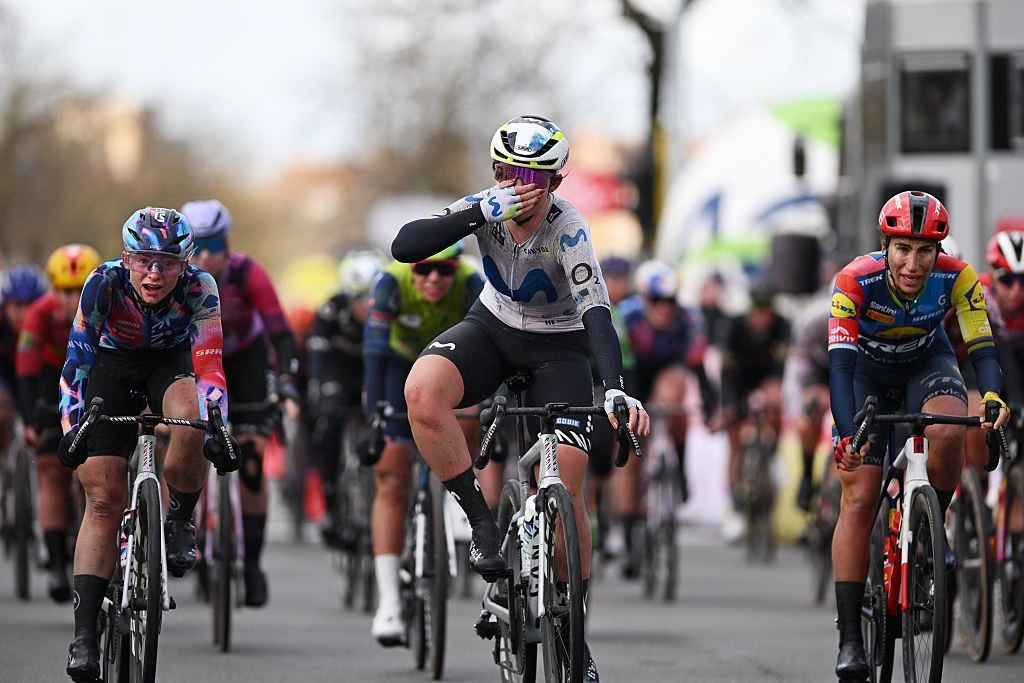
A sprint lead-out is the process of delivering a sprinter into the final metres of a race in the best possible position. The aim is not simply to ride fast. It is to control space, reduce the number of decisions the sprinter has to make, and launch her at the moment when she can use her acceleration without being exposed too early.
In simple terms, the lead-out is a chain of teammates riding in front of the sprinter. Each rider does a short, hard turn, then pulls away when her effort is finished. The next rider takes over, keeps the speed high, and brings the sprinter closer to the finish. The final lead-out rider is often the most important. She must judge the speed, distance, wind direction, road position and the sprinter’s preferred launch point.
The best lead-outs are not always the longest. A team does not need five riders in a line if only two are in the right place at the right time. In women’s cycling, where teams are smaller than in many men’s races and the final kilometres can be more fluid, a compact and well-timed lead-out is often more valuable than a long train that burns riders too early.
That makes the job more tactical. A team has to decide when to commit. Go too early and the lead-out fades before the finish. Wait too long and the sprinter may be trapped behind other teams. The difference between perfect and useless can be a handful of seconds.
Why women’s lead-outs can look less rigid than men’s lead-outs
Women’s sprint lead-outs often look more chaotic than the most controlled men’s sprint trains, but that does not mean they are less tactical. The structure of women’s racing makes them different. Teams are smaller, there are fewer riders available to dedicate purely to the sprint, and many races reach the finish after a more selective final hour.
That changes everything. A women’s team may not have four fresh riders left to form a long, straight train inside the final 5km. The climbers, rouleurs and attackers who helped earlier in the race may already be spent. The sprinter may have had to survive climbs, crosswinds, technical roads or repeated accelerations. By the time the sprint begins, the lead-out may be built from whoever is still there and still capable of doing one more turn.
This is one reason the best women’s sprinters tend to be more versatile than people assume. A pure sprinter who needs a perfect straight-line delivery can be very difficult to use if the race is messy. A sprinter who can surf wheels, move through gaps, read rivals and survive harder terrain gives her team more options.
That is also why riders such as Vos and Kopecky have been so dangerous in sprint finishes. They are not just fast. They are race readers. They can operate without a full train, choose the right wheel, and understand when a sprint is about patience rather than power. The same broader tactical theme runs through how team strategy really works in Women’s WorldTour racing, where the final sprint is often only the last visible part of a much longer plan.
The basic roles inside a lead-out train
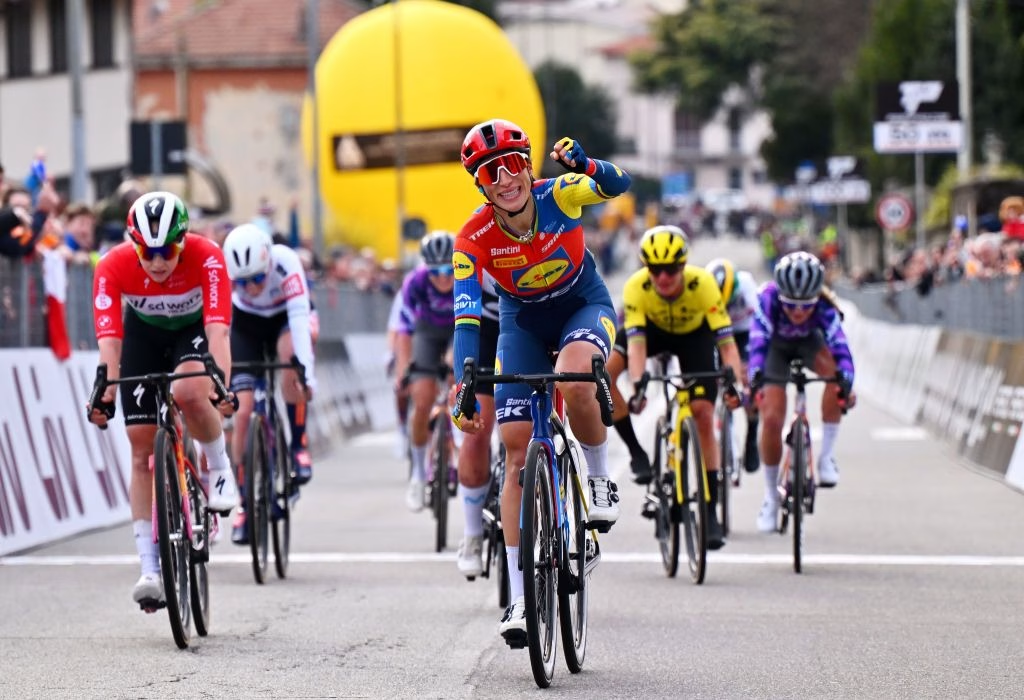
A sprint train is usually built from several roles, although they are not always clearly visible on television. The first job is positioning. In the final 10km, one or two riders may work to move the sprinter towards the front and keep her away from danger. These riders are not necessarily part of the final launch. Their task is to make sure the team starts the last phase in the right place.
Then come the riders who raise the speed. They try to keep the pace high enough that rivals cannot easily move up from behind. This is crucial. A slow final kilometre creates chaos because everyone has the energy and space to surge forward. A fast final kilometre reduces options. It makes the race narrower, more committed and harder to disrupt.
The penultimate lead-out rider often has to make the biggest tactical choice. She may need to guide the train through the final corner, take control of the centre of the road, or respond if another team launches early. Her effort is usually brutal, but it is still partly about judgement. She cannot simply empty herself without knowing where the final lead-out rider and sprinter are behind her.
The final lead-out rider is the sprinter’s last guide. Her job is to carry the sprinter to the launch point, usually somewhere between 100 and 250 metres from the line depending on speed, gradient, wind and the sprinter’s style. If she pulls off too early, the sprinter is exposed. If she waits too long, the sprinter may run out of road.
The sprinter is not just a passenger
It is tempting to think of the sprinter as someone being delivered, but that only tells part of the story. The sprinter still has to make decisions constantly. She must choose whether to stay on her own train or switch to a rival’s wheel. She has to sense whether the lead-out is fading. She has to know when to trust the plan and when to abandon it.
This is one of the hardest parts of sprinting. Trust and instinct can pull in opposite directions. A sprinter who leaves her lead-out too early may waste the work of her team and end up isolated. A sprinter who stays too loyal to a fading wheel may watch the race open up elsewhere. The best riders make that decision almost instantly.
Wheel choice is especially important. In a chaotic sprint, the best wheel is not always the fastest rider. It may be the rider with the clearest line, the strongest final lead-out, or the one positioned out of the wind. Sprinters often win because they choose the right wheel before the sprint even begins.
That is why Vos has been so difficult to beat for so long. She can win with a team, without a team, from a reduced bunch, or from a messy finale where the original plan has disappeared. Her sprinting is not only about acceleration. It is about reading the final kilometre better than almost everyone else, one of the reasons her 2026 season still carries so much tactical interest.
Why timing matters more than raw speed
The final sprint is usually decided by timing before it is decided by speed. Launch too early and even the fastest sprinter can fade before the line. Launch too late and there may be no room to come through. In women’s racing, where the final kilometres can be particularly congested and technical, that timing becomes even more important.
Wind direction changes the launch point. Into a headwind, sprinters generally want to wait longer because the rider in front offers valuable shelter. With a tailwind, it can pay to go earlier because the speed stays high and late chasers may struggle to close. On a slight uphill finish, patience matters. On a downhill or fast flat finish, hesitation can be fatal.
Road shape matters too. A final corner with 300 metres to go can make positioning more important than speed. If a rider exits that corner in 10th place, she may never reach the front, even if she has the fastest sprint. A wide, straight finish gives more riders a chance to come from behind, but it can also make the sprint harder to control because more teams can spread across the road.
A good lead-out understands all of this before the final kilometre. Teams study race books, road furniture, corners, gradients and wind forecasts because the final launch is not improvised from nothing. It is planned, then adjusted in real time when the race refuses to behave.
How lead-outs change in reduced bunch sprints
Not every sprint comes from a full peloton. In women’s cycling, many of the most interesting finishes come from reduced bunches after climbs, crosswinds or attacks have removed half the field. These sprints are very different from a flat bunch finish. There are fewer riders, fewer teammates and more uncertainty about who is actually fresh enough to sprint properly.
In a reduced bunch, a sprinter may only have one teammate left. Sometimes she has none. The lead-out becomes less about a train and more about positioning. A rider might use a teammate to mark late attacks, hold a place near the front, or disrupt other teams rather than provide a classic final pull.
This is where versatile sprinters gain value. Letizia Paternoster, Elisa Balsamo and Chiara Consonni can all be dangerous when the race has been hard enough to remove pure speed but not hard enough to stop a sprint. They do not need a completely flat day to be relevant. That makes their teams harder to read, because rivals cannot assume that a selective race automatically removes the sprint threat.
Reduced bunch sprints also create awkward tactical choices. If a sprinter’s team has done a lot of work to control the race, the sprinter may be tired or isolated. If another team has kept a rider fresh, that rider can suddenly become more dangerous than her usual ranking would suggest. The strongest lead-out is not always the one with the most riders. It is the one with the most energy left at the right moment.
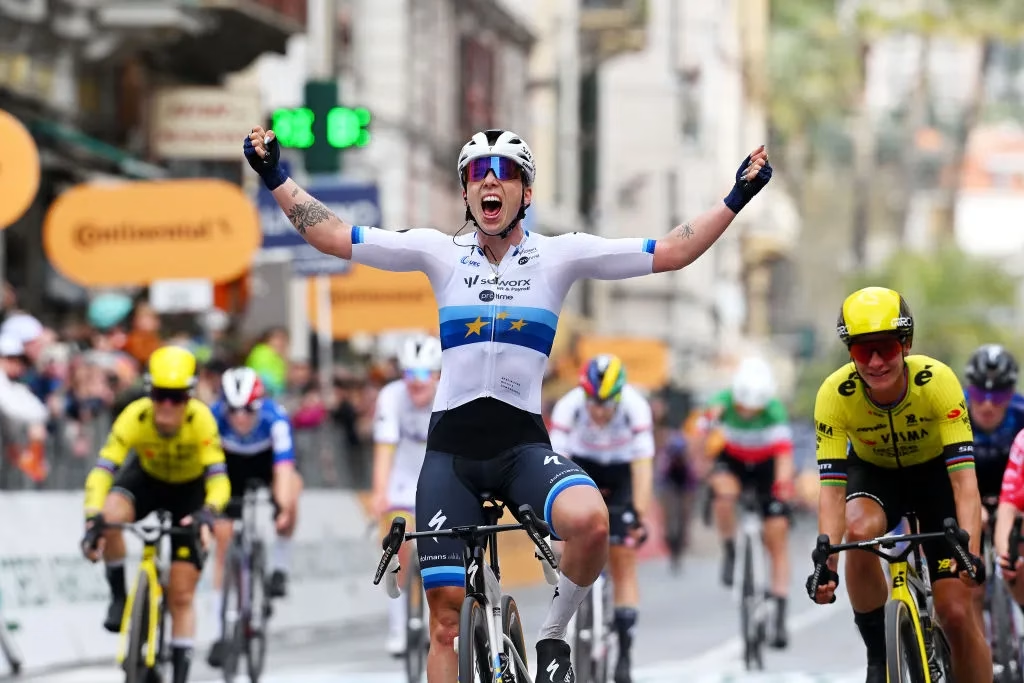 Photo Credit: Getty
Why Lorena Wiebes changed the standard
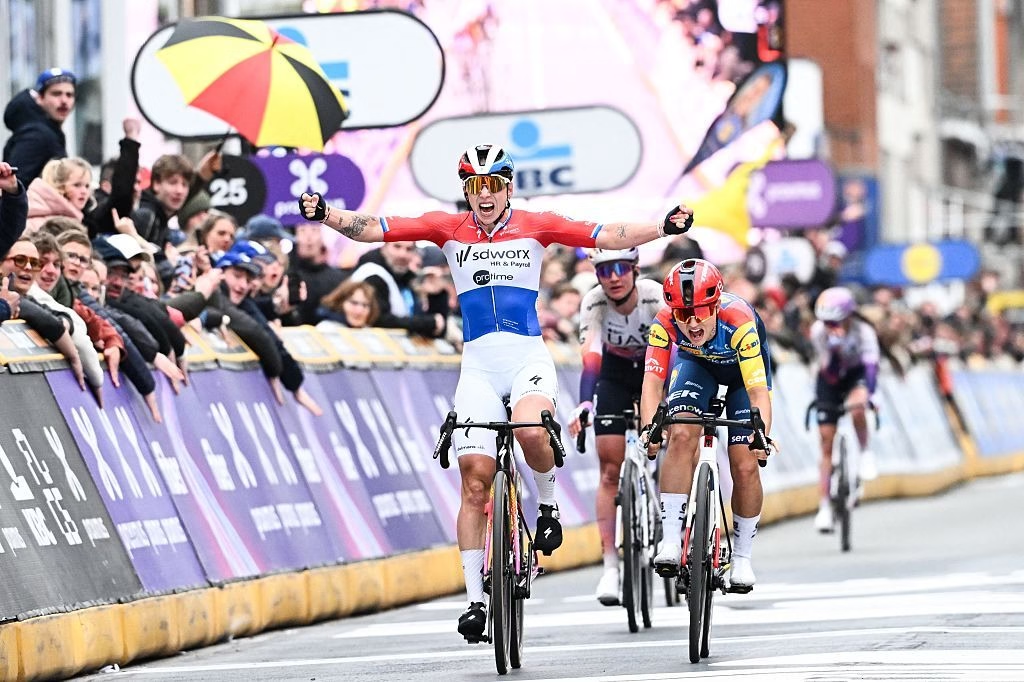
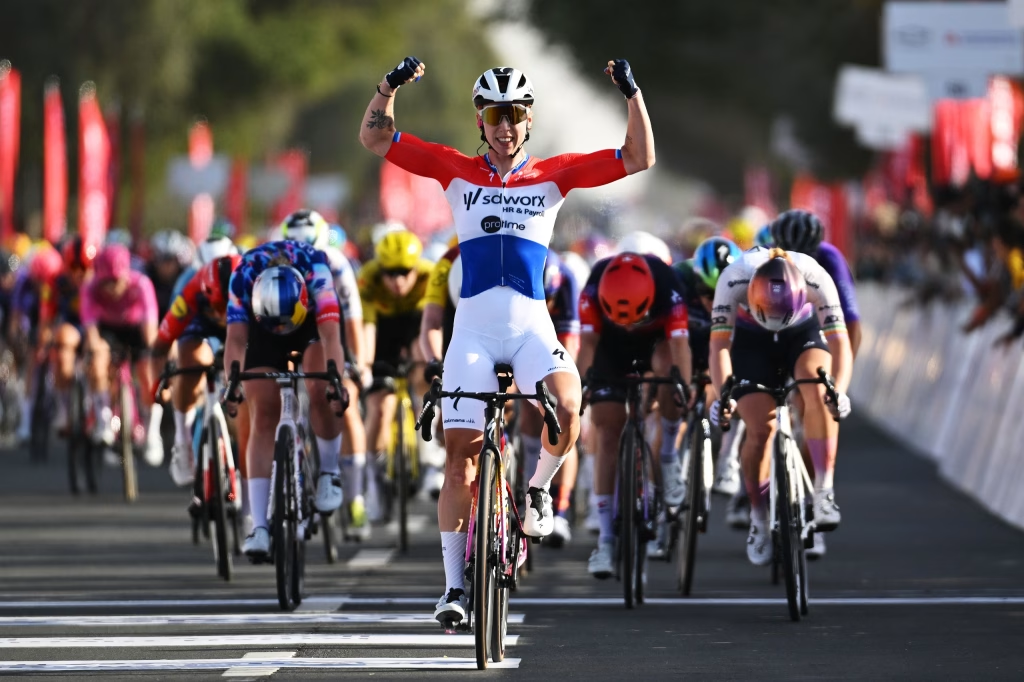
Wiebes is the clearest modern example of why lead-outs matter in women’s cycling. Her speed is obvious, but the reason she has been so dominant is not only that she sprints faster than everyone else. It is that her teams have often been able to build the final kilometres around making that speed usable.
At SD Worx-Protime, Wiebes has usually benefited from a powerful structure. The team can protect her, control the approach and still keep enough strength near the front to influence the last kilometre. When Kopecky has been involved as a final lead-out rider, the effect can be devastating because Kopecky herself is strong enough to win many of those sprints. A rival team has to decide whether it is chasing the lead-out or the sprinter, and by then the race may already be gone.
That is the ideal version of a lead-out: the final rider is not merely a helper, but a threat. If rivals hesitate, she can keep going. If they react, she has still delivered the sprinter. It creates a double pressure that is hard to manage, especially in a peloton where space disappears quickly.
Wiebes has also shown that even the best sprinter can be beaten when the lead-out is disrupted. If she is boxed in, forced to start too early, or made to sprint from a poor wheel, her advantage narrows. That is not a weakness. It is the nature of sprinting. Even the fastest rider still needs the race to give her enough road to use that speed.
That is also why Wiebes remains such a useful rider for explaining modern sprint tactics. As outlined in her 2026 season guide, her value is not limited to flat finishes. She is the reference sprinter partly because she keeps forcing teams to decide whether they can drop her, disrupt her lead-out, or accept that a clean sprint probably favours her.
Why some teams avoid a full lead-out
Not every team with a sprinter wants to build a traditional lead-out. Some do not have the riders. Some prefer to save energy and let bigger teams take responsibility. Others have sprinters who are better at surfing wheels than following a fixed train.
Wheel-surfing can be a very effective tactic. Instead of using three or four teammates, a sprinter follows the strongest rival train, waits for the final lead-out to finish, then launches from that position. It is risky because the rider gives up control. If the rival train fades, gets boxed in or chooses the wrong side of the road, the wheel-surfer is trapped too. But it is efficient, especially for teams without the depth to control the sprint themselves.
Some of the best sprinters are strong precisely because they do not need a perfect train. They can win from the wheel of an opponent, from a messy final corner, or from a reduced group where the normal lead-out structure has broken down. In women’s cycling, that ability is particularly valuable because many races are too dynamic for a full train to survive intact.
This is also why a team may choose to attack rather than lead out. If it knows its sprinter is not the fastest, it may send riders up the road in the final 10km to force faster teams to chase. That can drain the favourite’s lead-out, create hesitation, and make the sprint less predictable. A sprint finish is often shaped by attacks that never look likely to win, but still weaken the teams trying to control it.
What can go wrong in a lead-out?
Almost everything. That is the honest answer. Lead-outs fail because of timing, traffic, wind, fatigue, corners, road furniture, poor communication or another team simply being stronger. The final kilometre is not a clean laboratory. It is a crowded, high-speed environment where riders are making decisions under pressure while already near their physical limit.
One common problem is arriving at the front too early. A team may take control with 3km remaining, only to discover that it has used up its riders before the final 500 metres. When that happens, rival sprinters can sit in the slipstream and launch late. The team that did the work has effectively delivered the whole peloton.
Another problem is losing the sprinter. This can happen through a corner, a split, a moment of hesitation or a rival rider moving into the gap. A lead-out only works if the sprinter stays attached to the right wheel. Once that connection breaks, the plan usually becomes improvisation.
Boxing in is another constant danger. A sprinter may have speed but no lane. In that case, the race can be lost without the sprint ever being properly launched. This is why the final lead-out rider often tries to guide the sprinter towards a clear side of the road, or hold a line that prevents rivals from closing the door too early.
How to watch a sprint lead-out properly
The best way to understand a sprint is to stop watching only the rider who wins. Start watching from around 5km to go. Which teams are already near the front? Which sprinters have teammates left? Which riders are using rivals’ wheels rather than their own train? Which team is spending energy too early?
Inside the final 3km, look at road position. A team sitting first with no riders left may be in trouble. A sprinter in 15th place with a strong wheel may be better placed than she looks. A team moving up on the sheltered side of the road may be preparing the real launch while another team appears to be controlling the front.
In the final kilometre, watch the gaps between teammates. A clean train has riders close together, each one taking over smoothly. A failing train has gaps, hesitation and riders looking over their shoulders. If the sprinter is forced to move around her own teammates, the plan has already become messy.
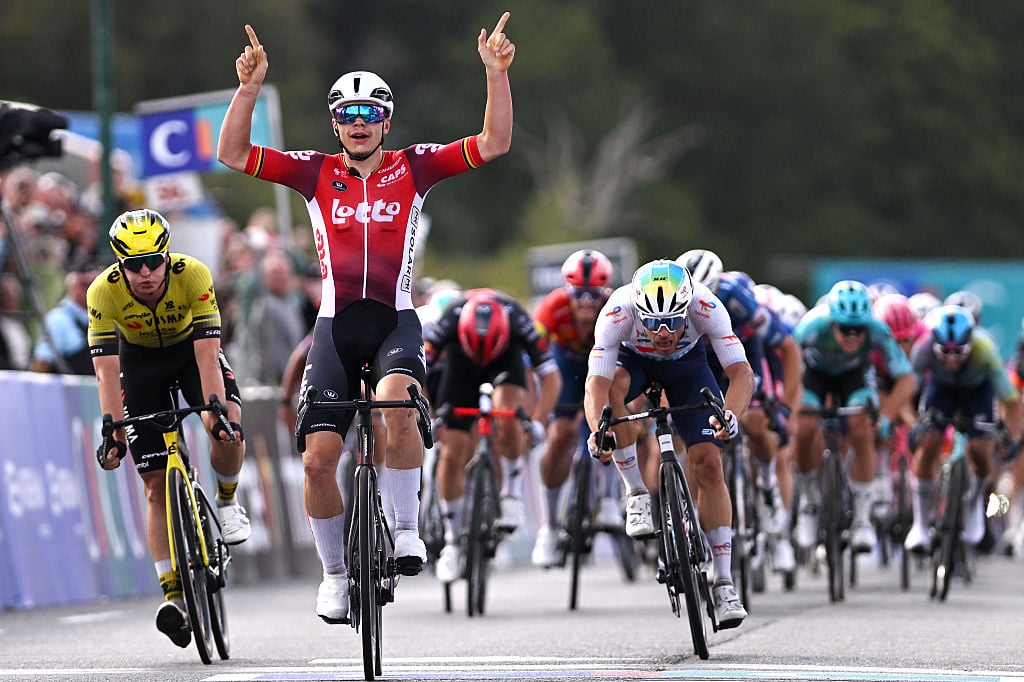
Then, in the final 200 metres, watch the launch point. Did the sprinter open first, or come off a wheel? Did she have to change line? Was she sheltered until the right moment? The finish photo tells you who won. The final kilometre tells you why.
-
 Photo Credit: Getty
Why lead-outs tell us so much about team strength
A good sprint lead-out is one of the clearest signs of team depth in women’s cycling. It shows that a squad has riders strong enough to survive the race, organised enough to follow a plan, and trusted enough that the sprinter will commit to their wheels under pressure.
It also reveals hierarchy. A team that works entirely for one sprinter is making a clear choice. A team that keeps several cards alive may avoid a full lead-out because it wants to preserve attacking options. Neither approach is automatically better. It depends on the race, the route and the rider they are trying to deliver.
In flat races, the lead-out may be the central tactical feature. In hillier races, it may only appear late after the team has spent hours keeping its sprinter in the race. That second version can be even more impressive. A rider who wins after surviving climbs, regrouping, and still receiving a final lead-out has not just benefited from speed. She has benefited from a full-team strategy.
That is why lead-outs are worth watching closely. They are not just a prelude to the sprint. They are the sprint’s architecture. By the time the winner crosses the line, the decisive work may have been done by a teammate who pulled off 700 metres earlier, exhausted and invisible in the result.
Why sprint lead-outs matter in women’s cycling
Sprint lead-outs matter because they reveal the difference between individual speed and usable speed. A sprinter can only win if she can deploy her acceleration in the right place, at the right time, with enough space and enough momentum. The lead-out is how a team tries to create those conditions.
In women’s cycling, that process is especially interesting because the races are often more fluid than the simple sprint-train model suggests. Teams are smaller, finales are frequently harder, and the strongest sprinters often have to be tacticians as well as finishers. The result is a sprint landscape where organisation matters, but improvisation remains essential.
That is what makes a great women’s sprint finish so compelling. It is not only about who has the fastest final kick. It is about who has survived the route, who still has teammates, who has chosen the right wheel, who has judged the wind, who has stayed patient, and who has found a line when the road suddenly narrows. The lead-out is where all of those pieces come together, or fall apart.