
Itzulia Women 2026 takes place from Friday 15th May to Sunday 17th May and keeps the race to its now-familiar three-day format, but the route still looks demanding enough to create meaningful gaps from the opening stage. The route centres on Zarautz, Abadiño and Donostia, with a total of 372.4km and 14 major climbs across the three days.
That matters because Itzulia Women has become one of the most tactically interesting stage races in the women’s calendar. It is short, which limits the room for recovery after mistakes, but the Basque roads still create enough climbing and enough repeated changes of rhythm to give different rider types a chance. The 2026 route does not look built around one summit finish or one dominant stage. It looks built around cumulative pressure.
 Photo Credit: Getty
What kind of Itzulia Women route is this?
This is a classic modern Itzulia Women route in the sense that it asks for repeated climbing rather than one overwhelming mountain-top showdown. Stage 1 around Zarautz brings six climbs and 121.3km. Stage 2 from Abadiño to Amorebieta-Etxano is the longest and hardest on paper at 138.0km with five climbs. Stage 3 around Donostia is shorter at 113.1km, but still includes the key climbs of Jaizkibel, Gurutze and Mendizorrotz close enough to the finish to threaten the general classification right to the end.
That makes the race more interesting than a simple climbers-only test. A pure mountain specialist can still thrive, but she will need position, agility and the ability to handle short, sharp Basque efforts rather than only one long summit ascent. Equally, puncheurs and aggressive all-rounders will look at this route and see room to attack.
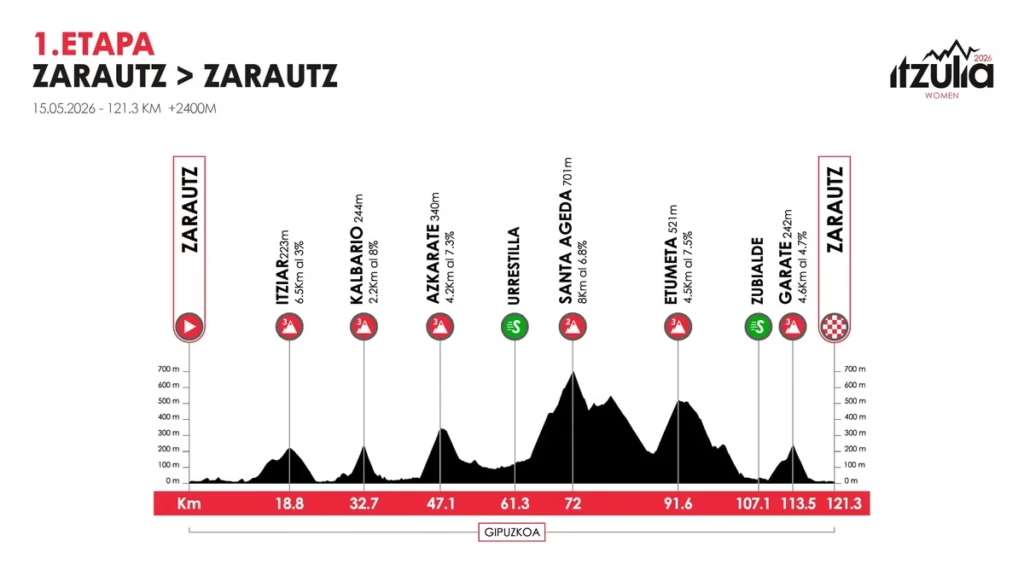
Stage 1 – Zarautz to Zarautz, 121.3km
The opening stage starts and finishes in Zarautz for the first time in the women’s race and immediately sets a serious tone. The route uses familiar Gipuzkoa racing roads with six category 3 climbs, little real flat terrain and narrow, twisting sections through the middle of the day that force riders to stay switched on and well positioned.
The key climbs include Kalbario, Alkarate, Etumeta and Santa Ageda, with Santa Ageda standing out as the only category 2 test at 8km and 6.8 per cent. The stage then finishes with a flat run-in after the descent from Garate. That is an important detail, because it means the hardest climbing does not come directly on the finish line. Strong riders can attack on the final climbs, but they will still need either a decisive gap or the ability to finish off a reduced sprint.
This should be the stage that starts the GC rather than settles it. The terrain is hard enough to create meaningful differences if teams push early, but it is also the sort of opening day where hesitation can keep more riders in touch than expected. If a team wants to make the race selective from the start, this is a very good place to do it.
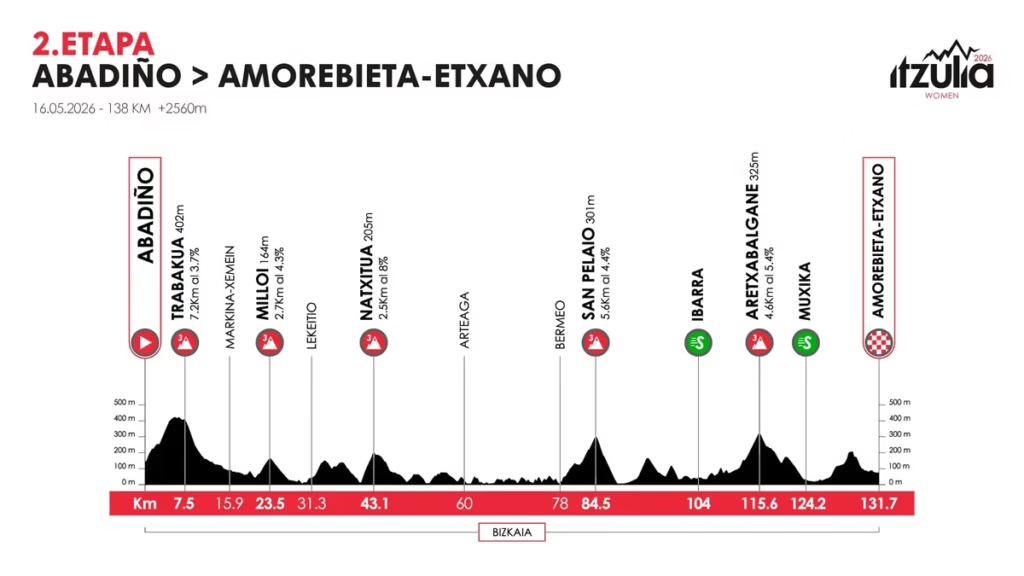
Stage 2 – Abadiño to Amorebieta-Etxano, 138.0km
Stage 2 looks like the key structural day of the race. It is 138.0km long with five climbs, and the route is built on fatigue, sustained effort and familiar one-day race terrain, with open, exposed roads in the final section towards Amorebieta-Etxano.
This is the hardest day overall on paper, with 2,474 metres of climbing and key climbs including Natxitua, San Pelaio and Aretxabalgane, plus a late unclassified rise near the finish. That suggests a stage that may not explode in one spectacular move, but can still wear riders down through repetition and then punish anyone who is slightly out of position late on.
This is the day that looks most likely to expose weak team support. The climbs are not so individually famous that the race has to wait for one exact moment, and the exposed roads in the finale make the stage harder to control if the pace is already high. It could still finish from a reduced group, but it feels like the sort of stage where a strong team can start isolating rivals before the final day.
Stage 3 – Donostia to Donostia, 113.1km
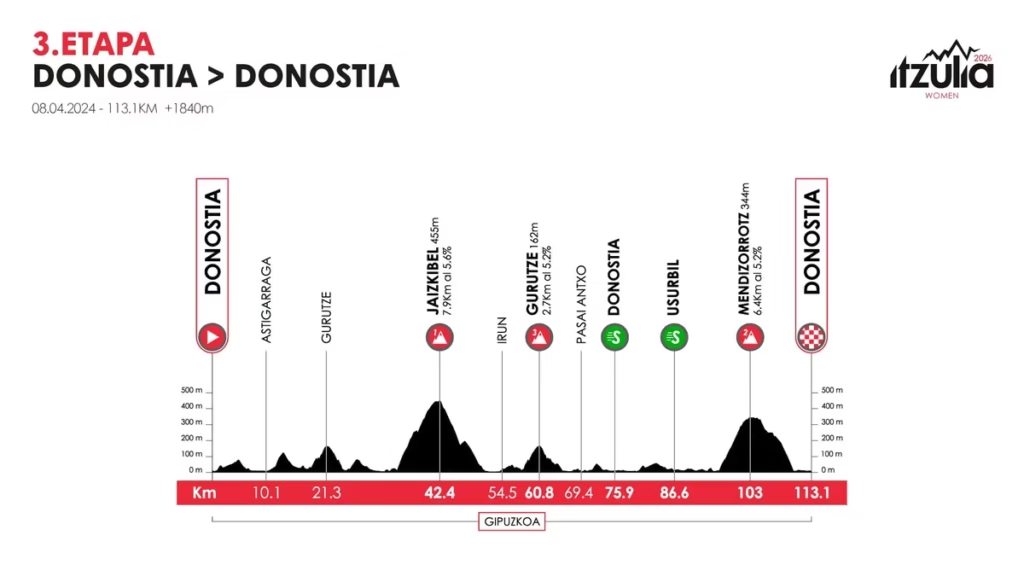
The final stage starts and finishes in Donostia, which has hosted the finale of every edition so far. It is the shortest stage at 113.1km, but it still carries 1,729 metres of climbing and retains the core final climbs that have shaped recent editions.
The key trio is Jaizkibel, Gurutze and Mendizorrotz. Jaizkibel is the biggest climb of the day at 7.9km and 5.6 per cent, but it comes relatively early. Gurutze follows later, and the final decisive point looks set to be Mendizorrotz, which sits just 10.1km from the finish at 6.4km and 5.2 per cent. That is close enough to the line to invite a race-winning move, but not so close that the stage automatically becomes a simple summit finish.
That makes the final day tactically rich. A rider with a small GC deficit can still attack on Mendizorrotz and hold the advantage into Donostia, but she will need the strength to sustain the effort beyond the climb itself. Equally, a leader with a strong team can still try to control the stage if enough support remains. This is a better finale than a pure uphill finish because it forces riders to think beyond the summit.
Which stage is most likely to decide the GC?
Stage 2 looks like the most important GC stage on paper because it is the longest, carries the most climbing and includes the sort of exposed finale that can turn fatigue into time gaps. But that does not automatically make it the stage that settles the race. Stage 3 still has the best late launch point in Mendizorrotz and the kind of finale where even a small overall gap can be overturned.
That is one of the strongest things about the 2026 route. It does not look likely to be decided by one dominant mountain day. Instead, it asks teams and riders to manage three hard days in sequence, with the opening stage dangerous enough to start the selection, the middle stage hard enough to widen it, and the final stage clever enough to keep it open.
What type of rider should this route suit?
This route looks best for a complete hilly stage-race rider rather than a pure specialist. The winner will need to climb well, obviously, but also handle repeated accelerations, narrow roads, technical positioning and the possibility of reduced-group finishes rather than clean summit arrivals.
That is why Itzulia Women often feels different from some of the other key races in the calendar. A rider who thrives in the Basque Country is usually not only strong uphill. She is also tactically sharp and resilient when the race changes direction quickly. In that sense, this route should continue to reward riders who can think as well as climb.

Why the 2026 route works so well
The 2026 Itzulia Women route works because it stays true to the race’s Basque identity without becoming repetitive. The organisers have built a three-day race that is hard from the first stage, structurally demanding on the second, and still tactically alive on the third. The route is compact, but not simplistic.
It should also create aggressive racing. The stage designs repeatedly emphasise constant climbing, narrow roads, exposed sections and changes of pace, which are exactly the conditions that make defensive riding more difficult. A very strong team can still control parts of the race, but this does not look like a route designed for quiet management.
That is one reason Itzulia Women continues to hold an important place in the women’s calendar. Alongside races such as Vuelta a Burgos Feminas and La Vuelta Femenina, it helps give Spain one of the strongest blocks of racing in the season.
Itzulia Women 2026 route at a glance
- Stage 1 – Zarautz to Zarautz, 121.3km, 6 climbs
- Stage 2 – Abadiño to Amorebieta-Etxano, 138.0km, 5 climbs
- Stage 3 – Donostia to Donostia, 113.1km, 3 key climbs
- Total distance – 372.4km
- Total major climbs – 14
Route verdict
Itzulia Women 2026 looks like a very good edition on paper. It has no wasted day, no obvious sprint procession and no single stage that overwhelms the rest of the race. Instead, it offers three different ways to create separation, which is usually the best sign of a strong short stage race.
The opening stage should begin the GC immediately, Stage 2 looks like the hardest overall test, and Stage 3 still gives the race a properly dangerous finish in Donostia. For a three-day Women’s WorldTour race, that is exactly the right balance. For the wider race picture, the main Itzulia Women race hub and the rest of the Basque-season coverage will frame how the route shapes the final hierarchy.

