
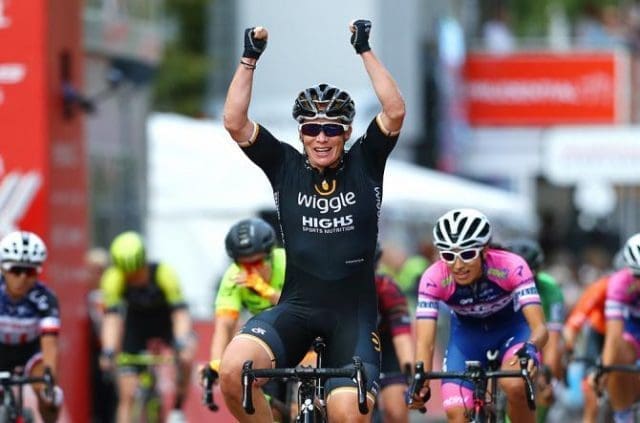
Kirsten Wild was never the sort of sprinter who arrived with a single defining win and lived off it. Her career was longer, harder and far more complete than that. She built a reputation on speed, yes, but also on durability, positioning, judgement and the quiet certainty of a rider who rarely wasted an opportunity. Over nearly two decades, she became one of the most reliable finishers in women’s road cycling, then carried that same authority onto the track, where her record grew into something close to untouchable.
She also belongs in the story of modern women’s cycling because she kept turning up across changing eras. She raced through the days when the calendar was thinner and the opportunities narrower, then adapted as the sport expanded, professionalised and sharpened around her. In that sense, Wild is not just a fast finisher from the Netherlands. She is part of the bridge between generations, and a major figure in the women’s cycling history that shaped the sport into what it is now.
A sprinter who understood roads, not just finishes
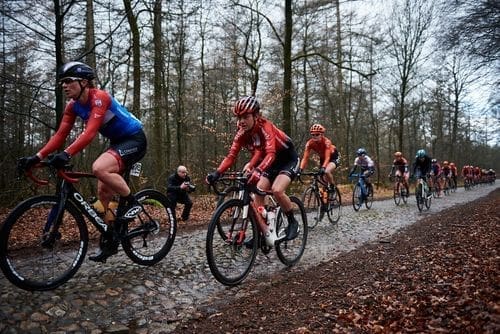
Wild was born in Zevenhuizen in 1982, in the flat, wind-carved country that has produced so many riders who learn early how to read space, speed and shelter. Her road style always felt rooted in that landscape. She was not the explosive, one-metre jump-out-of-the-saddle type so often associated with pure fast finishes. Instead, she was a rider who knew how to stay calm in movement, how to hold a wheel, how to trust the shape of a sprint train without becoming dependent on it.
That made her dangerous in different kinds of races. Wide boulevards, exposed shore roads, lumpy finishing circuits, technical urban finales, she could handle them all because she understood the logic of the road underneath the rush of the last 300 metres. She did not need chaos. She could survive it if it came.
The race sense that made her difficult to beat
Wild had the rare knack of arriving in the final straight with just enough in reserve. She did not always look the flashiest rider in the bunch, but that was part of the point. She was measuring every move, holding position, guarding her line and waiting for bodies around her to unravel. When the sprint opened, she was usually already in the right place.
In women’s racing, where lead-outs have often been less controlled than in the men’s peloton, that instinct mattered. Wild became expert at navigating finishes that were messy, wind-affected or simply underdeveloped. She could also win from reduced groups, which expanded her range beyond the pure drag-race script.
Major wins and the results that defined her
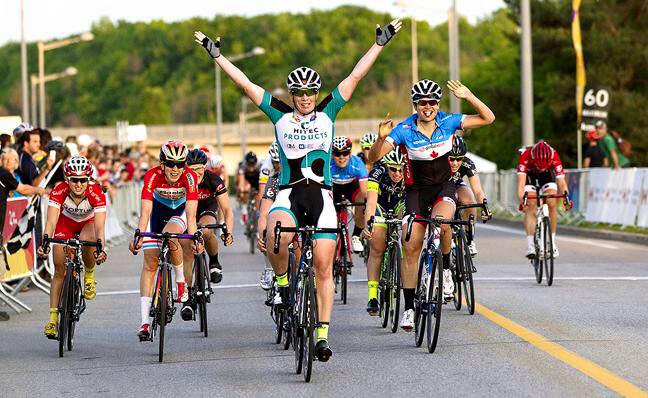
Wild’s palmarès is filled with wins that reflect both speed and consistency. She took multiple stages and overall victories across the major Dutch and international races, but the name most closely linked to her road career is La Course by Le Tour de France. In 2014, she won the inaugural edition on the Champs-Élysées, a victory that felt symbolic as well as personal. The race was staged as a showcase at a time when women’s road racing still had to fight for visibility, and Wild delivered the sprint with the confidence of someone who had been there before, even if the wider audience had not.
She also scored major wins in events such as the Tour de Yorkshire, the Healthy Ageing Tour, the Boels Ladies Tour and the Santos Women’s Tour down in Australia, among many others. Her versatility as a stage racer for sprints gave her a long shelf life. She was a rider teams could build around for flat stages, but also someone useful in stage races because she knew how to survive the road into the finish.
At national level, she was a multiple-time Dutch champion on the road, another marker of how consistently she stayed at the front in one of cycling’s deepest sprinting nations. Add podiums at world-class level, plenty of intermediate wins and the habit of being present when big races came down to timing, and you get a rider whose value cannot be reduced to one headline result.
The place of La Course in her career
The 2014 La Course win matters because it captured Wild at a moment when women’s road racing was beginning to gain a broader stage but still had to force the issue. On the famous finishing straight in Paris, she beat the field with tidy, clinical force. It did not look theatrical. It looked efficient. That was always part of her charm and part of her threat.
For a rider who already had an experienced body and a long race memory, that victory tied together her road craft and her place in a changing sport. It remains one of the most visible results of her road career and one of the cleanest examples of her sprinting intelligence.
The track record that matched the reputation
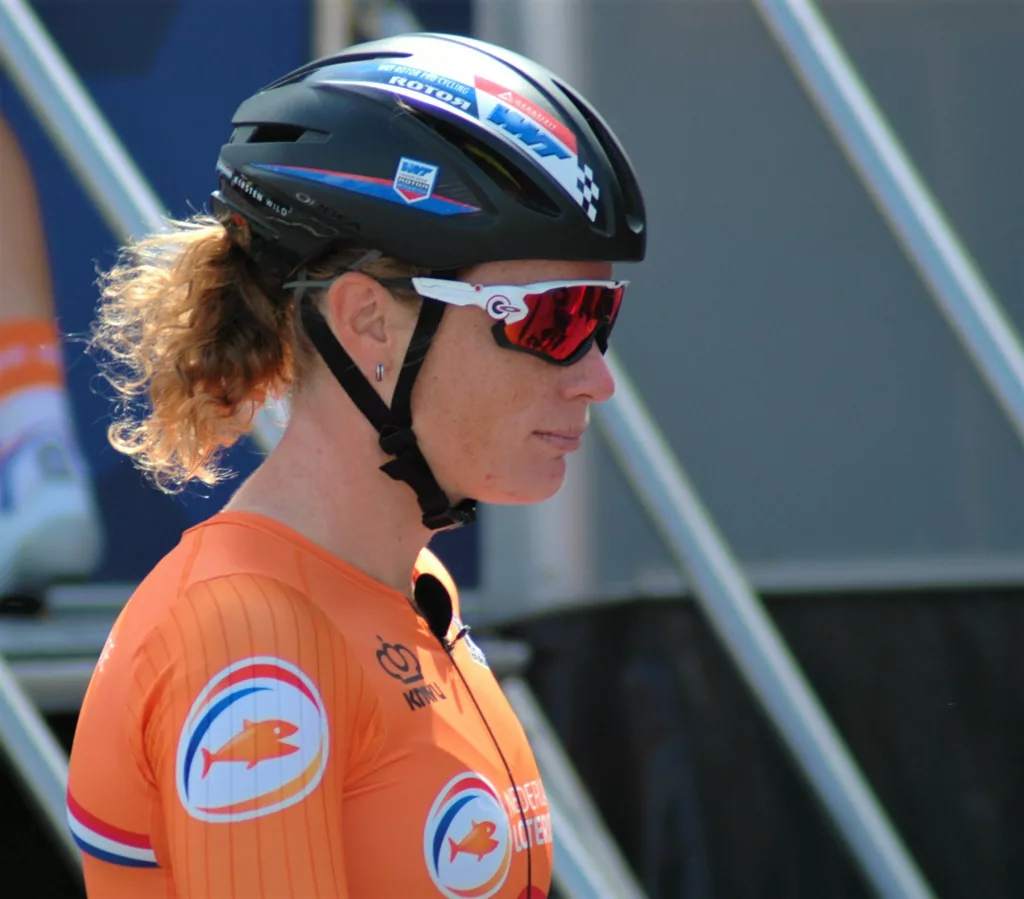
If Wild had been only a road sprinter, she would still have been important. The track made her extraordinary. Her record there was not an add-on or a side project but a second career thread, one that became increasingly central as the years passed. In the velodrome, her control, repeatability and tactical patience found an even sharper expression.
She became a multiple world champion on the track, dominating the scratch race in particular and adding major medals in the points race and madison. The scratch race suited her in the most obvious way: one clean, unforgiving finish, no place to hide, no room for indecision. Wild handled it with the same uncluttered efficiency she brought to the road.
Then there was the madison, where she paired with partners such as Amy Pieters to form one of the strongest combinations of the era. The event asks for touch, trust and an instinct for the timing of effort, and Wild had all of it. Her partnership with Pieters produced some of the most memorable Dutch track performances of the late 2010s, and the rhythm of their racing was recognisably theirs: measured, alert, economical until it had to be otherwise.
She also became a key figure in the emergence of track racing as a higher-profile discipline in women’s cycling, especially for riders whose road careers were already established. In a sport where specialisms can narrow careers, Wild showed that a sprinter could move between disciplines without losing identity.
World titles and the velodrome edge
Her world championship wins on the track made her one of the standout Dutch riders of her generation. The scratch title in particular underlined her ability to race with total clarity under pressure. No elaborate setup. No confusion. Just position, judgment and a finish.
That mattered historically because it placed a Dutch road sprinter at the centre of contemporary track racing when the event was becoming more visible, more professional and more contested. Wild helped bring the prestige of elite road sprinting into the boards, and not many riders carried that transition so smoothly.
Character, team life and the long professional road
Wild rode for several major teams during her career, including Cervélo TestTeam, AA Drink-Leontien.nl, Hitec Products, Sunweb and later Parkhotel Valkenburg and other Dutch structures. Across those environments, she developed a reputation as a professional who knew exactly what she was for. Teams could trust her in flat finishes, but they could also trust her to read a race and to understand what the day demanded.
She was not a rider who built a public persona around noise. Her riding was the statement, and it was usually enough. That restraint suited the Dutch racing culture around her: direct, practical, unshowy. She came across as switched on rather than dramatic, which can be a quiet strength in a sprinter. There is enough tension in the job without adding performance art to it.
In pelotons where sprint trains came and went, where form could be fleeting, Wild stood out for the length of her relevance. She could win in one atmosphere and still be dangerous in another. That adaptability is one reason she remained such a familiar presence for so long.
-
 Photo Credit: quentinphotographiebe
 -
 Photo Credit: Getty
Why Kirsten Wild is important in cycling history
Wild matters because she helped define what a complete women’s sprinter could look like across road and track. She was not limited by one discipline, one type of finish or one era of the sport. She won internationally before women’s cycling had the broadcast reach it would later enjoy, and she kept winning as the level rose around her. That makes her part of the fabric of the modern game.
She is also worth noting because her career overlaps with a key period in women’s cycling history, when more races, stronger teams and better structures began to create a deeper professional scene. Wild was both a beneficiary of that growth and a contributor to it. Her victories added weight to the calendar. Her presence gave races credibility. Her longevity set a standard.
For younger riders, she offered a template that was less about flamboyance than control. For fans, she offered something equally valuable: the sense that a sprint could be won by the rider who understood it best, not just the one who looked quickest in the final seconds.
After retirement: still close to the sport
Wild retired from elite racing in 2021 after a long and successful career, closing the book on a period in which she had become one of the most recognisable names in Dutch women’s cycling. Since then, she has remained linked to the sport in various ways, including through ambassadorial and event-based appearances, while also enjoying the space that comes after years of living to race schedules and training blocks.
That post-career phase suits her profile. Wild was never defined solely by personality or media presence, so retirement does not need to be a reinvention story. She has moved into the quieter afterlife many riders recognise: still connected, still respected, still occasionally visible at events or in Dutch cycling circles, but no longer locked into the daily grind of preparing for the next sprint.
What remains is the record. On the road, she was a consistent winner with a sharp finish and a deep understanding of where races were really decided. On the track, she became a world champion multiple times over. Put together, it is a career that belongs in any serious account of women’s cycling. Kirsten Wild was a sprinter, yes. But she was also a rider whose range, reliability and longevity made her much more than that.

