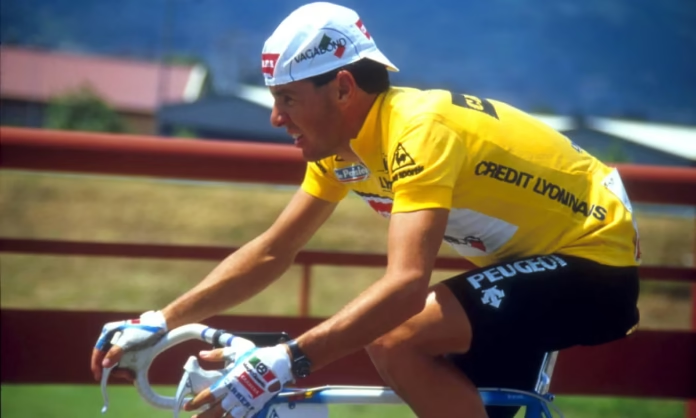
Stephen Roche’s career will always be read through the force of 1987. Not because the rest of it was ordinary, far from it, but because that one season compressed a lifetime’s worth of achievement into a few extraordinary months. He won the Giro d’Italia, then the Tour de France, then the World Championship road race in Villach, becoming only the second man to complete the men’s Triple Crown in the same year.
That alone would be enough to secure Roche’s place in cycling history. But the scale of the year becomes even clearer when placed against the rest of his career. He was already a major rider before 1987, with wins at Paris-Nice in 1981, Tour de Romandie in 1983 and 1984, and a Tour de France podium in 1985. What 1987 did was turn a very fine rider into one of the defining figures of his era.
Stephen Roche announced himself early
Roche was born in Dublin on 28th November 1959 and came through Orwell Wheelers before moving to France to continue his development. His rise as a professional was quick. In his first season as a pro in 1981, he won Paris-Nice, becoming the first neo-pro to take that race, and collected a string of other victories that immediately marked him out as more than a promising newcomer.
That early success already showed the range that would define him later. Roche was not boxed into one rider type. He could climb, time trial, survive hard stage races and still race aggressively enough to win important one-day contests. Even before his peak, the outline of a complete stage-race rider was already there.
The Tour de France podium came before the legend
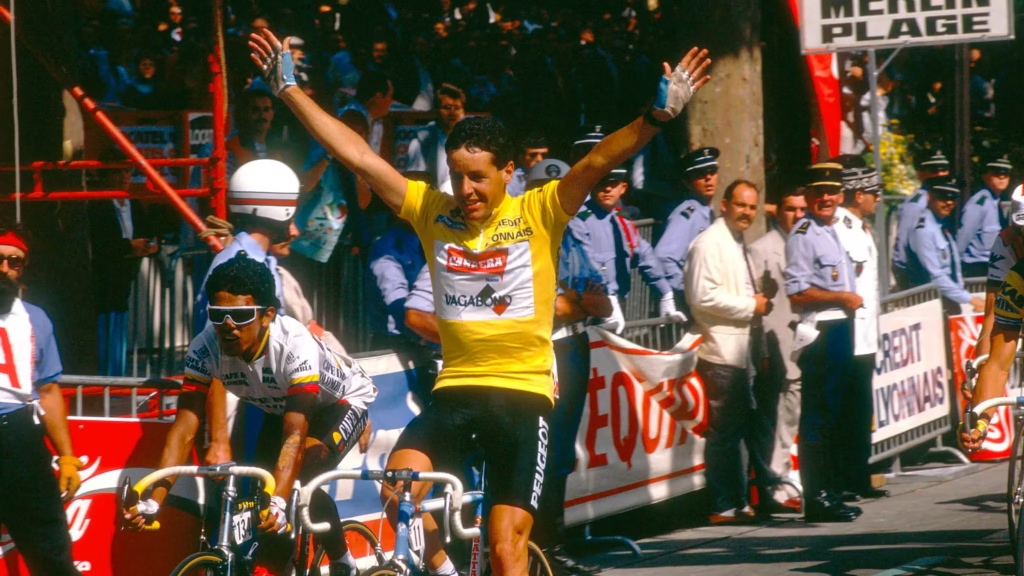
By 1985, Roche had already shown he could handle the biggest race in the sport. He won stage 18 of that year’s Tour de France and finished 3rd overall behind Bernard Hinault and Greg LeMond. That result is easy to overlook because of what happened two years later, but it was a major step. He had already proved he could survive three weeks at the highest level and remain central to the race deep into July.
That version of Roche matters. The 1987 champion did not appear from nowhere. He had already built the body of work of a serious Grand Tour rider before the season that made him immortal.
1987 began with form, not mythology
The extraordinary year did not start at the Giro. Roche had already shown his level in the spring, winning the Volta a la Comunitat Valenciana, taking his third Tour de Romandie title and riding strongly in Paris-Nice. He arrived at the Giro not as a romantic outsider, but as one of the strongest stage-race riders in the peloton.
That helps explain what followed. The Triple Crown year can sometimes be remembered too neatly, as if everything simply fell into place. It did not. Roche entered the biggest races already carrying expectation, already producing, and already looking like one of the few riders capable of taking command of a season.
The Giro was messy, political and decisive
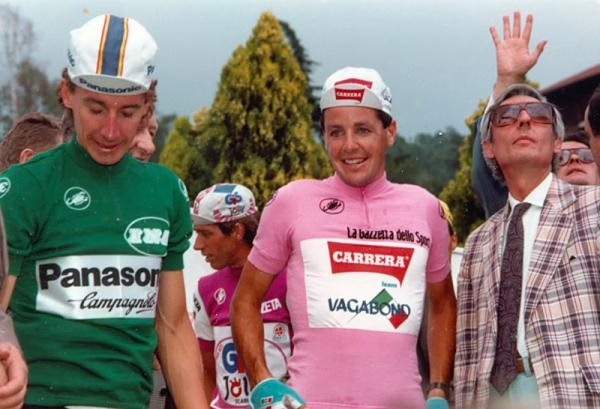
Roche’s 1987 Giro d’Italia remains one of the most dramatic and disputed editions in the race’s history. Riding for Carrera, he was locked in a tense internal struggle with teammate Roberto Visentini. The defining flashpoint came on the stage to Sappada, where Roche attacked in defiance of team orders, went up the road, and helped blow apart the internal hierarchy of the team on his way to taking over the race.
He went on to win the Giro overall, becoming the first Irish winner of the race and the first victor from outside mainland Europe. He also won both individual time trials in that edition, which underlined again that this was not simply a climber hanging on, but a complete rider shaping the race in different ways.
The Giro gave him more than one of cycling’s biggest prizes. It provided the first pillar of the season that would define his name forever.
The Tour de France made Stephen Roche a national sporting giant
Winning the Tour de France in 1987 changed Roche’s career and his place in Irish sport. It gave Ireland its first male winner of the race and placed him in a category of sporting significance that reached well beyond cycling.
The broader symbolism was huge. Ireland had already seen Sean Kelly become one of the best riders in the world, but Roche took something different: the biggest stage race in cycling. He did not simply become a great Irish cyclist. He became the Irish rider who won the Tour.
It also completed the Giro-Tour double, a feat rare enough on its own. Most careers would be remembered for that alone. Roche kept going.
Villach completed the impossible year
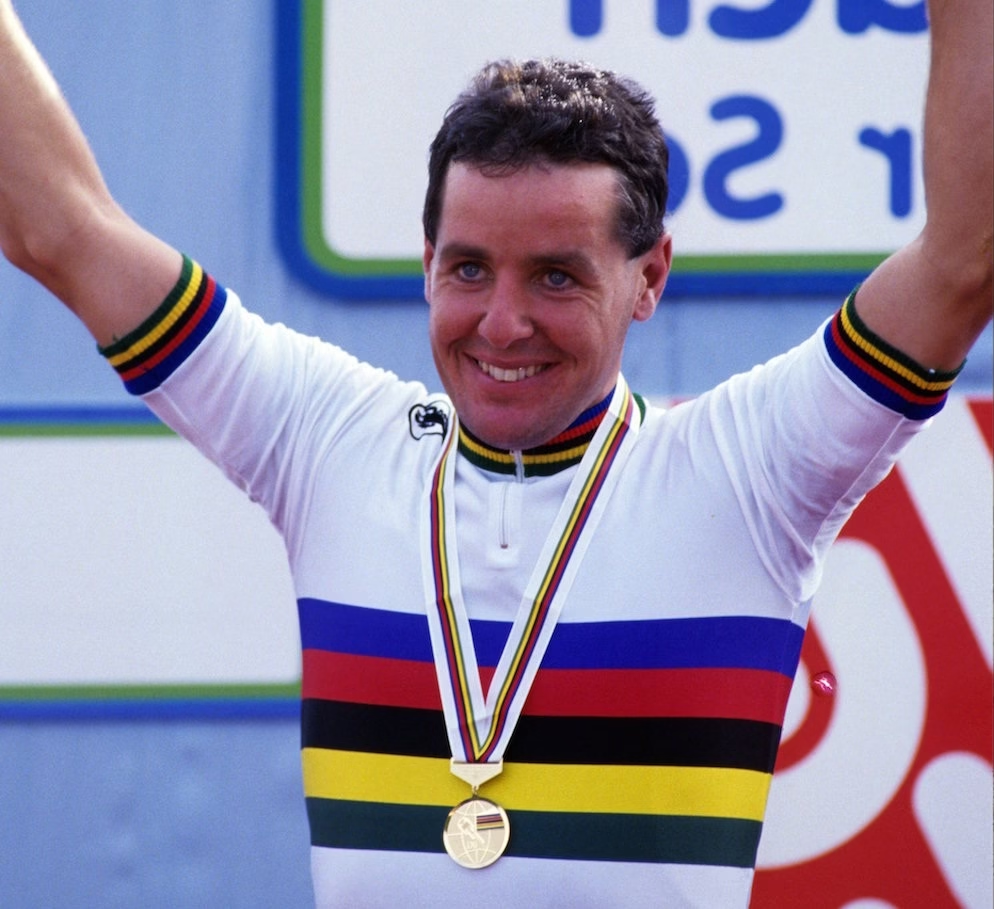
The final act came at the World Championships in Villach. Roche won the men’s road race ahead of defending champion Moreno Argentin and Juan Fernández, and in doing so completed the Triple Crown.
This was not a case of surviving on reputation built earlier in the summer. It was a championship win against the best riders in the world after he had already carried the physical and emotional weight of two Grand Tours. That is what gives 1987 such unusual force. It was not one peak. It was three of the biggest peaks the sport offers, taken in sequence.
The years after 1987 never matched it, but they still count
Nothing else in Roche’s career could rival 1987, and that is part of the difficulty in writing about him. The season was so overwhelming that it can flatten everything around it. But the later years still included strong results, even as injuries increasingly took hold. Roche struggled with recurring knee and back problems after a crash in 1986, and those physical issues shaped the second half of his career.
That does not reduce what came later so much as explain why the 1987 version of Roche feels so singular. He was not a rider with a decade-long period of rule. He was a rider who reached an extreme height and held it long enough to conquer everything worth conquering in one year.
What he is doing now
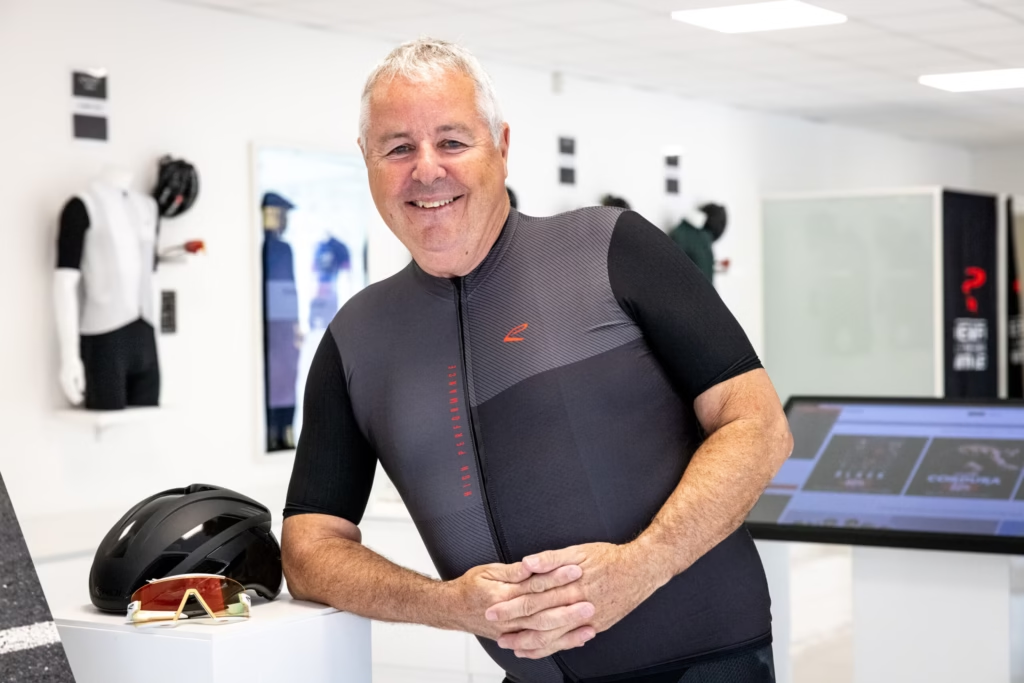
Roche has stayed close to cycling in ways that feel practical rather than ceremonial. One of the clearest examples is his long-running cycling holiday and training camp work, particularly in Mallorca, where his name remains attached to organised riding experiences built around the roads and rhythms of the sport rather than just its nostalgia. That side of his post-racing life suits him well. It keeps him connected to the everyday culture of cycling, not only its grandest memories.
He has also remained visible through ambassadorial and charity roles. In recent years that has included appearances linked to major fundraising cycling events, where his presence carries obvious weight because he is not just a former professional, but one of the very small number of riders whose career still changes the way people talk about the sport’s biggest achievements.
Media work has been part of that picture too. Roche has spent time in commentary and television, which helps explain why his voice and his perspective still surface so naturally around Grand Tours, big one-day races and historical comparisons. When the Giro-Tour double, the Triple Crown or the shape of a truly dominant season comes up, he is not only a historical example. He is still close enough to the sport to be part of the discussion around it.
That feels like the right kind of second act. Roche is not visible only because of anniversaries or because 1987 keeps getting replayed. He has remained present through riding, media and public-facing cycling work, which keeps him connected to both the culture and the ongoing history of the sport.
How Stephen Roche should be remembered
Stephen Roche should be remembered first as one of the sport’s great one-season peaks, but that description is almost too narrow. He was already a serious rider before 1987, and the earlier wins and Tour podium prove that. What made him unique was that, for one extraordinary year, he turned that quality into total conquest. Giro d’Italia, Tour de France, World Championship. There is no way to make that list sound ordinary.
For Ireland, he was the rider who brought the sport’s biggest prizes into national sporting history. For cycling, he remains one of the very few men whose career can be defined by a single season without that sounding reductive. In Roche’s case, the year was simply that big.
-
 Photo Credit: Gaetan Flamme