La Vuelta Femenina has quickly become one of the most important stage races in women’s cycling because it offers something slightly different from the Giro d’Italia Women and the Tour de France Femmes. The Spanish Grand Tour is shorter, more compressed and often more immediate in how it asks questions of the field. There is less room to recover from a bad day, fewer quiet transitions and a greater sense that the race can tilt very quickly once the climbing starts to bite.
That compact shape has helped La Vuelta Femenina build a clear identity in only a few editions under its current format. It remains a race where GC riders matter most, but it still leaves space for puncheurs, breakaway specialists and fast finishers in the early and middle part of the week. The balance is always delicate. Teams want to protect their leaders for the mountains, but they also know that time gaps, bonuses and positioning stress can begin shaping the overall picture well before the high-altitude stages arrive.
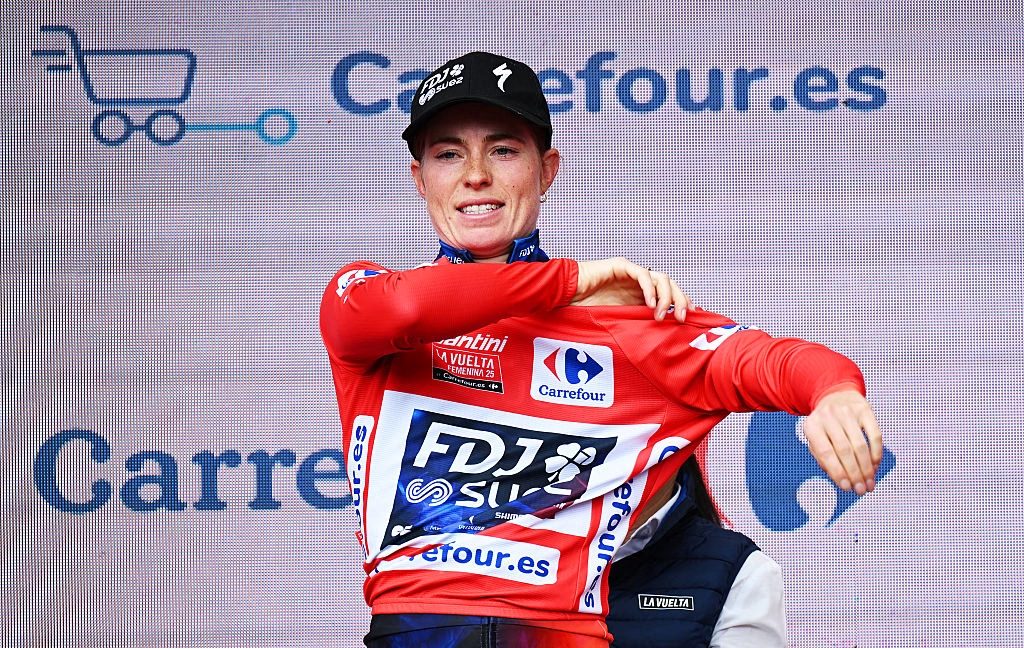
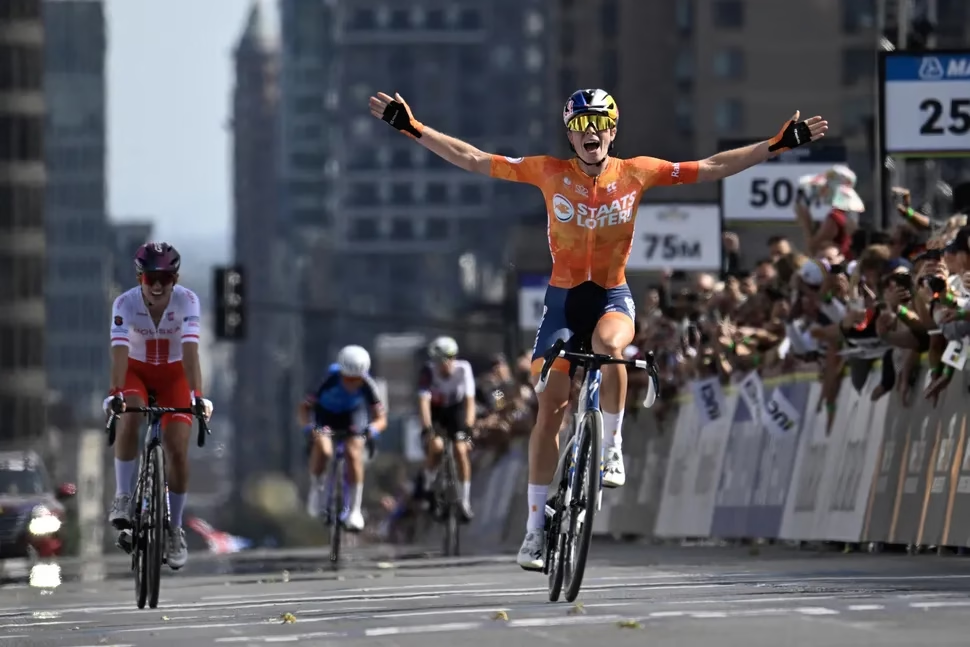
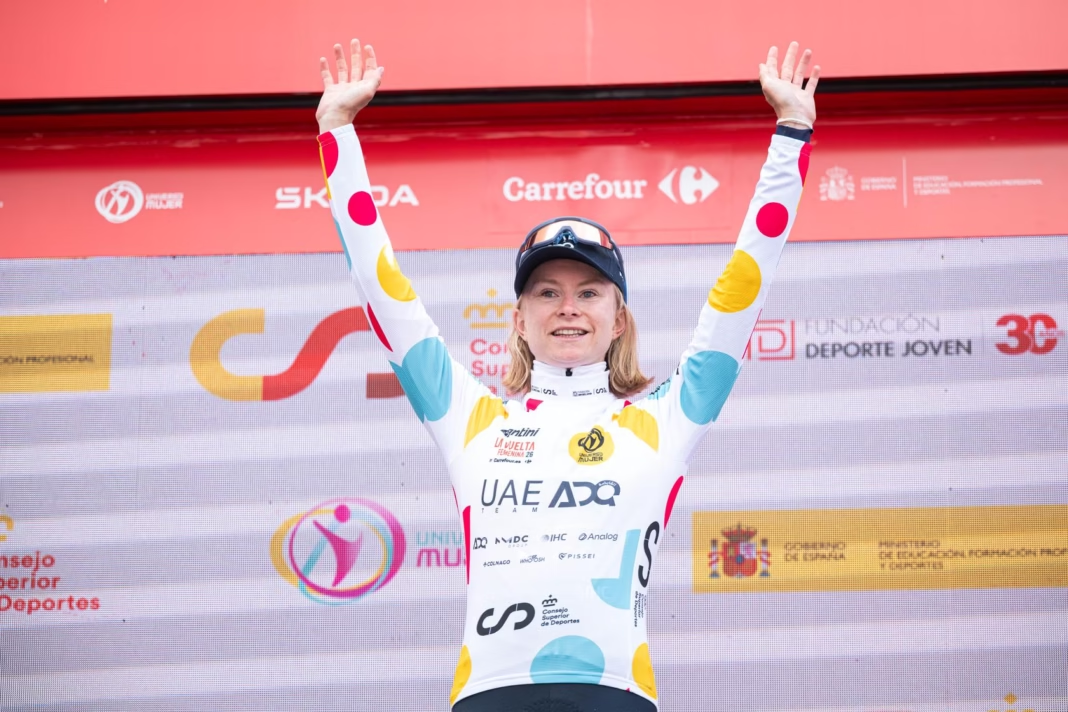
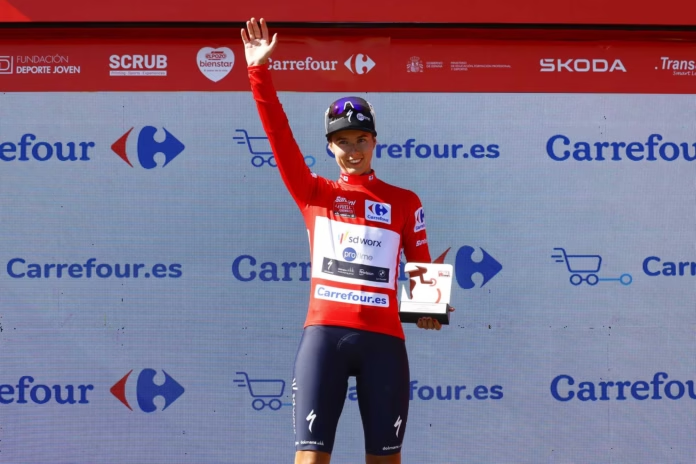
The recent roll of honour reflects the race’s growing status. Demi Vollering won in both 2025 and 2024, confirming her authority in stage-race terrain that demands both climbing strength and consistency across a full week. Before that, Annemiek van Vleuten won the 2023 edition, setting the early standard for what a dominant Vuelta campaign could look like. Those winners also tell a broader story, because La Vuelta Femenina has very quickly become a race that elite GC riders target seriously rather than treat as a secondary spring objective.
For 2026, the route looks even more decisive. The race starts in Galicia, moves eastwards and then finishes with two major mountain stages in Asturias, first at Les Praeres and then on the Angliru. That closing sequence should define the general classification, but it would be a mistake to see the first five stages as simple preparation. The route gives climbers the strongest hand overall, yet the hilly opening half still contains enough complexity to punish weak positioning, expose teams with limited depth and force contenders to stay sharp long before the final summit finishes.
Previous Winners
2025
Demi Vollering
2024
Demi Vollering
2023
Annemiek van Vleuten
2026 La Vuelta Femenina route
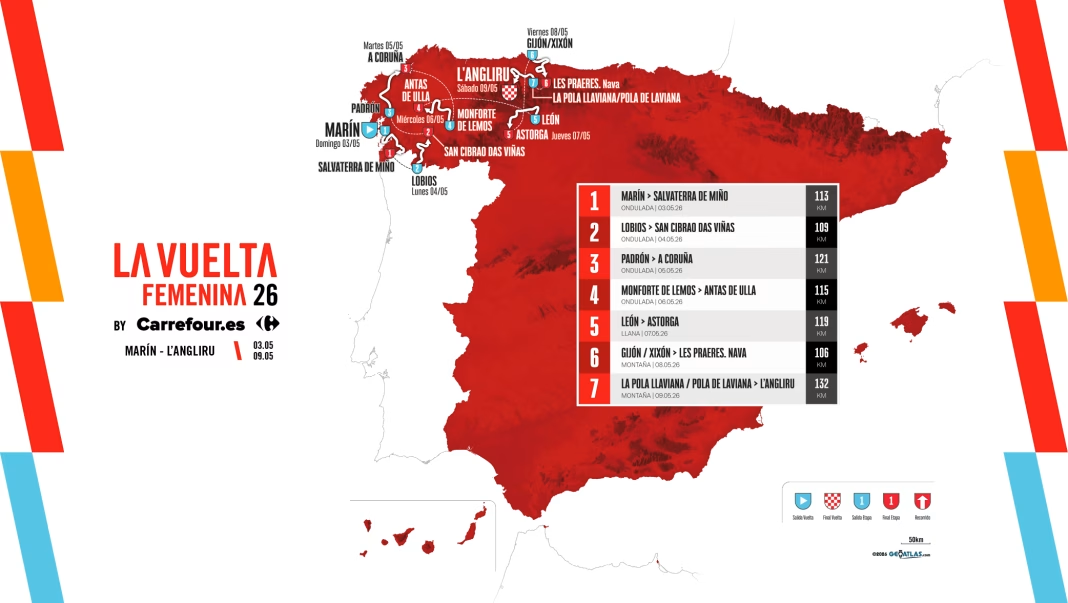
The 2026 La Vuelta Femenina covers seven stages and 819.5 kilometres, beginning in Marín on Sunday, 3rd May and finishing on the Angliru on Saturday, 9th May. The route opens with four days in Galicia, where hilly terrain and irregular roads should keep the race lively without immediately deciding the GC. From there, the race crosses into León before ending with back-to-back summit finishes at Les Praeres and the Angliru, a closing combination that gives the final weekend a far more severe feel than most recent editions.
What makes this route so interesting is the way it escalates. There is one obvious flat opportunity on paper, but most of the week carries enough climbing or enough awkward terrain to keep teams working. That means the pure sprint teams may have limited influence compared with the squads built around GC riders and versatile stage hunters. By the time the race reaches Asturias, the contenders should already have been tested by repeated positioning battles and rolling terrain. Then the route changes sharply, asking for genuine climbing depth on two of the most demanding summit finishes the race has yet used.
Stage 1
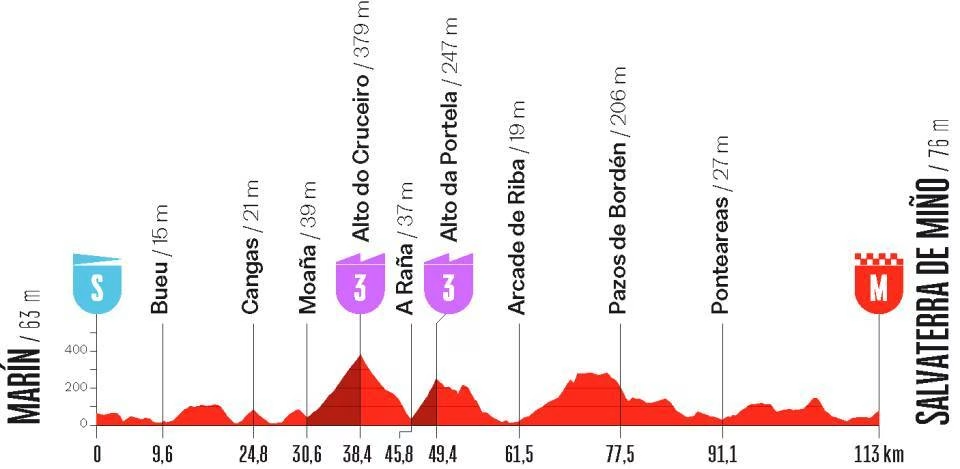
The opening stage from Marín to Salvaterra de Miño is labelled hilly and looks ideal for creating early pressure without delivering a major GC split. The toughest climbs come well before the finish, which should encourage aggressive teams to race hard while still leaving room for a reduced group sprint or a late attack. It is the kind of opener that can quickly expose who has arrived with good legs.
Stage 2
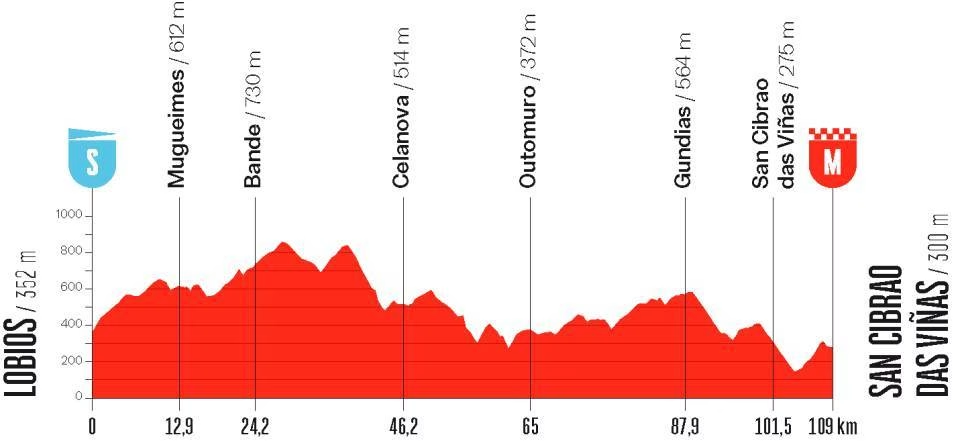
Stage 2 from Lobios to San Cibrao das Viñas is another hilly day and could prove more important than it first appears. It is short enough to be raced aggressively and awkward enough to suit teams willing to attack before the finish. Riders with punch and strong one-day instincts may see this as one of their best chances of the week.
Stage 3
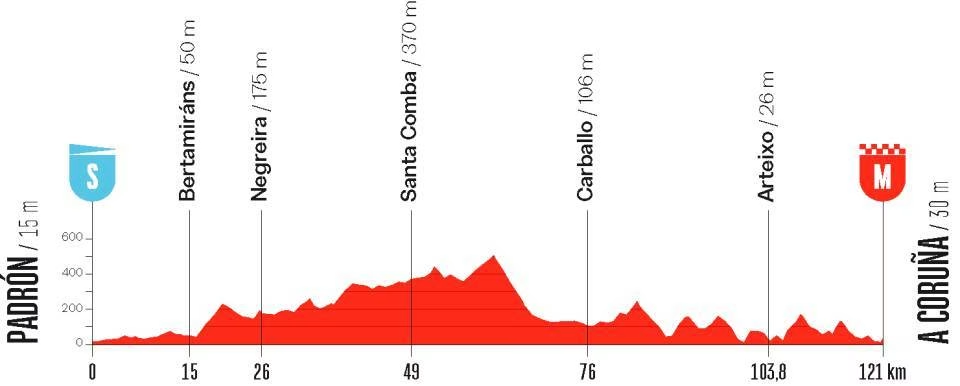
The route from Padrón to A Coruña is the clearest sprint opportunity in the race. Even here, though, teams will need to stay alert because flat Spanish stages are not always as simple as the label suggests. This should still be one for the fastest finishers if their teams can control the day and keep the late kilometres compact.
Stage 4
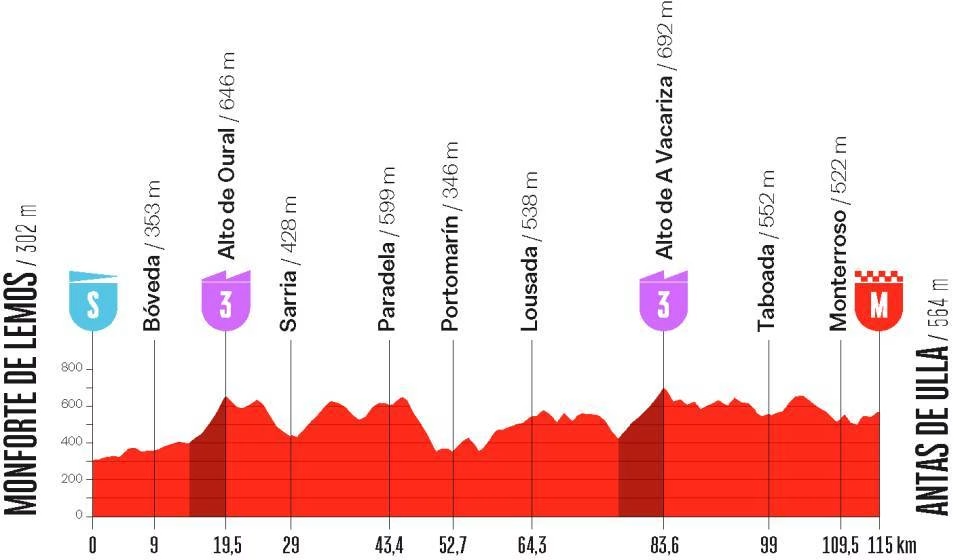
Stage 4 from Monforte de Lemos to Antas de Ulla takes the race back onto hilly terrain and should again keep the GC riders switched on. It is not the sort of day that guarantees large time gaps, but the repeated efforts can still wear riders down and create openings for strong breakaway moves or selective late attacks.
Stage 5
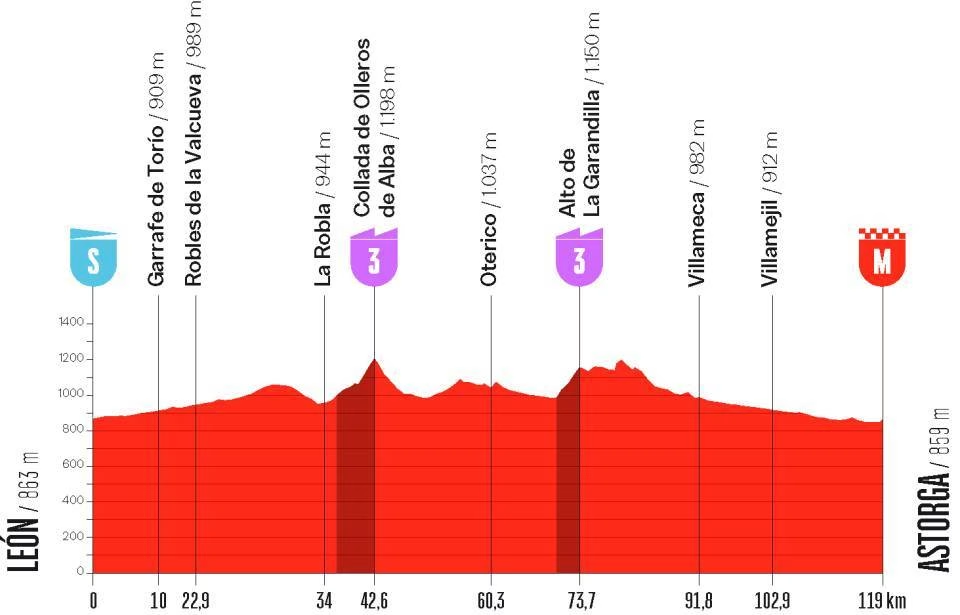
From León to Astorga, Stage 5 is another day that should favour the faster riders, although it comes at a point in the race where fatigue may already be shaping how teams race. This is likely to be the final chance for the sprint squads before the mountains take over completely, so the fight to bring it back together could be intense.
Stage 6
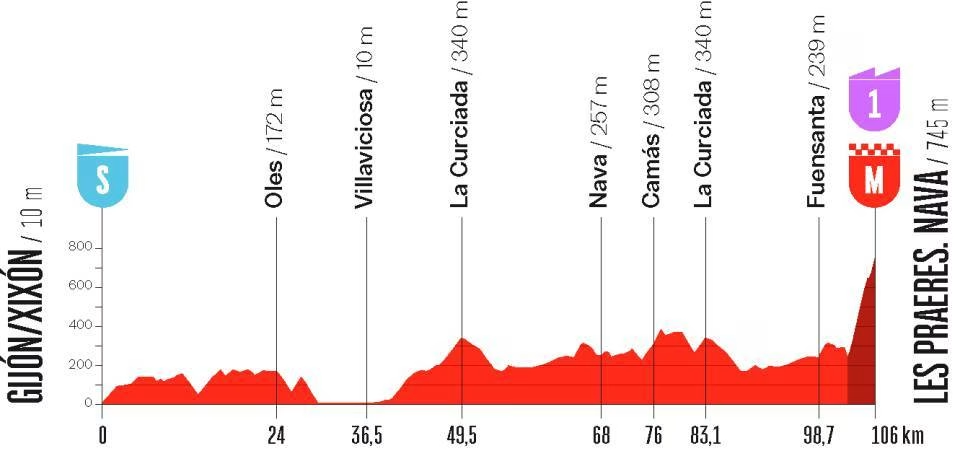
The race should change decisively on Stage 6 from Gijón/Xixón to Les Praeres de Nava. Les Praeres is not long by high-mountain standards, but its steep gradients make it a brutal summit finish and a perfect place for explosive climbers to attack. Riders who have been carefully managing losses earlier in the week will need to show themselves here.
Stage 7
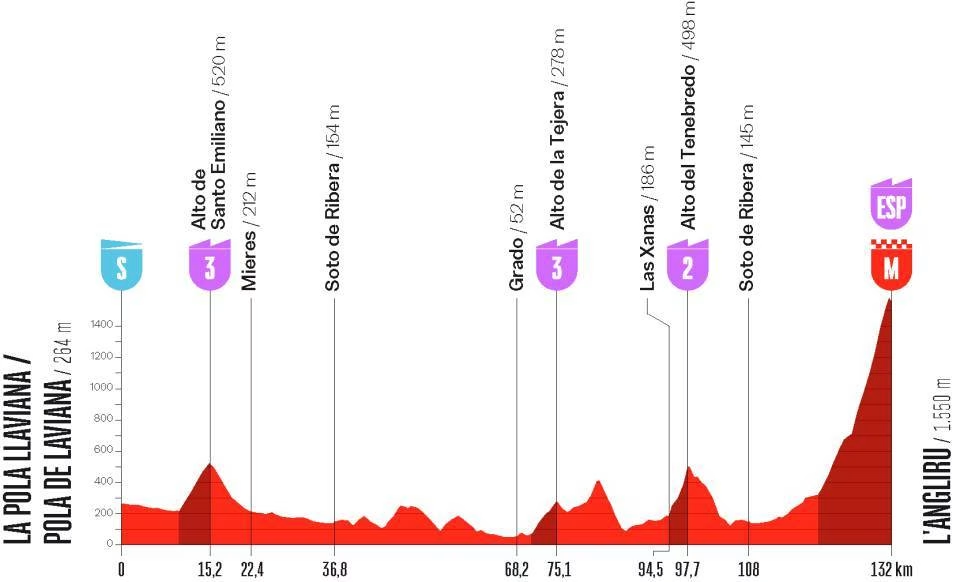
The final stage from Pola de Laviana to the Angliru gives the race its headline moment. The Angliru has such weight in cycling history that its first appearance in La Vuelta Femenina feels significant in itself, but it is also a very practical GC separator. The gradients are severe, the effort is unhideable and any remaining ambiguity in the red jersey battle should disappear on this climb.
2026 La Vuelta Femenina live TV coverage
Race Date: Sunday, 3rd May to Saturday, 9th May 2026
United Kingdom
Live coverage is available via TNT Sports and HBO Max.
International broadcasters
Across much of Europe, coverage is available via Eurosport and HBO Max, with free-to-air coverage also carried by selected EBU broadcasters in some markets. In Spain, the race is broadcast via RTVE. In the United States and Canada, coverage is available via FloBikes.
2026 La Vuelta Femenina startlist

2026 La Vuelta Femenina Contenders

A GC-first approach makes sense for FDJ United-SUEZ because they arrive with the deepest bank of proven Vuelta performers in this field. Juliette Berthet has four top-10s across seven starts, which is exactly the sort of reliability you want in a race that often rewards consistency and damage limitation as much as one spectacular climb. Evita Muzic brings similar depth: three top-10s in five starts plus a stage win, and she fits the profile of a rider who can climb well enough to stay in the GC conversation while still taking time on the right day. If the race becomes tactical rather than purely about watts, Franziska Koch is the kind of rider who can influence the shape of stages before the final climbs, while Lea Curinier and Eva van Agt add support for the frantic positioning and crosswind risk that can quietly decide early GC gaps.
The most obvious “always there” Vuelta GC contender on this start list is Katarzyna Niewiadoma-Phinney, and her record shows it. Three top-10s from five starts is strong in a race that punishes one bad day, and she is at her best when the race is raced aggressively rather than managed conservatively. Canyon SRAM also have riders who can support the two crucial parts of Vuelta racing: positioning and attrition. Cecilie Uttrup Ludwig has already delivered a top-10 in her only Vuelta start, which is a useful marker that she handles the multi-day rhythm well. Soraya Paladin adds another card for harder stages that end in reduced groups, while the presence of Neve Bradbury gives Canyon a rider who can handle GC pressure if the race becomes a pure climbing test.
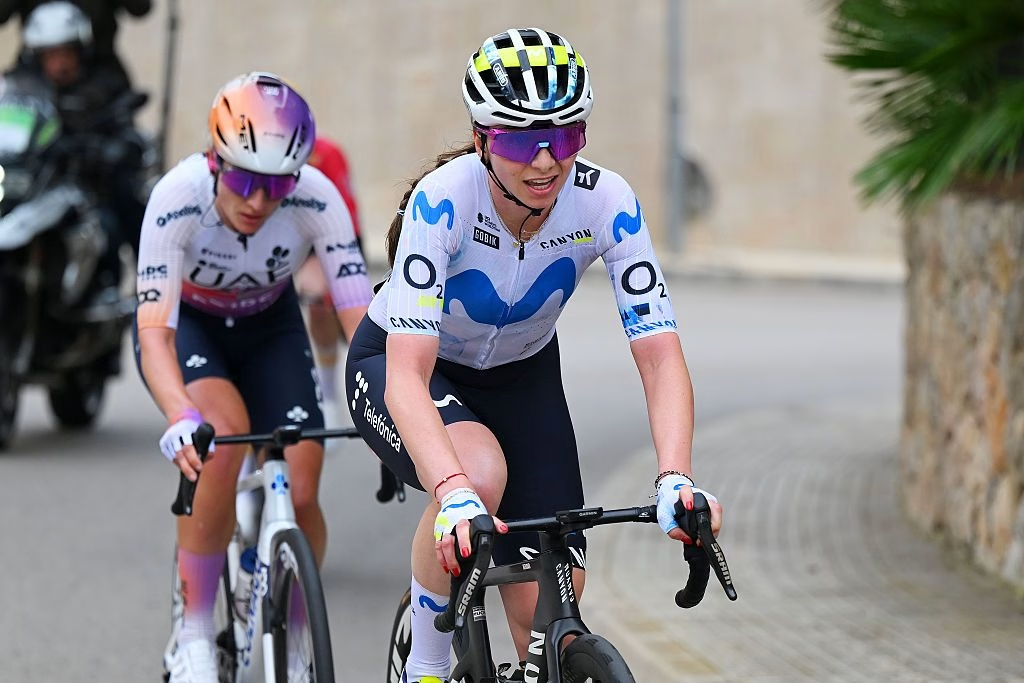 Photo Credit: Getty
A slightly different two-track threat comes from Movistar, because they arrive with riders who have already shown they can survive the Vuelta’s GC rhythm while still being dangerous on stages. Liane Lippert has three top-10s from seven Vuelta starts, which suggests she understands exactly how to manage the week and still deliver on the decisive stages. If the race throws up reduced sprints on transitional days, Arlenis Sierra is the finisher who can turn that into a result, while riders like Sara Martin and Tota Magalhaes can help keep the team in position on the days where crosswinds and chaotic finales quietly reshape the standings.
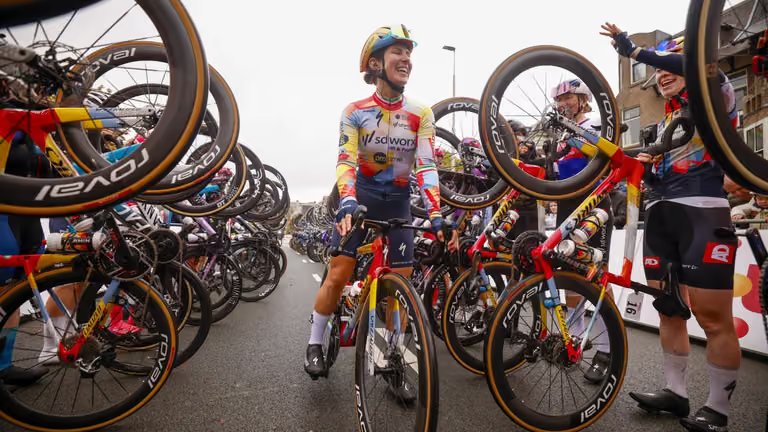
A stage-winning focus still makes sense for Team SD Worx-Protime, but the Vuelta history gives them multiple ways to matter. Anna van der Breggen has a Vuelta podium and a stage win from just two starts, which tells you she can be decisive when the race hits the mountains. Nienke Vinke has already placed in the top-10 once from two starts, and she is the kind of rider who can grow into the week if the early days are hard and the race becomes about endurance. There is also a punchy stage layer. Lotte Kopecky has a Vuelta stage win and can be dangerous on the right terrain, while Mischa Bredewold gives them another aggressive card if breakaways are allowed space.
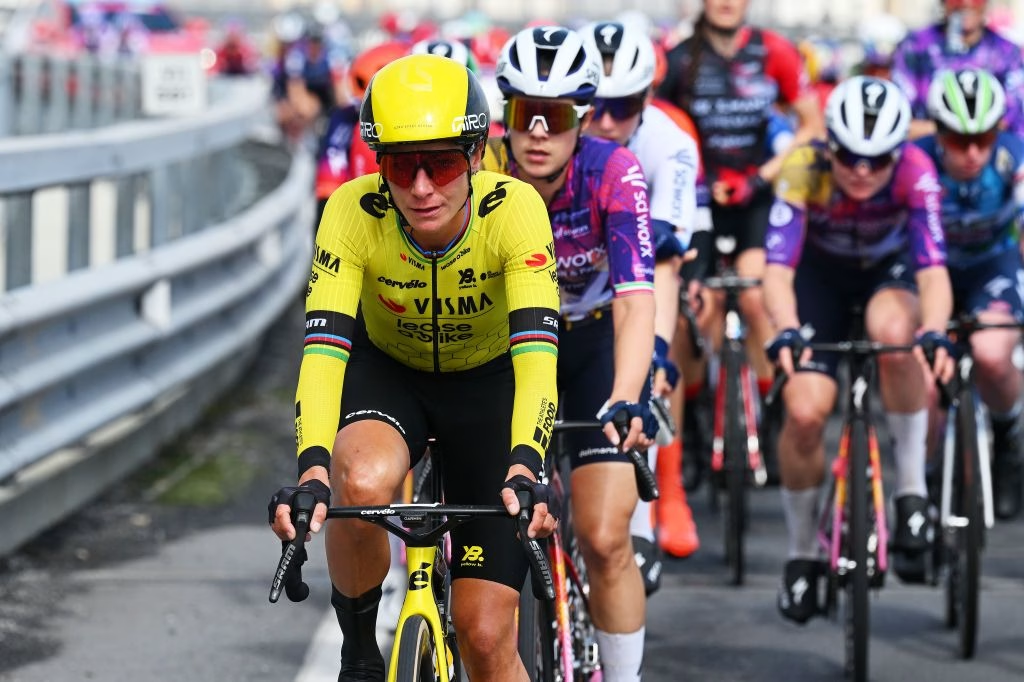
If the race includes stage opportunities for fast finishers, Team Visma | Lease a Bike has the clearest proven winner in the field through Marianne Vos. Six Vuelta stage wins from three starts is a striking record, and it points to a rider who reads the week brilliantly, picks the right stages, and still finishes even when the terrain is not perfectly flat. Visma also have riders who can take a different route. Marion Bunel gives them a climbing option if the week becomes selective enough for a GC push, while Lieke Nooijen is the kind of rider who can stay present on hard transitional days and still be relevant late in the week.
A more pure climbing and attrition profile comes from Lidl-Trek, because they have a clear GC card and enough experience to support it across a full week. Gaia Realini has a Vuelta podium and a stage win from only two starts, which is an excellent strike rate and suggests she can climb at the level required to shape the overall. The team also have riders with a reliable history. Riejanne Markus has a Vuelta podium and two top-10s, while Ricarda Bauernfeind has two top-10s from two starts, a strong early-career signal of course fit. If the race throws up reduced sprints, Lidl have enough depth to stay competitive even when the stage does not suit pure climbers.
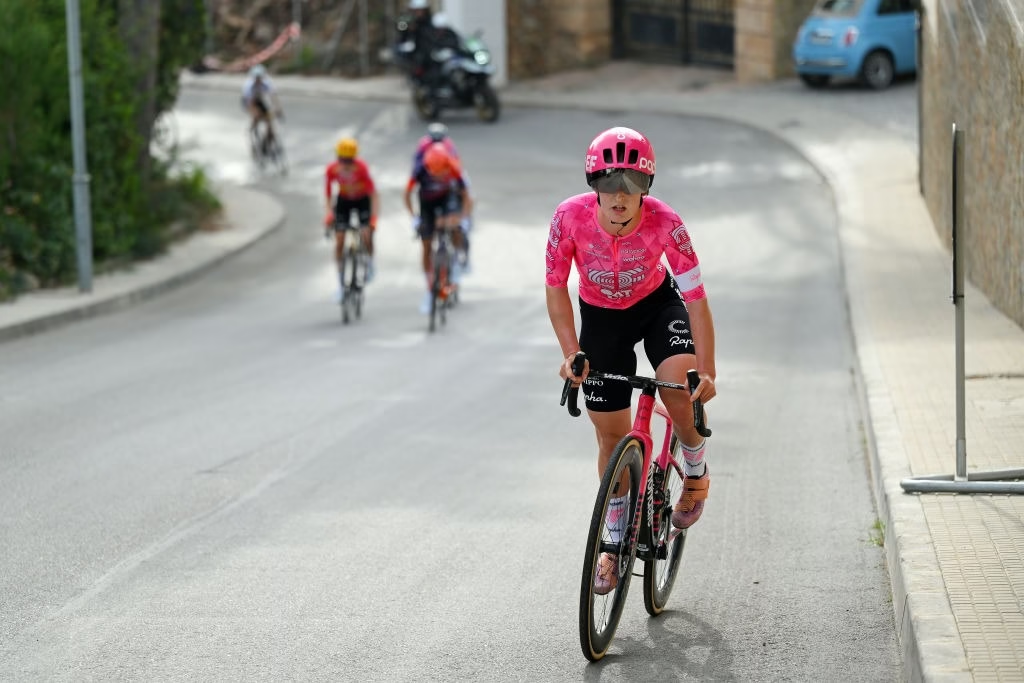
A team with one of the more interesting blends of stage hunting and a plausible GC foothold is EF Education-Oatly, largely because they have riders who can attack the week rather than simply defend it. Cédrine Kerbaol already has a top-10 in her only Vuelta start, a good indicator that she handles the race rhythm well, and she comes into the Spanish block after a strong spring, including 7th in GC at Setmana Ciclista Valenciana. The stage angle is also clear. Kristen Faulkner has a Vuelta stage win in her history and is capable of forcing a day rather than waiting for it, while Noemi Rüegg gives them a fast finisher for stages that end in reduced groups rather than pure bunch sprints.
Stage hunting still looks like the clearest Liv AlUla Jayco route, but the line-up also includes one rider who can push a credible GC line if the mountains are selective. Monica Trinca Colonel has already placed in the Vuelta top-10 once in two starts, and that is a useful marker for a rider still building her stage-race profile. The more obvious stage card is Letizia Paternoster, who has a Vuelta top-10 and is at her best when the finish is fast but messy, while Ruby Roseman-Gannon adds another finisher if the final group is reduced and the sprint is improvised.

The “survive, then profit” version of the Vuelta often suits teams that can keep riders upright and positioned early, then steadily climb into relevance as others fade, and AG Insurance-Soudal fit that shape well. Ashleigh Moolman-Pasio is the obvious endurance card, and Urška Žigart gives them another rider who can hold steady across multiple climbing stages. If the race allows breakaways space, riders like Mireia Benito can become relevant simply by being aggressive at the right moments, while the presence of Shari Bossuyt gives them a faster option if a transitional stage ends in a reduced group rather than a full bunch sprint.
When the race is selective but not fully decided by GC climbing, UAE Team ADQ can matter more than the headline names suggest, because they have riders suited to those awkward in-between stages. Mavi Garcia has a Vuelta top-10 in her history and is the type of rider who can ride into form during the week, especially if the key stages are attritional rather than explosive. Erica Magnaldi also has a top-10, and that suggests she can survive in the right group on decisive days. Paula Blasi gives them an aggressive option for stages where a strong move can gain time before the main GC battle begins, while Maeva Squiban is another rider who can profit if the race shape rewards opportunism.

A stage win without any need for GC ambition is exactly the kind of objective Human Powered Health can execute well, because they have riders suited to long-range moves and hard, selective stages. Petra Stiasny is the obvious attacker for the mountain days, especially if the race shape rewards a steady, committed tempo rather than explosive climbing. If she goes early and the GC teams hesitate behind, that is exactly the scenario where a rider like her can turn freedom into a stage result. The supporting cast matters too. Riders like Katia Ragusa and Barbara Malcotti can help make breakaways stick on lumpy transitional stages, while Marta Jaskulska gives them another option if the race is aggressive and the winning move comes from a strong group rather than a solo.
Momentum can be a real asset in stage racing because it changes how riders commit to moves, and Laboral Kutxa-Fundacion Euskadi arrive with exactly that kind of spark. Usoa Ostolaza is the headline name, and coming in off a win at GP de Eibar is a meaningful form marker, it is exactly the kind of result that suggests a rider will commit when an opportunity appears rather than waiting for permission. If the Vuelta includes a mountain stage that invites a long-range move, Ostolaza is the type who can make it happen. Riders like Tiril Jørgensen and Catalina Soto Campos also fit the breakaway profile, which matters because stage racing is often about having more than one rider able to get into the right move on the right day.
A reduced bunch sprint is not guaranteed in the Vuelta, but when it does happen, Lotto-Intermarché Ladies have the most straightforward stage-win-by-sprint card among the teams you flagged. Lea Lin Teutenberg is always a realistic finisher when the race offers a reduced bunch sprint or a chaotic finale where positioning matters more than a perfect lead-out. The key for a rider like Teutenberg is simply surviving the day, then arriving in the final kilometre with enough support to keep her out of trouble. If the sprint trains fragment and the finish becomes improvised, that is often where a rider with her speed can turn one clean launch into a stage win.
Top 3 Prediction
⦿ Anna van der Breggen
⦿ Kasia Niewiadoma-Phinney
⦿ Juliette Berthet
-
 Photo Credit: Unipublic/Cxcling/Aritz Arambarri
 -
 Photo Credit: Cor Vos