La Vuelta Femenina 2026 already looked serious on paper. Then the Angliru turned it into something else.
This year’s race runs from Sunday, 3rd May to Saturday, 9th May, packs in more than 14,500 metres of elevation gain, and finishes with back-to-back mountain stages to Les Praeres and then the Alto de l’Angliru. The organisers have framed it as a route designed for climbers, and the Angliru debut is the clearest reason why.
The final day changes how the whole race should be ridden
The route is not flat before Asturias. Stage 1 from Marín to Salvaterra de Miño is hilly, Stage 2 from Lobios to San Cibrao das Viñas is also awkward, and the race only briefly loosens its grip before the final mountain block. Stage 6 then climbs to Les Praeres, before Stage 7 finishes on the Angliru.
That structure changes the whole week. A final-stage Angliru means no GC rider can afford to spend the early part of the race only reacting. They need to arrive at the last weekend with time, position and team support still intact, because the final climb is hard enough to wipe out any margin that is merely decent rather than secure.
The Angliru is not just steep, it is race-shaping
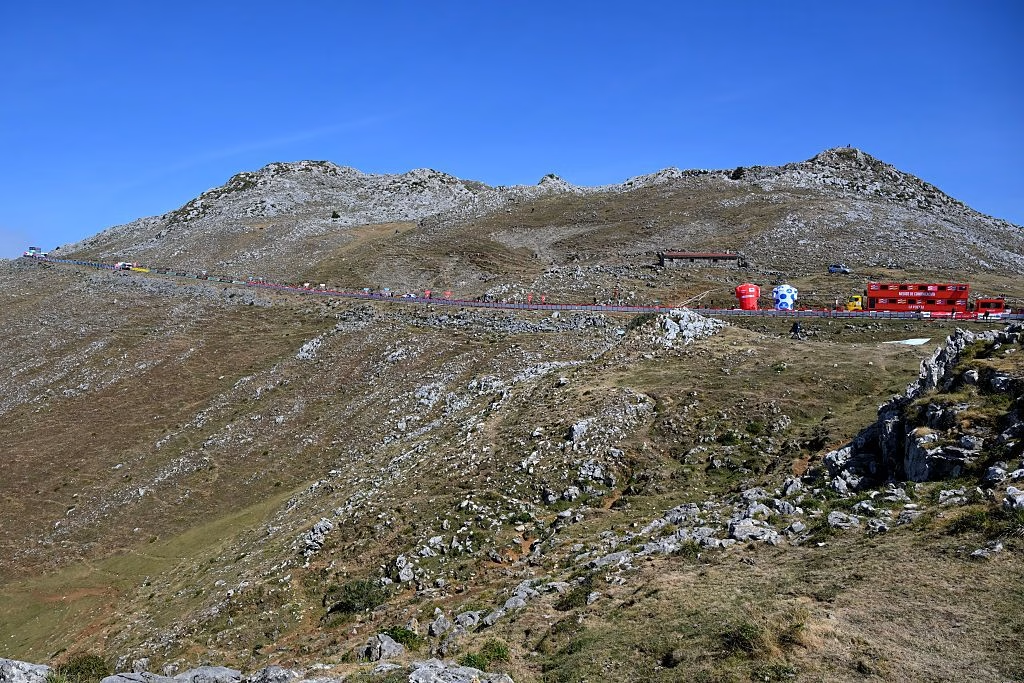
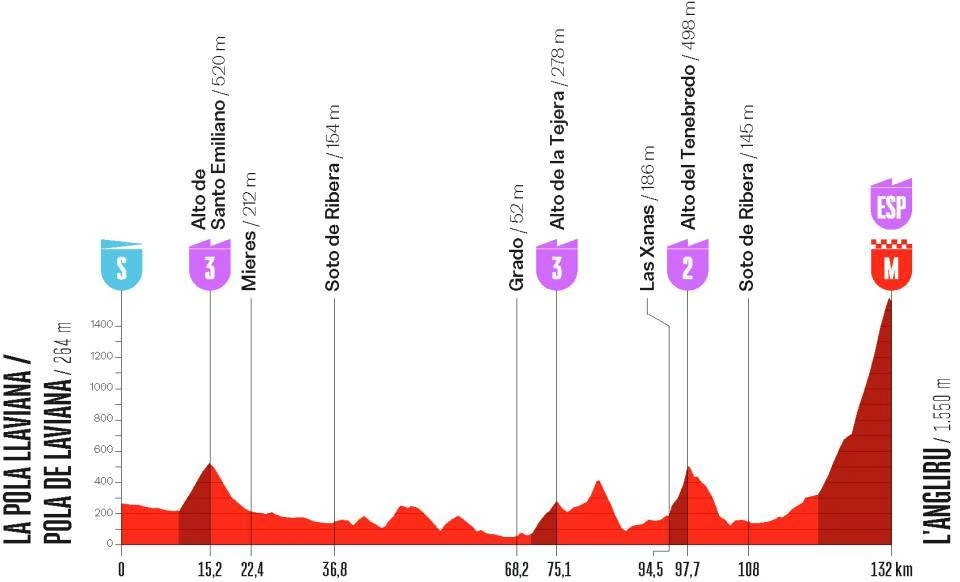
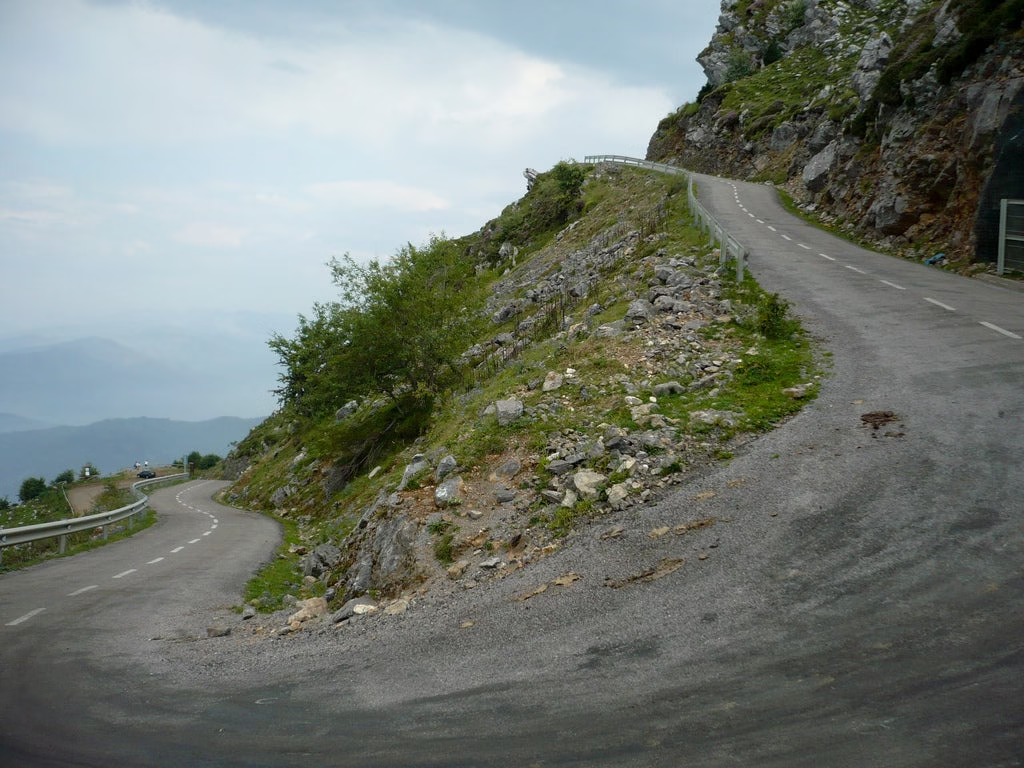
The organiser describes the climb as 12.4 kilometres at an average of 9.7 per cent, with ramps up to 23 per cent and whole kilometres well above 15 per cent. It also says the climb gains around 1,200 metres and calls it the most gruelling ascent yet faced in the Spanish women’s grand tour.
Those numbers are not interesting as spectacle alone. They define how the race can break apart. A climb like that does not simply reward the strongest climber. It punishes weakness brutally and immediately. Riders can manage small losses on many summit finishes. On the Angliru, small weaknesses can become large time gaps very quickly.
That means pacing errors matter more. A rider who spends too much energy in the wrong part of the week, or even in the wrong part of the stage, may not just lose a few seconds at the end. She can lose the race.
It gives La Vuelta Femenina a harder GC identity
La Vuelta Femenina has grown steadily in stature, but the 2026 route gives it a sharper, more selective identity than some previous editions. The official route announcement says the course is designed for climbers, while the organiser’s pre-race build-up has naturally drawn attention to riders such as Pauline Ferrand-Prévot, Kasia Niewiadoma-Phinney and Anna van der Breggen.
That fits the route perfectly. This is no longer a race where a strong all-rounder can simply limit losses in the mountains and expect the rest of the week to hold everything together. The final two stages are hard enough to make the pure GC riders the centre of the race. The Angliru does not just decide the final day. It gives the whole event a more uncompromising hierarchy.
The final weekend should reward depth, not just one big attack
There is another important detail in the route design. The Angliru comes after Les Praeres, not in isolation. Stage 6 is already a summit finish, which means the final weekend is built as a sequence rather than one dramatic reveal.
That should make recovery and team strength especially important. A rider can still produce one brilliant day after a hard week. Producing two decisive climbing performances in succession is much harder. The best GC riders will need form, but they will also need the sort of team support that keeps them out of trouble earlier in the week and delivers them to Asturias with as little wasted effort as possible.
This is what gives the route more depth than a simple “wait for the queen stage” reading. The Angliru is the ultimate test, but it comes after the race has already started asking serious questions.
The earlier stages now carry more weight
The obvious risk with any famous summit finish is that everything before it gets treated as preamble. This route should avoid that. The early Galician stages are awkward enough, the total climbing is high enough, and the final weekend is severe enough that the race should accumulate pressure from day one.
That is probably the best thing about the Angliru being here. It does not reduce the race to one climb. It sharpens the meaning of the whole week. Every small gap, every hard chase, every day where a contender spends a little too much energy starts to carry more weight because the final test is so unforgiving.
That is what a great summit finish should do. Not replace the race around it, but make every earlier stage feel more consequential.
Why the Angliru matters so much in 2026
The Angliru gives La Vuelta Femenina 2026 a clearer identity and a harder edge. It makes the race more demanding for the best climbers, more dangerous for anyone trying to bluff their way through the mountains, and more compelling for viewers because the route now has an unmistakable final shape.
This is not just a famous climb added for branding. It changes how the whole race will be ridden. And if the route works as intended, the rider who wins on the Angliru, or survives it best, will feel like the proper winner of a very serious edition of La Vuelta Femenina.