
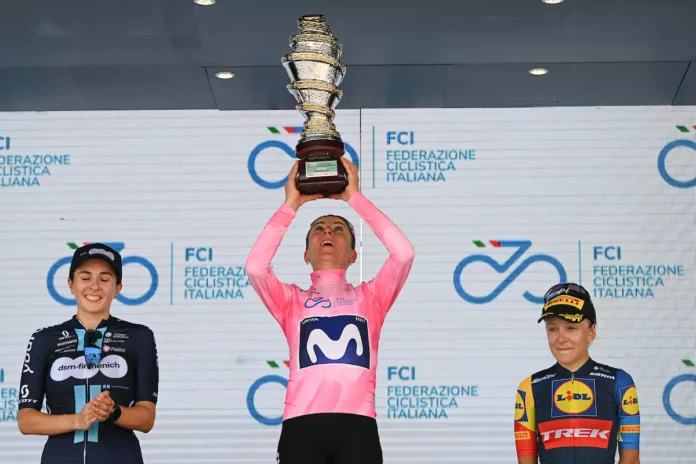
The Giro d’Italia Women has long been one of the defining races in women’s cycling, but its story is more layered than the current branding suggests. The race began in 1988, originally as the Giro d’Italia Femminile, and from the outset it offered something rare: a proper Italian stage race built around climbing, time gaps and overall classification ambition. Over the years, it has also raced under the names Giro Rosa, Giro d’Italia Donne and Giro Donne before returning to the Giro d’Italia Women title under RCS Sport.
How the race began
The first edition in 1988 was won by Maria Canins, giving the race an Italian winner and an immediate sense of prestige. In those early years the event was still establishing what it wanted to be, but it quickly became clear that this was not just another stage race on the calendar. It was the race that asked the biggest questions of the best all-round riders, especially once the climbing started to shape the general classification.
By 1990, the race had already become international in feel, with Catherine Marsal becoming the first non-Italian winner. That mattered because it showed the Giro was not simply a domestic flagship, but a race that the best riders from across Europe were beginning to treat as one of the season’s major targets.
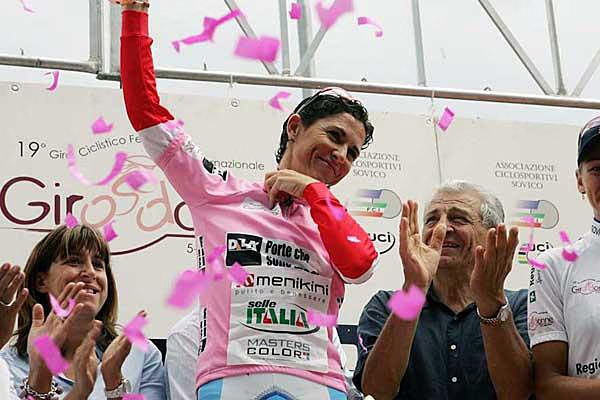 Photo Credit: Nicola Ianuale
The Fabiana Luperini era
No rider is more closely associated with the race than Fabiana Luperini. She won the Giro five times in total, and four of those victories came consecutively from 1995 to 1998. That run remains one of the most dominant spells any rider has ever had in a women’s stage race.
Luperini helped define what the race stood for. This was a race for climbers, for riders who could carry form across a full week, and for those who could turn one hard mountain day into minutes rather than seconds. Her dominance gave the Giro one of its first true era-defining champions and established a standard that later winners would always be measured against.
Why the Giro became so important
As women’s cycling moved through the 2000s and 2010s, the Giro became even more central. Other major women’s stage races disappeared or lost ground, but the Giro remained the reference point. For a long time, if you wanted to win the most prestigious week-long race in women’s cycling, this was it.
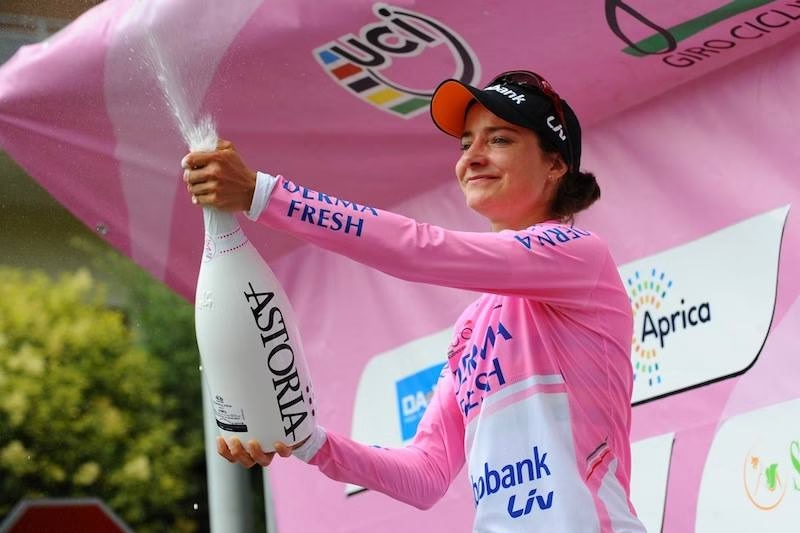
That standing gave extra weight to the riders who built their palmarès here. Joane Somarriba won three times. Nicole Brändli won four times. Then the race moved into a more modern era shaped by some of the biggest names the sport has known, including Marianne Vos, Anna van der Breggen and Annemiek van Vleuten.
Vos won the race three times, a reminder that her brilliance was never limited to one-day racing or sprint finishes. Van der Breggen won four editions and brought her usual mix of climbing control, race intelligence and late-race authority. Van Vleuten then added four wins of her own and, in doing so, became one of the defining Giro riders of the modern era. When you look through the winners list, you are not just looking at strong riders, but at the riders who defined whole periods of women’s cycling.
A race that changed names but kept its identity
Part of the race’s history is also its shifting identity. For many fans, it was the Giro Rosa for years, and that name still carries weight because it covered so much of the event’s modern growth. But the race itself remained recognisable through the branding changes. It was still Italy’s major women’s stage race, still a climbing-heavy test, and still a key goal for riders with GC ambitions.
That continuity is what makes the race so important historically. Even when the number of stages, route style and organisation changed from one period to the next, the basic challenge stayed familiar. You had to survive the week, handle the climbs, limit your losses on the wrong day and take your chances on the right one. In that sense, the Giro’s identity stayed stronger than its title.
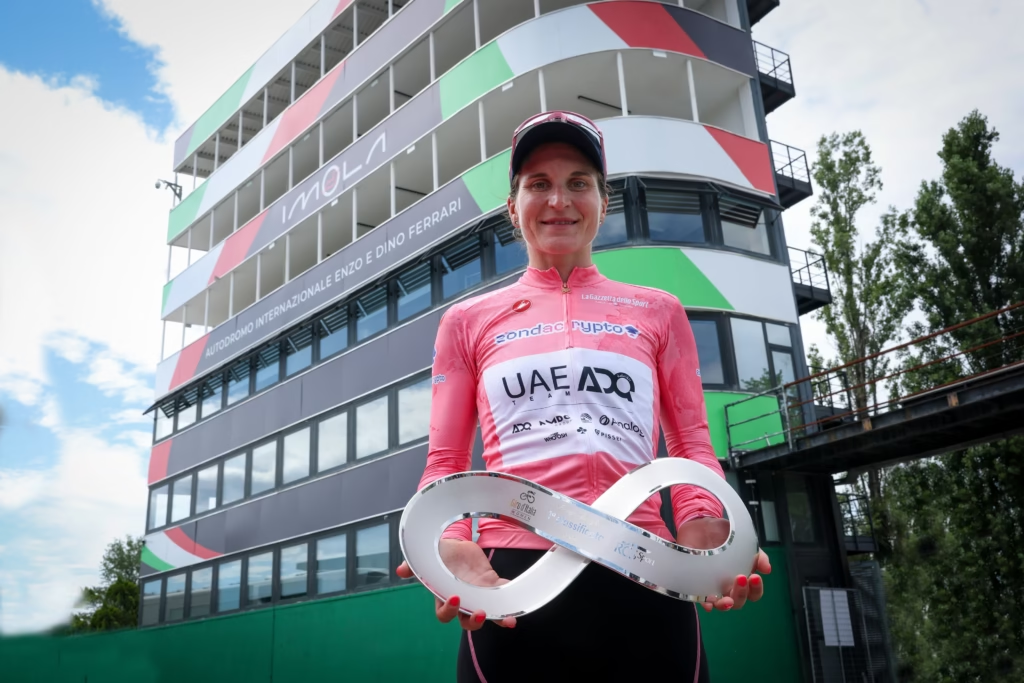 Photo Credit: LaPresse
The modern RCS era
A new phase began when RCS Sport took over the organisation from 2024 and restored the Giro d’Italia Women name. That shift gave the race greater visibility and a stronger connection to one of the sport’s biggest organisers. It also helped reposition the event within the broader calendar, especially with the later decision to move the race to a cleaner slot from 2026, away from the men’s Tour de France overlap. That has given the event more space in the calendar and more room to stand on its own.
The route itself has continued to evolve as well. The 2026 edition, for example, moves to nine stages for the first time and includes major mountain tests such as the Colle delle Finestre, underlining that the race is still willing to lean into the hardest side of stage racing rather than flattening its identity for convenience. That fits the history of the event far better than trying to make it something easier or safer. You can see more on that in ProCyclingUK’s beginner’s guide to Giro d’Italia Women 2026 and the feature on the epic climbs that have defined the Giro d’Italia Women.
-
 Photo Credit: A.S.O./Billy Ceusters

Where the race stands now
Recent editions have added another layer to the story. Elisa Longo Borghini’s victory in 2024 made her the first Italian winner in many years, and her successful defence in 2025 gave the race a home champion again at a moment when Italian women’s cycling badly needed one in its biggest domestic stage race.
That is what makes the Giro d’Italia Women such an important thread through the sport’s history. It began before the current boom in women’s cycling, carried prestige through leaner years, produced some of the discipline’s most important champions and has now entered a new era with stronger backing and better positioning. The names have changed and the calendar around it has changed too, but the race has kept its place.
Winning the Giro d’Italia Women still means the same thing it always has. You have mastered one of the hardest and most historically significant stage races in the sport.

