
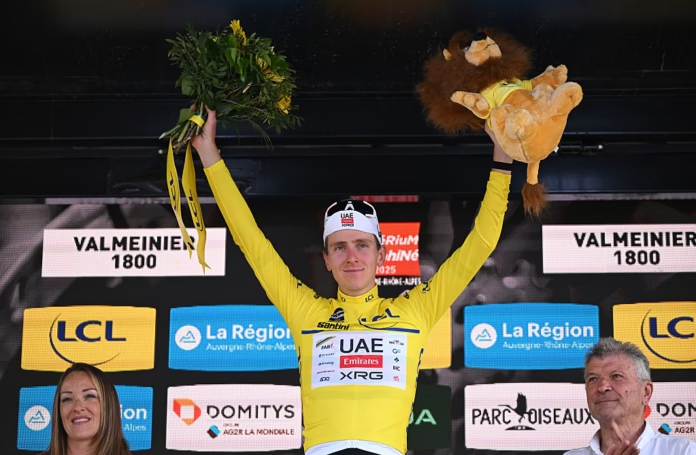
The Tour Auvergne – Rhône-Alpes 2026 brings a new name to one of June’s most familiar men’s stage races, but the sporting role is immediately recognisable. This is the renamed Critérium du Dauphiné, still sitting in the crucial pre-Tour de France window, still built around climbing form, team strength and the question every GC contender has to answer before July: is the preparation on track?
The 2026 route runs from Sunday, 7th June to Sunday, 14th June, starting in Vizille and finishing at Plateau de Solaison. Across eight stages, the race mixes early mountain pressure, a very long hilly stage to Le Puy-en-Velay, a team time trial, one likely sprint opportunity, then a brutal final three days in the mountains.
That structure gives the race a clear rhythm. It does not wait until the final weekend to matter, because stage 1 is already hard and stage 3 can create gaps through team organisation. But the overall winner should still be decided by the final sequence of Crest-Voland, Grand Colombier and Plateau de Solaison. For a race that already functions as a concentrated Tour de France test, that is a serious final examination.
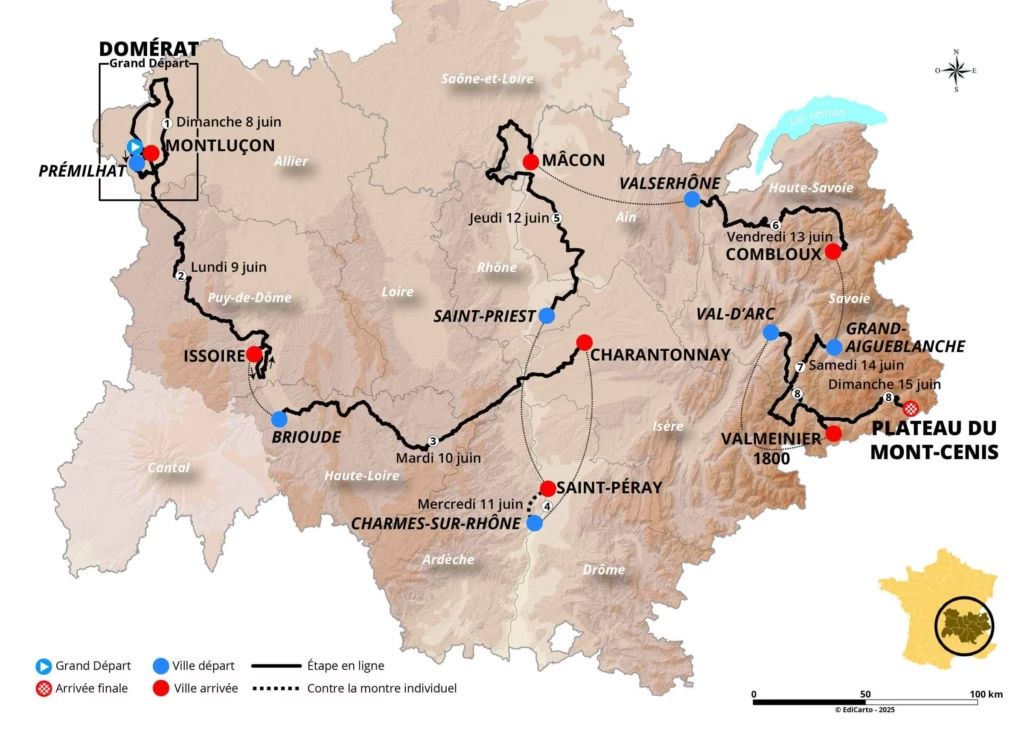
Tour Auvergne – Rhône-Alpes 2026 route overview
The race covers eight stages entirely within France, with the route moving through the Auvergne – Rhône-Alpes region and leaning heavily into its climbing terrain. The balance is direct: three major mountain stages to finish, one team time trial, several hilly stages that can punish weak teams, and one day that looks most suited to the sprinters.
The full stage list is:
- Stage 1, Sunday, 7th June: Vizille to Saint-Ismier, 146.2km
- Stage 2, Monday, 8th June: Saint-Martin-le-Vinoux to Le Puy-en-Velay, 234.3km
- Stage 3, Tuesday, 9th June: Perreux to Perreux, 28.4km team time trial
- Stage 4, Wednesday, 10th June: Le Puy-en-Velay to Montrond-les-Bains, 167.4km
- Stage 5, Thursday, 11th June: Saint-Chamond to Parc des Oiseaux – Villars-les-Dombes, 195.8km
- Stage 6, Friday, 12th June: Saint-Vulbas to Crest-Voland, 182.3km
- Stage 7, Saturday, 13th June: La Bridoire to Grand Colombier, 133.6km
- Stage 8, Sunday, 14th June: Beaufort to Plateau de Solaison – Brison, 120.1km
The race begins more sharply than a standard stage race. Stage 1 includes five categorised climbs and gives the puncheurs, climbers and ambitious GC teams an immediate chance to create pressure. Stage 2 is the long endurance test, with 234.3km of rolling and hilly terrain before the finish in Le Puy-en-Velay. Stage 3 then shifts the race into team time trial mode, which means gaps can appear before the mountain block has even started.
From stage 6 onwards, the race becomes a climbing contest. Crest-Voland is the first uphill finish, Grand Colombier is the headline summit of the weekend, and Plateau de Solaison gives the race a final-day mountain finish. That is exactly the sort of route that should reveal who has both June form and genuine Tour de France readiness.
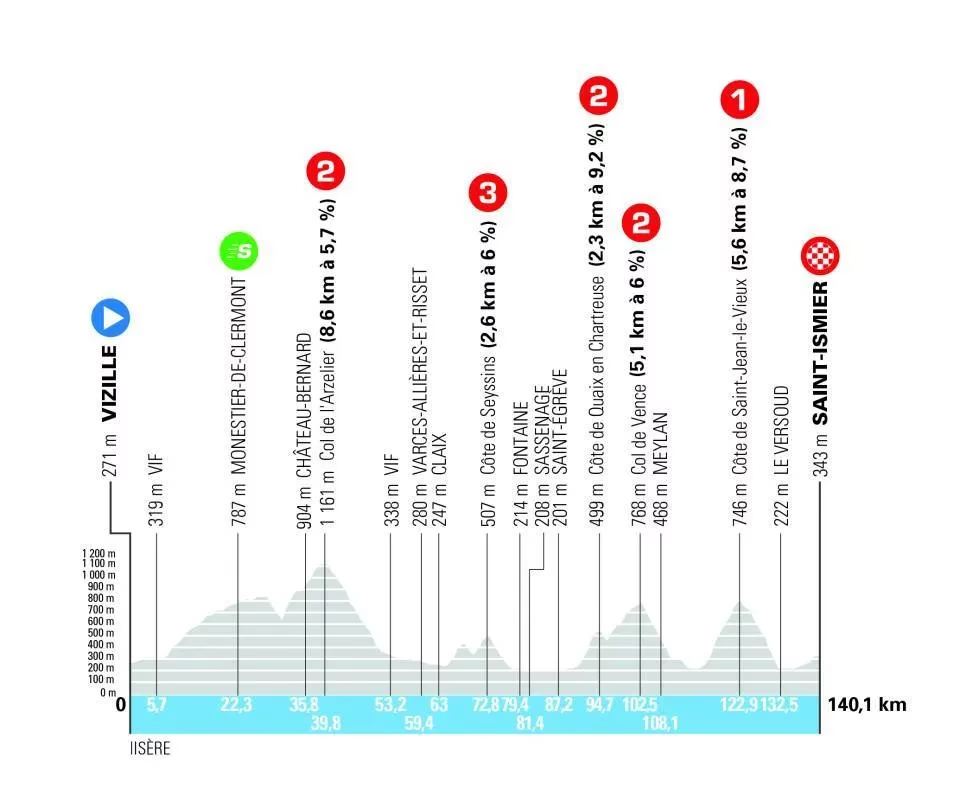
Stage 1: Vizille to Saint-Ismier, 146.2km
The opening stage is already labelled as a mountain stage, and it is easy to see why. Vizille to Saint-Ismier gives the race a tough first day in Isère, with repeated climbing rather than a gentle introduction.
The stage includes the Col de l’Arzelier, Côte de Seyssins, Côte de Quaix-en-Chartreuse, Col de Vence and Côte de Rousset. The final named climb, Côte de Rousset, is the hardest of the day at 8.2km at 7.6 per cent, and comes with around 21km still to race. That makes it a proper launchpad rather than a decorative early climb.
This is the kind of opening day that can immediately remove riders who arrive undercooked. The GC favourites may not try to win the race here, but they cannot afford to be casual. A hard pace on the Côte de Rousset could leave a reduced front group, and the descent and run-in to Saint-Ismier may reward riders who can handle technical racing after several climbs.
The first leader’s jersey could go to a climber, an attacking all-rounder or a fast finisher who survives the late selection. Either way, this is not a harmless first stage.
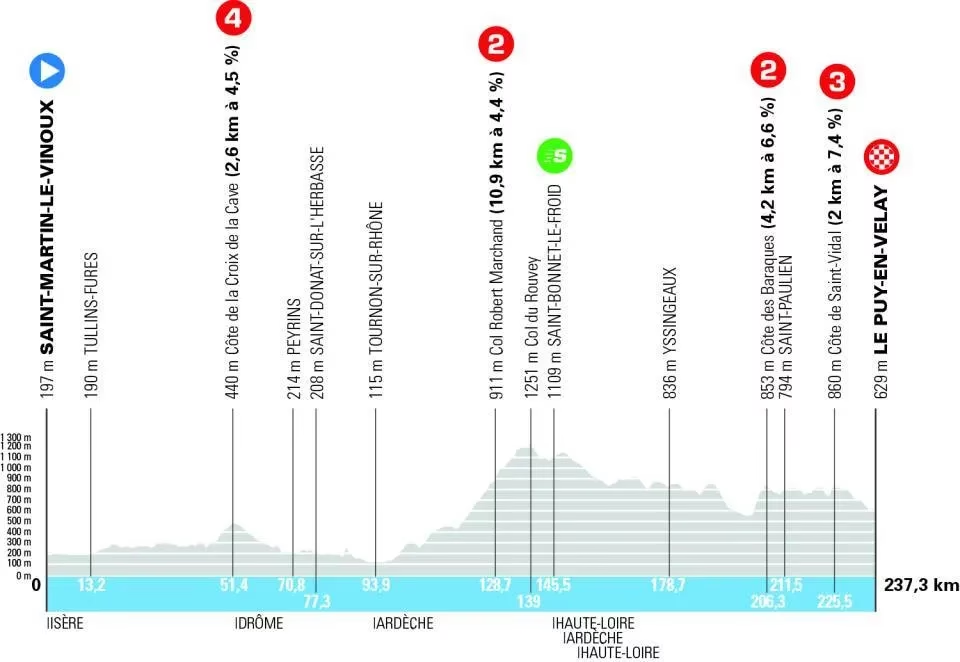
Stage 2: Saint-Martin-le-Vinoux to Le Puy-en-Velay, 234.3km
Stage 2 is the longest day of the race and may be one of the most draining. At 234.3km, Saint-Martin-le-Vinoux to Le Puy-en-Velay is not just a hilly stage, it is a proper endurance test before the team time trial.
The route includes the Col de Chatain, Col de la Croix de Toutes Aures, Col Robert Marchand, Côte des Baraques and Côte de Saint-Vidal. None of those climbs is a giant Alpine pass, but their placement across a very long stage matters. The riders will move across changing terrain, through Ardèche and Haute-Loire roads, with the climbing returning late enough to make fatigue central.
The Côte des Baraques, 4.2km at 6.6 per cent, comes just over 30km from the finish. The Côte de Saint-Vidal, 2km at 7.4 per cent, is even more interesting because it comes inside the final 12km. That gives attackers a late opportunity before the finish in Le Puy-en-Velay.
This stage could go several ways. A breakaway may fancy its chances, especially if the GC teams want to save energy before the team time trial. If the race is controlled, the late ramps could create a reduced sprint or a punchy finish between riders who still have something left after more than five hours of racing.
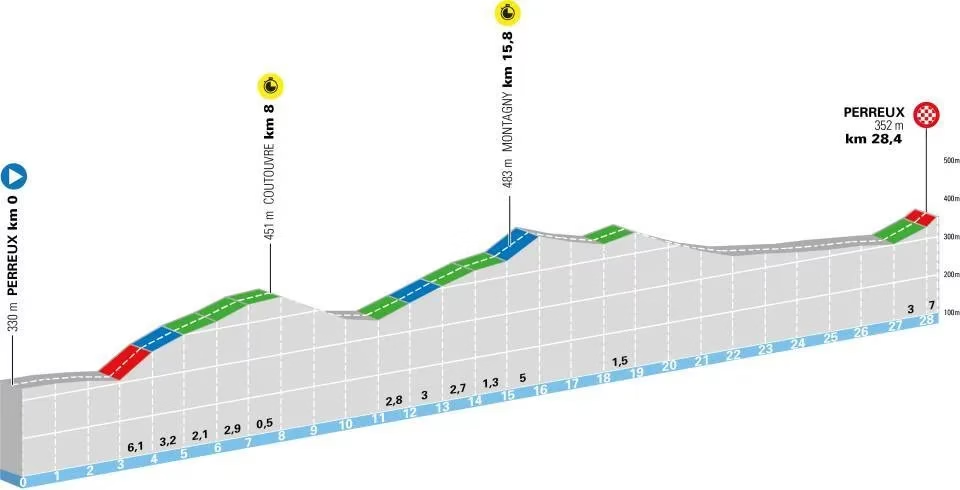
Stage 3: Perreux to Perreux, 28.4km team time trial
The third stage is a 28.4km team time trial around Perreux, and it could be one of the most important stages of the whole race. A team time trial in a one-week race changes everything. It rewards structure, depth, discipline and smooth rotation rather than one rider’s individual climbing strength.
That makes it especially relevant as a Tour de France preparation test. The best Grand Tour teams are not only built around one leader. They need riders who can protect, pace, position and communicate under pressure. This stage exposes whether those systems are working.
For GC riders, the danger is obvious. A strong team can put its leader into a commanding position before the mountains. A weaker team can leave a climber chasing time before the serious summit finishes even arrive. The course length is long enough for meaningful gaps, but short enough that every pacing error matters.
This could also decide how the final weekend is raced. A rider who gains time here can afford more control later. A rider who loses a minute may have no choice but to attack on Crest-Voland, Grand Colombier or Plateau de Solaison.
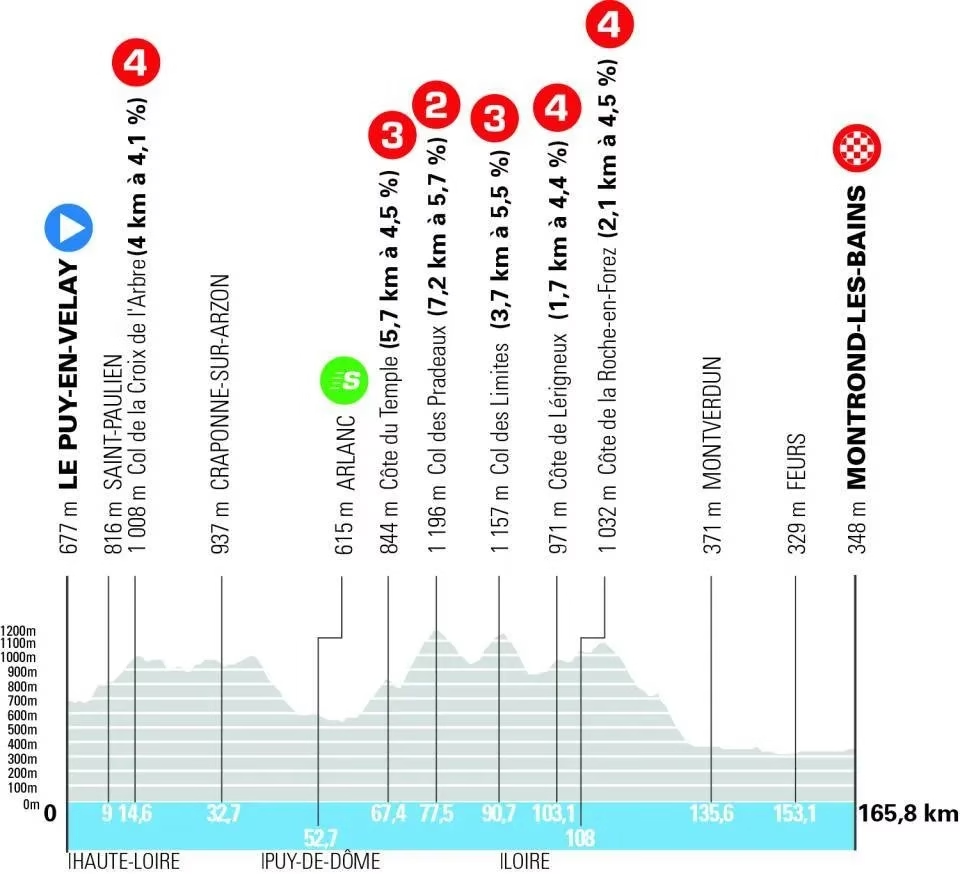
Stage 4: Le Puy-en-Velay to Montrond-les-Bains, 167.4km
Stage 4 is another hilly day, but with a different feel from the first two road stages. Le Puy-en-Velay to Montrond-les-Bains includes six categorised climbs, most of them packed through the first two-thirds of the stage, before a flatter run towards the finish.
The climbs include the Col de la Croix de l’Arbre, Côte du Temple, Côte de Chougoirand, Col des Limites, Côte de Lérigneux and Côte de la Roche-en-Forez. The Côte de Chougoirand is the most substantial, at 7.8km at 5.5 per cent, but it comes with around 90km still remaining. That makes the stage less likely to produce a clean GC selection, but more likely to suit a strong breakaway.
This is the type of day where teams need to decide how much energy the stage is worth. Chasing all day after the team time trial may not appeal, especially with harder stages still to come. That opens space for attackers, particularly riders who have already lost time or teams hunting a stage win.
The run-in to Montrond-les-Bains is not mountainous enough to guarantee separation among the favourites. The earlier climbing could still weaken sprint trains, and if the breakaway is strong enough, it may be hard to bring back.
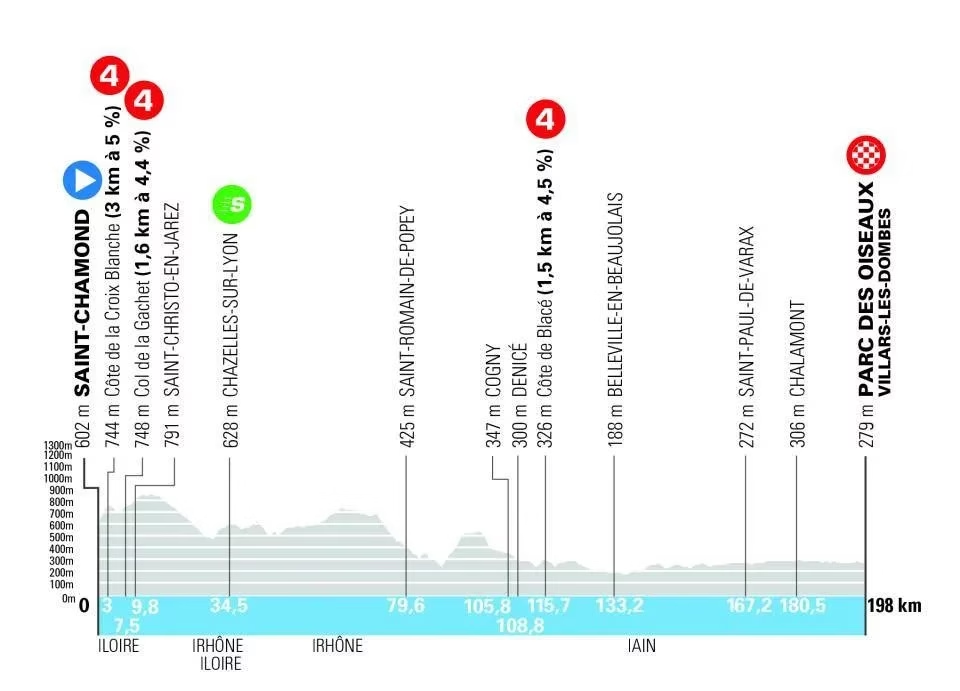
Stage 5: Saint-Chamond to Parc des Oiseaux – Villars-les-Dombes, 195.8km
Stage 5 looks like the clearest opportunity for the faster riders. The opening kilometres include the Côte de la Croix-Blanche and Col de la Gachet, but both come very early and should not prevent the sprint teams from organising the race if they are committed.
The route then moves through rolling roads before a flatter final phase towards Parc des Oiseaux – Villars-les-Dombes. At 195.8km, it is still a long day, but it lacks the late climbing that made stage 2 and stage 4 more awkward.
For sprinters, this may be the best chance of the week. The problem is that the race does not offer many obvious sprint stages, so every fast team will know the same thing. That can create a more controlled day, with teams reluctant to let a dangerous breakaway build too much of an advantage.
For GC teams, the stage is about staying safe. It comes immediately before the three-day mountain block, and nobody with overall ambitions will want to lose time through poor positioning, crosswinds or a late crash. The final should be fast, but the bigger GC story is simply getting through the day intact.
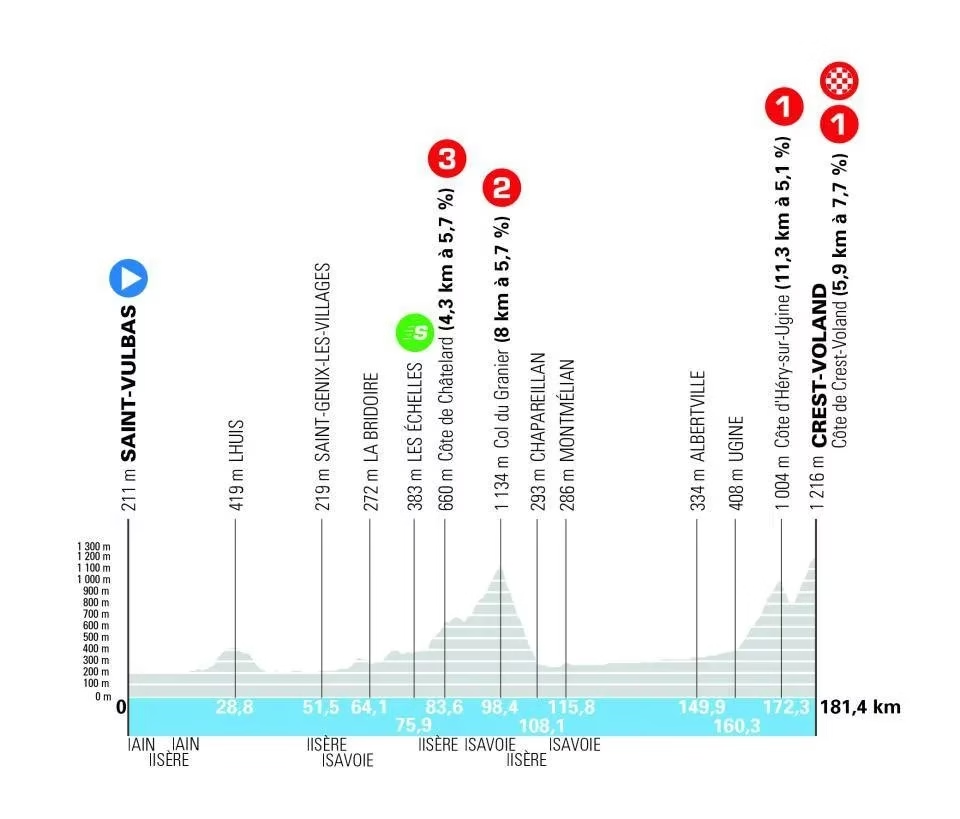
Stage 6: Saint-Vulbas to Crest-Voland, 182.3km
Stage 6 is where the race turns decisively towards the climbers. Saint-Vulbas to Crest-Voland is 182.3km and ends with a serious uphill finish after a demanding route through the mountains.
The early and middle parts include the Côte de Châtelard and Col du Granier, but the decisive section comes late. The Côte d’Héry-sur-Ugine is 11.6km at 5.1 per cent, followed by the final climb to Crest-Voland, 5.9km at 7.7 per cent. That pairing makes the final 20km much harder than the stage distance alone suggests.
Crest-Voland is the first proper uphill finish of the race, and it should reveal which riders can climb at GC pace after several days of racing. It is not as severe as Grand Colombier or Plateau de Solaison, but that does not make it soft. A climb of nearly 6km at close to 8 per cent at the end of a long stage is enough to create real gaps.
This is also where the team time trial consequences may become visible. Riders who gained time on stage 3 might defend more carefully. Riders who lost time may feel pressure to attack before the final weekend gets even harder.
Stage 7: La Bridoire to Grand Colombier, 133.6km
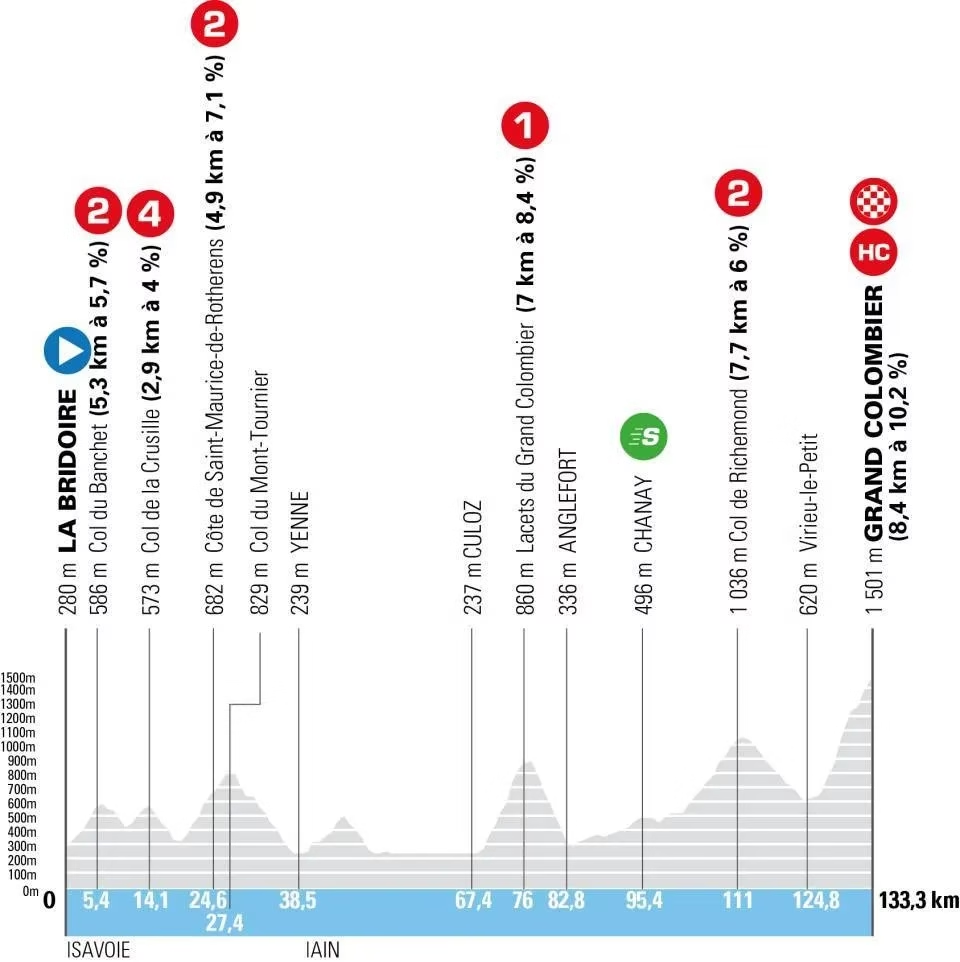
Stage 7 is the headline mountain stage. It is only 133.6km, but it is stacked with climbing and finishes on Grand Colombier, one of the most recognisable climbs in French cycling.
The stage begins with the Col du Banchet and Col de la Crusille before the Côte de Saint-Maurice-de-Rotherens, Lacets du Grand Colombier and Col de Richemond. Then comes the final climb to the Col du Grand Colombier itself: 8.4km at 10.2 per cent, an hors catégorie finish that should force the GC favourites to race directly.
The route is interesting because Grand Colombier appears in two different forms. The Lacets du Grand Colombier, 7km at 8.4 per cent, arrive earlier in the stage and can already thin the peloton. The final climb then gives the race a sharper and steeper summit finish.
This is where the overall can be broken open. The gradients are severe enough that team control may eventually disappear, leaving the strongest climbers to settle it between themselves. A rider who cracks here could lose minutes, not just seconds.
For Tour de France contenders, this is the kind of day that carries meaning beyond the result. A strong ride on Grand Colombier will be read as a major sign of July condition. A bad one will be much harder to explain away.
Stage 8: Beaufort to Plateau de Solaison – Brison, 120.1km
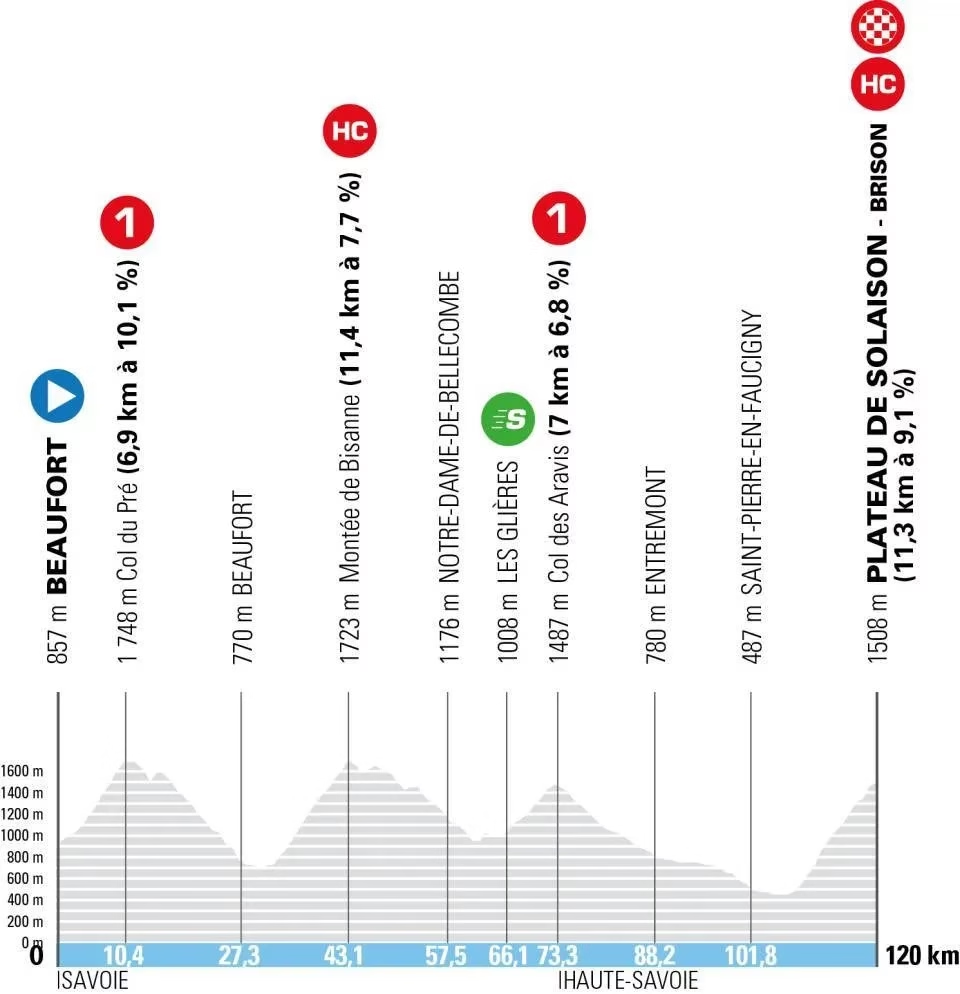
The final stage is short, brutal and perfectly placed to keep the race alive until the end. Beaufort to Plateau de Solaison is only 120.1km, but it includes the Col du Pré, Montée de Bisanne, Col des Aravis and the final climb to Plateau de Solaison.
The opening climb, Col du Pré, is already severe at 6.9km at 10.1 per cent. That means there is no gentle start. Montée de Bisanne follows, 11.4km at 7.7 per cent, and is categorised as hors catégorie. The Col des Aravis then adds 7km at 6.8 per cent before the final ascent.
Plateau de Solaison is the last climb of the race: 11.3km at 9.1 per cent. As final stages go, that is extremely demanding. It is long enough, steep enough and late enough in the race to overturn the general classification if the gaps are still close.
This stage also creates tactical possibilities. Because the climbing starts almost immediately, teams that need to attack can do so from a long way out. A rider trailing by 30 seconds might wait for Plateau de Solaison. A rider trailing by two minutes may need to use the Col du Pré or Bisanne to isolate rivals and turn the stage into a full mountain battle.
The winner of the Tour Auvergne – Rhône-Alpes 2026 will almost certainly need to survive this day at full strength. There is nowhere to hide.
Where will the Tour Auvergne – Rhône-Alpes 2026 be won?
The race is most likely to be won across stages 6, 7 and 8, but stage 3 may decide how those mountain stages are raced. The team time trial in Perreux can create the first serious GC gaps. That matters because the final weekend is hard enough for riders to take time, but not everyone will be able to attack with the same freedom.
The clearest GC days are:
- Stage 3, because the team time trial can create meaningful early gaps
- Stage 6, because Crest-Voland is the first uphill finish
- Stage 7, because Grand Colombier is the hardest single summit test
- Stage 8, because Plateau de Solaison gives the race a final-day mountain finish
Grand Colombier may be the most symbolic stage, but Plateau de Solaison may be the most decisive. A final climb of 11.3km at 9.1 per cent after a day already featuring the Col du Pré, Montée de Bisanne and Col des Aravis is exactly the kind of finale where a leader can still be put under real pressure.
What kind of rider does the route favour?
The 2026 route favours a complete stage racer rather than a pure climber alone. The winner will need to climb at an elite level, but the team time trial means they also need a strong squad around them. The hilly stages require positioning and tactical control, and the final mountain block demands recovery across three consecutive climbing days.
A pure climber can win, but only if they avoid losing too much time in the team time trial. A powerful all-rounder can gain early time, but they still have to survive Grand Colombier and Plateau de Solaison. The ideal winner is a Tour de France-level GC rider with a deep team, strong climbing form and the ability to back up multiple mountain efforts.
That is why this race remains such an important July indicator. It does not replicate the Tour de France exactly, but it asks many of the same questions in a shorter and more concentrated format.

Why the 2026 route matters
The rebrand from Critérium du Dauphiné to Tour Auvergne – Rhône-Alpes changes the name, not the race’s essential sporting value. This is still one of the most important stepping stones towards the Tour de France, and the 2026 route makes that especially clear.
The opening stages are difficult enough to prevent a slow start. The team time trial tests systems and support structures. Stage 5 gives the sprinters one clear chance. Then the race turns into a mountain examination, with Crest-Voland, Grand Colombier and Plateau de Solaison stacked across the final three days.
For GC contenders, it is a serious test of form. For teams, it is a test of organisation. For the wider season, it is one of the last major clues before the Tour de France. A rider who climbs well here, survives the team time trial and finishes strongly on Plateau de Solaison will leave with real momentum. A rider who struggles will still have time before July, but the warning signs will be difficult to ignore.

