
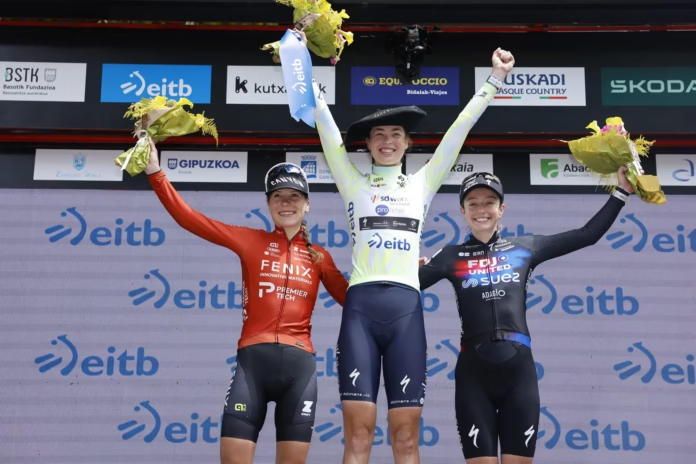
Itzulia Women 2026 did not need a long route or a summit finish to tell us plenty about the state of the Women’s WorldTour. Across three stages in the Basque Country, the race produced a sharp snapshot of where several riders and teams now stand after La Vuelta Femenina and before the calendar moves deeper into the late-spring and early-summer stage-race block.
Mischa Bredewold won the overall for Team SD Worx-Protime, Dominika Wlodarczyk took back-to-back stage wins for UAE Team ADQ, Yara Kastelijn finished second overall and won the mountains classification, while Lauren Dickson gave FDJ United-SUEZ a notable podium. On paper, that roll of honour looks like a varied but fairly compact stage-race result. In reality, it carried bigger implications.
This was a race shaped by small gaps, repeated climbs, technical descents, reduced sprints and late attacks. It did not reward one dominant climbing performance. It rewarded riders who could make decisions under pressure, recover between hard days, and stay visible when the race became unpredictable. That makes it a useful form guide, not just for the results themselves, but for what they say about who is ready to shape the next part of the season.
Bredewold turns versatility into a GC win
Bredewold’s overall victory mattered because of how she won it. This was not a race where she simply climbed away from everyone or controlled the peloton with overwhelming team strength. She won stage 1 in Zarautz from a reduced group, defended under pressure on stage 2, then had to chase back on the final stage after being distanced on Mendizorrotz.
That combination is important. Bredewold has long looked like a rider with enough strength, speed and tactical intelligence to win difficult one-day races and selective stages. Itzulia Women showed that those qualities can also translate into a short stage-race GC victory when the terrain is hard enough to split the field but not so mountainous that pure climbers dominate completely.
For Team SD Worx-Protime, the win also keeps their stage-race momentum alive in a season where the team’s depth remains one of its biggest weapons. Bredewold is not always the first name discussed when the conversation turns to GC leaders, but this was exactly the kind of race where a complete rider can beat more specialised climbers. She handled pressure, finished quickly, and showed enough resilience on the final day to protect the jersey when the race briefly moved away from her.
That could matter later in the year. Bredewold does not suddenly become a Grand Tour favourite because she won Itzulia Women, but she has strengthened her case as a protected option in selective week-long races, hard Classics-style stages and any event where the final classification is built on seconds rather than minutes.
Wlodarczyk announces herself properly
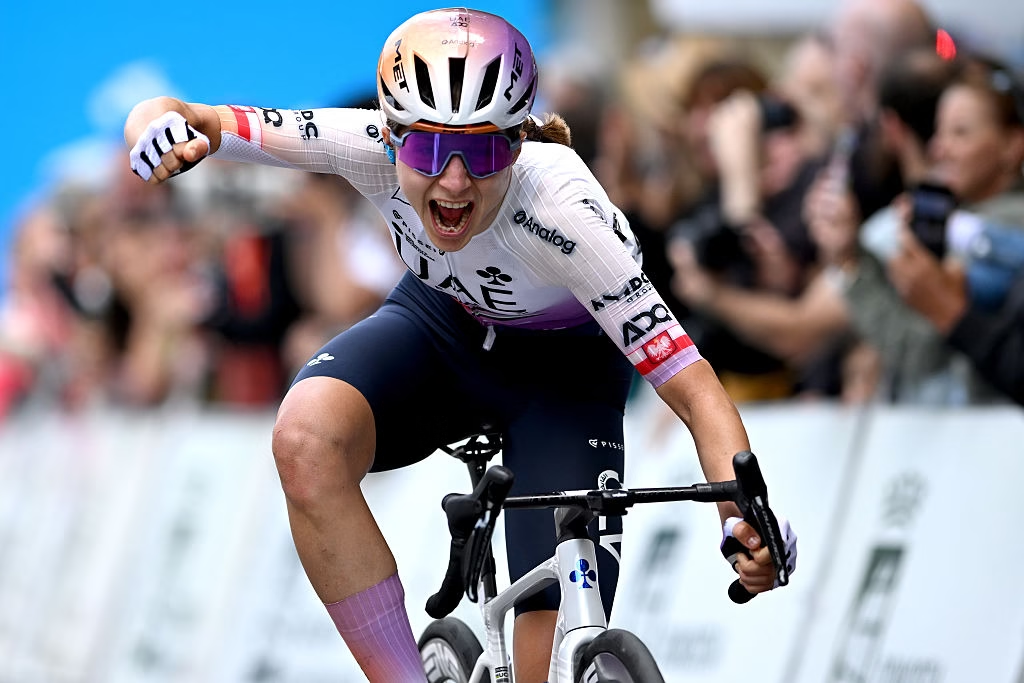
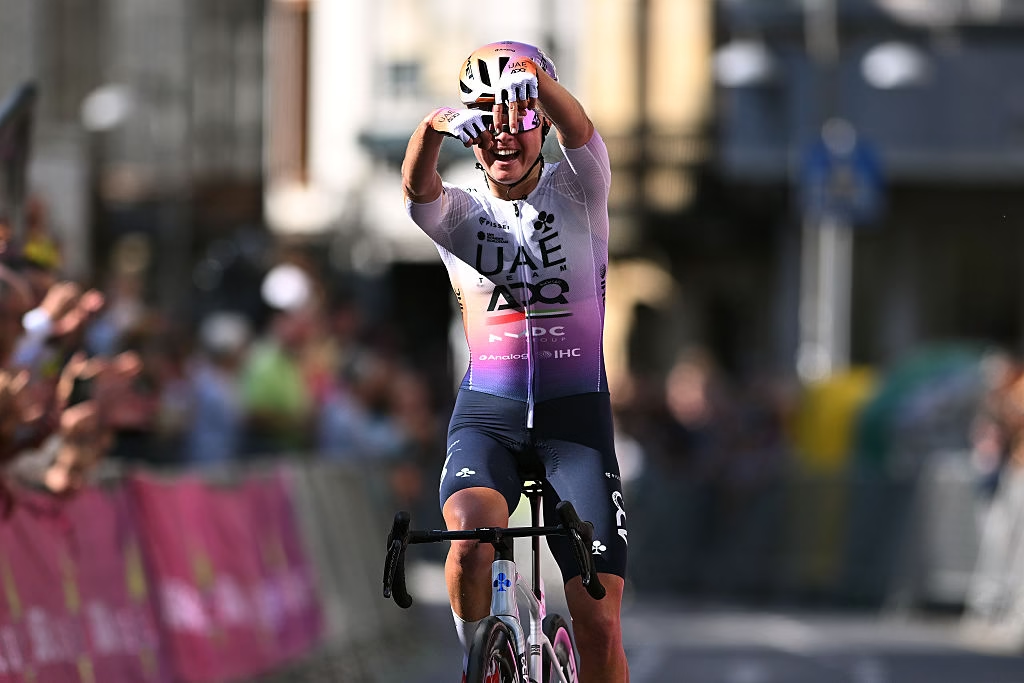
The biggest individual shift may belong to Dominika Wlodarczyk. Winning one stage would already have been a breakthrough. Winning two, including the final stage in Donostia, turned Itzulia Women into a genuine statement.
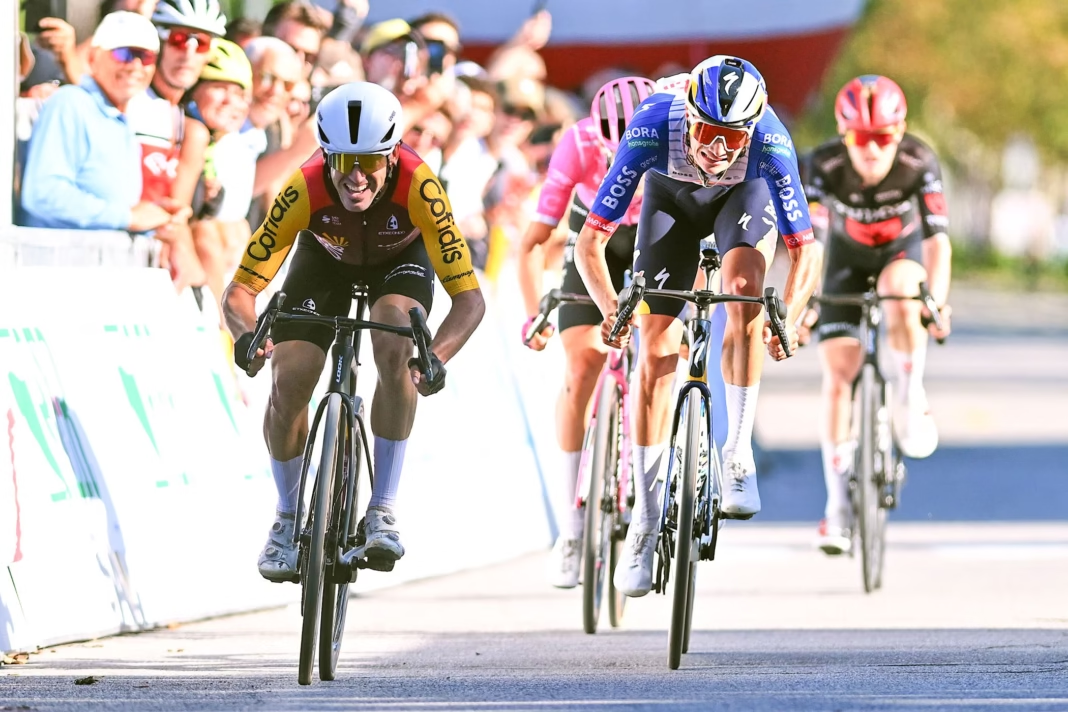
Her stage 2 victory was built on timing. She attacked late with Shirin van Anrooij, held off the yellow jersey group by metres, and won a finish where hesitation behind made the difference. The stage 3 win was different. That came from a front group after the race had already split on the climbs, with Bredewold chasing back and the strongest riders still present. Wlodarczyk then had the speed and composure to finish it off again.
That matters because it shows range. She did not simply profit from one tactical moment. She repeated the result in a different race situation the next day. For UAE Team ADQ, that gives them more than a stage win tally. It gives them another rider who can alter the shape of a WorldTour race.
UAE Team ADQ have often had strong individual pieces, but turning that into consistent WorldTour control is a different challenge. Wlodarczyk’s performance gives them a rider who can win from late moves, handle selective terrain and finish quickly after a hard day. That is a valuable profile in the modern women’s calendar, where more stages are being decided by reduced groups rather than clean bunch sprints or isolated summit finishes.
Her ninth place overall does not fully reflect her impact. She changed the race on stage 2, then confirmed it on stage 3. That is the sort of weekend that changes how rivals treat a rider for the rest of the year.
Kastelijn keeps building her stage-race case
Yara Kastelijn’s race was quietly excellent. Second overall, mountains jersey, repeatedly present when the race split, and close enough to keep Bredewold under pressure across all three days. It was not spectacular in the sense of one race-breaking attack, but it was highly convincing.
Kastelijn has always looked comfortable in races that reward aggression and repeated efforts. Itzulia Women suited that perfectly. She was second on stage 1, remained close through the middle stage, and stayed in the front fight on the final day. The mountains jersey underlined how consistently she was involved whenever the road rose.
For Fenix-Premier Tech, this is significant. Kastelijn gives them a rider who can target hard stage races without needing the race to be a pure climbing contest. She can survive, attack, score mountain points and sprint well enough from reduced groups to stay in the GC conversation.
The bigger point is that she looks increasingly like a rider who can turn tactical difficulty into opportunity. Some riders need a race to unfold cleanly. Kastelijn often looks better when it does not. That makes her especially dangerous in Spanish stage races, Ardennes-style routes and late-season events where control is harder to impose.
FDJ United-SUEZ show their depth
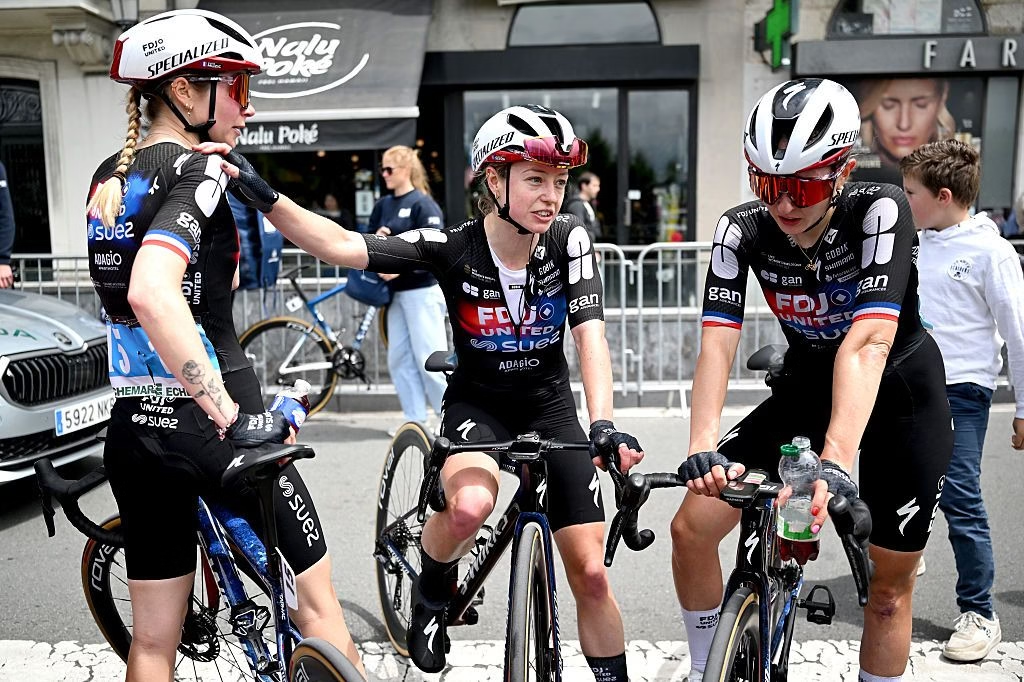
Lauren Dickson’s overall podium was one of the clearest team-level positives from the race. FDJ United-SUEZ also placed Évita Muzic and Juliette Berthet in the top 10 and won the team classification, which made their Itzulia Women much more than a single-rider success.
That collective strength matters. A three-day race can sometimes be distorted by one result, but FDJ United-SUEZ had riders present across the decisive moments. Dickson’s podium was the headline, yet Muzic and Berthet gave the team the depth to influence the race and remain visible when the tempo lifted.
For Muzic, sixth overall was solid rather than spectacular. She did not take control of the race, but she remained in the picture. For Berthet, eighth overall added another useful result in a season where consistency across hard terrain is becoming more important. Together, they made FDJ United-SUEZ one of the most complete teams in the race.
That is relevant beyond Itzulia Women. The Women’s WorldTour is increasingly being shaped by teams that can place two or three riders deep into the final hour. One protected leader is useful, but multiple cards make a team harder to control. FDJ United-SUEZ left the Basque Country with proof that their stage-race structure has depth.
Lidl-Trek had options, but not the final result
Lidl-Trek were one of the most interesting teams on paper and remained tactically relevant through the race. Riejanne Markus finished fourth overall, Ricarda Bauernfeind was tenth, and Shirin van Anrooij came close to turning her stage 2 move into a victory before Wlodarczyk beat her to the line.
That is a strong collective showing, but also one that probably feels like a missed chance. They had the riders to make Bredewold uncomfortable, and there were moments where the race seemed to suit them. Van Anrooij’s stage 2 move was the clearest example: aggressive, well-timed and almost enough.
The final classification shows the difference between being present and converting. Markus was consistent, Bauernfeind was in the top 10, and Van Anrooij was dangerous, yet the team left without the overall or a stage win. That does not make the race a failure, but it does highlight the narrow margins at this level.
For the rest of the season, Lidl-Trek’s depth remains clear. The question is execution. They have enough riders to shape selective races, but Itzulia Women showed again that timing the final move is everything. Against riders like Bredewold and Wlodarczyk, being strong is not always enough.
Canyon-SRAM zondacrypto and Niedermaier keep the long-term picture intact
Antonia Niedermaier’s fifth overall was another useful marker of her continued development. Itzulia Women was not the kind of race where a pure climbing performance could decide everything, but she remained close and finished inside the top five. That matters for a rider whose long-term ceiling still feels tied to harder GC terrain.
For Canyon-SRAM zondacrypto, this was a steady race rather than a headline-grabbing one. Niedermaier’s result gives them another strong marker in a season where her stage-race progression remains a major thread. She is not yet winning these races consistently, but she is present in the selections and close enough to be part of the tactical equation.
That is often the step before a bigger breakthrough. Riders learn how to survive the race before they learn how to control it. Niedermaier’s challenge now is to turn those top-five finishes into decisive moves, especially on routes where the climbs are longer and the finish gives less advantage to faster riders.
Lippert and Ostolaza leave with unfinished business
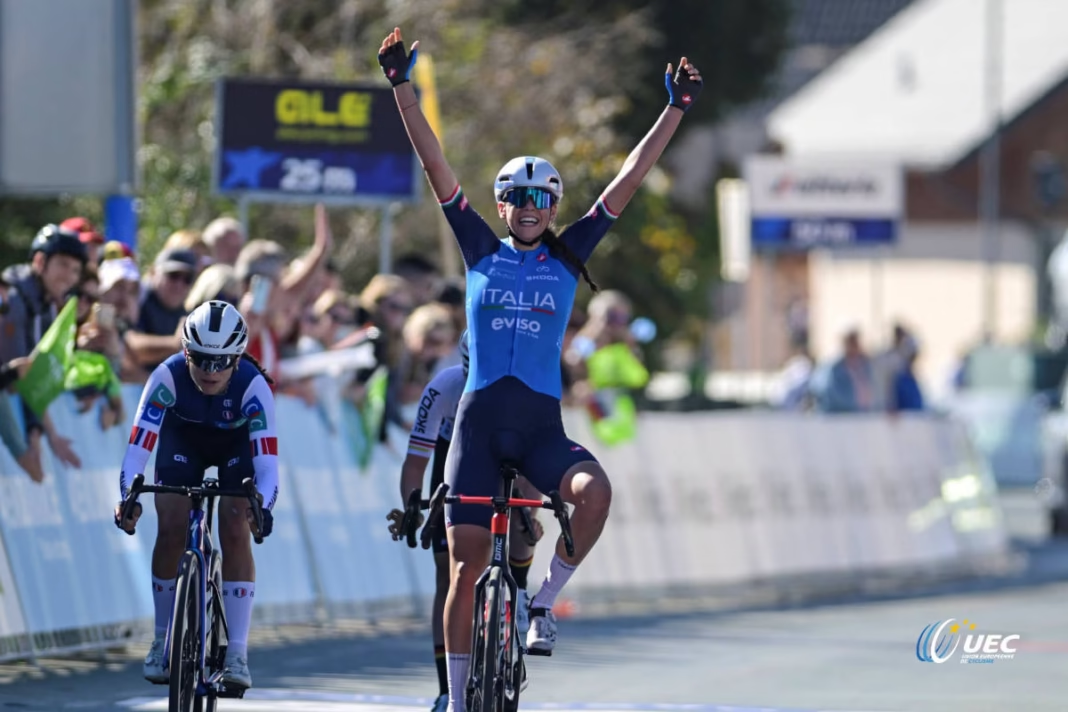
Liane Lippert and Usoa Ostolaza both finished the race with signs of strength but without the final result they might have wanted. Lippert was active and close enough to matter, while Ostolaza finished seventh overall and remained one of the more reliable climbers in the race.
For Lippert, Itzulia Women again showed the tension in her current profile. She is dangerous on punchy terrain, experienced in selective racing and capable of shaping finales, but this race did not quite open in a way that gave her the stage or GC result. In a reduced sprint against Bredewold or Wlodarczyk, she needed either a harder selection or a cleaner tactical situation.
Ostolaza’s performance was more straightforwardly encouraging. Seventh overall in this field, on Basque roads, keeps her firmly in the conversation as one of the stronger climbers in the next layer of the women’s peloton. She may not have produced the decisive move this time, but she was close enough to confirm that her climbing level remains strong.
Both riders will leave with reason to think there was more available. That is not a negative in itself. Itzulia Women often leaves riders with that feeling because the gaps are small and the decisions are compressed. A slightly different move, a cleaner chase, or a harder final climb could have changed the top five.
Spanish stage racing is shaping the season
One of the bigger takeaways is how important the Spanish block has become for the women’s calendar. La Vuelta Femenina, Itzulia Women and Vuelta a Burgos Feminas now form a concentrated run of racing that tests different versions of stage-race ability.
La Vuelta Femenina provides the Grand Tour framework, with bigger climbs, more days and more classification pressure. Itzulia Women condenses the race into three intense stages where control is difficult and seconds matter. Vuelta a Burgos Feminas then offers another climbing-focused test, usually with Lagunas de Neila waiting as the final sorting point.
That sequence gives teams a lot of information. Who recovers well? Who can handle repeated climbing? Who can sprint after hard terrain? Who needs a summit finish, and who can win from a reduced group? Itzulia Women answered some of those questions more clearly than expected.
Bredewold showed she can convert versatility into GC success. Wlodarczyk showed she can win at WorldTour level on back-to-back hard days. Kastelijn showed she remains one of the most consistent riders on lumpy, attritional terrain. FDJ United-SUEZ showed collective depth. Lidl-Trek showed they have multiple options but still need the final conversion.
That is a lot for a three-day race to reveal.
What it means for the Women’s WorldTour hierarchy
Itzulia Women did not completely overturn the Women’s WorldTour hierarchy, but it did add texture to it. Team SD Worx-Protime still have the depth and winning instinct to turn a complicated race into a title. UAE Team ADQ have gained a new source of stage-winning confidence through Wlodarczyk. FDJ United-SUEZ have reinforced their collective strength. Fenix-Premier Tech leave with Kastelijn looking more established as a GC threat in this type of race.
The most interesting part is that the race was not dominated by the most obvious Grand Tour climbers. That is healthy for the calendar. Not every stage race needs to be decided by the longest climb. Races like Itzulia Women allow different rider types to win: punchy all-rounders, aggressive attackers, climbers with a sprint, and teams that can create tactical pressure rather than simply ride tempo.
That makes the rest of the season more open. Bredewold’s win gives SD Worx-Protime another option. Wlodarczyk’s double gives UAE Team ADQ a rider who will now be watched much more closely. Dickson’s podium gives FDJ United-SUEZ another result to build around. Kastelijn’s consistency gives Fenix-Premier Tech a strong platform for similar races.
For the riders who missed out, the message is equally clear. Waiting for one decisive climb may not be enough. The races that shape the season are increasingly being won in the gaps between obvious moments: a late move before the sprint, a descent back to the front, a bonus second gained at the right time, a teammate used before the final climb rather than after it.
Why Bredewold’s win may matter later
The most important long-term effect of Bredewold’s victory is not that she becomes the season’s dominant GC rider. It is that she gives Team SD Worx-Protime another tactical route through difficult stage races.
If Demi Vollering or another pure GC leader is not present, the team can still win with a rider who combines climbing resistance, positioning and sprint speed. That matters in a calendar where many stage races are not pure mountain contests. Bredewold can win on days where the race is hard but not brutal, selective but not decisive enough to eliminate faster riders.
Her Itzulia Women win also reinforces the value of riders who can do several things well. Modern women’s racing is becoming deeper, and that makes control harder. A rider who can survive climbs, follow attacks, descend under pressure and sprint from small groups is extremely valuable.
That was the exact skill set that won the race. Stage 1 was about finishing speed after selection. Stage 2 was about limiting damage when late attackers survived. Stage 3 was about recovery, descending and composure. Bredewold passed all three tests.
The season ahead looks more crowded, not less
Itzulia Women 2026 did not simplify the season. It made it more interesting. Bredewold has added another major result to SD Worx-Protime’s season, but Wlodarczyk’s rise, Kastelijn’s consistency and FDJ United-SUEZ’s depth all point towards a wider spread of threats in the coming months.
That is good for the Women’s WorldTour. The strongest seasons are not built only around one or two dominant names. They are built around layers of form, development and tactical variation. Itzulia Women gave us all three.
The Basque race remains short, sharp and unforgiving. In 2026, it showed that winning across three days now requires more than climbing strength. It requires nerve, recovery, finishing speed and the ability to think clearly when the race has stopped following a clean script.
For Bredewold, it was a title earned through versatility. For Wlodarczyk, it was a breakthrough that could change how she is raced against. For Kastelijn and Dickson, it was confirmation. For the rest of the peloton, it was a warning before the next stage-race tests arrive.

