

The Tour Auvergne – Rhône-Alpes 2026 reaches its first race-shaping test on stage 3, with a 28.4km team time trial around Perreux. After the hilly opener to Saint-Ismier and the long endurance stage to Le Puy-en-Velay, this is where the general classification moves from early positioning into something more structured.
Team time trials are rare enough in the modern calendar to feel disruptive. They ask a different set of questions to a road stage or individual time trial. A squad needs power, discipline, equipment, pacing, smooth turns and enough depth to keep the speed high without losing key riders too early. For GC leaders, it can be one of the most stressful days of the week because the result depends on collective execution rather than individual legs alone.
Stage 3 is particularly important because of where it sits in the race. The final weekend will bring Crest-Voland, Grand Colombier and Plateau de Solaison, but the time gaps created in Perreux will decide who reaches the mountains with freedom and who is already under pressure. A poor team time trial does not end the race, but it can force a rider to attack earlier than planned later in the week.
For wider context, our Tour Auvergne – Rhône-Alpes 2026 full route guide breaks down the complete eight-stage race, while our GC and jerseys after Tour Auvergne – Rhône-Alpes 2026 stage 1 set out how the opening day had already created early gaps.
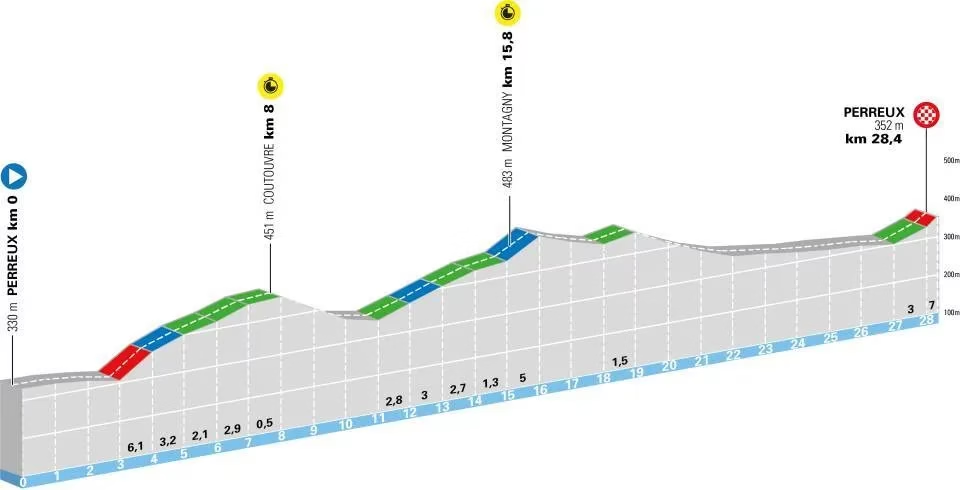
What is the route for Tour Auvergne – Rhône-Alpes 2026 stage 3?
Stage 3 is a 28.4km team time trial around Perreux. It is long enough to create meaningful gaps, but short enough that teams will have to ride it with real intensity from the start rather than settling into a conservative rhythm.
The route should favour squads with several strong rouleurs and time trial specialists, but the key is balance. A team cannot simply send its strongest rider to the front and hope the others survive. The fastest squads will need to keep their line smooth, rotate cleanly and protect their GC leader through every change of pace.
At this distance, the losses can become significant. The best teams may be separated by only a handful of seconds, but any squad that loses formation, sheds too many riders early or misjudges its pacing could concede half a minute or more. In a race that still has major mountains to come, that is a meaningful cost.
Why stage 3 matters for the general classification
The team time trial is the first major GC checkpoint of the Tour Auvergne – Rhône-Alpes 2026. The first two road stages can create small splits, bonus gaps and early pressure, but stage 3 is the first day where the strongest squads can make a collective difference.
For riders already behind after stage 1, this is a chance to stabilise the race or recover ground. For those who avoided the first split, it is an opportunity to reinforce that advantage before the climbing stages. The timing is important: the route does not immediately go into the biggest mountains after Perreux, but the shape of the GC after stage 3 will influence how teams ride the rest of the week.
A rider who gains time here can afford to be more measured in the mountains. A rider who loses time has fewer options. That can change the way the race is ridden long before the final weekend arrives.
 Photo Credit: Cor Vos
Team Visma | Lease a Bike have a clear opportunity
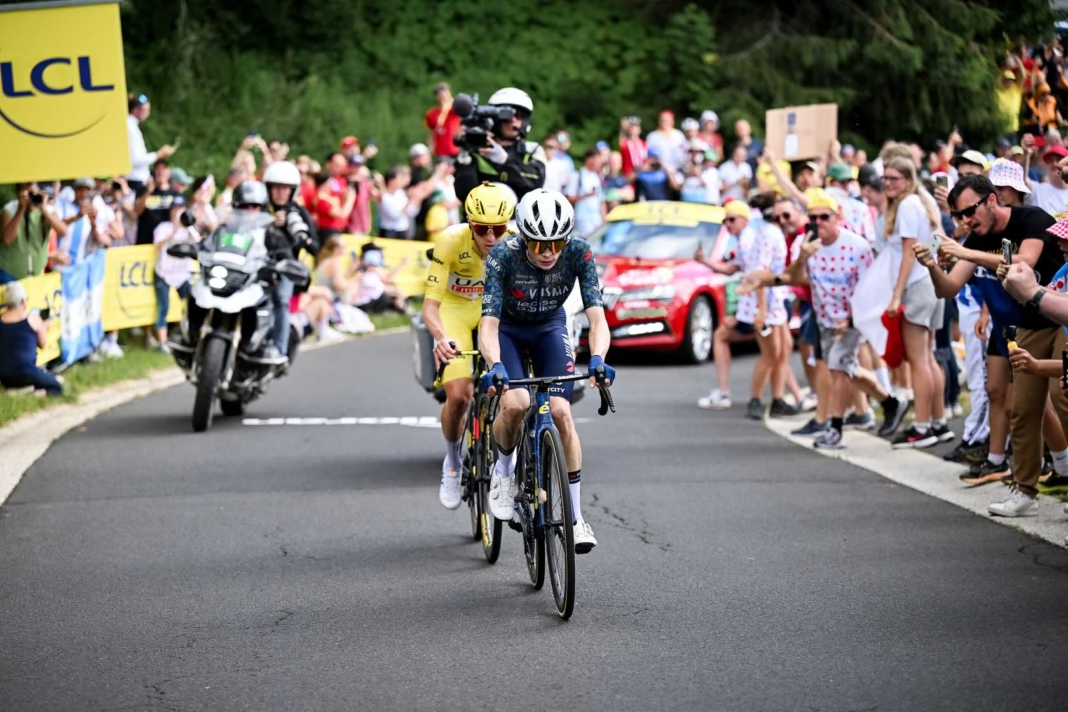
Team Visma | Lease a Bike should be one of the key teams to watch. Matteo Jorgenson gives them a major GC card, while Ben Tulett’s strong opening stage placed him well in the early overall picture. A team time trial gives them a chance to use collective strength rather than wait for the mountains.
The squad also started the race with enough depth to make this stage particularly relevant. A strong performance in Perreux would keep Jorgenson firmly in the GC conversation and could strengthen Tulett’s position if he remains close overall. That dual presence matters because it gives the team more than one way to race the next few days.
Their challenge is pacing. They do not need to risk everything, but they do need to make the stage count. A clean ride could put them ahead of several rivals before the race reaches its hardest climbs.
Netcompany INEOS can turn depth into seconds
Netcompany INEOS Cycling Team also have a strong hand for stage 3. Kévin Vauquelin and Oscar Onley both came out of the opening stage in a promising position, while Carlos Rodríguez lost time and needs the team to limit further damage before the mountains.
That makes the Perreux time trial especially important. A strong collective ride can keep Vauquelin and Onley high on GC, while also pulling Rodríguez back towards a more manageable position. The team’s depth should be well suited to a discipline that rewards structure and repeatable power.
The question is how they balance their leaders. If Vauquelin and Onley are still best placed overall, the team has to protect them, but Rodríguez remains a rider with the climbing pedigree to become more relevant later in the race. The time trial can help keep all three options alive.
UAE Team Emirates-XRG need a response
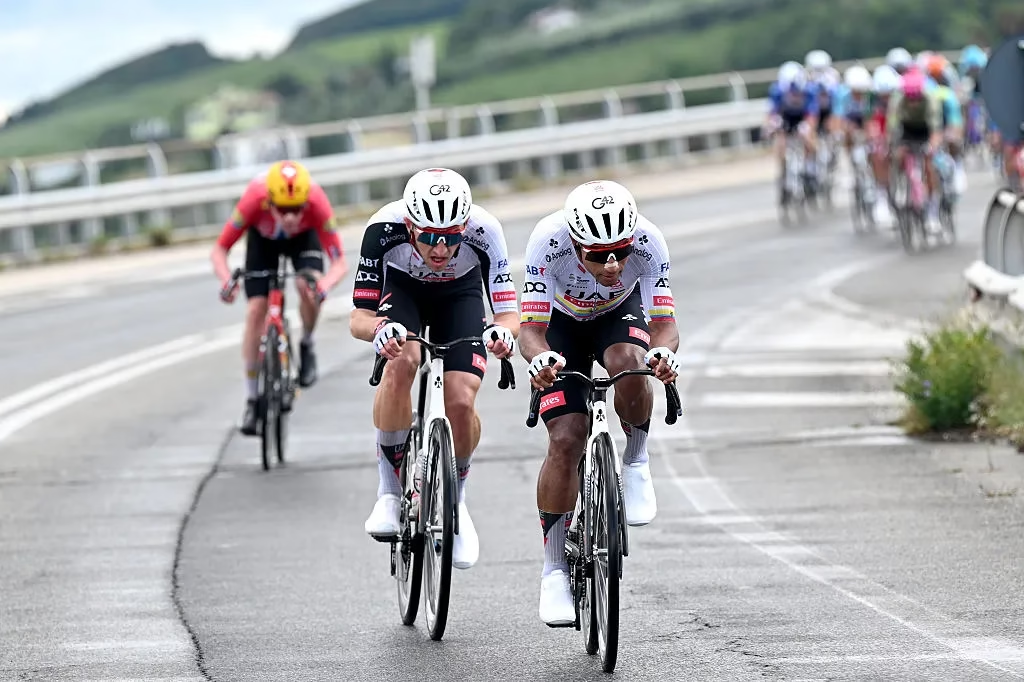
UAE Team Emirates-XRG have several riders who can shape the race, but stage 3 comes with extra importance after the opening gaps. Isaac del Toro and Juan Ayuso remain central to their GC plans, while João Almeida’s heavy time loss on stage 1 changed the team’s internal picture significantly.
That could simplify the team’s approach. Del Toro and Ayuso need protection, and the team time trial gives UAE a clear opportunity to regain control of their race. Kevin Vermaerke’s strong opening day also gives them another rider close to the front of the standings, adding value to a disciplined ride around Perreux.
The risk is that the team tries to serve too many interests at once. The best approach is likely to be direct: keep the strongest group together, avoid panic, and make sure Del Toro and Ayuso leave stage 3 with time gained or at least no major damage.
Lidl-Trek and Skjelmose cannot afford weakness
Lidl-Trek arrive with Mattias Skjelmose as an important name in the overall conversation. A team time trial is exactly the sort of stage where a strong squad can keep its GC rider close and prevent the race from becoming too reactive before the mountains.
Skjelmose has the profile to be dangerous later in the week, but he needs to reach the key climbing days without being forced into long-range desperation. A solid ride in Perreux would give him that platform.
The margins here will matter. If Lidl-Trek can stay close to Team Visma | Lease a Bike, Netcompany INEOS and UAE Team Emirates-XRG, Skjelmose remains in a strong position. If they lose time, the final weekend becomes more complicated.
Bahrain Victorious, Team Jayco-AlUla and the danger of drifting
Bahrain Victorious have Santiago Buitrago as their key GC option, and stage 3 is about keeping him close enough before the mountains arrive. Buitrago is more likely to make his biggest impact later in the race, but the team cannot allow the time trial to create a gap that forces him to chase from too far back.
Team Jayco-AlUla have Luke Plapp well suited to this kind of effort. His engine, time trial ability and road-stage strength make him one of the riders who could benefit from a strong team performance in Perreux. Michael Matthews gives the team another powerful rider for the discipline, even if his main stage opportunities come elsewhere.
This is the kind of stage where teams without the absolute strongest GC favourite can still improve their race. A clean ride can move a rider into the top group of contenders before the mountains. A messy ride can quietly push them into the second tier.
What does stage 3 mean for Alex Baudin?
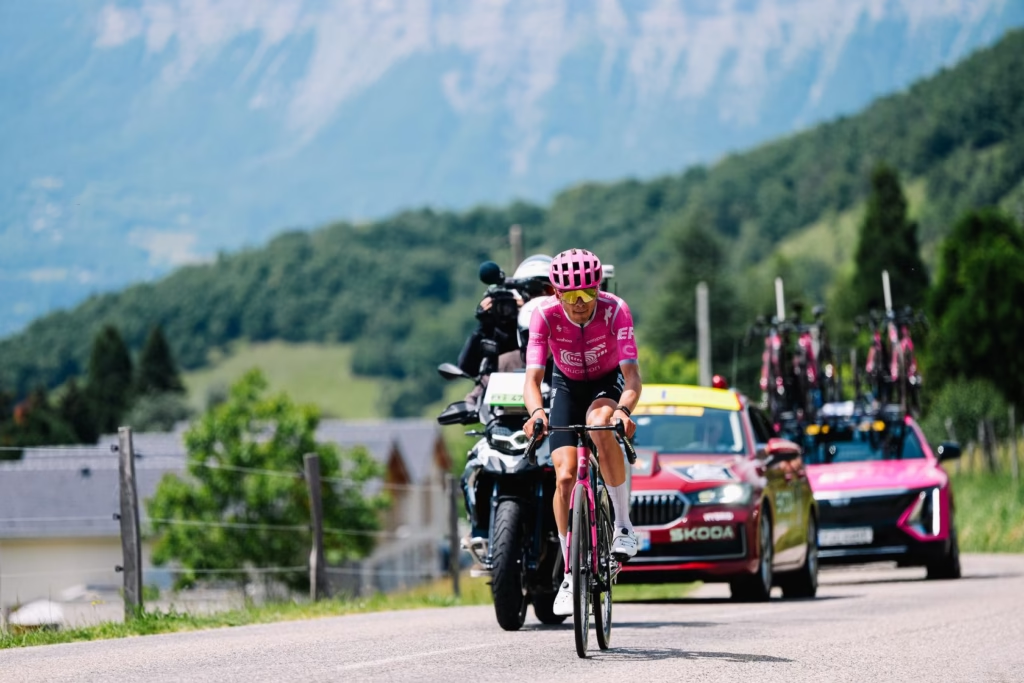
Alex Baudin took the first leader’s jersey with his stage 1 victory, and the team time trial will be a major test of how long EF Education-EasyPost can keep him near the top of the standings. He earned his position through aggressive racing rather than a protected GC ride, and stage 3 is where the race begins to test team depth around him.
EF Education-EasyPost have Ben Healy, Georg Steinhauser and other riders capable of contributing to a strong collective effort, but the key question is whether they can match the more GC-focused squads over 28.4km. Baudin’s early lead gives him a cushion, yet that can disappear quickly in a team time trial if the line begins to fracture.
Even if he loses the jersey, his opening victory has already changed the race. Stage 3 will determine whether he remains a live overall presence or hands the race to the more conventional GC teams.
How much time could be gained or lost?
Over 28.4km, the best teams could put real time into weaker squads. The front of the race may be decided by small margins, but further down the standings the gaps can widen quickly if a team struggles with pacing or loses key riders.
A strong team might gain 15 to 30 seconds on direct rivals. A bad day could cost closer to a minute. The exact gaps will depend on the course conditions, wind and how technical the route proves to be, but the discipline almost always punishes hesitation.
Stage 3 is not spectacular in the same way as Grand Colombier or Plateau de Solaison, but it can quietly decide who has to attack there.
Where will stage 3 be decided?
The stage will be decided by pacing discipline. The fastest teams will not necessarily be the ones who start hardest. They will be the ones who keep enough riders together deep into the course and still have the power to accelerate in the final third.
The first section will set the rhythm, but the middle of the route should be where teams begin to separate. If a squad has overcommitted early, the line will start to stretch, gaps will appear between riders and the turns will become less efficient. Once that happens, the time starts to leak away.
The final kilometres are about damage limitation for some teams and full commitment for others. Any squad still together with five or six strong riders late in the course can take time quickly. Any team reduced too early will be fighting the clock rather than attacking it.
-
 Photo Credit: A.S.O./Billy Ceusters
What comes next after stage 3?
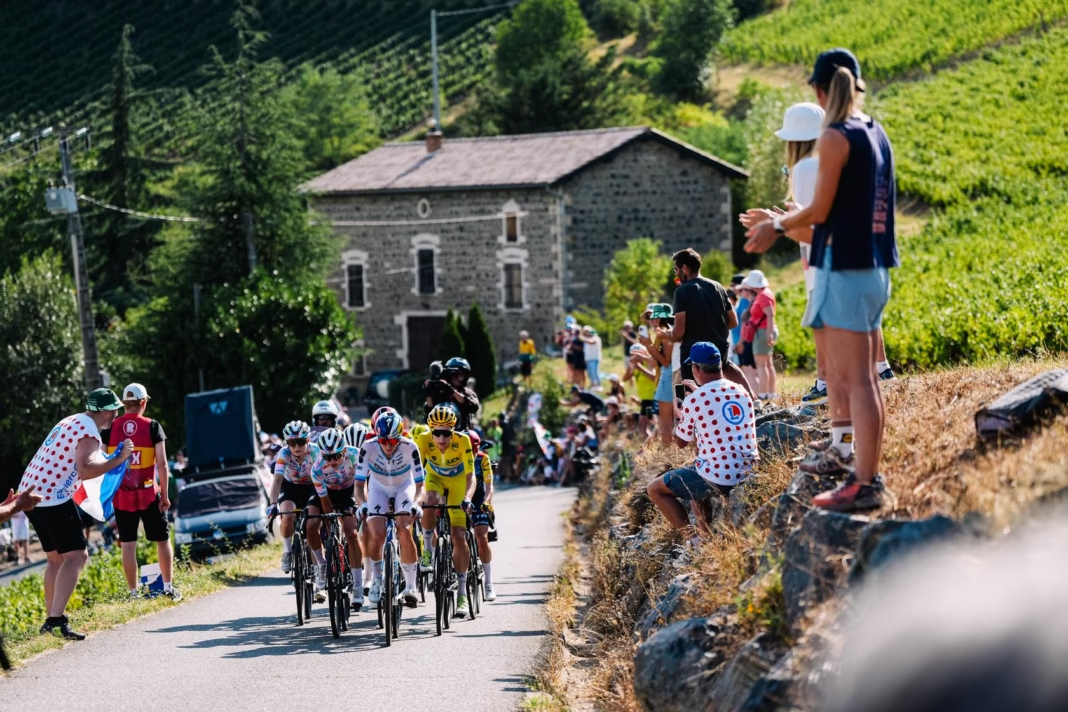
Stage 4 continues the race after the Perreux team time trial, with the GC picture likely to be much clearer than it was after the opening road stages. The mountain block is still to come, but stage 3 will help decide who can race patiently and who needs to start creating pressure.
The final weekend remains the centre of the race. Crest-Voland, Grand Colombier and Plateau de Solaison will decide the final shape of the podium, but the team time trial can decide the starting positions for that fight.
A rider who leaves Perreux with a time buffer can wait for the right climb. A rider who leaves Perreux behind schedule may need to race earlier, harder and with fewer tactical choices.
Tour Auvergne – Rhône-Alpes 2026 stage 3 prediction
Team time trials usually reward depth, discipline and more than one rider capable of long, high-speed turns. On that basis, Team Visma | Lease a Bike and Netcompany INEOS Cycling Team look like two of the clearest contenders for the stage win, with UAE Team Emirates-XRG and Lidl-Trek also dangerous if they keep their line intact.
Team Visma | Lease a Bike have the balance for this kind of effort. Jorgenson, Tulett and the wider squad give them a strong platform, and the stage offers a chance to gain time without exposing their GC leaders on the road.
Prediction: Team Visma | Lease a Bike to win the stage 3 team time trial in Perreux, with Netcompany INEOS Cycling Team and UAE Team Emirates-XRG close behind, and the GC picture tightening before the race heads towards the mountains.

