
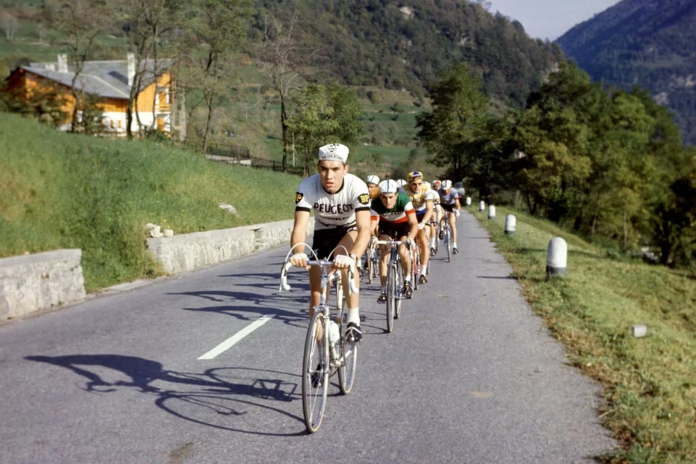
Few team names carry the same weight in cycling history as Peugeot. Long before modern WorldTour structures, co-sponsors, performance departments and rotating team identities, Peugeot was already part of the sport’s fabric. It was a bicycle manufacturer, a car company, a sponsor, a talent developer, a Tour de France force and, for decades, one of the most recognisable names in the peloton.
The black-and-white chequerboard jersey became one of cycling’s enduring visual signatures. It was simple, direct and instantly recognisable, the sort of kit that still looks modern because it was never overdesigned in the first place. But Peugeot’s importance was never only about aesthetics. The team’s history stretches across the sport’s earliest professional decades, through the post-war boom, into the Merckx era, the Thévenet years and the more international peloton of the 1980s.
Peugeot was not a short-lived superteam built around one champion. It was a cycling institution. Its story overlaps with the growth of the Tour de France, the rise of trade teams, the shift from national cycling cultures to international rosters, and the slow movement towards the corporate structures that define the sport today.
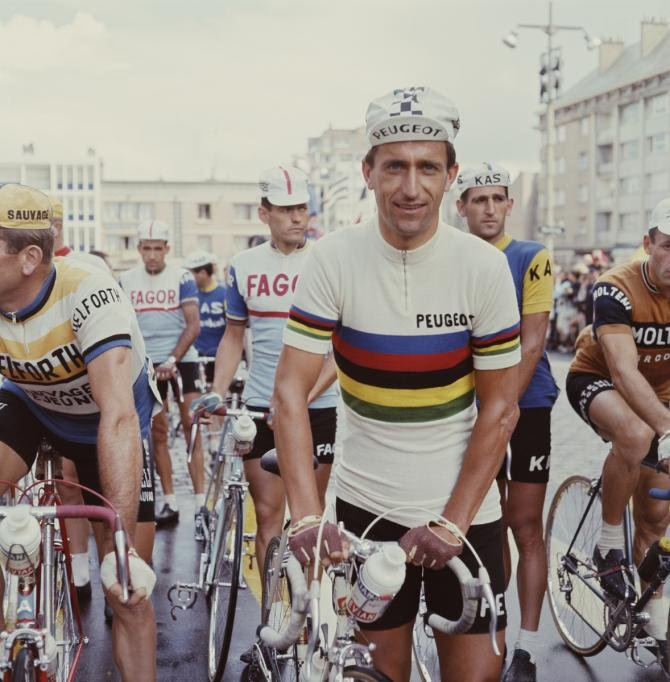
The early Peugeot years and the birth of trade-team cycling
Peugeot’s cycling roots go back to the earliest years of the sport’s commercial development. The company was already making bicycles in the 19th century, and by the early 20th century, its racing presence had become part of the professional road scene. At a time when the Tour de France was still defining what it wanted to be, bicycle manufacturers were central to the sport’s identity. They supplied equipment, backed riders and used racing as a public demonstration of durability.
Professional cycling was not yet built around the modern sponsor model. The bike industry was the sport’s first real commercial engine. Peugeot, Alcyon, La Française, Automoto and other manufacturers were not simply names on jerseys. They were part of the machinery that turned road racing into a public spectacle and a business.
Peugeot quickly became one of the strongest of those names. The company was associated with early Tour de France success and built its reputation on endurance, reliability and visibility. In the years before television, instant data and global team branding, winning races was one of the most powerful advertisements a bicycle manufacturer could have.
That set the tone for Peugeot’s long relationship with the sport. The team’s identity was practical, competitive and deeply tied to cycling’s commercial origins.
Peugeot and the Tour de France
Peugeot’s history cannot be separated from the Tour de France. Across the first half of the 20th century, the brand was repeatedly present around the race’s biggest moments, both through official team structures and through riders using Peugeot equipment.
The Tour’s early decades were messy, experimental and often reorganised, with trade teams, national teams and equipment rules shifting over time. Peugeot remained one of the constants. Its bikes, riders and racing structure helped anchor the sport through periods when professional cycling was still forming its identity.
The company’s Tour connection became even more significant in the post-war era, when the race regained its role as the centrepiece of the European cycling season. By then, Peugeot had become more than an old manufacturer with a racing department. It was a recognised elite team, capable of attracting major riders and shaping the outcome of the biggest races.
That continuity is part of what makes Peugeot different from many famous teams. Plenty of squads have had dominant eras. Far fewer have mattered across such a long span of cycling history.
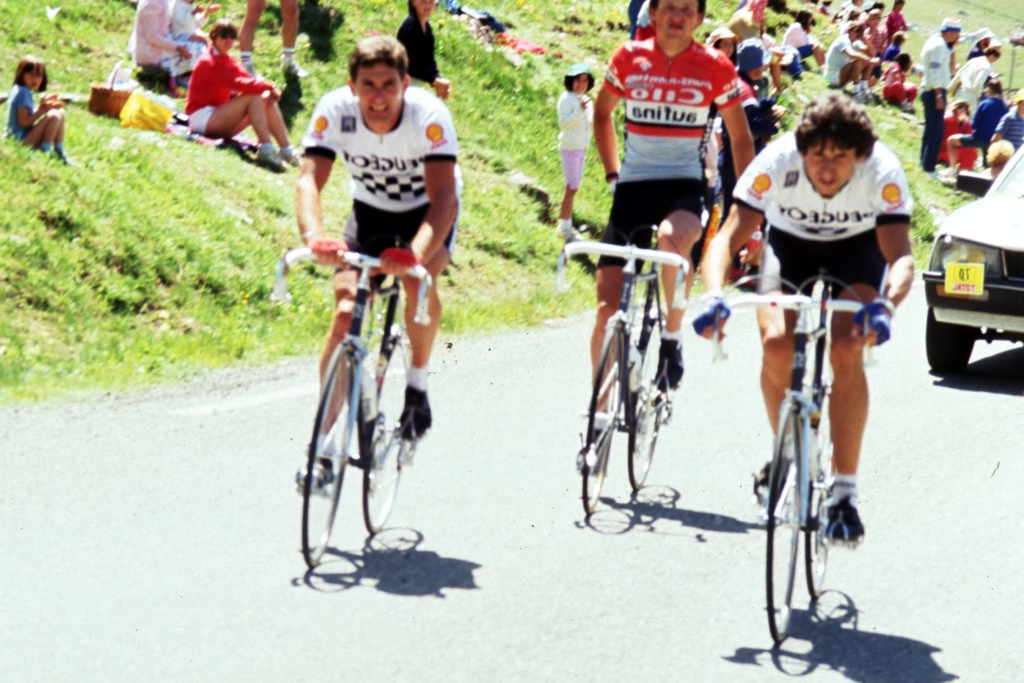 Photo Credit: Sirotti
The chequerboard jersey becomes an icon
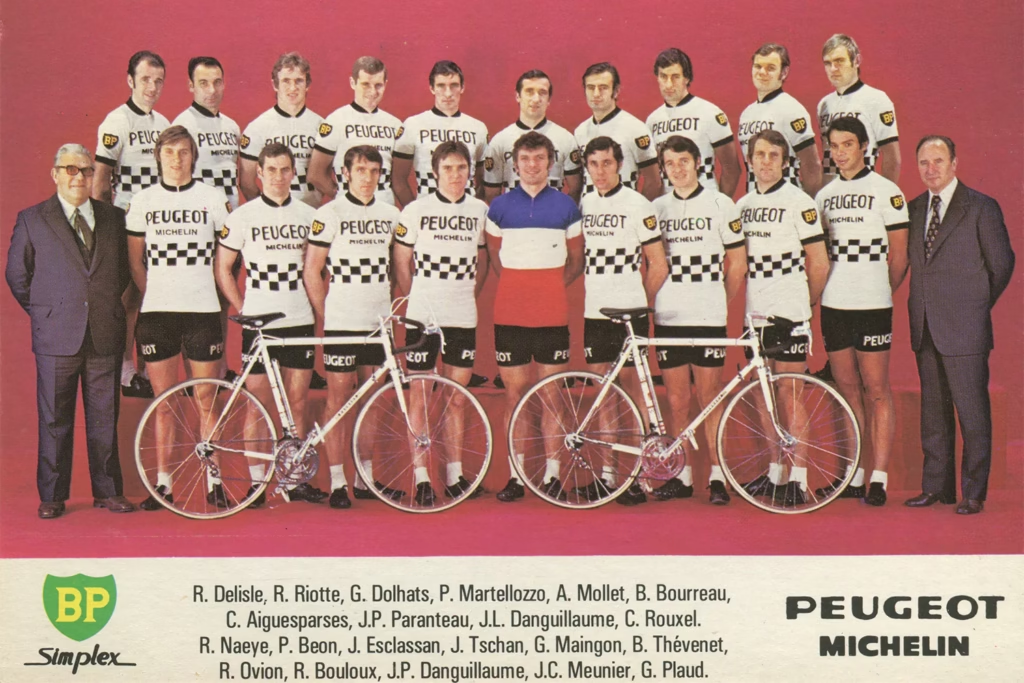
Peugeot’s black-and-white chequerboard jersey is one of the great visual designs in cycling. It was bold without being loud, distinctive without needing explanation, and strong enough to remain associated with the team long after the sponsor left the peloton.
The jersey also suited the team’s image. Peugeot was rarely a team built around glamour alone. It had stars, but it also had a strong workmanlike identity. The kit reflected that: clean, mechanical, confident and instantly readable from a distance.
In a sport where teams often disappear into a fog of sponsor changes, Peugeot had the opposite problem. Its jersey was so memorable that it became hard to separate the design from the wider idea of French professional cycling. The chequerboard pattern still appears in retro collections, historical features and cycling culture because it represents an era as much as a team.
That visual identity helped Peugeot maintain a sense of continuity even as riders, co-sponsors and team structures changed. It gave the team a permanence that most cycling sponsors never achieve.
Tom Simpson and Peugeot’s British connection
For British cycling fans, Peugeot has a particular resonance because of Tom Simpson. Simpson rode for Peugeot during the 1960s and became one of the defining British riders of his generation. His world championship win in 1965 made him a global figure, and his presence in the Peugeot jersey helped connect British cycling to the highest level of the European professional scene.
Simpson was not simply a British rider abroad. He was one of the best one-day racers in the world, capable of winning major Classics and competing across the toughest races of the calendar. His Peugeot years placed him inside one of the sport’s strongest structures at a time when the professional peloton was still hard for British riders to break into.
His death on Mont Ventoux during the 1967 Tour de France remains one of the darkest moments in cycling history. It also forms part of Peugeot’s story, not because it defines the team, but because Simpson’s career and tragedy are inseparable from the era in which Peugeot was one of the sport’s central squads.
The British connection did not end with Simpson. Peugeot later became an important home for riders such as Robert Millar, Phil Anderson and Sean Yates, making the team part of the pathway by which English-speaking riders became more visible in the European peloton.
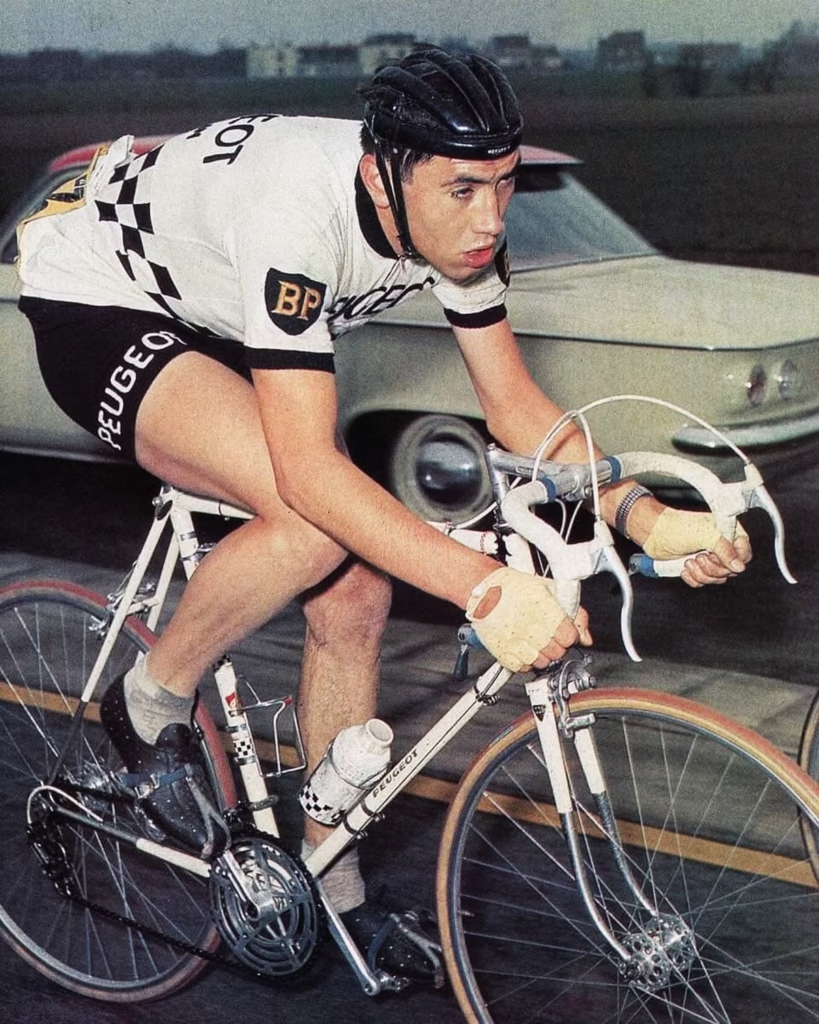
Eddy Merckx before Merckx became untouchable
One of the most fascinating parts of Peugeot history is that Eddy Merckx rode for the team early in his professional career. Before the Molteni years, before the full-scale domination, before the image of Merckx as the complete and almost unbeatable rider, Peugeot was one of the teams that helped bring him into the top level of the sport.
Merckx’s time with Peugeot was short, but it was far from minor. He won Milan-San Remo in 1966 and the world road race title in 1967 while riding in Peugeot colours. Those results were early proof that he was not just another talented young Belgian. He was already a rider with the range to win the biggest one-day races.
For Peugeot, Merckx’s presence is a reminder of the team’s recruitment power. It could attract and develop riders who would go on to shape entire eras. Merckx became most closely associated with other teams later in his career, but Peugeot still owns part of the origin story.
That gives the team an unusual place in cycling history. It was important enough to be a launchpad for the greatest rider the sport has seen, even if it was not the team with which he became most famous.
Roger Pingeon and the 1967 Tour de France
Roger Pingeon gave Peugeot one of its defining post-war Tour de France victories in 1967. His overall win came in a period of cycling still shaped by national-team structures at the Tour, but the Peugeot connection remained central to his professional identity.
Pingeon was not the most flamboyant French Tour winner, but his 1967 victory added to Peugeot’s reputation as a team capable of producing and supporting riders for the very biggest stage. He followed that with further Grand Tour success, including victory at the Vuelta a España in 1969.
His career also sits in an important transition period. Cycling was moving towards more stable trade-team identities in the Grand Tours, and Peugeot was well placed to remain relevant as that shift developed. Pingeon’s success helped carry the team from its older manufacturing-era prestige into a more modern professional framework.
For a French team, a French Tour winner in Peugeot colours carried obvious symbolic value. It reinforced the idea that Peugeot was not only part of cycling’s past. It was still part of its present.
Bernard Thévenet and the end of Merckx’s Tour reign
If one Peugeot rider defines the team’s 1970s mythology, it is Bernard Thévenet. His Tour de France victories in 1975 and 1977 made him a national hero, but the first of those wins carried extra historical weight because it came at the expense of Eddy Merckx.
The 1975 Tour has become one of the symbolic turning points in cycling history. Merckx was chasing another Tour victory, but Thévenet cracked him in the mountains and won the race. For Peugeot, it was the perfect combination: a French rider, in one of the sport’s most famous jerseys, ending the Tour dominance of the greatest rider of all time.
Thévenet’s second Tour win in 1977 confirmed that 1975 was not a one-off. He was a complete Grand Tour rider, strong enough to climb with the best and durable enough to manage the pressure of a three-week race. His success restored Peugeot to the front of the Tour conversation at a time when French cycling needed a rider who could stand up to the dominant international champions.
That period gave Peugeot its last great era as a Tour-winning superpower. The team had history before Thévenet, but his victories gave it one final block of Grand Tour greatness before the sport changed again in the 1980s.
A team that gave English-speaking riders a route into Europe
Peugeot’s 1980s identity was shaped partly by its international recruitment. At a time when British, Irish, Australian and other English-speaking riders still had to fight for acceptance in the European professional peloton, Peugeot became one of the teams that helped open the door.
Phil Anderson was one of the most important figures in that process. He became the first non-European rider to wear the yellow jersey at the Tour de France and helped show that riders from outside cycling’s traditional heartlands could compete at the highest level. His time with Peugeot made the team part of a wider shift in the sport’s geography.
Robert Millar also became closely associated with Peugeot. His 1984 Tour de France performance, including victory in the mountains classification and fourth overall, remains one of the great British Grand Tour achievements. Millar was a pure climber with a distinctive racing personality, and Peugeot gave him the platform to compete deep into the Tour’s hardest stages.
Sean Yates was another British rider who passed through the Peugeot structure, adding to the sense that the team was unusually important for riders trying to build careers from outside the standard French, Belgian, Italian and Spanish pathways.
Peugeot was still a French institution, but by the 1980s, it had become one of the teams helping professional cycling become more international.
The 1980s and the pressure of a changing sport
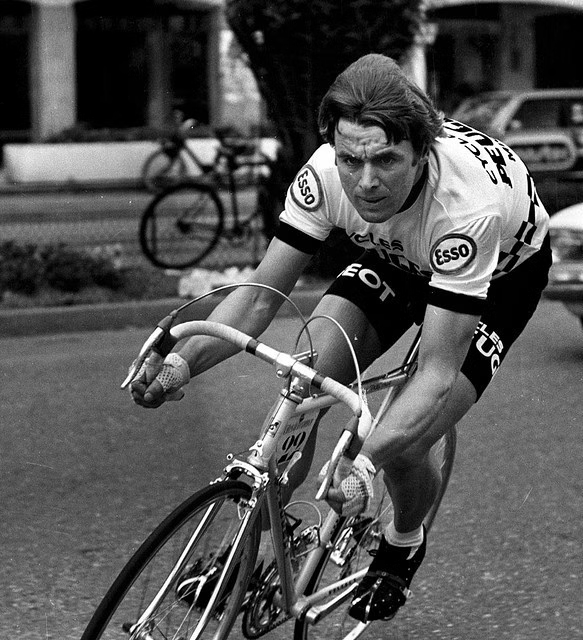
By the 1980s, cycling was becoming more commercially complex. Teams were increasingly dependent on sponsor packages, television exposure, broader marketing value and a more modern approach to management. Peugeot still had history and prestige, but history alone was no longer enough.
The team remained competitive, but the sport was moving towards a different model. New sponsors entered, budgets rose, team identities became more fluid, and the old manufacturer-led structure lost some of its natural authority. Peugeot, once one of the defining names of the bike-industry era, was now operating in a peloton where corporate sponsorship was becoming more important than manufacturing heritage.
That does not mean Peugeot faded quietly. The team still produced major riders, stage wins and memorable performances. But the direction of travel was clear. The old cycling house was being pulled into the modern sponsorship age.
By the end of 1986, Peugeot’s long run as a title sponsor came to an end. The team structure continued under new sponsorship, first with Z, then later through identities such as GAN and Crédit Agricole. That lineage is important because Peugeot did not simply vanish into nothing. Its sporting structure helped carry part of its legacy into the next era.
From Peugeot to Z, GAN and Crédit Agricole
The post-Peugeot continuation is an important part of the story. When Peugeot stepped away, the team did not disappear overnight. Under Roger Legeay, the structure carried on through the Z team, then GAN, then Crédit Agricole.
That lineage produced major results of its own. Greg LeMond won the 1990 Tour de France with Z, giving the former Peugeot structure another place in Tour history even after the chequerboard jersey had gone. Later, the Crédit Agricole years kept the line alive into the 2000s before the team finally ended in 2008.
This is why Peugeot’s influence extends beyond the years when the name was on the jersey. The team helped create a professional structure that survived sponsor changes and continued to matter for decades. In modern cycling terms, that kind of continuity is valuable. It shows that Peugeot was not merely a sponsor logo. It was part of a deeper team culture.
The chequerboard disappeared from the peloton, but the sporting organisation behind it kept contributing to the sport long after the Peugeot name left.
-
 Photo Credit: Canyon SRAM (supplied media release)
 -
 Photo Credit: Park Tool

Why Peugeot mattered
Peugeot mattered because it connected so many parts of cycling history. It was there when bicycle manufacturers were central to the sport. It was there through the rise of the Tour de France. It had early champions, post-war stars, Merckx before his greatest dominance, Simpson at his peak, Pingeon in yellow, Thévenet ending the Merckx era, and 1980s riders who helped widen the sport beyond its traditional European base.
It also mattered because it looked like a cycling team should look. The chequerboard jersey was not just a design. It became shorthand for a long, serious, deeply embedded presence in the sport.
Modern cycling often moves quickly from one sponsor identity to another. Peugeot belonged to a different category. It lasted long enough to become part of the sport’s architecture. Its story was not just about wins, though it had plenty of those. It was about continuity, visibility and the way a team can become woven into the memory of a sport.
Peugeot’s place in cycling history
Peugeot is one of the oldest and most important team names professional cycling has produced. It helped shape the trade-team model, gave the sport one of its most recognisable jerseys, supported riders across multiple eras and remained relevant from the early Tour de France years to the modernising peloton of the 1980s.
Its legacy is not limited to nostalgia. Peugeot’s history explains how cycling became commercial, how teams built identity, how manufacturers used racing to sell the sport back to the public, and how a long-running structure could survive changes in riders, sponsors and eras.
The team’s greatest strength was not only that it won. It was that it endured. In a sport where teams often arrive, dominate briefly and disappear, Peugeot became something rarer: a name that feels almost permanent, even decades after it last appeared at the front of the peloton.
Main photo credit: Mark Leech / Offside

