
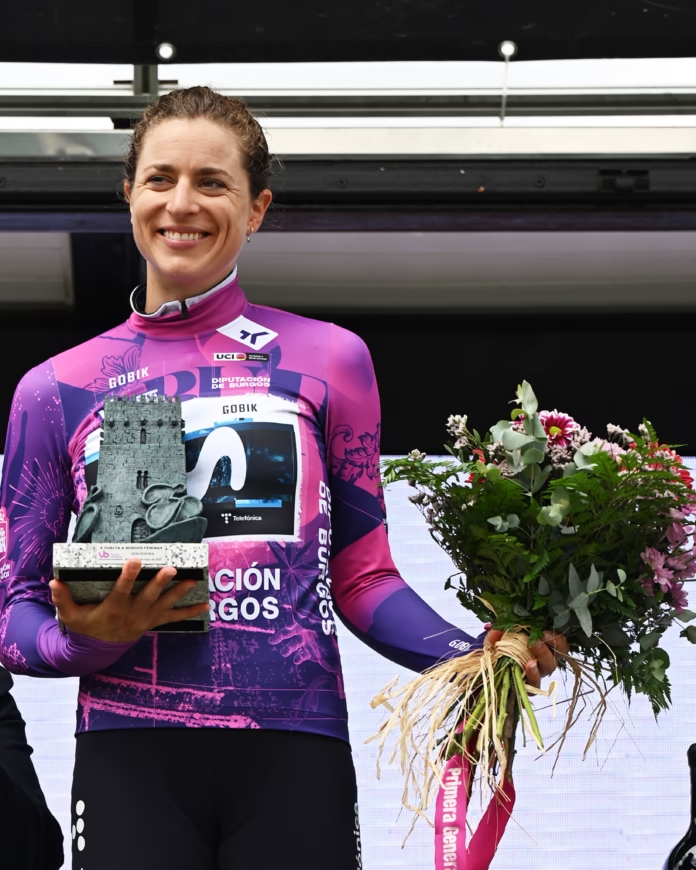
Vuelta a Burgos Feminas 2026 runs from Thursday, 21st May to Sunday, 24th May and once again gives the Women’s WorldTour a compact but serious four-day stage race in northern Spain. The route finishes at Lagunas de Neila on the final day, which immediately gives the week its shape. This is not a race built around flat control and a late twist. It is a race that builds towards a clear mountain conclusion.
That does not mean the first three stages are just there to fill space before Neila. Burgos usually works because it asks different questions across a short week. Riders need enough sharpness for rolling and transitional terrain, enough team support to stay out of trouble, and then enough climbing level to finish the job when the race reaches its queen stage.
What sort of race does this route create?
The 2026 edition looks like a race where several rider types can stay relevant for a few days, but where the best climbers should still dominate by the end. Stage 1 around Burgos is long and lumpy rather than brutally selective, stage 2 should suit stronger finishers and all-rounders, stage 3 moves into more broken terrain, and stage 4 ends at Lagunas de Neila.
That gives the week a strong structure. The route should not hand the race over to the GC favourites on day one, but it also should not let the pure sprinters dominate it either. The overall is likely to stay close enough through the opening stages before the final climb imposes a much clearer hierarchy.
Stage 1 should open the race without blowing it apart
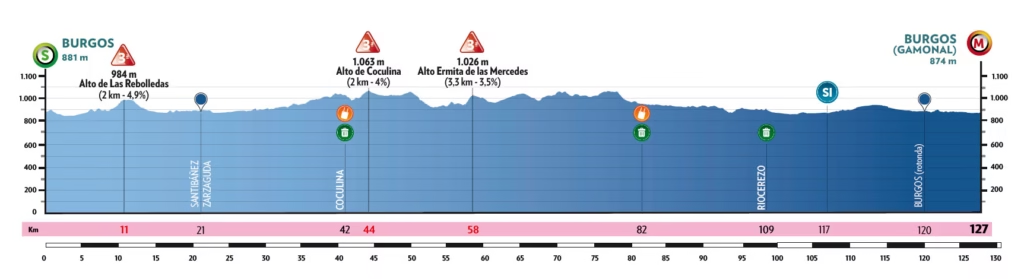
The opening stage starts in Burgos and returns to Burgos over 127km. It includes three classified climbs in the first half of the day before the route settles into a flatter second half.
That is the sort of opening stage that usually gets the race moving without deciding it outright. Attackers have room to try something, punchier riders can start applying pressure, and teams with fast finishers still have a reason to believe they can bring things back together if they stay organised. The main point is that the race starts under tension rather than drifting into an easy first sprint.
Stage 2 should keep the stronger finishers interested
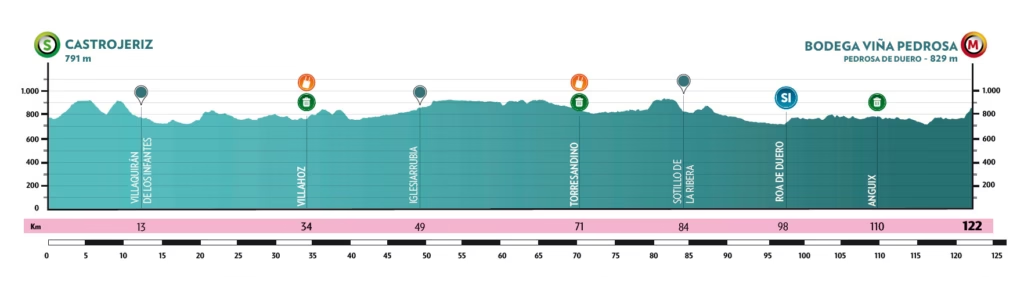
The second day looks like the sort of stage that can still reward a fast finisher, but probably not a pure sprinter who wants a simple run-in. Burgos often uses this middle part of the race to keep the field honest rather than offering a full reset.
That should keep the all-rounders and tougher sprint types heavily involved. Teams that arrive with only one obvious plan can find races like this awkward very quickly. Burgos tends to reward squads that bring two or three ways to read a stage rather than only one.
Stage 3 is likely to shape the final day
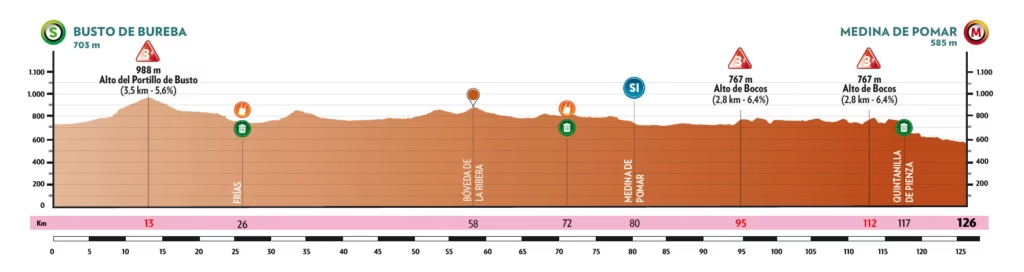
The third stage runs from Busto de Bureba to Medina de Pomar and sits in a very important place in the week. It comes immediately before Lagunas de Neila, which means it does not need to be the hardest day to still have a major effect on the race.
That is often where Burgos gets interesting. A stage like this can take more out of riders than it first appears, especially if teams start racing with one eye on the following day. Riders who spend too much energy there can arrive at Neila already under pressure, while teams that keep control should reach the final stage with more cards still to play.
Lagunas de Neila gives the race its verdict
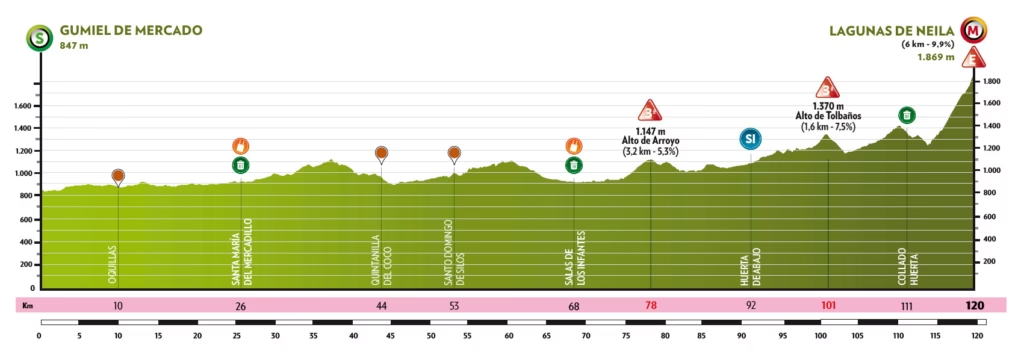
The clearest route-defining detail of the whole race is stage 4 from Gumiel de Mercado to Lagunas de Neila. It is 120km long and includes three mountain passes before the final climb to one of the most established summit finishes in Spanish racing.
This is what gives Vuelta a Burgos Feminas 2026 its GC identity. Neila is not there for image alone. It is selective enough to turn a close overall into a clear result. If the race reaches the final day with only small time gaps, which looks likely from the shape of the first three stages, Neila should produce the decisive differences.
That final stage also gives the week a proper sense of escalation. The earlier days may sort the field, but Neila should decide who is actually strongest.
What kind of rider should this route suit?
The overall route should suit riders who can handle mixed terrain first and then still climb well enough to win or defend the race at Neila. Pure sprinters may still have stage ambitions earlier in the week, but the general classification should come back to the stronger climbers and stage-race riders by the end.
That usually makes Burgos a good race for balanced GC riders rather than pure specialists. You need enough support and positional sharpness to come through the earlier days safely, but you also need the climbing level to finish the week properly. This is not the sort of route where you can hide until the final day and expect everything to fall into place.


Why the route works well in the calendar
Vuelta a Burgos Feminas sits in a useful part of the season. It remains one of the key Women’s WorldTour stage races in May, which gives it a strong place between the spring one-day block and the later Grand Tour-focused part of the year.
That timing suits the route. It is hard enough to test the serious GC riders, but short enough and varied enough to attract teams still balancing stage hunting, rider development and summer preparation. The final climb is severe enough to matter, but the first three stages still leave room for several different race scripts before the overall is settled.
Route verdict
Vuelta a Burgos Feminas 2026 looks like a strong, well-balanced four-day stage race built around a clear final mountain verdict. Burgos opens the race with a long, rolling stage, the middle of the week should keep the all-rounders and stronger finishers involved, and Lagunas de Neila gives the race a proper summit finish to decide the general classification.
That is why this race usually works so well. It does not try to be a mini Grand Tour, but it does give the week enough shape for the overall to feel earned. Riders have to manage different terrain, different race rhythms and then one very clear final climbing test. In 2026, the route looks set up to do exactly that.

