
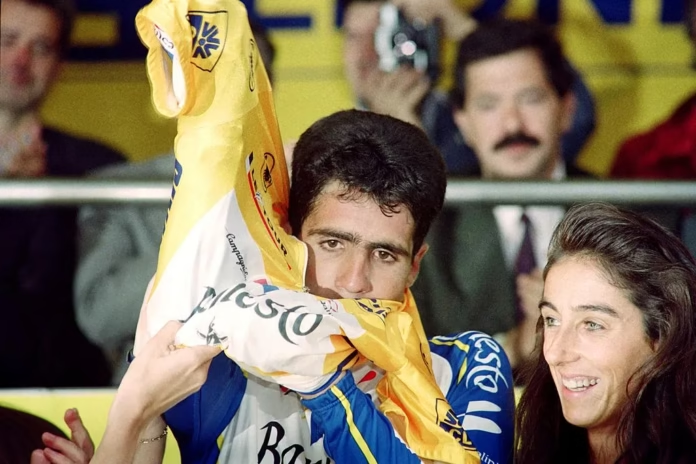
Team Banesto is remembered above all through Miguel Indurain, and understandably so. Five consecutive Tour de France victories, two Giro d’Italia titles, time trial dominance and a style of racing built around calm, suffocating control made him one of the defining riders of the 1990s. Yet the Banesto story is larger than one rider, even one as extraordinary as Indurain.
The team represented a Spanish cycling dynasty that grew out of the Reynolds structure, evolved into Banesto, then continued through later identities that eventually became part of the lineage now associated with Movistar. Its greatest period came when Spanish cycling moved from heroic mountain improvisation into a more modern era of planning, pacing, team discipline and Grand Tour management.
Team Banesto did not race like the romantic ideal of cycling’s past. It controlled. It calculated. It trusted the clock, the mountain train and Indurain’s almost unsettling capacity to remain composed while rivals burned themselves out around him. In doing so, it helped define how Grand Tours would be won in the 1990s.
From Reynolds to Team Banesto
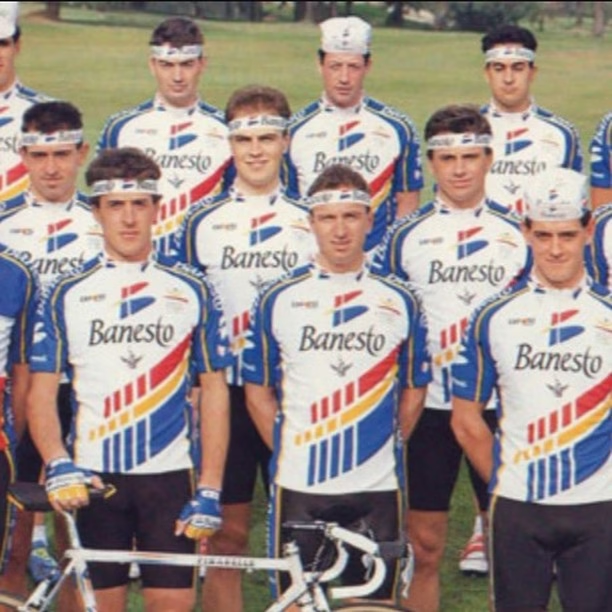
The roots of Banesto sat in the Reynolds team, one of the major Spanish squads of the 1980s. Reynolds had already built a strong identity before the Banesto name appeared, with riders such as Pedro Delgado helping establish the team as a serious Grand Tour force.
Delgado’s 1988 Tour de France victory was a key moment. It showed that the team could win the biggest race in cycling and gave Spanish cycling a major reference point before Indurain’s rise. Delgado was a different kind of leader from Indurain: more expressive, more vulnerable, more visibly reactive. He raced with flair and occasionally with chaos around him. That contrast makes the later Banesto era even more striking.
Indurain joined the Reynolds structure as a young rider and developed gradually. He was not immediately treated as the inevitable Tour champion he later became. His early years were about learning, supporting and growing into his enormous physical engine. The team’s patience mattered. Indurain was not rushed into leadership before he was ready.
When Banesto became the title sponsor in 1990, the timing was ideal. Delgado was still important, but Indurain was emerging. The team had the continuity of a proven Spanish structure, the commercial backing of a major bank, and a rider whose attributes were about to redefine what control looked like in a Grand Tour.
The rise of Miguel Indurain
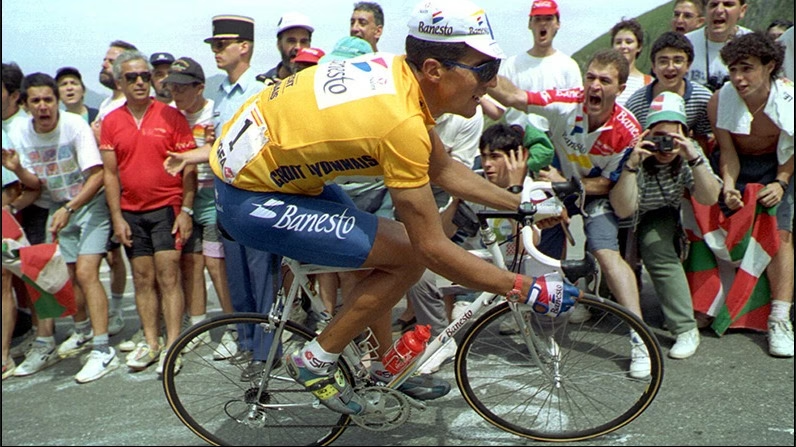
Indurain’s first Tour de France victory in 1991 changed everything. He had already shown his potential, but winning the Tour placed him at the centre of the sport. From that point, Team Banesto became less a team with several possible stories and more the machine built around one extraordinary leader.
What made Indurain so difficult to beat was not one isolated quality. He could time trial better than almost every rival. He could climb with enough strength to follow the best in the mountains. He recovered well across three weeks. He rarely panicked. He did not waste energy chasing headlines on unnecessary days.
Banesto understood how to build around that. Their strategy was clear: use the time trials to create or extend the advantage, control the mountains rather than race them wildly, and force rivals to attack from positions of weakness. Indurain did not need to win every mountain stage. He needed to stop others taking enough time back.
That made his racing style look almost understated. He often appeared less dramatic than his rivals, but that was part of the point. Indurain’s greatest weapon was not theatrical aggression. It was pressure. He placed rivals in a position where they had to do something exceptional, then calmly followed, limited or neutralised the damage.
Team Banesto and the art of Grand Tour control
Banesto’s great innovation was not inventing control, but perfecting its Spanish Grand Tour version around Indurain. The team knew exactly what it had and how to use it.
The time trial was the foundation. Indurain’s performances against the clock were often devastating, particularly in long individual time trials where his aerodynamic position, huge engine and ability to sustain power created large gaps. Once he had time in hand, the race changed. Rivals were forced to attack early in the mountains, often from too far out, often with little realistic chance of breaking him.
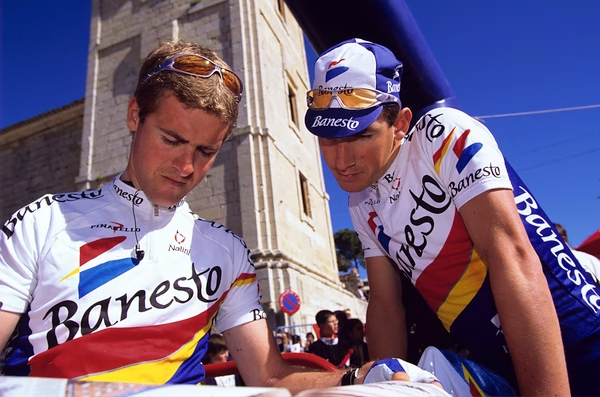
Team Banesto’s domestiques then became central. Riders such as Jean-François Bernard, José Luis Arrieta, Julián Gorospe, Marino Alonso and others contributed to the team’s ability to protect Indurain across varied terrain. The line-up shifted over time, but the function remained consistent: keep the race stable, reduce risk, control the pace, and leave Indurain where he needed to be.
This was not always spectacular to watch, but it was brutally effective. Banesto did not need to chase every attack immediately. They could judge danger, calculate the gap and trust their leader. That calm made opponents uneasy. The more they attacked without reward, the more inevitable Indurain’s control began to feel.
The team’s approach anticipated much of what later became common in Grand Tour racing. Strong teams would increasingly focus on risk management, pacing, terrain selection and leader protection. Banesto were not as technologically associated with control as some later squads, but tactically they were part of the same evolution.
The five Tour de France wins by Team Banesto
Indurain’s five consecutive Tour de France victories from 1991 to 1995 remain the centrepiece of Banesto’s history. Each win had its own texture, but together they created a feeling of inevitability that defined the decade.
The 1991 Tour was the breakthrough. Indurain took the leadership clearly, with Delgado’s era giving way to a new kind of Spanish dominance. It was not only a personal transition but a team transition too. Banesto now had its leader for the next half-decade.
In 1992, Indurain confirmed that the first victory was not a one-off. He also won the Giro d’Italia that year, completing the Giro-Tour double and strengthening his place among the sport’s elite. The scale of his time trial superiority made the Tour feel increasingly like a race others had to rescue rather than control.
The 1993 season brought another Giro-Tour double, something that underlined both Indurain’s recovery capacity and Banesto’s ability to manage repeated Grand Tour objectives. Winning one Grand Tour could be framed as peak form. Winning two in the same season, twice in a row, required planning, endurance and an exceptional team structure.
By 1994, Indurain was no longer surprising anyone. That made the task harder in one sense, because every rival knew the pattern. Yet knowing the pattern did not mean they could break it. Banesto’s control remained strong, and Indurain’s time trialling continued to give him the decisive margin.
The 1995 Tour completed the run. Five in a row placed Indurain alongside Jacques Anquetil, Eddy Merckx and Bernard Hinault in the record books at the time. For Team Banesto, it marked the peak of a project that had turned one rider’s rare gifts into a sustained team dynasty.
Giro d’Italia success and the wider Indurain peak
Banesto’s Tour identity can sometimes overshadow how important the Giro d’Italia was to the team’s greatest years. Indurain won the Giro in 1992 and 1993, both times pairing it with Tour success.
Those Giro wins mattered because they showed that Team Banesto’s system was not limited to one race or one tactical environment. The Giro brought different roads, different weather, different climbs and a different rhythm. Italian racing could be unpredictable, especially in the mountains, yet Indurain and Banesto were still able to impose structure.
That double also gives useful historical context to modern Giro coverage, where the race still asks different questions from the Tour. The Giro d’Italia can be less predictable, more weather-affected and more tactically volatile, which made Indurain’s control across both races even more impressive.
The 1994 Giro also produced one of the most memorable moments of Indurain’s career, even though he did not win the race. On the Passo del Mortirolo, Marco Pantani attacked and distanced the main favourites, exposing a kind of climbing explosiveness that contrasted sharply with Indurain’s steady power. Evgeni Berzin won that Giro, with Indurain finishing third.
That race hinted at a wider shift. Indurain’s system was still formidable, but new types of rivals were emerging: more explosive climbers, riders willing to attack with less regard for pacing logic, and opponents who could make the race harder to control on the steepest terrain.
The team behind the champion
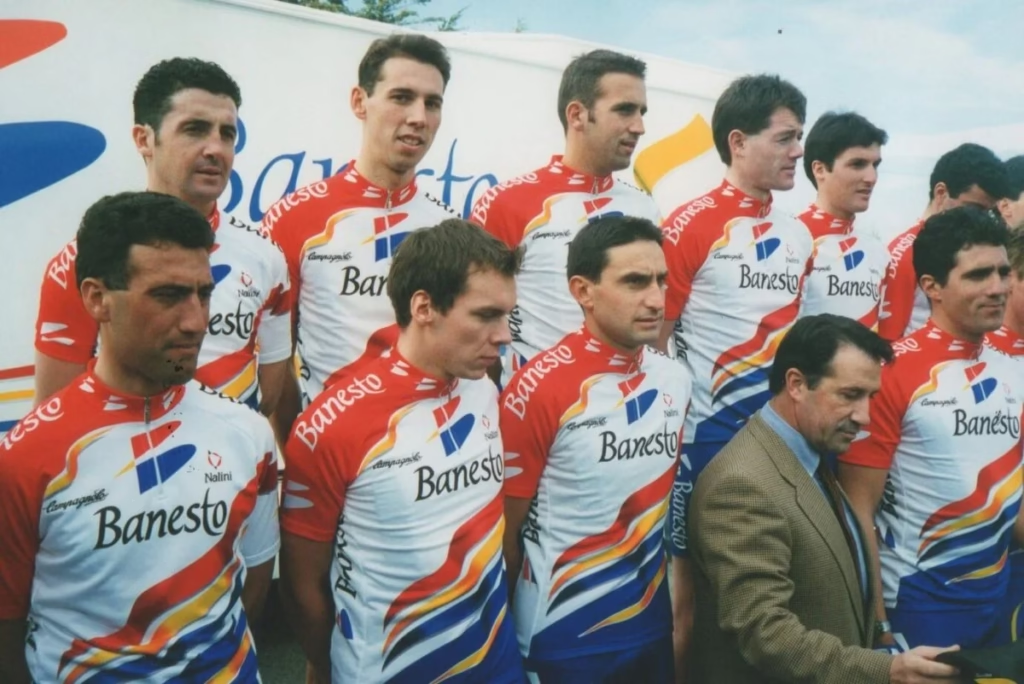
Indurain’s calm sometimes made Banesto look simple. The reality was more complex. A Grand Tour dynasty depends on a team that can repeat discipline day after day, often with little visible glory.
Banesto’s domestiques had to ride with restraint. Their job was rarely to blow races apart for themselves. They managed pace, shut down dangerous moves, protected Indurain through flat days, positioned him before climbs and absorbed pressure when rivals attacked. It was not romantic work, but it was essential.
The team also benefited from continuity. José Miguel Echavarri and the management structure created an environment that understood Spanish cycling, Grand Tour demands and Indurain’s personality. The team did not ask him to race like Delgado. It built around his strengths instead.
That distinction is important. Great teams do not simply collect strong riders. They identify what their leader needs and then shape the race around that. Banesto gave Indurain a platform where his measured style became a weapon rather than a limitation.
There was also a cultural shift in how Spanish success was perceived. Delgado’s Tour victory had carried emotion and unpredictability. Indurain’s victories carried certainty. Spain had not only a champion, but a champion who could dominate through method.
Team Banesto’s style and its critics
Not everyone loved the way Banesto raced. Some saw the team’s control as dull. Indurain’s dominance in time trials and defensive strength in the mountains could make the Tour feel closed down before the final week had fully developed.
That criticism is understandable, but it can also be too simple. Banesto’s control was not passive. It was a tactical choice built on confidence. They knew that Indurain’s best path to victory did not require constant attacks. It required making rivals spend more energy than him.
There is a difference between negative racing and efficient racing. Banesto’s approach was efficient. They turned Grand Tours into contests of accumulated pressure, where the strongest all-round rider with the best support structure usually won. Rivals had opportunities, but they had to create them with force, distance and imagination.
That is why the best challenges to Indurain were so compelling. When riders attacked him in the mountains, the tension came from whether they could finally disrupt the pattern. The fact that it rarely happened only made the system look more powerful.
The end of the Indurain era
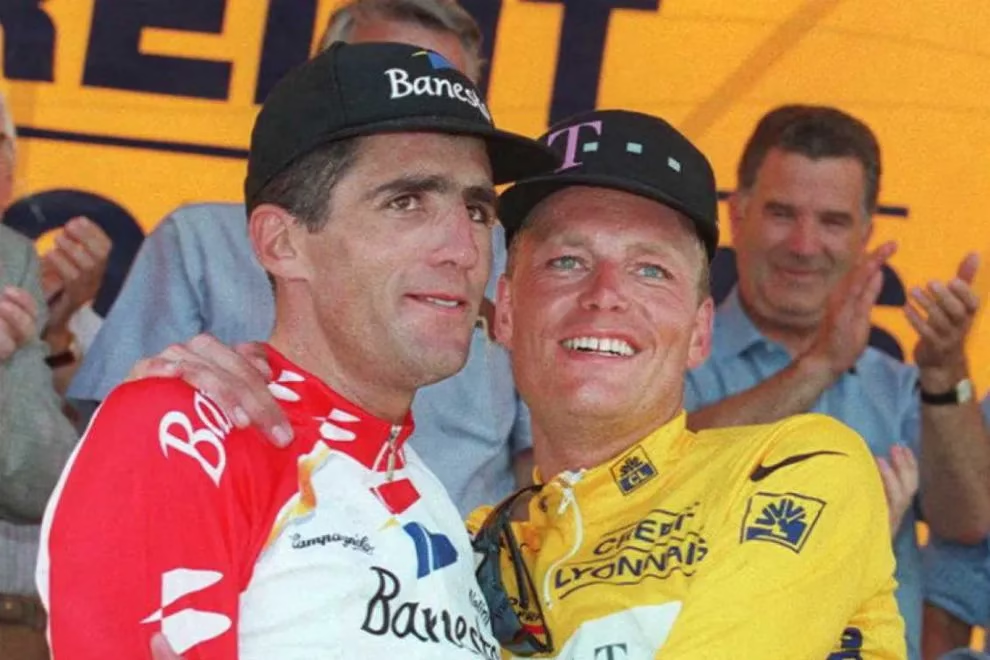
The dynasty ended in 1996. Bjarne Riis won the Tour de France, Jan Ullrich emerged as a future force, and Indurain’s long run finally came to an end. He finished 11th overall, unable to impose the same control that had defined the previous five editions.
The end was not a dramatic collapse so much as a shift in the race around him. The pattern no longer held. Rivals were stronger, the pace of change was clear, and Indurain’s ability to absorb every attack had diminished. He retired at the end of the season, closing one of the most controlled and successful eras in Tour history.
For Team Banesto, losing Indurain meant losing the centre of its sporting identity. The team continued, but it could not simply replace a rider who had won five Tours and two Giros. Dynasties often look obvious in hindsight, but they are built around rare combinations. Banesto had the right rider, the right structure and the right timing. Once one part disappeared, the whole shape changed.
Banesto after Indurain
After Indurain, Team Banesto remained an important team but no longer carried the same aura. The squad continued to produce and support strong riders, and it remained embedded in Spanish cycling’s top tier, but the 1990s dominance had gone.
The sponsorship and team identity eventually evolved. The broader structure that had run through Reynolds and Banesto later continued through iBanesto.com, Illes Balears, Caisse d’Epargne and Movistar. That lineage matters because it makes Banesto part of a much longer Spanish team story rather than a closed chapter.
Modern Movistar is not Banesto in a simple one-to-one sense, but the historical thread is clear. The same broader organisation carried forward elements of Spanish stage-race identity, Grand Tour ambition and team continuity. Banesto remains the golden era within that lineage, the period when everything aligned around one leader and one method.
-
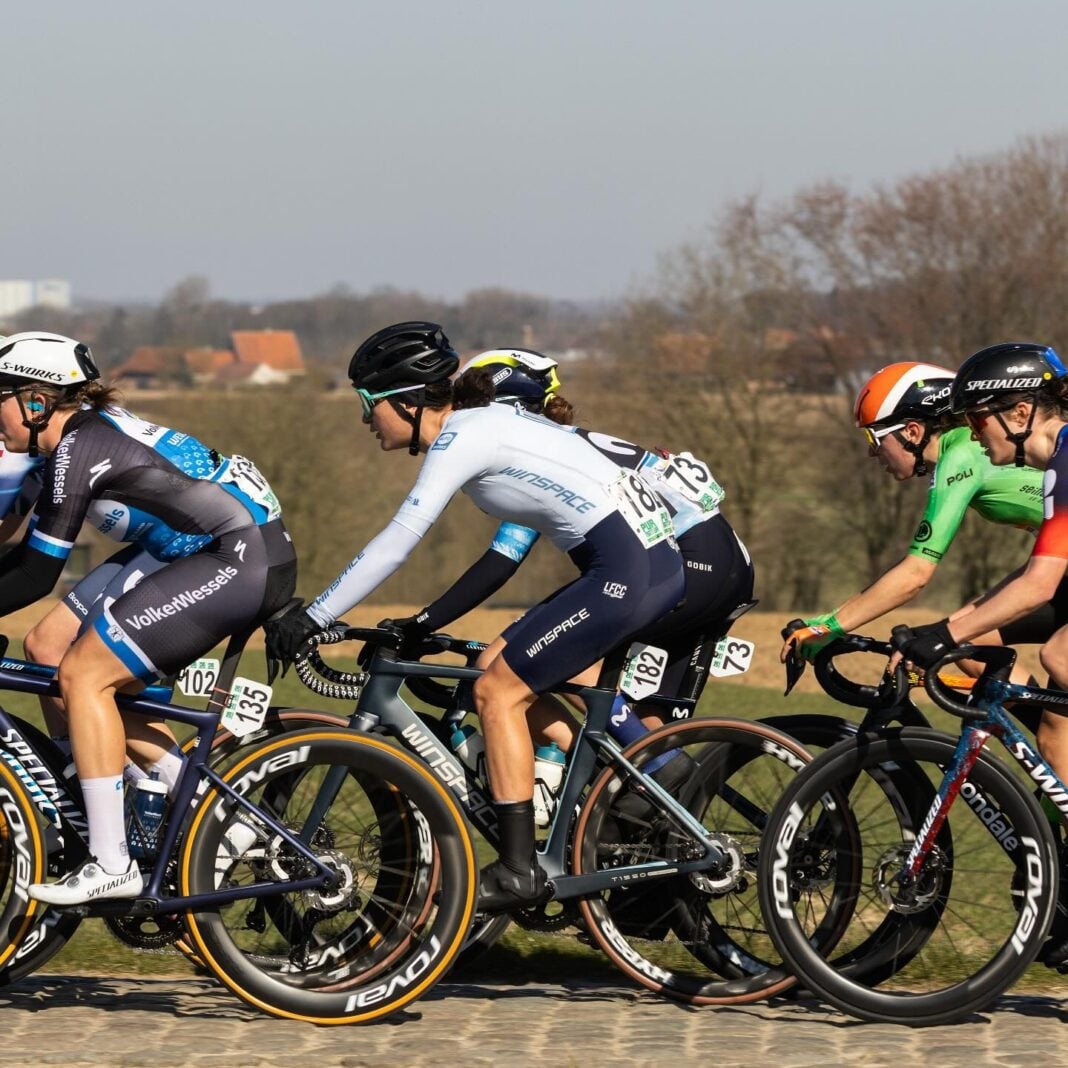
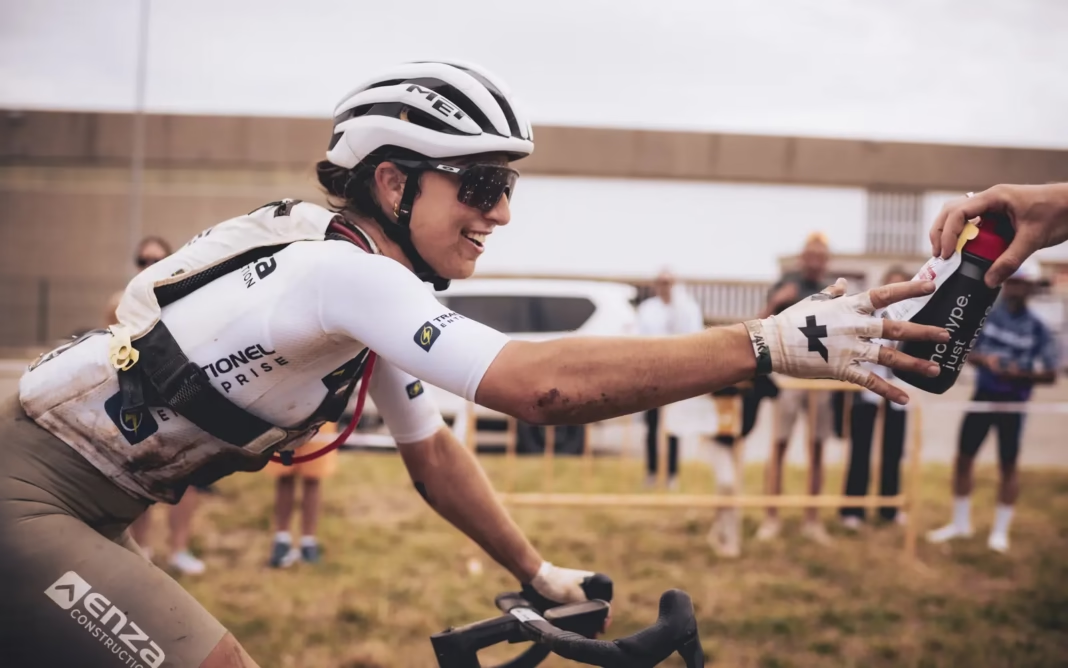
 Photo Credit: quentinphotographiebe
 -
 Photo Credit: Getty
Team Banesto’s place in cycling history
Banesto’s legacy rests on more than the fact that Indurain won five Tours. It rests on how those Tours were won.
The team helped define a model of Grand Tour dominance based on control, time trial superiority, pacing discipline and leader protection. It showed that a rider did not need to attack constantly to dominate. He could make the race bend around his strengths. He could win through restraint.
That model influenced how people understood stage racing. Later teams would refine control with bigger budgets, deeper squads, more advanced technology and more visible performance systems. But Banesto’s Indurain era already contained many of the core principles: keep the leader safe, use the strongest discipline to create advantage, manage mountain stages intelligently, and force rivals to take risks.
It also changed Spanish cycling. Before Indurain, Spanish Grand Tour success had often been associated with climbers, emotion and unpredictable mountain racing. Banesto gave Spain a different image: measured, dominant, powerful against the clock, and capable of ruling the Tour de France year after year.
The meaning of the Team Banesto dynasty
The Banesto dynasty was not loud. It did not depend on constant drama, flamboyant attacks or visible internal conflict. It was built on composure. That is why it remains so distinctive.
Indurain looked almost impenetrable at his best, but no rider wins five Tours through individual strength alone. Behind him was a team that understood the value of routine, rhythm and control. Banesto’s riders and management created the conditions in which his gifts could decide races with minimal waste.
That is the essence of the team’s place in cycling history. Banesto did not just have Miguel Indurain. It knew what to do with him.
Its Tour dynasty was built on a simple idea executed with extraordinary discipline: gain time where Indurain was strongest, defend it where rivals were most desperate, and keep the race calm enough for the clock to tell the truth. For five years, that truth was almost always the same. Banesto and Indurain were the standard by which everyone else was measured.

